5 Tips for Living with a Resource Guarder

Last week I talked about normal vs. abnormal guarding, and that resource guarding in general is a pretty normal behavior. Humans are masters at it! Just because something is considered normal, though, doesn’t mean that we shouldn’t take steps to avoid it or treat it accordingly. So for this week I thought the logical next step would be talking about tips for living with a guarder. Check them out below. 

  1. Learn their body language. For those of you who’ve followed this blog for a while, I probably sound like a broken record when it comes to the first step. When it comes to resource guarding, there are signs before the growl, air snap, or bite. Learning these signs allows you to intervene before there’s a problem and before your pet has to use those warning signals to keep someone at bay. 
  2. Make a list of all the things they guard and share it with everyone in their life. If your pet only guards, say, raw bones, you probably don’t need to write this down. You can simply let anyone who would give your pet that item know that it’s a guarded item. However, if you have a pet who guards a lot of things from various individuals, a written list can be incredibly helpful for people like dog walkers, pet sitters, and longer-term visitors. 
  3. Create a management plan and share it with everyone in your pet’s life. Now that you know what they guard, we can look at those situations and determine how we can prevent guarding. This could be something like simply not giving your pet items they guard or picking up all the toys when the neighbor dog comes over to play. Food and item guarding is usually quite easy to manage. Space and people guarding is more challenging, and often requires a professional because it’s not as easy to manage.
  4. Don’t test your pet. There are so many things that I don’t know if Oso guards because I’ve never bothered him when he has them. If it’s a high enough value I assume it will be guarded and I leave him alone and manage as I would if I knew it were true. There’s really no reason to test instead of manage. This also goes for feeding your pets together. There’s really no need to test this when you can simply feed them in separate rooms. Management is easier and cheaper than a bite.
  5. Don’t take things from your pet. It’s fairly easy to create a resource guarder. How do you create one? Take things from them. Teach them that someone is routinely going to take their valued possessions away from them or bother them while they’re eating. More info on that here. If your pet has an item they shouldn’t have and it’s not dangerous or valuable, ignore them. Let them have it. If it is dangerous or valuable, trade them for it with treats. 


Now what?

  • If you’re living with a resource guarder (and we all likely are, to some extent!), go through the list and determine what your first action should be. Do you need to learn more about what body language signals to look for? Or talk with the rest of the household about your management strategy? 
  • Start in on your first action item! When that feels comfortable and sustainable, choose another action item.
  • If you’re feeling overwhelmed with where to start or how much it feels like there is to do, check out our Beginning Behavior Modification: Learn the Skills You Need to Successfully Address Your Pet’s Aggression, Anxiety, Reactivity, or Fear. It walks you through learning your pet’s body language, setting up a management plan, and more. Check it out here
  • Check out our free Resource Guarding Workshop to learn more about resource guarding specifically and some of the RG-specific foundation skills. 


Happy training!

Allie

How I Accidentally Taught My Turtle to Escape

I talk about my dog, Oso, all of the time but he’s not the only critter in our household. I’ve mentioned my turtle, Zorro, a couple of times throughout the course of this blog but today I want to devote an entire post to him. Specifically, I want to talk about a trainer/owner failure: how I accidentally taught him to escape from his tank. 


My management failure

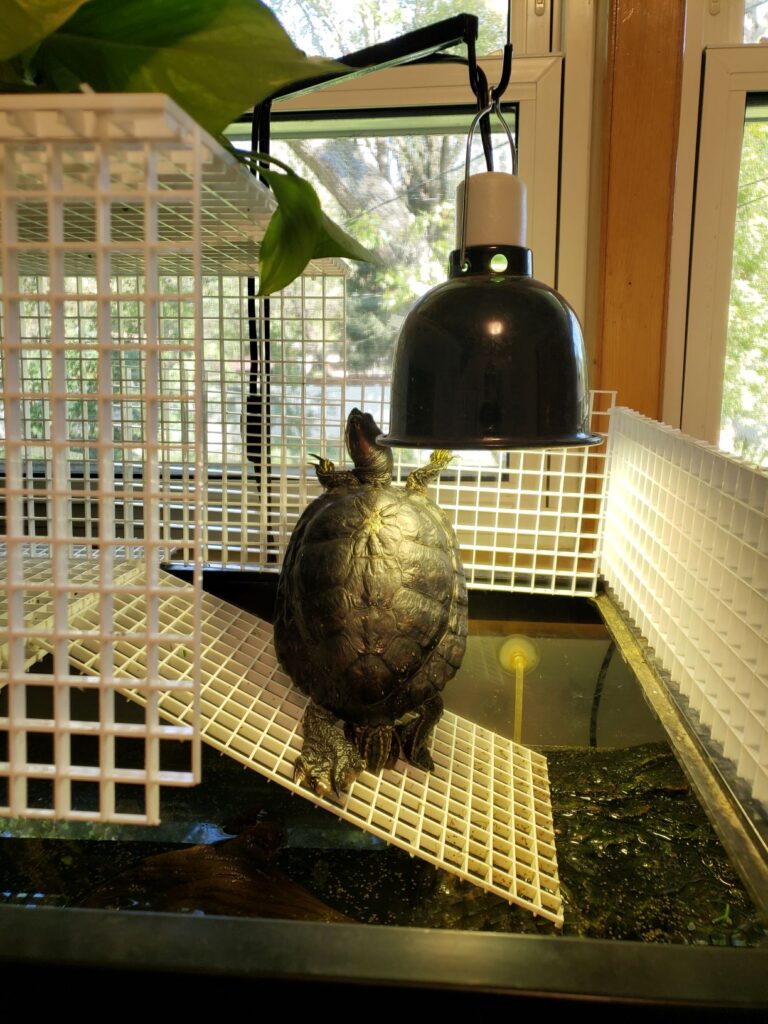
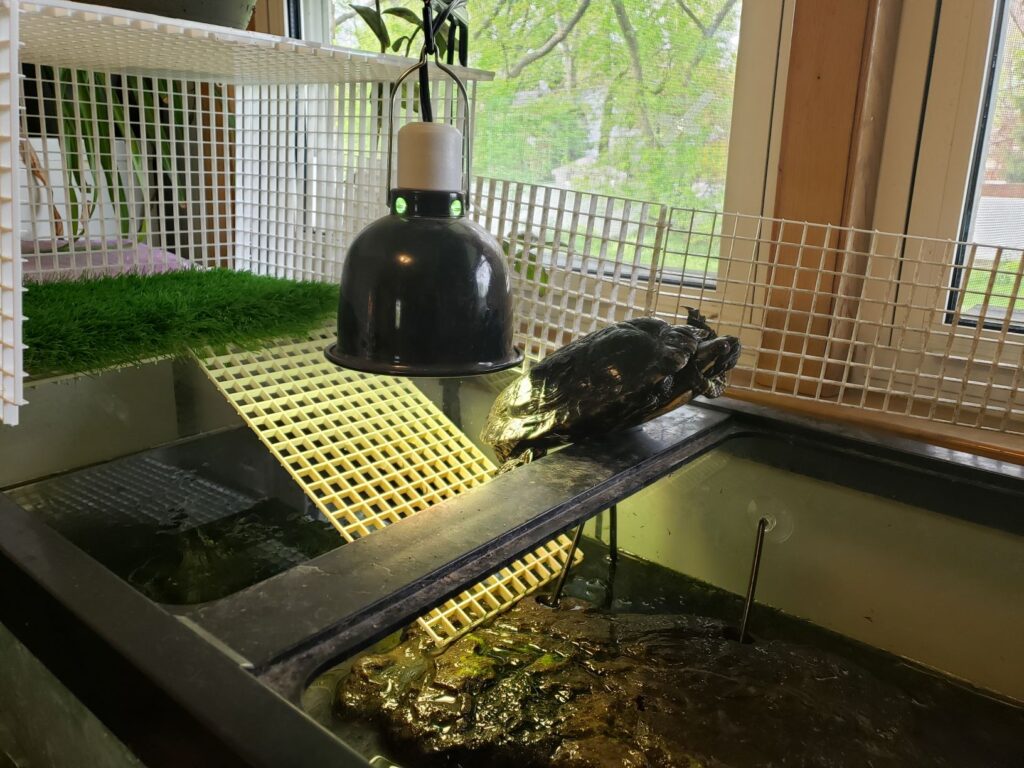
A year or two ago I changed Zorro’s setup by building a platform that sat on top of his tank to allow for more water in it. As soon as it was installed, I questioned whether or not he would be able to escape from his new setup. However, instead of doing something preemptively about that, I decided to take the “wait and see” approach. 


This was mistake number one. Zorro tries to escape whatever enclosure he’s in. This has been true of every enclosure I’ve put him in in the last 12 years I’ve had him. I knew he would try to escape this new setup and I knew that it was more possible than it was with his previous setup. Yet, I still took the wait and see approach, even though I knew better. 

Sure enough, it took only a few days for him to start trying to climb out. Luckily, his tank is in my office so I was right there to put him back in. It quickly became clear that I would need to actually have some management solution in place to keep him safe. Instead of developing a great management solution, though, I put up a half-assed management solution. Again, I questioned whether or not it would be effective. 


This was mistake number two. Instead of putting a great management solution in place that I knew was going to be effective, I opted for the easiest solution I could think of and I still questioned whether or not it would be effective. Of course that didn’t work and he was able to climb out of his tank. What this did was teach him that if he just pushes the barrier a little harder, then it will work. 

Since that didn’t work I reinforced it a little more. I knew it still wasn’t perfect, but it should’ve been much harder for him to escape. However, because I previously [accidentally] taught him that if he pushes against the barrier harder then he’ll be able to escape, he was now able to get out of this more difficult setup, too. Mistake number two came back to bite me and provide mistake number three. 


This situation was 100% my fault. I knew Zorro’s past behavior; I knew he’d try to escape this setup and I knew that it was likely possible. Even with all of that knowledge, I still chose to take my chances and feign surprise when what I knew would happen actually happened because it was easier for me to do it that way. I didn’t have to put in the extra effort or forethought by taking the “wait and see” approach. And, because I didn’t do what I should have done the first or even the second time, I taught Zorro to try harder and how to escape more successfully.

The way that I taught him to try harder is through something called “shaping”. Shaping means reinforcing gradual approximations– or baby steps– towards an end goal behavior. This is the technique frequently used for teaching really cool tricks. Below is a quick video example of shaping:


How I used shaping here [albeit without trying] was by setting up gradually more challenging situations for him to succeed at escaping. If I had put a more rigorous management solution in place after the first time Zorro tried to escape, he would have failed and learned that it doesn’t work to try harder. However, because I set up an only slightly more difficult approach he did learn that pushing harder worked and was able to use that knowledge later for the next only slightly more difficult approach. 


The right way

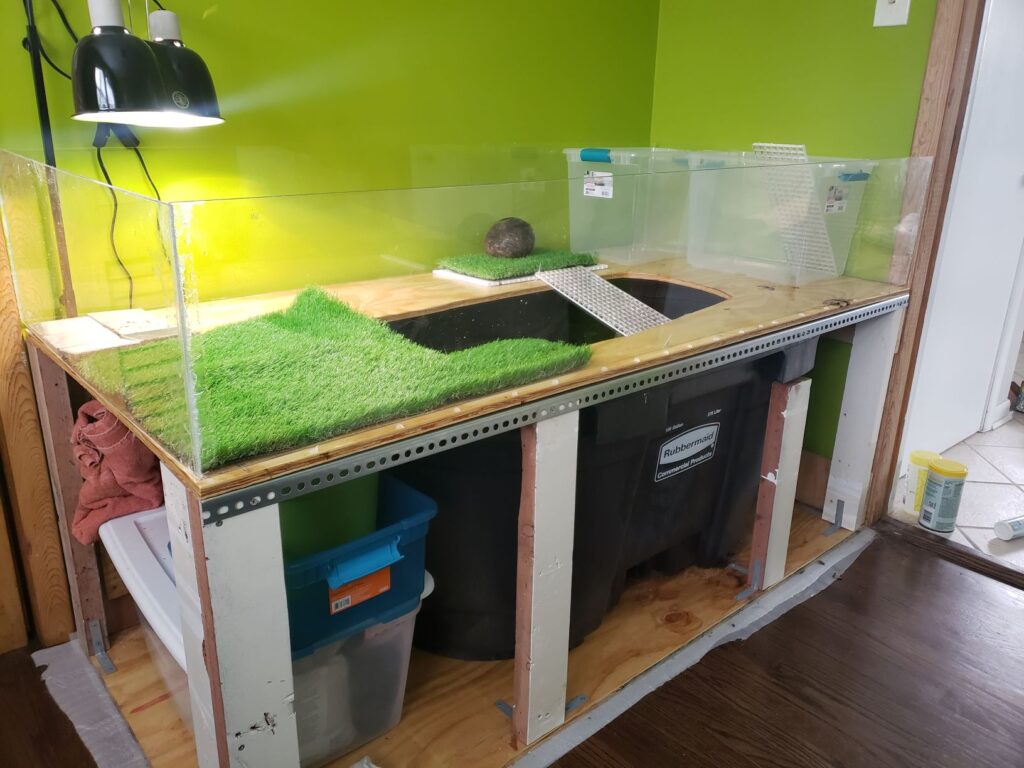
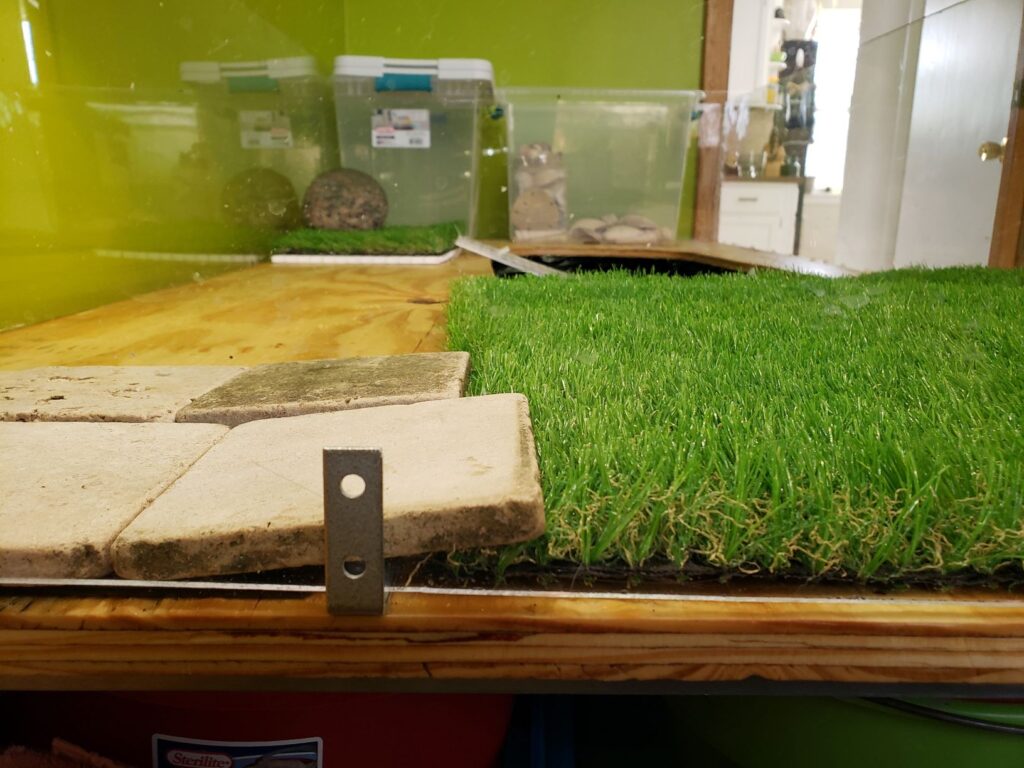
This past summer I finally started building the dream enclosure I’ve been thinking about for Zorro for a while. And this time, I decided to do it right when it came to him escaping. When thinking through the design for his enclosure, I took into account all of the ways I could possibly think of for him to escape. I knew I wanted a plexiglass barrier surrounding it for aesthetic reasons, but decided to make the barrier taller so it wouldn’t be possible for him to reach the top and pull himself up and out. Anything that’s tall enough for him to climb on to then climb out is against a wall. We anchored the back walls so he can’t move the barrier off and slip under. 

When the top and barrier finally went up and he was able to move around, we reassessed our management strategy to make sure what we assumed and expected to happen were accurate. While watching him and testing the barrier for ourselves, we decided there might be one more possible way for escape: if he pushed it hard enough could he break the adhesive holding the sides together or bow out the plexiglass enough to slip out? Instead of taking our chances, we grabbed a few brackets so that even if he pushed he wouldn’t be able to bow or break the sides. We’re a few weeks in and he’s tried to escape as he always does. This time, though, he’s been unsuccessful and his attempts are dwindling. 


Still some work to do but it’s now functional!


How does this relate? A dog counter surfing example

The reason I wanted to tell this story is because I often see pet parents go through this same process of taking a half-hearted approach to management and inadvertently shaping their pet to be better at foiling those management attempts.

One behavior that I frequently see this happening with is counter surfing. Dogs are opportunistic scavengers. They are made to search for food and eat it when opportunity strikes. It’s what they do. Even though we know that, many people still opt for the “wait and see” approach when bringing home a new dog, just like I did at first with Zorro’s new platform. The “wait and see” approach here is to leave food out on the counter (even if it’s in a bag) and leave the dog unattended in the room. 

When that doesn’t work, many people will opt for pushing the food back on the counter so it’s harder to access but will still leave them unattended with the food on the counter. This is the part where we inadvertently train our dogs that if they try harder, they can still access the food. 

When that doesn’t work some people opt for the sink but will continue to leave them unattended. Again, we usually end up inadvertently shaping our dogs that they can still access the food if they try harder.

A more solid management solution to start with instead is to leave no food on the counters when the dog is unattended and if you do need to leave the kitchen while you’re cooking (when it’s difficult to put food away) to then keep the dog out of the kitchen using baby gates, doors, etc. It’s much harder to counter surf when you’re not in the kitchen when food is on the counters. 


Now what?

  • Think through your pet’s current behavior and learning history. Is there a behavior you’ve been trying to manage but are instead inadvertently shaping your pet to foil your attempts? 
  • Think about a management solution that would make it so your pet couldn’t perform that behavior. Chances are you may have already heard of the management solution but maybe thought it was too cumbersome (like I did with Zorro’s platform!) Is there a way to make it less cumbersome or easier to enact?
  • Enact your management solution and start breathing easier!
  • If you’re having trouble coming up with a management solution, email us at info@petharmonytraining.com to schedule a session or check out our Setting Yourself Up for Success: Behavior Modification Basics course. 


Happy training!

Allie

January 2021 Training Challenge: Video Your Pet Home Alone


We are full swing into our free Separation Anxiety Workshop this week! In honor of that workshop and our Separation Anxiety Immersive Digital Course which starts this upcoming Sunday 1/10/21, I wanted to do a separation anxiety-related training challenge this month. Here it is:

Video your pet home alone

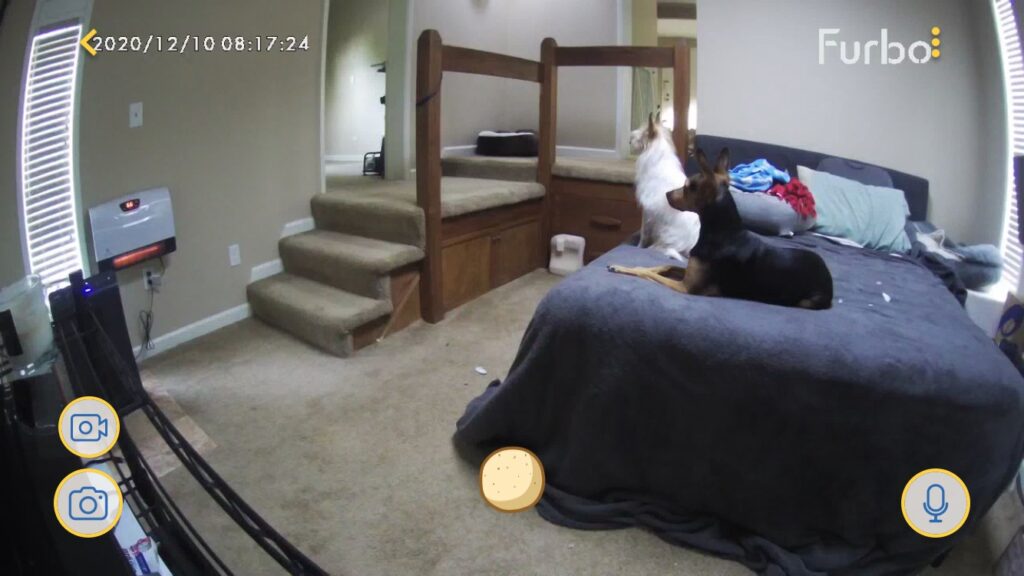
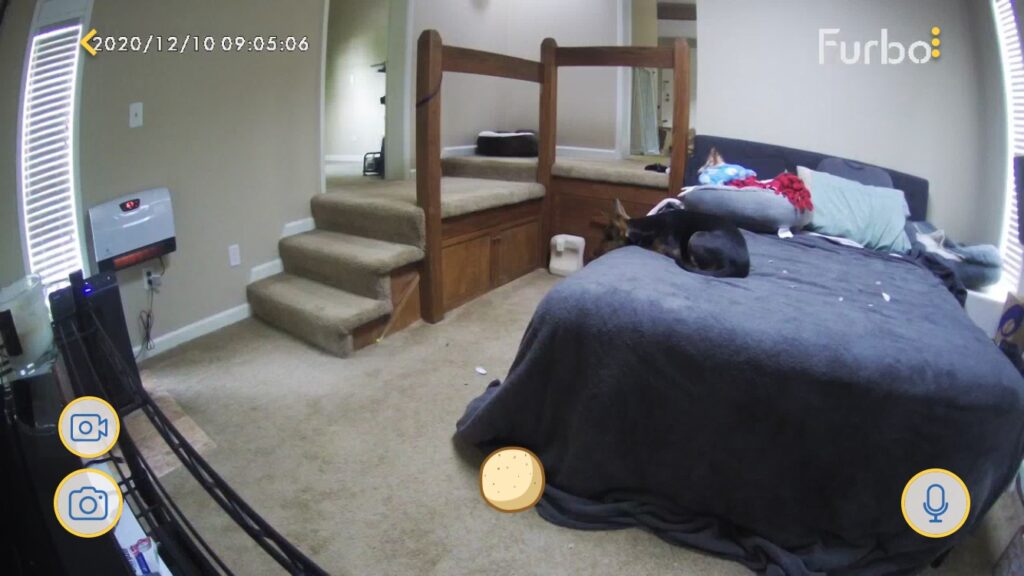
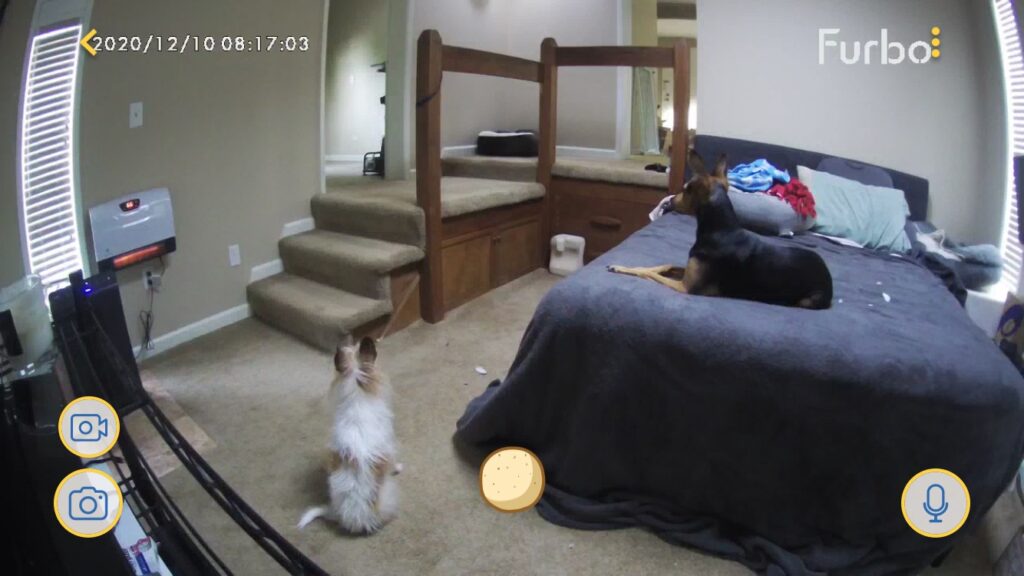
Here are a few screenshots from one of our consultants, Ellen, doing this activity:


Why everyone should do this

In Ellen’s blog post about her dog’s separation anxiety journey last month (check it out here if you haven’t read it yet), she mentioned that scientists are starting to think that more pets have separation-related issues than we previously thought– up to 22.3% – 55% of the dog population. That’s a whole lot of dogs! Even if you think your pet is fine being left alone, let’s double check just to make sure. 

For those of you who do have a pet who you think may be displaying separation-related issues, this is definitely something you’ll want to do. The first thing we ask potential separation anxiety clients to do is send us a video of their pet home alone. With other behavior issues we’re able to ask questions about what the person sees their pet doing and we can determine what’s going on that way without needing to see the behavior (more info here). However, with separation-related issues the person can’t know what their pet is doing without a video. There can be other explanations for certain behaviors aside from separation-related distress, so a video is incredibly helpful in this situation.

Note: if it’s pretty obvious your pet is distressed being left home alone, work with a consultant before doing this. There’s no need to cause unnecessary stress and a professional can give you more specifics on the set-up than what’s feasible in a blog post. 


How to do it

There are a lot of ways to get a video of your pet home alone. Here are a few of our favorites (Disclosure: Affiliate links ahead. We receive a small commission for purchases made through these links at no extra cost to you. This helps us continue to put out free content to help you and your pets live more harmoniously!):

  • Zoom yourself. Set up a zoom meeting between two accounts (both of which can be owned by you!). One camera stays in the house (laptops work great here) and the other goes with you (i.e. phone or tablet). I love this option because you get real-time streaming + recording function that you can send to your behavior consultant. 
  • Ring or Nest systems. A lot of folks already have home security systems set up in their house that can be accessed in real-time and can save recordings. If you already have something like this, use it! 
  • Furbo cameras. Furbos are designed specifically for knowing what your dog is up to while you’re gone. A super cool feature is their event-triggered recording option (available through an optional subscription with the device) so you can better learn what triggers a reactive dog throughout the day. 

What you’re looking for

Long-time readers of this blog won’t be surprised at the first answer: body language. We’re looking for stress signals before and after leaving. Everyone– pets included– shows stress a little differently so the specific signals will be dependent on the individual. Common signals include vocalizing, pacing, drooling, and destruction. However, shutting down is a not uncommon signal that can also be difficult to distinguish from true rest and relaxation. 

We’re also looking for how long it takes them to calm down if we do see stress signals. Some pets’ anxiety is more centered around the actual departure than being alone for a long time. A video makes all of that clearer. Again, if it’s pretty obvious that your pet is distressed being left alone I recommend working with a consultant first so they can give you more specifics on the video set-up. 


Now what?

  • Figure out the technology you’d like to use to get a video of your pet home alone. 
  • Record your video. Since it’s hard to go places at the moment, a quick walk around the block can be a good start. 
  • Watch your video. What body language signals do you see? What activities do you see them performing?
  • If you’re seeing signs of stress, we recommend starting on that behavior modification journey now before it becomes a real problem when we’re back to leaving our pets for longer. Our Separation Anxiety Immersive Digital Course or a private session are both great options. We recommend Ellen for separation-related problems– she’s finishing up a program to be a certified separation anxiety consultant! Email us at info@petharmonytraining.com to get started with either option. 


Happy training!

Allie

How Cherry Picking Your Plan is Getting in the Way of Your Progress– and What to do About it!


There are a lot of factors that go into how successful a behavior modification program is. Some of those factors are uncontrollable: genetics, certain things in the environment (i.e. city-living is always going to be louder than rural living), age, etc. Some of those factors are controlled by your behavior consultant: science-based, empathetic, ethical training techniques, splitting steps down small enough for both you and your pet to be successful, etc. And then there are those factors that are controlled by you, the pet parent: communicating successes and hardships with your consultant, practicing the exercises, managing stress and unwanted behaviors, etc. 

There’s one pet parent factor in particular that I want to talk about today: cherry picking parts of your behavior modification plan. What I mean by that is following some parts of your behavior plan but not all of them. Let’s dive into why it happens and why it’s so detrimental. 


Why Cherry Picking Your Plan is Detrimental

Cherry picking parts of your plan and ignoring other parts is detrimental to your progress. Yes, you can still make progress this way. Yes, sometimes you can even reach your goals this way. However, it’s probably going to be slower than it could be if you followed all parts of your plan. If the behavior modification journey already typically takes several months, why would you risk adding more time onto it?

It may also not be possible to reach your goals if you’re cherry picking. For example, if you want your pet to stop counter surfing but you keep leaving food on your counter while you’re not home and your pet is loose, you’re not going to reach your goal. Your pet could have an amazing stationing (go to a spot and hang out there) behavior when you’re cooking, an amazing “off” cue, and other foraging opportunities. You’re still not going to reach your goal without that particular management component.

Because there are so many factors that go into behavior, we usually need to address several factors to be successful. Think about it this way: all of those factors are like an orchestra that comes together to create one end result. All of the factors of behavior come together to create one end result, too. Now, if our orchestra is practicing and we improve the woodwinds, brass, and percussion, but completely ignore the strings, the end result isn’t going to be the same as if we improved each section. We can’t cherry pick and expect the end result to be the same. 


Why Cherry Picking Happens

I see cherry picking happen for a lot of reasons:

  • Not knowing what a recommendation is for, does, or why it’s important
  • Not knowing how to do or implement that recommendation
  • Not seeing the recommendation work, including not knowing how to troubleshoot it to make it work better
  • The consultant put in too many recommendations at one time
  • Forgetting a part of the plan
  • Old habits– and concepts– die hard

I’m probably missing a few but those are the most common reasons I see when speaking with my clients. Almost all of these merit an entire blog post to themselves, but let’s briefly explore each and talk about solutions. 


Not knowing what a recommendation is for, does, or why it’s important

This one is all about buy-in. Some people need to know why they’re doing something before they’ll do it. There are plenty of times that that’s applied to me, too! If you don’t know (or remember) why you’re supposed to do something or do it in a particular way, ask your consultant. There’s no shame in asking and, believe me, we’d much rather you ask straight off the bat if you’re not sure why instead of avoiding it for a few weeks. 


Not knowing how to do or implement that recommendation

This usually comes down to a break-down in communication when you’re given instructions (or can come from people skipping ahead in their plan instead of following instructions as they were relayed). An example of this is when a consultant might say “separate your dogs with baby gates and perform this exercise on either side of the gate” and you have an open-floor plan. Even though the instructions seem straightforward, the environment makes it a whole lot trickier to implement. Again, speak with your consultant and relay specifically what you’re having trouble with. The more specific the better!

If the reason you don’t know how to do something or implement it is because you’ve skipped ahead, go back to what your consultant recommended. When we say, “practice this only in your yard or with someone they know for the next 2 weeks”, we really mean it. There may be tweaks that need to be made before the recommendation can work in other capacities and we don’t want you to have to figure that out yourself. Plus, moving too fast is a prime reason for seeing setbacks later in the process. 


Not seeing the recommendation work, including not knowing how to troubleshoot it to make it work better

Reasons for a recommendation not working can run the gamut and is going to be based on the individual case. That said, almost all of those reasons can be resolved with some troubleshooting. Before giving up on a recommendation completely, talk to your consultant (noticing a pattern here?) Tell them what you tried, for how long, and send a video if you can! We don’t expect you to know how to troubleshoot something to make it more effective; that’s our job. 


The consultant put in too many recommendations at one time

I was incredibly guilty of this when I was a newer consultant, and am still sometimes guilty of this! Your consultant should tailor their recommendations to you as they get to know you better, but in the beginning it can be difficult to find that sweet spot. Tell your consultant when there’s too much, but only after you’ve made sure that it’s not actually because of one of these other reasons. I often hear someone say they don’t have time for one thing in particular, but when we talk more about it we discover that one of these other reasons is the real culprit. 


Forgetting a part of the plan

Okay, we’ve all been here, right? Remembering everything you’re supposed to do can be hard, especially in the moment. I see a lot of my clients get around this by posting their training worksheet (which we send to all of our clients after every session) on the fridge. Others opt for post-it notes around the house. The point is that the system needs to work for you. I recently spoke with a client who was cherry picking her plan. When I brought it up, she admitted that she forgot about some parts of it and doesn’t check email frequently and so wasn’t utilizing the training worksheets I was sending. We decided that her taking her own notes would be more effective. No system will work unless it works for you! Think through what systems work for you in your regular, daily life and figure out how to incorporate what you should be working on into those tried and true systems.


Old habits– and concepts– die hard

This one is part buy-in, part forgetting, and part habit. There are so many times that someone has come to me with a history of leash popping their dog and looking for a more LIMA-friendly way to walk. Usually the short-term solution involves them looping their thumb in their belt loop or pocket to keep them from leash popping. Even habits that we want to change die hard! And, sometimes, we have no idea that we’re even doing them. Give yourself some grace as you’re working on changing your own thoughts and behaviors- and remember that your pet is going through the same process. Ask your consultant if they have any recommendations to help you change particular habits (like looping your thumb in your belt loop). 


Now What?

  • Take an honest look at your behavior modification and what you’re doing. Does it match up? Even the little details? If yes, awesome! Keep on keeping on. 
  • If it doesn’t match up, which of the above (or combination thereof) best describes your situation? 
  • Talk to your consultant about what’s going on, even if you’re not quite sure what the issue is. They’ll be able to help troubleshoot the issue to set you up for success better!


Happy training!

Allie

The Behavior Modification Journey Part 2: I Tried a Program, but…

Last week I talked about how the behavior modification process is a journey: a journey someone may not be ready to take. With this two-part post series, I wanted to specifically address those folks who aren’t yet ready to take that journey. 

Those of you who read last week’s post (check it out here if you haven’t already), you know that this article is written without judgment. Last week I mentioned that I also wouldn’t be ready for some behavior modification journeys and I’d be a hypocrite if I judged those who currently find themselves in that situation. 

I simply want to provide some relief for those folks who aren’t yet ready to work with us or those who find themselves in a “failed start” situation by outlining some of the common scenarios I see and offering advice. Last week’s post was for folks who haven’t yet tried a program. This week we’ll get into the failed start situation for people who have tried a program already. 

Let’s dive right in!


I started a program but my life changed and I can’t continue.

We’ve all been here, right? We start something with the best of intentions and then our lives are suddenly flipped upside down. The whole of 2020 has been like that. The good news is that because management is one of the first steps in creating a behavior modification program for an individual, you probably already have quite a few management tools and tricks up your sleeve. Lean on those as much as needed to keep everyone safe and to prevent your pet from being able to practice the unwanted behavior. 

You may have some behavior modification techniques in your toolbox as well if you’re further into the program. It’s okay to take a break and get back into your program when life allows for it. Be sure to communicate these intentions with your consultant. We wonder about those clients who seemingly fall off the face of the earth and like to know that you and your family are okay.


I tried a program but didn’t understand how much work it would be on my part.

We’ve also all been here, right? I feel like every time I start a new-to-me project I quickly learn how much more is involved than I expected. Sometimes that causes me to indefinitely shelve that project. Sometimes I’ll take the time to go through all the extra hoops I didn’t anticipate in order to finish it. The point is, it’s hard for us (or at least me) to fully understand what’s involved until I’m in the thick of it. 

I see this with clients, too, because there’s no magic wand when it comes to behavior modification; just good ol’ hard-fashioned work. Sometimes people aren’t in a position to devote what they need to or would like to with a program. Like the previous scenario, the good news is that you probably have some management options that can keep everyone safe and keep the behavior from worsening until you’re ready to fully commit to the program. 

Once again, be sure to communicate with your consultant. Sometimes we as consultants get overzealous and provide a plan that’s not feasible within someone’s lifestyle. When you let your consultant know that you can’t do everything in your plan, they can help you distill down the most important pieces and shelve things that can be focused on later. Often I find that doing so helps someone continue on with their plan with the knowledge that the timeline will be extended by paring back action items. Sometimes we agree to keep it at a management plan for now and they come back when they’re ready. There’s no shame in that, either. 


I tried a program but admittedly didn’t put in all of the work.

This one is very similar to the scenario above, but I wanted to include it because there are reasons other than time constraints that cause people to not put in as much work as they’d intended into their pet’s behavior modification plan. I’d argue that time is one of the less-likely reasons, actually, but that’s perhaps a post for another day. 

If you’re not putting in the work that you want to or intended to, think about why that is. Don’t allow yourself to fall into the “not enough time” rut. There are many times where clients will tell me that they didn’t have time to do something, but in looking at their plan I asked them to work on two separate things for 2-3 minutes 3-4x/week. We all have 2-3 minutes to spare each day for something we prioritize; the “not enough time” trope doesn’t work here. The question then becomes, “what’s the real reason?” 

I find a myriad of reasons when I take that deep dive with my clients into figuring out what their roadblocks are. Sometimes they don’t remember why they’re doing something and so decided it wasn’t important. Sometimes they tried it a few times and it didn’t go like it did when we practiced. There are a lot of other reasons that I’ve found over the years. 

The important part is that if you find yourself in this position, where it’s truly not a time issue when you’re being honest with yourself, to think about what the real issue is or ask your consultant to help you suss that out. When your consultant knows the real issue they will be better able to help you. If someone tells me it’s an issue of time but really was an issue of my explanation, I will decrease the time expectations but not change my explanation. That isn’t helpful to my client. Your consultant can only help you if you share your real challenges with them. 


I tried a program but it was too challenging.

“Too challenging” can take on a lot of different forms: the exercises were difficult to implement or perform, there were a lot of moving pieces to remember, and so on. Like the above scenarios, this too is one where you should speak with your consultant (noticing a pattern?) There are several ways to achieve the same or similar results and troubleshooting is necessary for any behavior modification plan. 

Your consultant will be able to break steps down further, help you practice to better perform the exercises, or change exercises entirely if you’re struggling with them. The most important part is to be specific with what in particular is too challenging. It doesn’t help to throw up your hands and say, “I can’t do this because I’m not a professional trainer.” That’s true for most of our clients! You don’t need to be a professional trainer to make it through your plan. You do need to tell your consultant exactly what’s challenging, though, in order to be successful. 


I tried a program and I didn’t get along with the consultant or like the material, techniques, etc.

You need to click with your consultant and their program. You can be working with a really competent, well-known consultant but if you don’t get along with them then you might not be as successful as you could be. It’s okay to acknowledge that you would prefer to work with someone else. 

Let your consultant know that you’re not going to continue with them and make sure to include in your search for your next consultant specifically what you are looking for. Do you want someone who responds primarily over the phone or email? Someone who works well with kids? Someone who is capable of giving you some tough love or a kick in the pants when you need it? Each consultant has strengths and weaknesses and it’s important to find someone who complements your needs.

On the flip side, we see a lot of clients who come to us because they didn’t like the program or techniques a previous professional was asking them to use. There are various reasons why that could be and many of them come down to the different training philosophies that arise due to our unregulated field. There are, of course, other reasons that fall more into the above categories, too. 

The salient point for this category is that if you don’t agree with or believe in the philosophy governing your behavior modification plan then you likely won’t make as much progress with it. When people aren’t fully on board with their plan they’ll cherry pick the parts they like and ignore the rest. We’ll talk more about why this is detrimental in a few weeks, but for now just trust me when I say that you’re not going to be as successful by doing that. 

If you find that you’re not on board with your behavior modification plan or the philosophy behind it, talk with your consultant and be upfront about this. They can explain to you why they’re doing what they’re doing and should be able to back it up with actual, peer-reviewed scientific studies or references containing those studies. If you’re still having trouble getting on board, it’s time to find someone else. 


I tried a program and it truly didn’t work even though I did everything as the consultant said to and worked extensively with them to troubleshoot my plan.

There are many scenarios that can fall into this category– too many to talk about in the span of this article. I want to make it clear, though, that there are scenarios that absolutely don’t fall into this category (hence all of the qualifiers in the heading). Some of those include when people cherry pick parts of their plan and ignore the rest, practice something for only a couple days or weeks and give up if it doesn’t work without asking for help troubleshooting, or work with a consultant only once when they’ve been told their plan will need multiple sessions. Those scenarios fall into one of the above categories. 

This category is specifically for those people who have been working in earnest with a consultant, following their behavior modification plan to a T, and their consultant acknowledges that all of that is true. Now, I’ve unfortunately seen consultants who will put the blame on a client who truly is following the entirety of their plan instead of recognizing that the plan isn’t working. But, if your consultant can’t give you clear, concrete examples of areas that need to be better followed then this situation may apply. If so, it’s time to find another consultant who has more expertise in the areas you’re needing help in. 

A couple notes for folks in this category. One note: experience does not equal expertise. Someone may have fewer years of experience but have more expertise in a particular area. The second is that progress and success can be defined differently for different people. If your expectations are unrealistic (and a consultant should tell you that) then there may be no plan out there that will get you what you’re looking for. Be honest with your consultant as to what your expectations are so they can tell you if that’s reasonable. There are some factors that contribute to behavior that are simply not modifiable. 


I started a program but I just can’t do this anymore.

The behavior modification journey is challenging. It’s longer than the average person anticipates and it’s more work than many people anticipate. Not only that, but it’s usually quite emotionally taxing for families to go through. This becomes even more prevalent when it’s a journey that someone didn’t sign up for or expect to go on. 

I have many conversations with my clients about the human side of things. I explain to them that at a certain point regressions are going to feel even worse than it did in the beginning, even though their pet’s behavior regresses to a point that’s still better than it was. I offer exercises that can help with those feelings like they’re stuck or helpless. 

Not infrequently, I have conversations that involve letting them know that they don’t have to do this. We talk about other options. Occasionally I’ll have this conversation with someone during our first session to let them know that we will work through a behavior modification plan but that at any point in time they can make the decision that this pet isn’t the right fit for them and they’re not the right fit for the pet. I tell them that I will support them regardless of that decision. I’ve worked in shelters longer than I’ve worked in behavior and I’ve seen how damaging trying to force something or someone to fit can be. I don’t wish that for my clients or the animals involved. 

If this is you, know that it’s okay. Loving someone sometimes means knowing that someone else could provide more of what they need than you can. This is an incredibly difficult decision and we should all be a lot kinder to each other when it comes to these decisions. If you’re in a place where you feel like you can’t continue, talk with your consultant. They can lay out the different options. I won’t lie; for many cases the options aren’t great and the better options are usually not immediately available. Your consultant should be able to modify your plan in the meantime to help provide you with some relief while you’re deciding what to do. 


Now what?

  • Have you experienced a failed start with a program like one of the above scenarios? It’s okay. We’ve all had similar experiences; now’s not the time to beat yourself up. Think about your experience and be honest with yourself as to what went wrong. Which category speaks most to your situation?
  • If you’ve identified that you need a break before continuing your behavior modification journey, make sure to let your consultant know and ask what management strategies you should be doing in the meantime to keep everyone safe and to lessen the chances of the behavior worsening as much as possible. We understand that life gets in the way sometimes and will be here for you when you’re ready to resume. 
  • If you’ve identified that you are ready to continue the behavior modification journey, talk with your consultant about how they can better help you to do so. Or, you may choose to find a new consultant altogether. Search for and speak up for what you know you need. Don’t be afraid to seek help from a consultant offering remote services if you can’t find someone who fits the bill in your area. We have loads of testimonials of people who’ve been able to overcome serious behavior challenges with their pets who we’ve never met in person. Email us at info@petharmonytraining.com if you’d like to set up a session with one of our consultants.


Happy training!

Allie


We Don’t Know What We Don’t Know


Every now and then when speaking with a prospective or new client they’ll tell me:


“I don’t know what to do. I’ve tried everything already!”


I’ll ask them to describe to me what they’ve already tried. Often the list is quite long and I understand why they made the above statement. But, here’s the thing. We don’t know what we don’t know. And, even if we did try something, that doesn’t mean that it wouldn’t work without some troubleshooting. We shouldn’t let not knowing what a professional can do for us keep us from reaching out.


Everything to you is not everything to me

Think about a time when you started learning something new. In the beginning, it seemed pretty simple and straightforward, right? It seemed like you could easily master this new skill in no time. Then you took a deep dive into different aspects of this topic and realized that it’s not so simple and straightforward. There’s a lot of nuance. There are a lot of related topics that you probably needed to learn about in order to better hone your skill. The more you learned the more you realized how much there was to know.

Animal behavior is the same way. Just because you don’t know of another way to do something doesn’t mean that it doesn’t exist. It just means that you don’t yet know how to do it. When people tell me they’ve tried “everything”, it really means that they’ve tried everything that they know to do or have researched. That doesn’t mean it’s everything that I know. Everything to you is not everything to me. 


Troubleshooting is key

Occasionally I get a new case where someone is already doing the exercise that I was planning to recommend to them, but they’re telling me that it’s not working very well. Do we immediately try a new exercise? No! I first ask them to show me what they’re doing (even in a remote session) or send me a video of them working on it if they’re not able to demo live. 

Watching them perform the exercise is often where that aha moment happens and I find myself saying, “That’s why it’s not working! It’s an [insert training mechanic here] problem.” As with most things, the devil’s in the details. Let’s take counterconditioning for example. Counterconditioning is a specific scientific term that essentially means associating a scary thing with an awesome thing in a way that scary predicts awesome so it can become awesome in and of itself. That’s a diluted definition and we’d actually need to see the scary thing become awesome for it to count, but you get the gist. 

Every now and then someone will tell me that they’re working on counterconditioning with their pet. However, when I ask them to demonstrate what they’re doing they are not actually counterconditioning. There are a lot of ways to do it incorrectly and there are only a few ways to apply it correctly. Once we tweak how they’re doing the exercise we’re able to make more progress with it. 

Perhaps the problem in implementation is not in their mechanics, but in their setup. Let’s say someone is implementing a counterconditioning exercise in a situation where their pet is too stressed to learn (hello, mountain lion brain!) While technically we can still do that and make progress, there are ways that we can change the setup to make it easier. Once again we can tweak how they’re doing the exercise so they’re able to make more progress with it. Even if someone’s tried “everything”, it doesn’t mean that troubleshooting isn’t necessary.


It hasn’t been long enough

One last note on “trying everything”. Many times when I hear this statement I see someone who’s tried a lot of different things for only a few days at a time. Think about how long it took you to learn something new or, better yet, to develop a new habit. It was a lot more than a few days. The same is true for our animals; change takes time and a whole lot of practice. Trying something for just a few days doesn’t count. 


Now what?

  • Do you find yourself not reaching out for professional help because you don’t know what they could recommend that you haven’t tried already? Reach out! Chances are that they know of something you haven’t seen before or can help you troubleshoot what you’re already doing. We offer services worldwide; email us at info@petharmonytraining.com to set up your first session. 


Happy training!

Allie

5 Signs Your Pet Needs Professional Help


I’m very much a Do-It-Yourself person– so much so that I consider it a fault. I will absolutely try to do something by myself and learn a new skill if I think that I can. I see this with a lot of my clients, too. They originally tried to tackle their pet’s maladaptive behaviors by themselves and eventually found their way to getting professional help. 

In many of those situations I wish that they’d contacted a professional sooner. Sometimes that’s because they’ve tried something that has actually worsened the behavior or because they waited until it was more serious or dangerous before getting a professional involved. But there are other times I wish they’d contacted a professional sooner simply because it’s easier to change a behavior that’s been happening for less time. Well-established habits are harder to change. 

I then occasionally get cases where someone has just adopted an animal and reaches out to our team immediately. In those situations we’re almost always asked, “Do you think it’s too soon for us to see you? Should we wait a bit?” Our answer is usually a resounding, “no, it was a great decision to involve us so quickly!” 

So, as someone who is a staunch DIY-er, who tries to tackle problems without additional help, but also recognizes that getting a professional involved sooner rather than later can be beneficial, I thought it’d be helpful to discuss some key signs that would cause me to recommend someone seek professional help for their pets’ behavior. 

  1. Safety is on the line. This could be the safety of you, your pet, another human, or another animal. If any individual’s safety is at risk you should immediately seek the help of a behavior professional. 
  2. It’s a behavior you haven’t dealt with before or dealt with recently. It’s much better to learn something from a professional the first time around instead of trying your hand at something you’re not experienced with. And, if you haven’t dealt with this particular issue recently, chances are that there are now more effective or empowering ways to work with the behavior and it’s time to update your skills. This field is constantly growing and evolving and that’s a good thing!
  3. You’re not making progress. If you’ve been working on your pet’s behavior for a few months and you’re not making any progress, it’s time to call in a professional. Save yourself the time and hassle by getting help. 
  4. You’re having to resort to more forceful tools and methods. It’s a myth that certain animals need more forceful tools or methods. We work with aggressive animals of all shapes and sizes for a living and can do so in a way that’s empowering and empathetic towards our animal learner. If you’re stuck and finding yourself reaching towards more forceful tools and training methods, it’s time to get help from a behavior professional who can keep you working in a way that is effective, ethical, efficient, and empowering.
  5. You want to make sure you’re doing something well and as efficiently as possible. There are plenty of things that I choose to muddle through myself, knowing that it would be more efficient if a professional did it. However, there are other things that I want done well the first time and don’t feel that I can afford the mistakes that come with learning (like our business taxes). If you feel that way about your pet’s behavioral and mental health, then look for a professional sooner rather than later. 

Now what?

Happy training!

Allie

The Human Side of Animal Behavior


The past couple of weeks I’ve been talking about warning signs, like growling. I’ve been talking about warning signs from the perspective of our pets and why we should be respectful– not punishing– of those body language signals. But one thing that I’ve left out of the previous posts is all of the human emotions that happen as a result of those particular behaviors. That’s what today’s post is for. 

When I meet a new client and they start telling me about their pet’s behavior, I often hear things like:


They’re really quite sweet. I just want everyone to see that, too.

They’re sweet 95% of the time. 

They’re a good pet, just scared.

I’ve been telling you all of the bad things about them. Let me tell you some good things, too. 


I chuckle internally when people tell me these things. I know that they’re trying to convince me to not judge their pet, or them, too harshly. That they don’t have a “bad” pet. But here’s the secret: I know that! We as humans are the ones who attach morals (I.E. good or bad) to certain behaviors. Our pets aren’t thinking about if something is right or wrong. They’re thinking about if a behavior works for them or not: what the outcome of that behavior is.

It’s a false dichotomy to say that someone is all good or all bad. Individuals, including our pets, live in a grey area. That’s why good pets can sometimes do bad things and why bad people can sometimes do good things. I don’t need to be convinced that a pet who’s biting is also sweet. My job is working with good pets who sometimes do bad things. 


The less-lighthearted part 

I try to keep our blog posts relatively lighthearted and optimistic. That style is what I enjoy writing and what I enjoy reading. However, I’d be remiss if I didn’t touch on the less-lighthearted parts of human emotions in relation to pet behavior. 

The animal behavior consulting field is incredibly emotional. On a daily basis folks reach out to our team, often on the verge of tears, because they’re scared of their pet’s behavior. It’s easy for me to say in a post that all behavior just is and that we’re the ones who attach morals to them. The water muddies when those behaviors are at the expense of mental health (for both the pet and the human) and/or safety of others. There very much are “bad” behaviors– as deemed by our society– that result in the euthanasia of animals. 

Now, this post is not about the many sides of behavioral euthanasia. That’s an enormous discussion and one that I don’t currently have the bandwidth to write in a way that does the topic justice. One day I’ll tackle it, but not today. This post is specifically about human emotions, like:


I’m scared they’re going to hurt someone. 

I feel like a prisoner in my own house because of their behavior. 

It’s really difficult to live with this. I don’t know how much longer I can do this. 

It’s embarrassing when they’re reactive on walks. 


Embarrassment. Frustration. Helplessness. Shame. Defeat. Regret. Remorse. Fear. A whole lot of fear. There are a lot of really big emotions that come into play when you have a pet with maladaptive behaviors. And, yes, it’s our duty to help the animal we chose to bring into our home and we should be doing our best to meet their needs but that doesn’t negate the human element, either. 

Your feelings are also valid. 

I think the human side of animal behavior consulting is often swept to the side. We put such a large emphasis on animal emotional states and making sure they’re comfortable, but can sometimes forget to tell people that it’s okay to be feeling however they’re feeling about their pet’s behavior. Sometimes good pets do bad things and that’s scary. We’re allowed to be scared by that. But the good thing is that you don’t have to be alone. That’s what behavior consultants are for. 


Now what?

  • Have you stopped to truly take stock about how you’re feeling in relation to your pet’s behavior? Take a moment to do so. 
  • Are there certain aspects of your pet’s behavior that are taking a larger toll on you? Focus on tweaking your management plan for those behaviors so they’re less likely to happen (like putting up a baby gate around the front door to lessen the chances of door dashing.)
  • Not sure where to start? Check out our Setting Yourself Up for Success: Behavior Modification Basics course to take the first steps in your pet’s behavior modification plan.
  • Get help from a professional. You don’t need to do this alone. Our team works with people all over the world. Email us at info@petharmonytraining.com to schedule your first appointment.

Happy training!

Allie

More Warning Signs


In last week’s blog post I talked about why I like warning signs, like growling. Check it out here if you haven’t read it yet. This week, I wanted to address an adjacent topic that often comes up in client sessions in the form of:

Me: “What body language signals did you notice before the bite?”

Pet parent: “There were none! He didn’t growl or show his teeth.”

When I hear this, I usually make a mental note and simply continue with the next question I had planned. Later in the session, we talk about body language signals and I give an example of Oso’s stress signals. That’s usually where the lightbulb moment happens; there are more warning signals and stress signals than just growling or showing teeth. 

Just because you didn’t see teeth or hear growling doesn’t mean that the animal didn’t ask you to back off prior to a bite. There are a lot of ways in which animals communicate beyond those two signals. Some signals are intuitive- hackles (fur on the back) raised or tail tucked- but many are not– lip licks and stress yawns. There very well may have been signs that the animal was about to bite, but if we don’t know animal body language we won’t be able to respond appropriately. 


Other warning signs

Warning signs are a way for animals to say, “If you don’t stop what you’re doing and/or move away from me I may bite you.” Warning signs aside from growling or showing teeth (which are both not always warning signs!) can include:

  • Freezing
  • Posturing over an item (putting their body weight over it)
  • Corners of the mouth going forward
  • Muzzle punch (just as it sounds- punching something with their muzzle)

There are, of course, other signs besides these and there are many, many other signs of stress in general. Check out this blog post about learning body language for more resources.


What should I do if I see warning signs?

For those of you who read last week’s blog post, you know that the answer is to provide relief in the moment. Go away if they’re asking for you to go away. Communication is a good thing, even if we don’t like what’s being said, and is something that will keep us safe. You can then work with a behavior professional on changing the underlying reason why your pet is uncomfortable and thus showing warning signs. If you’re looking for immediate help, check out our “Setting Yourself Up for Success: Behavior Modification Basics” course. 

Remember: don’t punish warning signs. That’s how “bites out of nowhere” can actually happen. 


Now what?

  • Learn more about your pets’ body language. All species living in your house communicate through their body language– from you yourself to a dog or cat to my turtle, Zorro. Having a proficient understanding of body language is the first step to being able to work with pets who exhibit maladaptive behaviors. 
  • Keep a log, either written or in your head, of when you see what signals. What happened before? What happens immediately (I.E. within 3-5 seconds) after? Observe and adjust your environment accordingly to keep your pet feeling more comfortable. 
  • Contact a behavior professional to help you. It’s much easier to address something when it first starts happening, instead of waiting it out or seeing if they’ll grow out of it (if individuals grew out of fear and anxiety we wouldn’t have human therapists.) We offer immediate help through our “Setting Yourself Up for Success: Behavior Modification Basics” course in addition to remote consults for pet parents (and professionals!) worldwide. 


Happy training!

Allie

Why I Like Warning Signs & What to Do with a Growling Pet


I’m going to say something that sounds weird, so hear me out. I like warning signs. I like pets who growl. I appreciate when a pet chooses to growl. So in a society that has a lot of feelings– usually negative feelings– about growling, why am I going against the norm?


Why growling is okay

Growling is a form of communication. It’s not necessarily good or bad, just like other forms of animal communication like ears forward or backward or tail up or down are not necessarily good or bad. They just… are. It’s us humans that attach a moral “good” or “bad” tag to animal communication. We, as a society, have deemed growling as a bad thing and that causes us to treat it like it’s a bad thing instead of what it really is– normal communication. (Note: I’m not downplaying the role that language plays in the oppression of groups of people. There are certainly real moralities and pain attached to human language and communication. I’m solely talking about animal communication here, which does not have the moral implications that human language does.)

Again, growling is a form of communication. It’s a way for our pets to say, “Hey, I’m uncomfortable. Please give me some space.” It’s a way for them to try to diffuse a situation instead of escalating straight into biting. And, between those two options, I’d take growling over biting any day of the week. Far fewer incidents happen when we respond to and respect this warning sign. Communication should always be appreciated, even if you don’t like what the individual is saying. Communication– these warning signs– are what keep us safe. 


Don’t punish growling

When I was little, I thought just as many people do: growling is bad and we should punish pets who growl at us. Now I know that that’s not the best option. What happens when we punish pets who growl, is that we change their communication, but not the actual reason why they were growling in the first place. A common example in the dog training world is equating punishing growling to taking the batteries out of a fire alarm. There’s still a fire, you just don’t know about it anymore. Punishing growling only changes the growl, not the fact that they might bite if pushed farther. This is one of the ways to create “bites that happen out of nowhere”.


What to do if your pet growls

In the moment, the answer is to provide relief for your pet. If they’re growling at you, that means you should go away. If they’re growling at something else, that means removing the thing or your pet. We should give them the space they’re asking for. 

The question that always arises when I say this is, “Aren’t I rewarding him for growling if I go away?” My answer is a hearty, “Yep!” Because, again, far fewer incidents happen when we respect our pet’s communication. My primary goal is always first and foremost safety: making sure my clients and other individuals don’t get bitten. The best way to do that is to give an animal who’s asking for space the space that they’re asking for. We can then discuss how to keep those situations from arising in the future so we don’t need to worry about what happens when they growl. We can set up the environment and work through behavior modification plans so the pet doesn’t feel like they need to do so; they feel more comfortable or aren’t put into those situations. 


How can I keep my pet from growling in the future?

The first suggestion will come as no surprise to those of you who follow this blog. Learn their body language, especially subtler signs of discomfort. Unless growling occurs because of a true startle response, there are signs of stress and discomfort that happened before the growl. It may be that they were small and easy to miss, but oftentimes people don’t know what they’re looking for when it comes to signs of stress. We need to learn more about body language before we can see it in our own pets. Then, when we are able to see those subtle stress signals, we can intervene sooner so that the animal doesn’t escalate to growling. 

The second suggestion is to manage the environment and situations your pet is in. I talked a bit about this in the post “What Should I Do If My Pet Growls When I Try to Move Him?” If we know the situations in which the animal is uncomfortable, we can avoid those situations and not have to worry about what to do when they growl. They won’t do it if they’re not in those situations. Sometimes this is easier said than done; a behavior professional can help you suss out those scenarios and triggers if you’re having trouble figuring out the common threads surrounding your pet’s behavior. 

Finally, we can work through a behavior modification plan to help your pet feel more comfortable in those situations. This is a case where you should work with a behavior professional. It’s easy to make these behaviors worse and a behavior professional can help you get on the right track. 


Now what?


Happy training!

Allie