

Training advice can quietly warp into impossible standards. “Daily sessions” becomes “if I miss one, I’ve failed.” Here’s how to name that trap and see why consistent, sustainable effort beats flawless execution every time. Through real examples, you’ll see what “good enough” training actually looks like — tossing treats instead of running a perfect protocol, swapping a hike for a cardboard box to shred. Find out why sustainable plans, not comprehensive ones, are the ones that actually create lasting change.
Tag: dog training

7 Tips for Working with Your Leash Reactive Dog
Leash reactivity (barking, lunging, growling at triggers) is usually rooted in fear. We’ll discuss practical tip around building a management plan, learning your dog’s body language, and using distance as your best tool for staying under threshold. You’ll also find guidance on practicing new skills before hitting the sidewalk.

5 Signs Your Dog Doesn’t Trust You (and how to Make it Better)
Did you have feelings about that title? Did it make you feel sad, confused or possibly even ashamed? Afterall, we love our dogs and it seems unlikely that anyone reading this post is intentionally trying to create conflict with their beloved pet. So before I jump into the signs of a trust account that needs some repair, I want to reassure you that trust accounts can feel broken for many, many reasons and the vast majority of them aren’t due to something you are intentionally doing.









How to Teach Your Dog to Calm Down

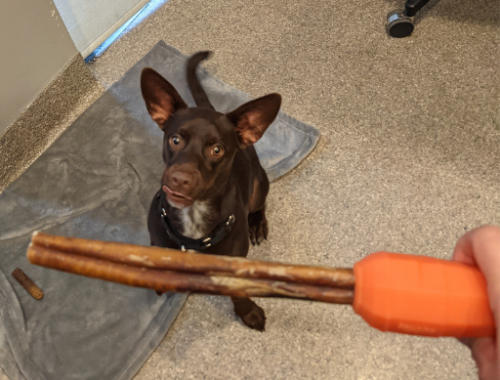
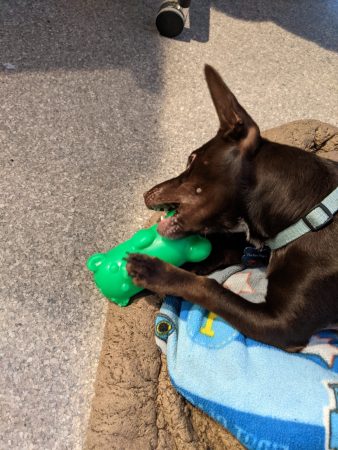
Us trainers love a good relaxation protocol! There are many worth taking a look at, but one I use frequently is Suzanne Clothier’s Really Real Relaxation. I like to start with this one specifically because it focuses on pointing out to your dog what calm actually feels like in their own bodies and identifying that they get rewarded for that feeling!
PS – Pet Harmony also has one for the pros in the audience.
Set it and Forget it: Enrichment Strategies for Busy Times
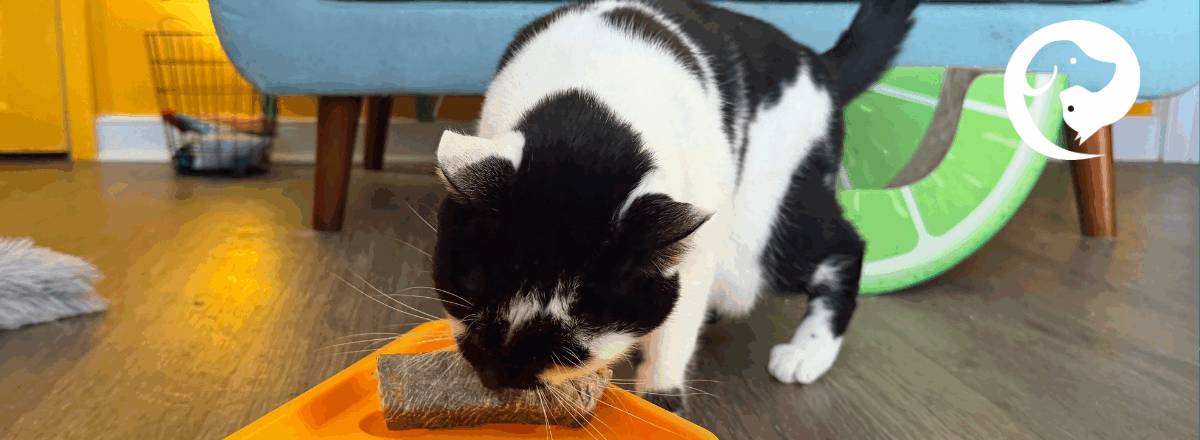
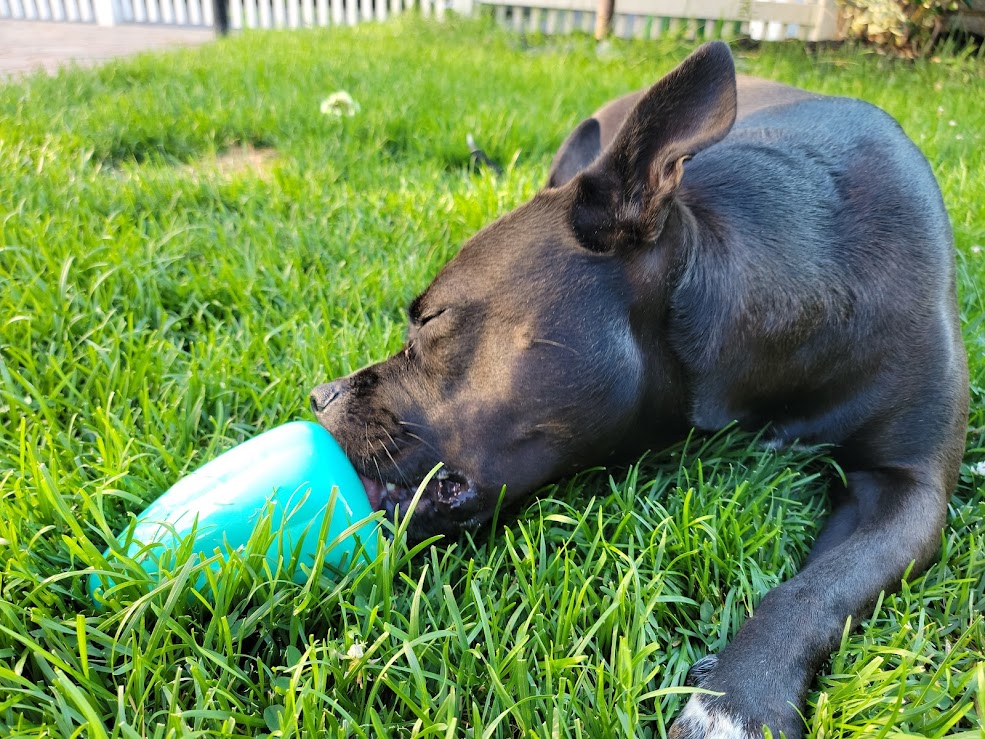
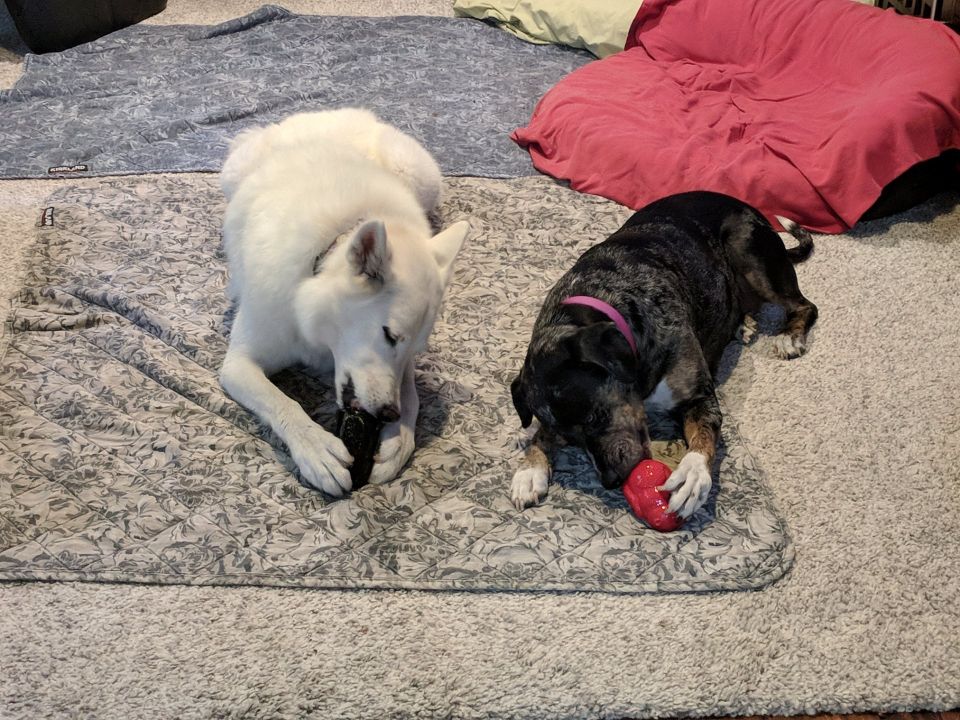
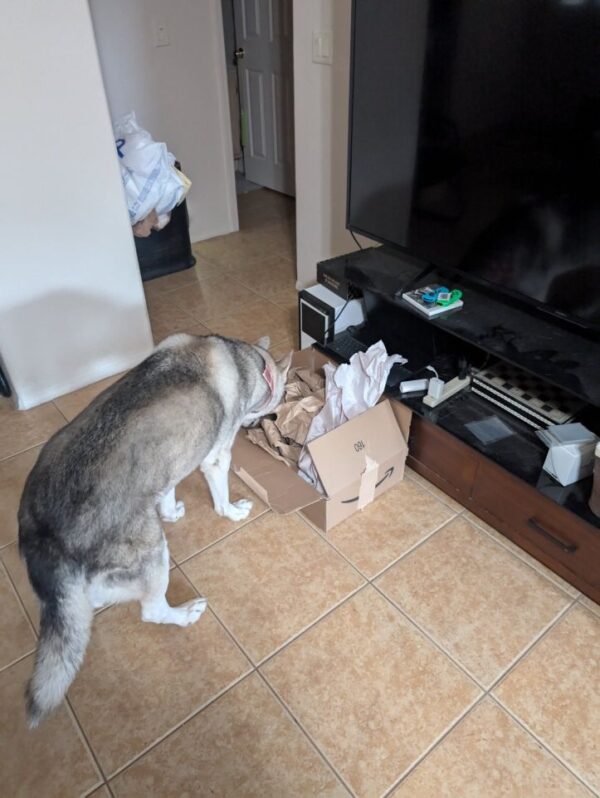
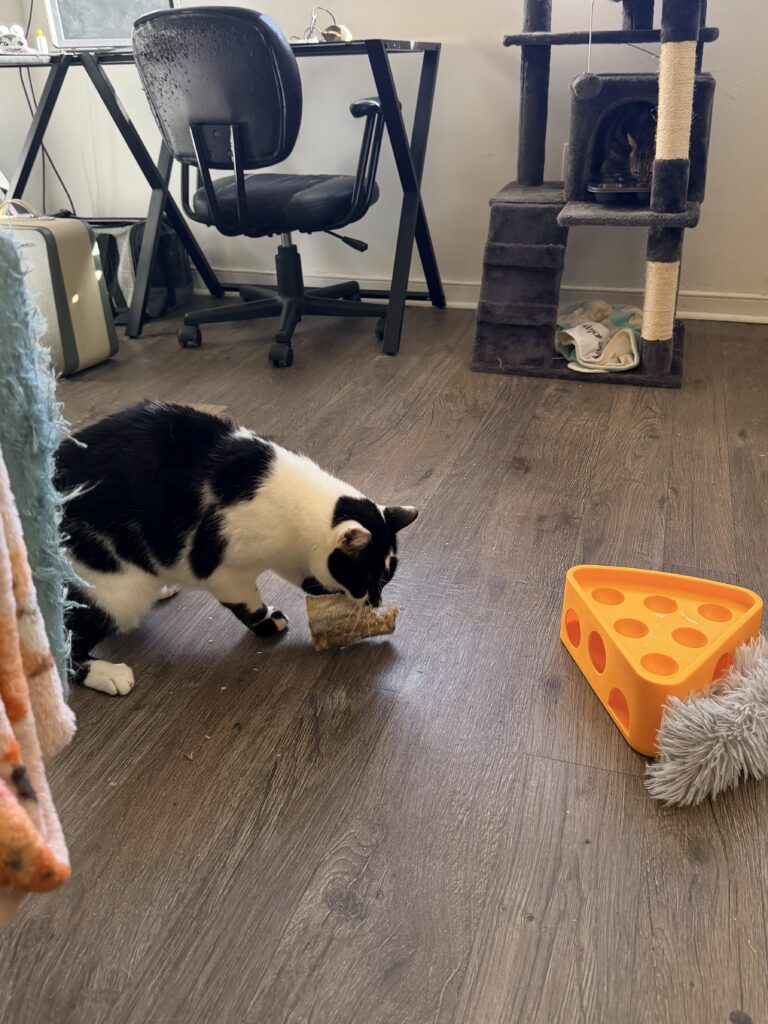

Every Mistake a Lesson: What Pets Teach Us About Getting It Wrong
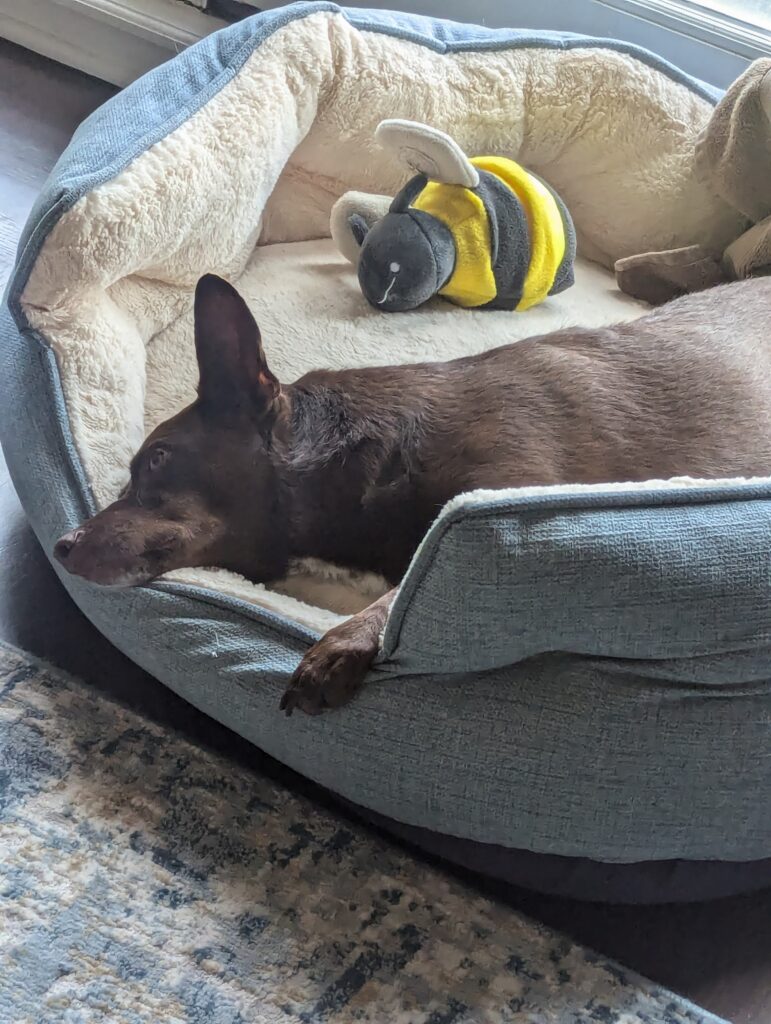

Warmer, Not Colder: Why Clear Guidance Matters in Pet Training
Have you ever thought to yourself something like…
“Will you just stop barking?”
“Can you not scratch my couch up?”
“For the love of all things good and pure, please get off of me.”
“Stop pulling on the leash.”
“Quit pushing the glass off the table!”
“Get out of the trash!”
Come on, be honest. If you haven’t had one of these thoughts, you’ve had a similar gripe or complaint about something you want your pet to stop doing.
It’s normal! It isn’t something to be ashamed about or feel guilty for. There are plenty of things I wish my dogs or other animals in my care would stop doing. Have you ever tried to maintain a fresh water source for a parrot? I can promise you, it isn’t easy! The way they leave bits of food in water is a very normal part of food acquisition and consumption for them. But changing their water constantly to keep it clean can be incredibly frustrating for us.
But here’s the kicker. If you want to do something about it, focusing on the stop, cease, quit isn’t going to be helpful. Like at all. It may give you a vague idea of an end point, but it provides you little to no guidance for the journey.
Warmer / Colder
Do y’all remember the warmer/colder game you’d play as a kid. Where there was a “hot spot” in the room, and using the cues “warmer” and “colder,” you needed to guide your teammate to the hot spot?
Imagine how hard that game would be if you only could say colder, if you couldn’t provide any information that your teammate is getting “warmer” to the correct answer. If you were lucky, maybe you only had 20 square feet that you were playing in, and it would only 19-ish “colders.” But imagine if there were hundreds, or thousands, of things that your teammate could try before finding the hot spot. It’s going to be a miserable activity for both of you. You’re going to get frustrated, and no one likes to be wrong that often. It feels terrible. But getting that feedback that you’re warmer is stellar, and exciting.
Let’s Look at an Example:
Let’s pretend that my partner has a routine of coming home, walking over to the couch, taking his shoes off, and leaving them between the couch and the coffee table.
And I hate that. I have a history of tripping on his shoes or stubbing my toe, and I can’t stand all the pine needles he’s bringing into the house.
I want him to stop leaving his shoes by the couch.
So when he walks to the couch, I say “No.”
When he starts to take a shoe off, I say “No.”
He puts a shoe on the ground, I say “No.”
That’s not terribly helpful, right? I’ve managed to tell him he’s wrong in like 85 different ways, and boy, oh boy, he has thousands of alternative things he could do that I seriously wouldn’t like. I mean, what if one day, I walk into the kitchen and he’s like “Whelp, might as well try leaving my shoes in the kitchen sink?!” And yes, I intend this to be a fanciful example. However, I wouldn’t put it past my partner to think outside of the box. All of this is to say, instead, I can look at what I do want.
I want my partner to stop at the front door, take his shoes off, and leave them on the mat.
Now is the fun part. I get to get curious. I get to get creative. I get to play Nancy Drew: The Case of the Annoying Shoes. I get to investigate why that isn’t already happening. Why is coming in, walking to the couch, sitting down, taking the shoes off, and leaving them there the path of least resistance for him?
Maybe the mat is too small, and we need a bigger mat to accommodate all of our shoes. Maybe it bothers him when his shoes get buried under all of mine.
Maybe he needs a place to sit to take off his shoes, and that’s why he’s walking all the way to the couch.
Maybe he goes to the couch because that is where his slippers are, and we’ve been caught in this terrible cycle because of ease of access.
By identifying what I did want, I now get to do the trial and eval and I can get warmer, not just colder.
Problem Solving in Practice
Comparing this to behavior consulting…what each family wants and needs is unique. This isn’t a comprehensive list of options. So while these are some of the wants from my clients, yours may be different!
“Will you just stop barking?” –> “Can you bark twice and then come find me?”
“Can you not scratch my couch up?” –> “Scratch this scratching post instead.”
“For the love of all things good and pure, please get off of me.” –> “Go to bed.”
“Stop pulling on leash.” –> “Walk within 3 feet of me.”
“Quit pushing the glass off the table!” –> “4 on the floor (or in this case, table)”
“Get out of the trash!” –> “Find a toy in your toy bin.”
“Will you stop dirtying your water?!” –> “I want you to have clean water, let’s try more bowls.”
Identify What You Want
This sounds pretty simple, right? That doesn’t mean it is easy. I’m not going to lie, this can be HARD. Especially when something hurts, when something is causing us pain or friction. We just want it to stop. And that’s where a little bit of help comes in.
When I’m working with families, identifying what they want is often one of the first steps. Part of my job as their behavior consultant is to help them translate their pain point into an actionable plan. I have a robust database of options of what they may want, and that means I can do the heavy lifting as long as they get descriptive–and that usually means I’m asking a lot of questions, like:
- Surrounding your current pain point, imagine your perfect situation with your pet. What does that look like? What does that feel like? What would that mean for you and your family?
- Pretend you’re a fiction author and you need to describe, in detail, your dream situation with your pet. How would you describe it?
- Give me five out-of-the-box things that you think would solve your problem.
- What are things you’ve pondered, but aren’t sure about?
As I mentioned with in this podcast episode talking about enrichment, allergies and Griffey’s journey, having a team to collaborate with makes a huge difference. I don’t need to be the expert in allergy management, I just need to be the expert in me, my family, and Griffey. I was able to use my team to determine what needed to happen, so I could use my bandwidth to make it happen.
Now What?!
If you are stuck with something regarding your pet, ask yourself if you’ve identified what you do want. Do you already have a plan in place to tell your pet that they are warmer, or are you only focused on giving feedback for the “colder”?
Set yourself up to succeed in reinforcing approximations of or the behavior you are looking for by having treat jars already filled and set out. Check out this podcast episode on troubleshooting and problem-solving if you’d like to dive deeper into these topics!
Here’s to harmony!
Ellen
You Have to Practice Before the Test
When I’m giving a client a new activity, I always tell them to practice first in scenarios where they’ll be more successful. For example, practicing loose leash walking or the flight cue inside. Or Look at That or a greeting strangers protocol with faux triggers or people they know. Every now and then, someone will come back to me with:
I tried what you said to do and it didn’t work.
After some sleuthing, we sometimes find that the problem is that they tried to use it in a more difficult situation before they or their pet were ready. That happens to all of us (myself included!) at some point! But, if we go straight to testing without practicing, we usually fail the test.
Practice makes perfect
This cliche applies to behavior modification: practice makes perfect. Well, as close to perfect as we can expect from a living, breathing individual with free will. The situations in which we want to use our pet’s skills are usually higher stress situations, either due to excitement or distress. I liken this to a “test”, where you’re expected to perform skills you’ve been learning in a higher stress situation. But the only way to do well in that type of situation is to practice a lot in easier scenarios that gradually build in difficulty.
Imagine we plucked someone off the street, told them the basics of brain surgery, and then asked them to perform brain surgery on someone. Show of hands of who’d like that person to operate on them? That’s a hell no from me! I want someone who’s gone through school, practiced on cadavers, and has operated on a bunch of people before me. I want someone who’s practiced.
Teaching our pets something once or twice and then asking them to perform it in a high-stress situation is like asking someone we’ve plucked off the street to perform brain surgery. It’s just not going to go well. And, if through luck it does, it’s not going to be predictably replicable. We need to practice in easier situations that gradually build in difficulty in order for them to succeed.
What do easier situations look like?
This will be different depending on the skill or maladaptive behavior we’re talking about and where the pet is in their learning journey. In general, easier situations can look like something as simple as you and your pet training in your living room without anyone else around or it can look like a watered-down version of the situation you’re working up to. You have a lot of options when it comes to an easier situation. In general, choose a scenario where you’re pretty sure your pet will be successful.
Keep in mind that “easier” is subjective, and is based on current skills. Calculus is easy for someone with a Ph.D. in math but it’s hard for a 3rd grader. Staying still is hard for a puppy but is easy for a service dog. The goal is to practice in situations that gradually increase in difficulty but for each step to still be easy for your pet’s current skill level.
Now what?
- Determine what an easier situation looks like for a skill you’re trying to teach.
- Start practicing! If your pet is doing well, keep practicing. If they’re not doing well in that situation, that means it’s currently too difficult for them. Go back to the drawing board to figure out what would be easier for them and try again.
Happy training!
Allie