
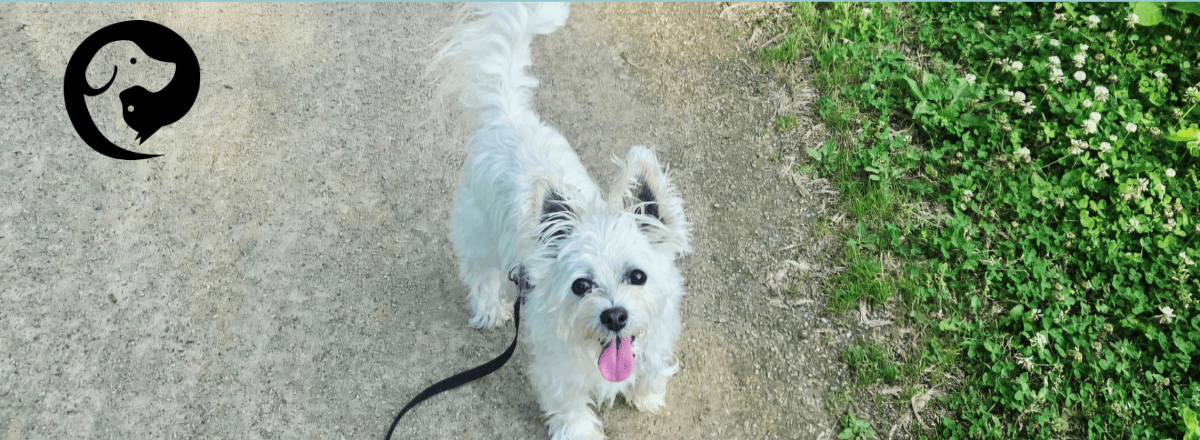
Is My Dog Just Getting Older, or Is Something Wrong? A Guide to the Senior Years
Estimated reading time: 5 mins
Last week Preston thought I was a tree.
I was tossing treats for a game of “Find It” in the backyard. When I moved spots, Preston stood in front of the big tree in the middle of the yard and barked continuously, demanding treats from it. Calling his name didn’t work. Walking over helped a little. Finally, placing a piece of food right at his nose and luring him away worked—I saw it register in his eyes that he had finally “found” me.
As a vet tech, knowing medical details is both a blessing and a curse. It’s super easy for me to remain objective when I talk about other people’s pets. But when it comes to my own, I’m a pet parent just like anyone else. There’s a good chance I either have blinders on and don’t notice small changes, or I notice EVERY change and go down a rabbit hole of all the worst possibilities to explain what I’m seeing.
Thankfully, I have a vet team who helps me remain objective. So together, we took a closer look at what Preston’s life was actually like:
- He solicited pets less often
- He moved up and down stairs slower
- He sometimes didn’t respond to his name
- He bumped into things more often
- He was losing weight
- He developed a new shoulder lump
- His bark changed
- He lost impulse control
- He became less reactive to other dogs
- He showed new anxiety when left home alone
These weren’t immediate changes, but together, they pointed to senior aging: arthritis, sensory loss, and cognitive shifts. Here’s how we addressed them.

A Comfy Preston!
Getting the Medical Team Involved
When I suspect a medical issue, I consult our vet team immediately—I’d always rather hear “it’s no big deal” than risk missing something.
- Mobility & Pain: We tested options to find the right pain medication with great results and zero side effects.
- Cognitive Health: His loss of impulse control was my biggest factor in seeing the vet behaviorist again, who transitioned him to a cognitive-focused medication and supplements.
- Weight & Digestion: Preston sees a specialist for IBD. To safely address his weight loss, we adjusted his GI medications and split his food into three daily meals.
- Vocal Changes: We discussed potential causes for his altered bark and chose to monitor it rather than put him through an MRI.
- Lumps & Bumps: Our vet evaluated his shoulder lump and confirmed it just needs routine monitoring.
What We Changed at Home
Once he got cleared by the medical team, we focused on all the things we could control in his environment:
Mobility & Comfort
- Floor Traction: We added extra rugs across hardwood floors to prevent slipping and protect his joints.
- Furniture Access: Installed foam stairs so he can safely climb onto the couch and bed without jumping.
- Car Access: He used car stairs for years, but when those became challenging, we transitioned to lifting him. We always use a verbal cue before touching him and another before lifting so he’s never startled.
- Stairs & Thresholds: When we notice him slowing down on indoor stairs, we pick him up just like we do for the car. We also applied traction tape at doorway thresholds so he can physically feel when he’s positioned correctly to step through, rather than bumping into side glass panels.
- Rest Spots: Placed supportive, low-profile floor beds throughout the house that are easy for stiff joints to get in and out of.
Senses & Navigation
- Lighting: Plugged in extra night lights so he can navigate comfortably if he gets up during the night.
- Layout Consistency: Stopped rearranging furniture so he never collides with unexpected obstacles in familiar rooms.
- Curbs & Steps: We use a simple “wait” cue before stepping off curbs to give his eyes and brain a second to process depth perception.
- Reconnecting: When he gets confused or loses track of where I am, I use distinct, gentle sounds and scents to help him find me without causing panic.
Cognitive Support & Daily Routine
- Enrichment: Increased low-impact mental stimulation through scentwork and foraging—whether in a snuffle mat, playing Find It, shredding/destroying cardboard, or using puzzles.
- Predictable Routine: Kept daily sequences predictable (Step A, then Step B, then Step C). Even if the timing shifts slightly, keeping the sequence consistent provides cognitive comfort.
- Professional Guidance: Because I can’t be my own behavior consultant, I scheduled sessions with Pet Harmony, of course!
Learn More from Veronica

Is It "Just Aging," Pain, or Something Else?
Don’t get me wrong: not every change you see in your aging pet is medical, and not every change is “just aging.” What might you see in your own pet?
- Stubbornness or ignoring cues: They’re not blowing you off on purpose—it’s usually physical pain, hearing loss, or their brain taking just a few seconds longer to process what you asked.
- New or worsening reactivity: When senses start to dull, the world gets a lot more startling. If your dog can’t hear or see another dog coming until it’s right next to them, their default reaction switches to defensive barking or growling.
- Touch sensitivity or sudden grumpiness: If they flinch or growl when petted, it’s rarely a sudden attitude problem—it’s usually an arthritic sore spot or joint discomfort you accidentally touched.
- New weather or storm anxiety: Drops in barometric pressure and cold weather can make aching joints hurt much worse, turning a simple rainstorm into a physically uncomfortable experience.
- Hesitating at thresholds or slick floors: That pause at the doorway or kitchen tile usually isn’t a fear of the room itself—it’s lost depth perception or a very valid fear of slipping on weak legs.
- Nighttime pacing or sleep disruptions: Wandering or “sundowning” at night often comes down to physical stiffness from lying in one spot too long, poor low-light vision, or cognitive changes.
- Resource guarding or needing control: When senior dogs start feeling physically vulnerable, they often double down on trying to control their immediate environment or their high-value items.
This is why Pet Harmony was such a good fit for me and Preston. I needed a team that understood that senior dogs aren’t a monolith. They get that when a senior dog’s behavior changes, it’s rarely about a bad attitude—it’s about communication. Having a team that looks at the intersection of medical needs, physical comfort, and behavioral wellness made all the difference in keeping Preston comfortable and happy.
Growing Old Gracefully
Preston is almost 15 now. He has a weekly pill organizer that could rival any pharmacy counter, and honestly, some days it’s really hard watching him slow down. We constantly ask ourselves what more we can do to keep him comfortable.
But at the end of the day, he deserves to age gracefully. Honestly, we should all be so lucky to grow old and be loved so fiercely. Preston isn’t the only senior pet navigating these changes—read about MaryKaye’s journey with sweet Fonzy here to see another beautiful example of caring for a senior dog.
Here’s to harmony,
Veronica
Now What?
Seeing your dog slow down is hard, but you don’t have to navigate it by yourself. Whether you’re trying to figure out if a new behavior is pain, sensory loss, or cognitive decline, having expert guidance makes all the difference.
- Unsure if it’s medical? Check out our post on The Intersection Between Health and Behavior to see when to involve your vet.
- Ready for a custom support plan? We’ll help you adapt your home, ease your dog’s anxiety, and keep them comfortable.
PS: Capitalism
Want to support our free, public content? Check out our Amazon shop. It’s full of enrichment and pet care items (that we really, actually use). Our team spends a significant amount of time working on content every week. We love it! But we’re also out here trying to pay our bills.
* Pet Harmony, LLC is a participant in the Amazon Services LLC Associates Program, an affiliate advertising program designed to provide a means for sites to earn advertising fees by advertising and linking to Amazon.com.
About the Author
Veronica Garcia, CVT, KPA-CTP, FFCP-V
Veronica Garcia is a trainer and behavior consultant with Pet Harmony. Bringing expertise in both veterinary medicine and behavior, she loves working with clients to help their dog be their best dog self.
She found veterinary medicine in 2008 after moving to northern California. After spending much of her veterinary career in emergency and critical care, she transitioned to veterinary behavior in 2021.
Copyright 2025 Pet Harmony, LLC. All Rights Reserved.
Terms & Conditions, Privacy Policy
Results are not guaranteed because behavior, human, canine, or otherwise, are not guaranteeable.