

Training advice can quietly warp into impossible standards. “Daily sessions” becomes “if I miss one, I’ve failed.” Here’s how to name that trap and see why consistent, sustainable effort beats flawless execution every time. Through real examples, you’ll see what “good enough” training actually looks like — tossing treats instead of running a perfect protocol, swapping a hike for a cardboard box to shred. Find out why sustainable plans, not comprehensive ones, are the ones that actually create lasting change.
Tag: dog behavior

7 Tips for Working with Your Leash Reactive Dog
Leash reactivity (barking, lunging, growling at triggers) is usually rooted in fear. We’ll discuss practical tip around building a management plan, learning your dog’s body language, and using distance as your best tool for staying under threshold. You’ll also find guidance on practicing new skills before hitting the sidewalk.

How to Teach Your Dog to Calm Down

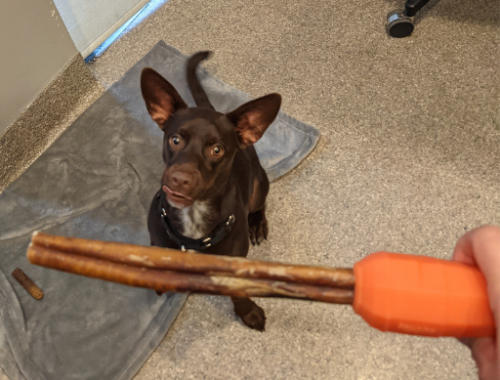
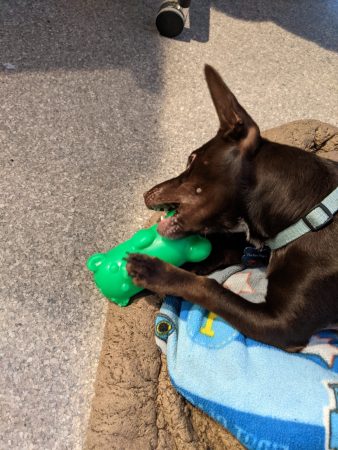
Us trainers love a good relaxation protocol! There are many worth taking a look at, but one I use frequently is Suzanne Clothier’s Really Real Relaxation. I like to start with this one specifically because it focuses on pointing out to your dog what calm actually feels like in their own bodies and identifying that they get rewarded for that feeling!
PS – Pet Harmony also has one for the pros in the audience.


Why Does My Dog Bark So Much (& What To Do About It!)
My short, tongue-in-cheek answer to the question, “Why does my dog bark so much?” is that they’re a dog and that’s one of the ways they communicate. But that answer doesn’t usually help and doesn’t make for an interesting blog post. So let’s dive in a little further, shall we? Starting with a few fundamental pieces of information about barking that will help you figure out where to go from here.
You Have to Practice Before the Test
When I’m giving a client a new activity, I always tell them to practice first in scenarios where they’ll be more successful. For example, practicing loose leash walking or the flight cue inside. Or Look at That or a greeting strangers protocol with faux triggers or people they know. Every now and then, someone will come back to me with:
I tried what you said to do and it didn’t work.
After some sleuthing, we sometimes find that the problem is that they tried to use it in a more difficult situation before they or their pet were ready. That happens to all of us (myself included!) at some point! But, if we go straight to testing without practicing, we usually fail the test.
Practice makes perfect
This cliche applies to behavior modification: practice makes perfect. Well, as close to perfect as we can expect from a living, breathing individual with free will. The situations in which we want to use our pet’s skills are usually higher stress situations, either due to excitement or distress. I liken this to a “test”, where you’re expected to perform skills you’ve been learning in a higher stress situation. But the only way to do well in that type of situation is to practice a lot in easier scenarios that gradually build in difficulty.
Imagine we plucked someone off the street, told them the basics of brain surgery, and then asked them to perform brain surgery on someone. Show of hands of who’d like that person to operate on them? That’s a hell no from me! I want someone who’s gone through school, practiced on cadavers, and has operated on a bunch of people before me. I want someone who’s practiced.
Teaching our pets something once or twice and then asking them to perform it in a high-stress situation is like asking someone we’ve plucked off the street to perform brain surgery. It’s just not going to go well. And, if through luck it does, it’s not going to be predictably replicable. We need to practice in easier situations that gradually build in difficulty in order for them to succeed.
What do easier situations look like?
This will be different depending on the skill or maladaptive behavior we’re talking about and where the pet is in their learning journey. In general, easier situations can look like something as simple as you and your pet training in your living room without anyone else around or it can look like a watered-down version of the situation you’re working up to. You have a lot of options when it comes to an easier situation. In general, choose a scenario where you’re pretty sure your pet will be successful.
Keep in mind that “easier” is subjective, and is based on current skills. Calculus is easy for someone with a Ph.D. in math but it’s hard for a 3rd grader. Staying still is hard for a puppy but is easy for a service dog. The goal is to practice in situations that gradually increase in difficulty but for each step to still be easy for your pet’s current skill level.
Now what?
- Determine what an easier situation looks like for a skill you’re trying to teach.
- Start practicing! If your pet is doing well, keep practicing. If they’re not doing well in that situation, that means it’s currently too difficult for them. Go back to the drawing board to figure out what would be easier for them and try again.
Happy training!
Allie
What Gardening Can Teach Us About Behavior
I’m a plant person. So, naturally, I was thinking about plants as we were readying a space to install raised beds last year. We have a shady backyard and while we chose the sunniest spot for the new beds, I was carefully monitoring how much sunlight it actually got so I knew which plants to put in. And that’s when I realized that there are some similarities between plants and animal behavior.
Environment matters
I mentioned that our backyard is shady so we didn’t have a choice to put our raised beds in an area with full sun (unless we wanted to chop down a tree, which we didn’t). That means that those beds house our veggies that need less sunlight: peas, salad greens, carrots, radishes, broccoli, cauliflower, etc. They’re loving it! Those plants are doing great and we’re getting to eat the rewards of that hard work. The environment is set up for those particular plants to thrive.

But what would have happened if I had tried to put plants in those beds that required full sunlight? Some of them may survive, but they would never thrive. They would never do as well in partial light as they would in full sunlight. It wouldn’t matter how well I cared for them. It wouldn’t matter how much water they received or how much compost I added to their soil. They still would never thrive, no matter what I did.
Environment matters. Each plant needs a particular type of environment in order to thrive. That’s true for our pets, too. Our pets may be okay in an array of different environments, but will likely only thrive and be the best they can be in certain ones.
We know this already for ourselves, whether consciously or not. When I think of this topic, I’m reminded of my professional wife and Pet Harmony co-owner, Emily. Emily and I met when we were working in southern Utah. She knew that she wasn’t a desert person even before moving there. She described to me that she had low-level stress all of the time by living in a desert and that she felt a sense of relief when she traveled somewhere greener. I didn’t really understand what she meant until I found myself experiencing that same relief when I would travel back to Illinois. I didn’t know I had low-level stress from living in a desert environment until I wasn’t in the desert anymore.
It’s not that either of us did poorly living in the desert (well, Emily may say otherwise at times). But we would never be our best in that environment. It’s not the right living situation for us. The same can be true for our pets, too. A pet with sound sensitivity is going to have a harder time living in a city or living with certain kids. Dogs who come from a working line will do better in a household that loves doing things with their dogs and perhaps has more space. I’ve mentioned before that we adopted Oso as a behavior case. In our environment, he’s incredibly easy on a day-to-day basis. That wouldn’t be true in a different one, though (and was not true in several of his previous environments). Environment plays a role in behavior.
What if my environment isn’t perfect for my pet?
If you’re reading this and thinking, “Uh oh. I know my environment isn’t the best for my pet. What do I do?”, you’re likely not alone. Many of the cases we see are situations in which that environment is simply not the best for that pet and that’s a large reason as to why they’re having problems. It wouldn’t be as hard in a different environment.
One thing that we can do is management, and that can go a long way to improving the environment. For example, if we know our pet has a hard time with sounds and we live in the city then we can explore different sound masking options. Or, if we have a dog with leash reactivity to other dogs we could walk them in an industrial area where there isn’t likely to be other dogs. There are tweaks that we can make to improve our environment for our pets.
This is also where behavior modification comes in. We can help our pets feel more comfortable in their environment and teach them skills that can help them interact with it. In some scenarios, these skills can help them be much closer to the best version of themselves; in others, it may only help make the situation okay instead of great.
There are also several times where we’ve seen people choose the answer: change the environment. I did this with Oso when we moved back to Illinois. Our set-up in Utah was not ideal for him and we knew that when we brought him into our family. However, we also knew that we were moving in a few months and that we would be able to have a much better environment for him in Illinois. He’s one of the reasons we live in the house that we do today. I’ve seen other folks do the same when they’ve moved in the middle of their behavior modification journey and their pet’s behavior was a factor in their new location. Emily had a client who wasn’t planning on moving and then did so specifically for her dog!
The question we get not infrequently when talking about changing the environment is about rehoming. That conversation is outside the scope of this particular post, but it is a viable option in some cases. Sometimes loving an individual means doing what is right for them, even if it’s hard for you. And sometimes what’s right is allowing a pet to be in an environment that’s set up for them to thrive even if you can’t be the one to provide it.
Accepting our pets for who they are
Sometimes the issue is not necessarily the environment our pet lives in, but the environments we want them to be a part of. For example, a dog who’s afraid of kids might do quite well in their home environment which doesn’t have kids but it would be disastrous to take them to a family party in which there are a lot of kids running around. Or, a pet with generalized anxiety might do well with their day-to-day routine and home, but would likely not do as well traveling cross country in an RV with their family. We need to accept our pets for who they are and not put them into environments in which we know they won’t do well. We wouldn’t ask a plant to need less sunlight, would we? (Okay, I actually make that request of plants all the time and then they start dying so it’s not a successful request.)
Now what?
- Evaluate your environment objectively. Try to keep emotion out of it as much as possible (I know it can be hard!) Is your environment perfect for your pet? If yes, great! If no, keep on reading.
- Consider how you can manage your environment to help make it closer to what your pet needs. Start implementing those management strategies!
- Evaluate how those management strategies are going. Is it sufficient or do you need to go to the next step of teaching skills and modifying behavior? If it’s sufficient, great! If not, keep on reading.
- Work with a behavior consultant to determine which skills will help your pet and your particular situation. A professional will be able to get you results faster than if you were to go through it on your own. Email us at info@petharmonytraining.com if you need help or get started immediately with our Beginning Behavior Modification on-demand course! Even remotely we can still evaluate your environment; we’ve mastered the wobbly Zoom house tour without getting seasick!
Happy training!
Allie
May 2021 Training Challenge: Overt vs. Covert behavior
Happy spring! I have no idea how we’re already in May, but here we are. And with the new month comes a new training challenge. Here’s the challenge for May:
Describe 1 construct or label using overt behavior
Okay. What the heck did I just say? This training challenge requires a bit of a vocabulary lesson. Now, y’all know I try to not be super vocab-heavy or technical in these blog posts, but this is one where the technical terms end up being the easiest way to communicate this concept. I promise to make it as painless as possible! Let’s dive in.
Overt vs. Covert Behavior
Overt behavior refers to observable, measurable behavior. Examples of this include:
- The person took three steps to the right
- The hawk is flying at 20 mph
- The dog’s ears turned back and are sitting low against the skull
- The cat jumped onto the counter
There’s no arguing whether these behaviors are or are not true because we can see them and measure them.
Covert behavior refers to internal thoughts, feelings, motivations, and intentions. And a construct is our interpretation of those covert behaviors. If you want to think of covert behavior and constructs as the same thing for now, go for it. The technical differences between those two aren’t as relevant for our level of discussion. Examples of this include:
- The dog is mad that I left him alone and that’s why he pees when I’m gone
- The dog is anxious when I leave him alone and that’s why he pees when I’m gone
- The dog doesn’t know to not potty inside and that’s why he pees when I’m gone
- The dog is trying to claim his territory when other dogs pass by the house and that’s why he pees when I’m gone
As you can see, there’s a whole lot of debate as to whether these behaviors are or are not true. Here we have the exact same overt behavior- urinating when left home alone- but I’ve heard all of the above as constructs people have created to explain that particular behavior.
Here’s the thing with covert behavior and constructs: we’ll never know if they’re accurate. Heck, we’re even terrible at guessing the covert behavior of our fellow humans, with whom we speak the same language! How can we assume that we’re better at guessing the covert behavior of another species that doesn’t speak the same language?
One more vocab word to throw into this mix: labels. A label is something we use to describe someone. For example, we could say a pet is:
- Stubborn
- Fearful
- Aggressive
- Anxious
- Sweet
All of those are labels.
Why does all of this matter?
All of this matters for a few different reasons:
The words we use shape our judgment, and ultimately can shape how we feel about our pets
Let’s say we have a dog who sometimes lies down in the middle of a walk and cannot be coaxed to get up for several minutes at a time.
Overt behavior: lies down while on a walk for several minutes
Constructs and labels I’ve heard people use to describe this behavior:
- Stubborn
- Too hot to walk
- Scared
- Watching everything; attentive or focused on their surroundings
- Getting old and joints might hurt
Now, how do you think the person who thinks their dog is stubborn feels about them vs. the person who thinks their dog is getting old with ouchy joints feels about them? My guess is those two people have a pretty different relationship with their pets and feel very differently about this particular behavior.
Our judgment shapes our decisions, for better or worse
Let’s continue with the previous example. Each of those people would likely choose a different path to change that behavior. This might look like:
- Stubborn: force them to walk
- Too hot to walk: manage by walking in the morning when it’s cool
- Scared: seek help from a behavior professional
- Watching everything; attentive or focused: train a watch me or attention cue
- Getting old and joints might hurt: speak with their vet about pain management options
One behavior, 5 different options for treatment based on our assumptions about what’s happening. But, and I can’t stress this enough:
We don’t know if our assumptions about covert behavior are accurate.
That means that we can’t make training decisions based on covert behavior, constructs, or labels. While we might be right in our assumptions, we can end up doing more harm than good if we’re wrong. For example, if the person thinks their dog is stubborn but actually they’re too hot to walk or in pain, forcing them to walk could end up seriously injuring them. Assumptions do not make for effective decisions; observing overt behavior makes for effective decisions.
Our assumptions cloud our observations
I see people on a daily basis who are struggling to reconcile seemingly incompatible thoughts, theories, assumptions, etc. that they have about their pets. The most common I hear is reconciling the “sweet” label with a dog who is biting people. This usually comes in the form of the following statement:
They’re so sweet 95% of the time but it’s just that 5% we’re worried about
It’s hard for us to wrap our heads around how a pet who is sweet can also bite someone; sweet individuals don’t hurt others. When I see this happen we usually have a discussion that we’re the ones setting up that false dichotomy; their pet can still be very sweet with them but also fearful and biting other people. They’re not mutually exclusive behaviors.
Sometimes, though, I see people struggling with that more than others. In those situations, I often see where folks will hold fast to a label or construct that they have about their pet and it makes it so they cannot see overt behavior that contradicts that label.
For example, I’ve worked with a few clients who had leash reactive dogs and would even bite other dogs in some situations. The dog was showing clear signs of stress around members of their own species and even though we went through all the typical spiels about anxiety-related behaviors, they still believed that their dog truly enjoyed other dogs because they had a dog friend as a puppy. They couldn’t see the stress signals I was pointing out to them because that contradicted who they thought their dog was. Needless to say, those folks made much slower progress than their counterparts until we reached the point where they were able to see with their eyes, not their ideas.
Hold up. Don’t you use labels and constructs all the time?
Yep! I do. Even though we shouldn’t make training decisions based on constructs or labels, they’re really helpful for communicating as long as all involved parties are defining those words the same way. For example, if I had to describe leash reactivity as barking, lunging, growling, and air snapping at the end of a leash when a dog is near another dog every time I talked to a client, we’d never get anything done. Instead, I tell my client, “this behavior that you’re describing I’m going to call leash reactivity.” That way we can communicate more efficiently and be on the same page as to what we’re defining as leash reactivity.
But, what about the anxiety label you use? Isn’t that an assumption?
Right again! Those of you who have done an initial consultation with me might remember that when I describe your pet’s behavior as an anxiety-based behavior, I’ll actually say it’s a behavior based in anxiety, stress, fear, however it helps you to think of it. The next sentence is usually something along the lines of, “Those are all technically different, but for our purposes, I’ll use those phrases interchangeably because we can treat them all the same way and that’s really what I’m more interested in.”
Those are, however, all still labels or constructs. The reason I feel comfortable using those to make behavior decisions is because of body language. There has been enough study on body language, and studies are still coming out, that we can make an accurate enough guess as to broad strokes of covert behavior– like excitement and fear. So really those behavior decisions are happening based on body language and other behavior observations (overt behavior), and we attribute those body language signals to different constructs or labels.
Back to the training challenge
Alright, I think we’ve detoured from this month’s training challenge enough for it to now make sense.
Your task for this month is to take 1 construct or label that you have for your pet and describe it using only overt behaviors. Here’s an example:
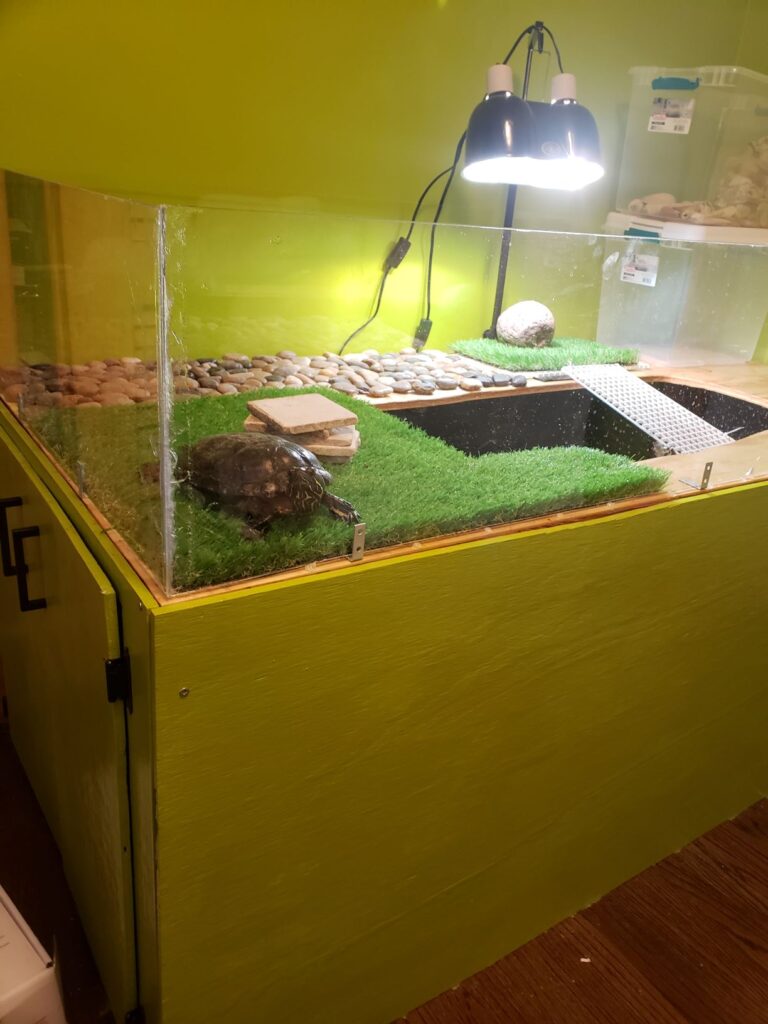
Construct: Zorro likes his new tank setup
Overt behavior: Zorro is spending more time basking, less time trying to escape, and less time performing repetitive swimming behaviors in his new tank setup than his old one.
If you’re feeling extra ambitious for this challenge, you can then turn that overt behavior into a different construct or label so you can see how easy it is for folks to create different explanations for the same behavior, like this:
New construct: Zorro has realized that I have finally outsmarted him when it comes to him escaping and he’s given up. I’m finally smarter than my turtle.
Now what?
- Choose a construct or label.
- Think about what your pet is actually doing when you use that construct or label. What do you see with your eyes?
- Share your results with us on Facebook or Instagram @petharmonytraining
- If you’re interested in learning more about this topic, we have a video training on overt vs. covert behavior in our Beginning Behavior Modification course.
Happy training!
Allie
P.S. We have something BIG in the works to help even more pets and their people. Stay tuned for an announcement later this month!
What is the Difference Between Training & Behavior?
As someone who sees clients as both a trainer and a behavior consultant, I often get asked the question, is the behavior I see my dog exhibiting a training issue or a behavior issue? I think it is a legitimate question and one that deserves a closer look, especially because it can help a client determine what type of professional would be best suited to help them work on and implement a training plan for themselves and their dogs.
Training
When I think of training, the first thing that comes to mind is giving our dogs the tools they will need to help them safely navigate our human world and expectations. Dogs certainly weren’t on the receiving end of a ten-page document on how to live harmoniously with humans in a home! They do what works for dogs because after all, that’s exactly what they are. They don’t come hardwired to understand that open doorways are not for dashing out of or that delicious turkey sandwiches left unattended by humans are not for their consumption. It is up to the humans in their lives to teach them the skills they will need to share our homes in a way that still allows them to be dogs but also addresses safety concerns and good manners from the human perspective.
So how do dogs typically acquire these essential skills? Perhaps you’ve taken your dog to a group class like puppy kindergarten or beginning obedience. Or you’ve hired a trainer to do a remote training session or come to your home. Or you could have joined an online training forum. Through one of these venues, you have taught your dog some basic manners such as sit, down, stay, or to go to her “place” when cued. Are these acquired skills essential from the dog’s perspective? Probably not. It is highly unlikely that your dog finds it necessary to do a sit/stay or go to her “place” when the pizza delivery arrives. And yet, from a safety perspective, we humans know that these trained behaviors help to keep us, our dogs, and possibly the pizza safe! So, as responsible dog guardians, we train our dogs to respond reliably to these cues.
Wait, There is More
Now, technically we know that trained cues are behaviors. In the textbook Learning and Behavior, the definition of behavior is as follows: “anything a person or other animal does that can be measured” (Moore, 2011; Reber, 1995; Skinner, 1938). The book goes further by saying that “anything an animal does might qualify as behavior, whether measurable or not, but for scientific analysis we are necessarily limited to those things we can measure” (Baum, 2011). A cued sit or stay is certainly something that a dog does and there is no doubt we could find ways to measure the behavior but it is very unlikely that a measurement is necessary for daily functioning. We just need to know that the cued behavior is reliable in a variety of circumstances. The predictability of our dogs understanding and performing their known cues is helpful for their daily functioning so that they can live cohesively in our homes with minimal stress for both species.
Behavior
Now that I have explained what might constitute a training issue, let’s take a look at what would more likely fall under the behavior issue category. When a prospective client contacts Pet Harmony with a concern about their dog’s behavior, we would typically be thinking about behaviors that are considered maladaptive behaviors.
The American Psychological Association defines maladaptive behaviors as “a condition in which biological traits or behavior patterns are detrimental, counterproductive or otherwise interfere with optimal functioning in various domains, such as successful interaction with the environment and effectual coping with the challenges and stresses of daily life” (http://dictionary.apa.org). Bearing that definition in mind, typical behavior issues a dog behavior consultant might be contacted to help with could include the cluster of behaviors that help describe things like leash reactivity, separation-related problems, fear of strangers, and dog to dog aggression. In other words, if a dog is exhibiting behaviors that prohibit optimal functioning in their daily lives, a behavior consultation would better address these concerns than a training session. To help us further clarify the differences between training and behavior, I will provide some common scenarios that fall under each category.
Training |
Behavior |
|
|
As you can see there are some similarities in the scenarios above. For example, in the first example of visitors entering the home, both reactions from the dog are not ideal. We don’t necessarily want our dogs to rehearse the behavior of jumping up on guests to greet them. However, I’m guessing that it would be way more troublesome to owners everywhere if their pet was exhibiting the set of behaviors (growling, barking, lunging) that are described under the behavior category. Both situations are the same in that the style of greeting isn’t well-suited for safe interactions with visitors but in the behavior example, the dog’s behavioral choices are much more likely to include the possibility of escalating to a bite if management and a good behavior modification plan are not implemented.
Why Does Any of This Matter?
It matters because it’s important to work with the appropriate professional to help you reach the training and behavior goals you have for your dog. Whether you think your dog has training issues or behavior issues, hiring a trainer or behavior consultant who understands learning theory and the behavioral sciences can help you safely, effectively, and ethically address those concerns by providing you with a plan to help you and your dog. We at Pet Harmony are ready to help you address these concerns, whatever they be, because we believe that the relationship you have with your dog should be mutually beneficial to you both so that you can live the best life that is possible for you and your dog. You can find out about the type of services we offer by using this link: https://petharmonytraining.com/services/clients/all-services-comparison/
We are here to help and look forward to hearing from you, whatever your concerns may be.
Now what?
- Think about a behavior that your dog exhibits. Does it seem more like a training issue or a behavior issue?
- Determine if you need to work with a professional (this blog post can help you do that.)
- Choose a professional and start working with them.
MaryKaye
5 Benefits of Muzzle Training You Might Not Know About
I love muzzles. I think they are great. I heard Veterinary Behaviorist Dr. Chris Pachel refer to them as a portable baby gate on Drinking From The Toilet and I thought that was so clever.
Muzzles, at least here in the United States, tend to carry a lot of stigma. It’s so unfortunate, because they are as important as a harness or a leash. Over the past few years, thanks to diligent dog trainers, and the wonderful community the Muzzle Up! Project built, we have made a ton of progress. You can find gorgeous custom made muzzles that will allow your pup to reap the benefits of a muzzle in comfort AND style. Trainers, like the wonderful team at Summit Dog Training, have paved the way to help clients navigate the stigma of their dog wearing a muzzle.
You can find lots of great articles on the benefits of wearing muzzles, like this one from Synergy Behavior Solutions.
Now, enough fluff.
Hot Take: All dogs should be muzzle trained.
Now, as I type this, I can feel the flinching, the gasps, the defensiveness that my prior statement will cause. But bear with me. I don’t use words like “all” and “should” lightly. Muzzle training can really improve your dog’s welfare and help us to meet their needs.
I want to focus on 5 benefits of muzzle training you may not know about.
1. It is great mental exercise for our pup… and us.
Muzzle training puts our pup’s brain to work! When I say “muzzle training”, I don’t mean, buy a muzzle, strap it on my dog, and ABRA CADABRA! Dog is muzzle trained.
Muzzle training, when done correctly, is a slow, beautiful process. It involves teaching our dogs to be active, engaged participants within the procedure. When we are moving through the training plan, we are looking for happy body language from our pups. And by “happy” I mean, loose, wiggly, body language, with quick responses and engagement (see Griffey’s “happy” here!). In my dogs, it’s the same body language as when I pull out dinner or get home. We want the sight of the muzzle to work like the world’s BEST recall.
Because we are working so hard to keep the muzzle meaning “all good things”, we are also going to work our brains. Watching our pup’s body language, modifying our training, and tracking our progress is going to give us a mental work out too.
2. Relationship Building
We are so careful to make muzzle training fun for our pup, which means our pup is having fun with us. We strive to be predictable, so we don’t push or surprise our pup with too much too soon. It’s an excellent way to bolster our relationship with our dog. Having a fun activity to do together is super important. It’s 3-5 minutes of your day where you and your dog get to connect, work cooperatively, and enjoy each other.
As you progress through the training protocol, you can start to pair the muzzle with other fun stuff like sniff strolls or even foraging enrichment opportunities. You can also start using the “shove my muzzle into things” behavior for other fun tricks. We do sock muzzles in our house.
3. It’s a great way to hone your skills.
Want to practice your training mechanics? Muzzle training is the way to go. Being able to read our dog’s body language is critical when we are trying to condition a positive association with something. My goal is that with the muzzle in my lap, my dog will insert his nose, and remain in the muzzle while I clasp it behind his head.
Muzzle training is really about letting your dog control the session. Imagine sitting still on the couch and letting your pup do the work. Do you know where you would start? How would you progress? Do you know how to proof a behavior (video part 1 and part 2)? Have you ever taught a start button procedure? When we let our dog do the work, we get to park on the couch and focus on our own skills: reading your dog’s body language, your timing, your treat delivery, how you are raising criteria, and your ability to provide your dog agency.
4. It’s a great opportunity to practice providing your dog agency.
I bet you can guess my next sentence by now. Muzzle training is about our dog being in control of their outcomes. It is the perfect situation to practice providing your dog with complete control over their outcomes. This is a great exercise for teaching your dog to say “no, thank you”, and for you to practice listening.
5. You, and your dog, will be so relieved.
Training, conditioning and practicing wearing a muzzle can create a wonderful sense of relief if and/or when we need to use them.
I remember a DVM (I wish I could remember who it was!) that shared a story during a muzzle training seminar I attended. They had a dog come in with something fairly catastrophic, I think it was a broken leg. It was a dog everyone knew. By all measures, this dog was “not a bite risk”. Except for this moment. The dog was in pain, people were trying to help, but he didn’t know that. For safety reasons, the dog needed to be muzzled.
The vet pulled out the muzzle, and immediately saw the dog relax. The muzzle was well conditioned and well trained. This pup’s hooman put in the work to teach the muzzle before it was needed, and now everyone, the dog, the hooman, and the vet staff were able to feel more safe and secure EVEN during a traumatic incident.
6. And one more benefit for good measure: the end result of muzzle training is a dog who can comfortably, cooperatively, wear a muzzle.
We have a saying in animal care that “all things with a mouth can bite”. This includes our dogs. All dogs. We do our darndest to keep them safe, prevent any bad things from happening, but we can’t control everything. Training, conditioning and practicing wearing a muzzle can, not only prevent additional aversives during times of distress, but also provide comfort like in the dog mentioned above. It allows for our dog to “wear a muzzle” (opt in) instead of “being muzzled” (having something done to them).
That’s a very important distinction.
Remember when I said “all dogs should be muzzle trained”?
You should do “Whatever works for you, your family, your situation and keeps the animal and others happy, safe, and physically, mentally, and behaviorally healthy.” (see our blog on getting rid of “should”)
Muzzle training can accomplish all these things and more. The return on investment for muzzle training is so high, that I really do think it’s worth it for everyone.
Now What?
- If I’ve convinced you to embark on a muzzle training journey, you’re going to need a muzzle! (Disclosure: the muzzle links are affiliate links. We receive a small commission for purchases made through these links at no extra cost to you. This helps us continue to put out free content to help you and your pets live more harmoniously!) We usually recommend the Baskerville Ultra as a good starting muzzle or the Leather Bros for dogs with longer faces.
- If you have a muzzle, but don’t know where to start, check out the muzzle training plan from The Muzzle Up! Project.
- If you have done some muzzle training with your dog, share a video or picture of your dog on our Facebook, or tag us @PetHarmony on instagram! We want to see those happy pups!
- If you are considering muzzle training because you have a safety concern, I suggest seeking professional behavior consultant support. We offer services worldwide! Email us at info@petharmonytraining.com to schedule your first consultation