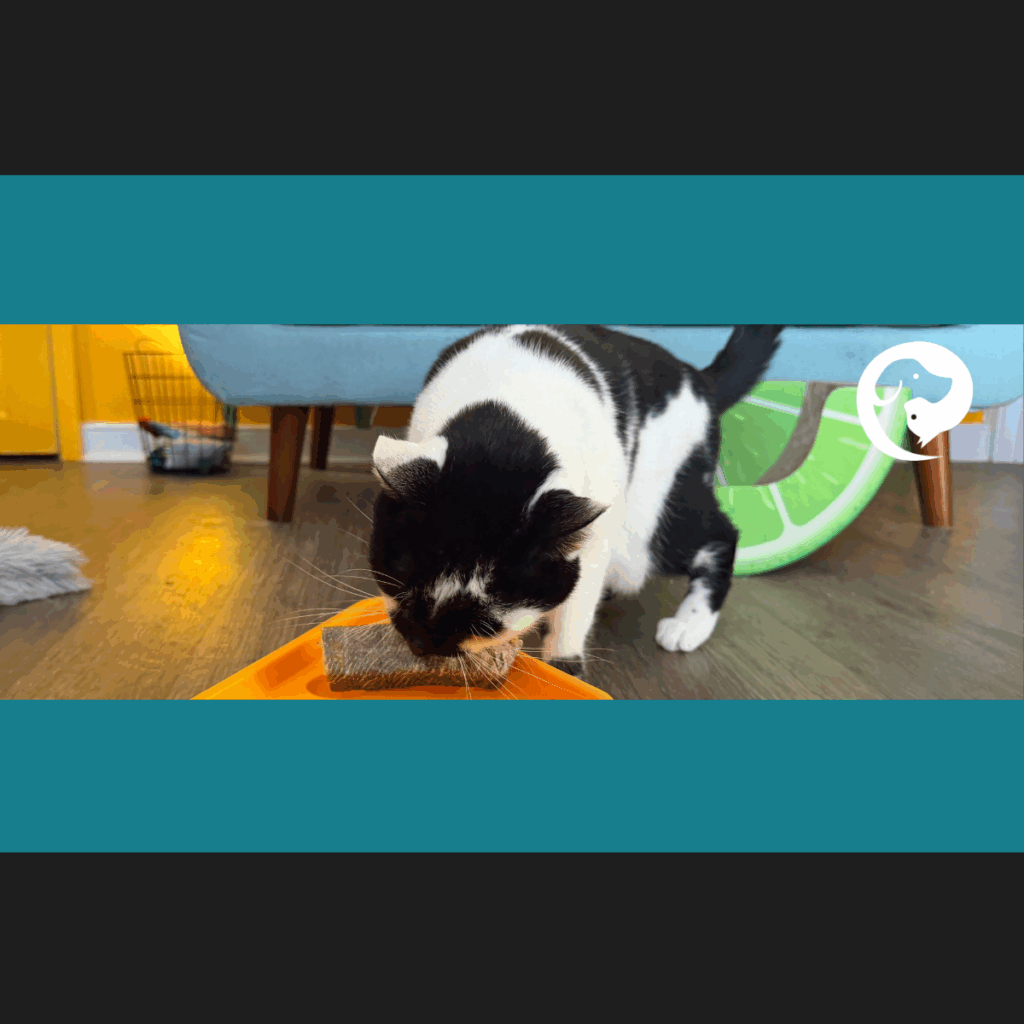
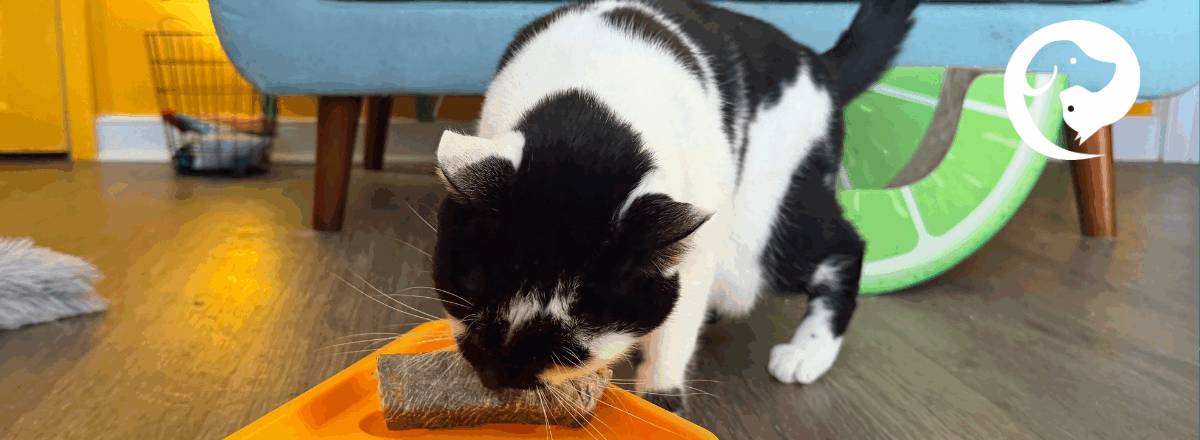
A white and black cat pulling a fish skin out of a toy.

Set it and Forget it: Enrichment Strategies for Busy Times

Set it and Forget it: Enrichment Strategies for Busy Times

A white and black cat pulling a fish skin out of a toy.

Cover image courtesy of Sam Pierce (Dognitive Behavior and Training)


Life sure is funny. It seems like just yesterday that I was talking to you about preparing the household for the transition of returning to school and here we are again, preparing for yet another transition.

Holiday season, winter doldrums, arctic freeze, anyway you slice it, things are in the process of changing…again. And if you have been following us for any length of time, you will already know that we are particularly passionate about three things around these parts: welfare and wellbeing, meeting an animals’ needs and responding proactively to the changes that living life on the daily brings. 

We humans are really good at putting pressure on ourselves and especially around holiday time it can feel like things need to be “just so” in order to be good. I am here to both challenge the notion that things have to be perfect to be good and that it is ok to take some shortcuts every now and then especially if they help us ease into a new transition. 

Now I want you to imagine your best cheesy salesperson voice and let me introduce you to the concept of Set it and forget it Enrichment Strategies: the One and Only True Way to Survive the Holiday Season! New and improved and guaranteed to make your lives easier! 

Ok, all joking and hyperbole aside, I am going to present to you some ideas to help you make meeting your dog’s needs just a little bit easier during the upcoming busy season. I promise that it will be manageable and take just a wee bit of effort on your part but you will get paid exponentially in doggy kisses, kitty purrs, a more satisfied pet and hopefully a little more wiggle room in your already busy schedule. How’s that for a sales pitch? Are you ready to read on? 

What Does “Set It and Forget It” Enrichment Mean?

The whole idea of “set it and forget it” essentially means that once you arrange something, it will then work automatically and thus requires little to no further attention. When it comes to enrichment our goal for “set it and forget it”  includes the following concepts: 

  • Enrichment doesn’t have to mean daily crafts or complicated activities.
  • Enrichment systems can keep working even when you’re busy.
  • The enrichment strategies should build consistency, predictability, and calm for both pets and people.

The goal is to have our strategy be low-effort for you, foster independence in your pet and be sustainable in the long term. A quick overview of some examples might include: 

  • Rotating enrichment stations
  • Safe spaces that stay stocked
  • Long-lasting chews or puzzle feeders that don’t require supervision

Build Your Enrichment Menu

Ask any chef and they will tell you one of the most important parts of cooking is not the finished plate but rather two important aspects that come before the cooking. Chefs spend time creating a menu in its entirety and then prep by creating something called the mise en place. Which is just the fancy French way of saying everything in its place. Meaning that before a chef cooks the meal, they first must decide what it is they will be cooking and then prepare and organize all the tools and ingredients they will need to cook it. Veggies must be chopped, herbs and spices measured, workstation cleaned, equipment readily accessible and knives at the ready. Only then does the true artistry of cooking commence. 

Part of “setting it and forgetting it” is to create your menu first and your mise en place second. Just like a chef, creating an enrichment menu for your pet will help lessen your labor in the long run. You can read more about this here: Create Your Pet’s Enrichment Menu but here are some easy steps to create a menu:
Identify your pet’s favorite enrichment types (eating, chewing, foraging, destructables, exploring, playing, etc)

  1. Identify your pet’s favorite enrichment types (eating, chewing, foraging, destructables, exploring, playing, etc).
  2. Gather a few go-to items for each category.
  3. Keep materials organized and easy to access in a location where you can gather everything you need. This might be a shelf in the pantry, a corner of the freezer, a section of a closet or even a storage bin.

Creating an inventory of what material you will need for your mise en place may feel like a bit of labor now, but once it is done, will save time in the long run. Creating a visual menu or checklist or spreadsheet now will help for those times when we need to make quick decisions, especially when time or energy is low. 
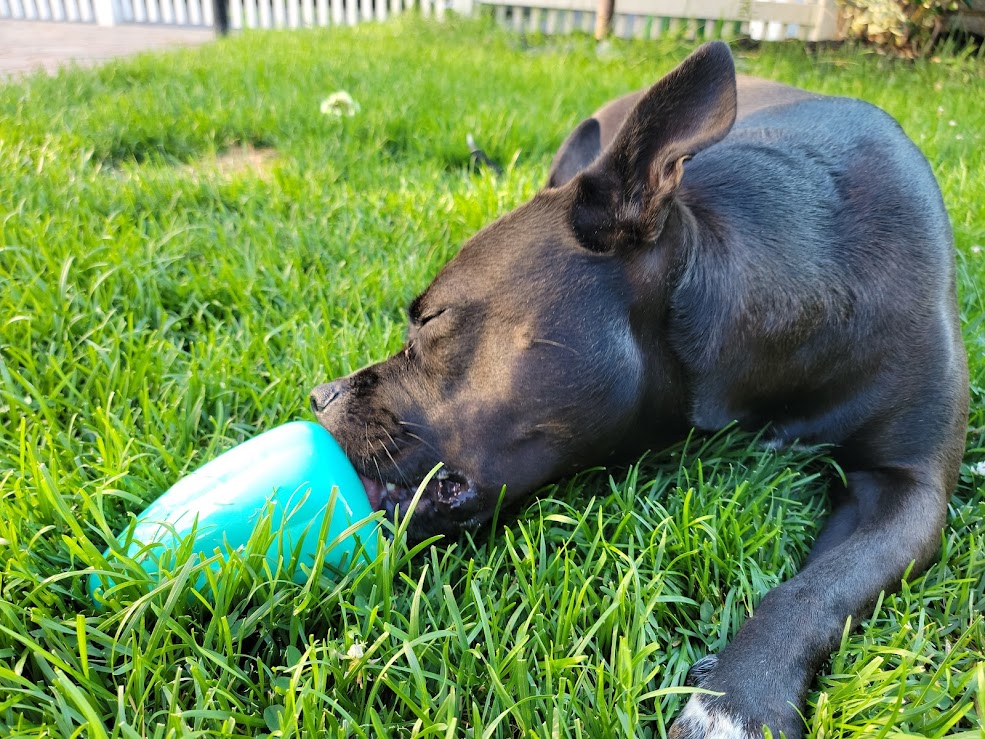
A black dog lying in the grass licking food out of a toy.
Minnie relaxing in the grass with a toy stuffed with frozen food. Photo courtesy of Katie Nahabedian (Pride and Joy Dog Training)
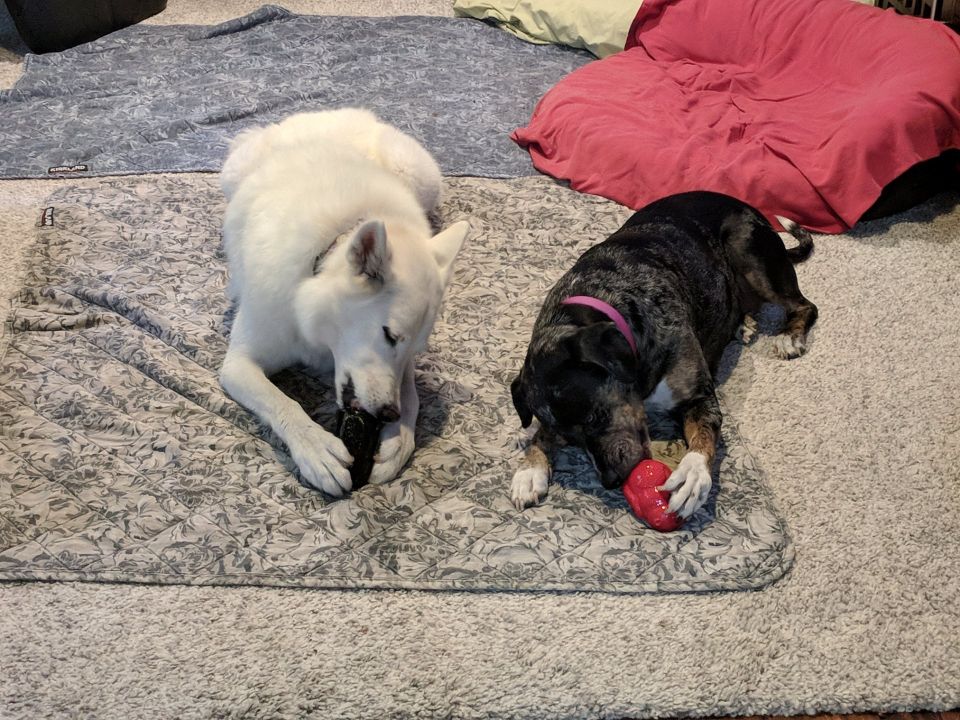
Some besties prefer to work on projects together, like Kara (left) and Georgia (right). Photo courtesy of Susan Cripps (A Dog's Tail)

Long-Term Calming Projects

One of my personal favorites for “set it and forget it” enrichment is a category that Pet Harmony refers to as long term calming projects

Long term calming projects are enrichment activities whose goal is to help your pet better self-regulate, gain independence, de-escalate, and ease into rest and or relaxation. Resting, self regulation, independence and learning how to de-escalate are skills that can be taught, practiced, and learned, and long term calming  projects are a big component of that process for our consulting team. 

Here are some examples of long term calming projects for dogs: 

  • Snuffle mats 
  • Licki mats
  • Stuffed Kongs or Toppls 
  • Chewing preferred items

And for cats and other obligate carnivores (such as ferrets): 

  • Small stuffed Kongs 
  • Licki mats
  • Snuffle mats  

Safe Spaces That Work on Autopilot

The holiday season can be stressful for everyone including our pets. Schedules are upended, visitors are more frequent and predictability and routine are tossed by the wayside. Creating a safe space that your pet can retreat to when things feel overwhelming for them is a crucial part of a set it and forget it strategy. 

We want our pets to know that they have a space that is always available to them if they need time away from the hustle and bustle. This can be a crate, a room or a section of the home where they will feel secure, they can rest, and where they will not be disturbed.

If your pet doesn’t have a defined safe space yet, watch where they currently rest and see if that will function as one. Remember though, if your pet’s preferred resting location is the family room couch and that is where a lot of activity will be happening in the next several weeks, you may want to help them learn that another location is quieter, calmer, and more relaxing. 

Providing a long term calming project in the new location, and pairing it with sound masking to cut down on ambient noise and your pet’s favorite blanket or bed can help boost the overall performance of the safe space.

When it comes to safe spaces it is incredibly important to understand that the safe space is not just about a location. It is mostly about the feeling of security it brings to your pet when the guests are gathered around the turkey and the egg nog is freely flowing. A safe space’s goal should not necessarily be about isolation but rather about the comfort that it provides for pets who may be overstimulated by changes in their routine. If you would like more tips on how to help your pets survive the holiday season read here and here

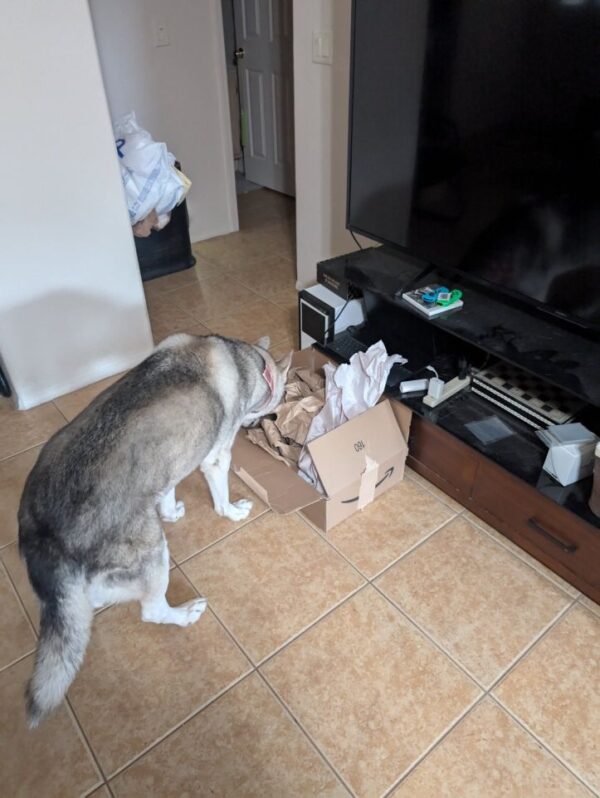
A grey and white dog snuffling treats out of a cardboard box with crumpled paper inside.
Turk snuffling out some snacks from a box full of shreddable materials. Photo courtesy of Rebecca Najarian (Dogs Plus Love).
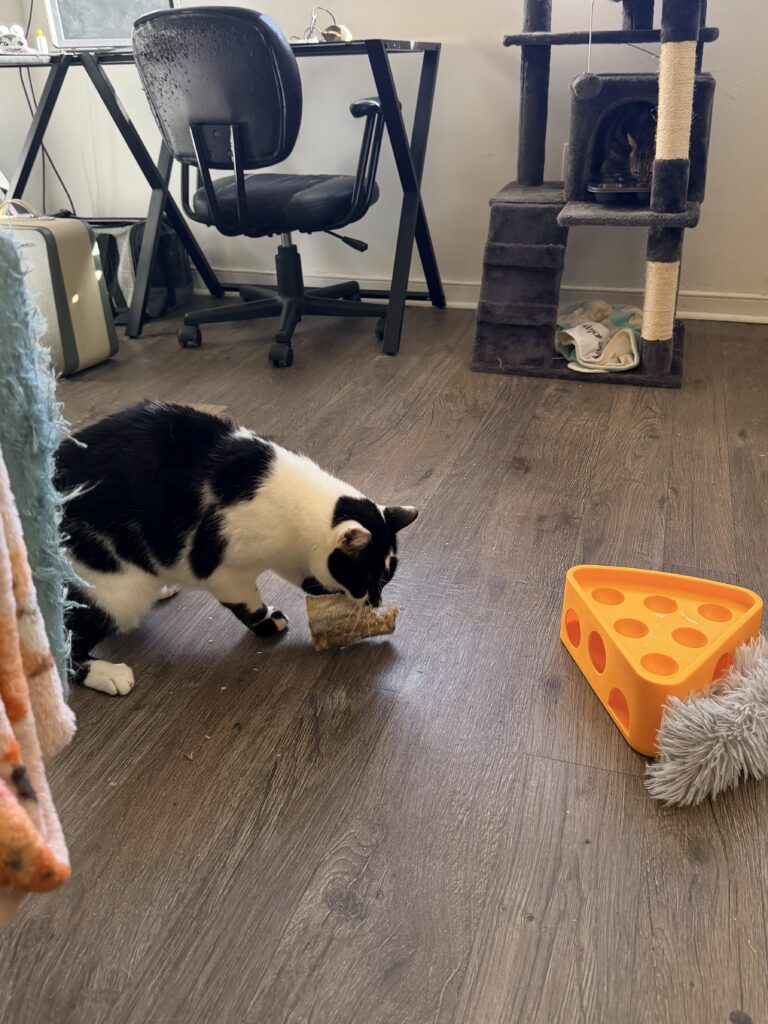
A white and black cat chewing on a fish skin. In the background, a tabby cat in a cat tree is eating treats out of a muffin tin.
Cowboy (foreground) chews on a fish skin while Joylyne (in her safe space--the cat tree) eats treats out of a muffin tin. Photo courtesy of Sam Pierce (Dognitive Behavior and Training).

Results May Vary–Observe and Adjust

Good enrichment strategies of any kind should be guided by results, not by expectations. You might expect that once your pet engages with a preloaded snuffle mat they will then settle in for a long winter’s naps. However, what works for one individual may not work for another and it is important to adjust not only our expectations but also our plans if needed. Here are some tips to help with that: 

  • Observe outcomes so you can see what truly meets your pet’s needs.
  • Watch body language and look for signs that the enrichment is working, ie-relaxed body language, longer rest periods, lower intensity of undesired behaviors and faster recovery time are just some of the signs that tell us our strategies are going well.

Even though we are talking about set it and forget it, it is important to note that changes occur and we should expect to pivot when necessary. Developmental stages, health status, and physicality all will vary throughout a pet’s life and we should be prepared for adjustments in our plans as needed.

Here’s to harmony,

MaryKaye

Now What?

Preparedness makes for smoother transitions and preparing for the busy weeks ahead should include your pets so that you don’t have to panic at the last minute when Fluffy decides they can’t tolerate Uncle Bub half way through the holiday feast. 

To recap, ways that you can proactively prepare for the weeks ahead include the following:

  • Decide on a location for where you can store prepared enrichment items for your pet
  • Decide on a location that will function as your pet’s safe space 
  • Create your enrichment menu 
  • Gather the supplies and ingredients you will need to create your enrichment items 
  • Have young kids in the family? See if you can get their help with creating the enrichment activities. There are some great pet safe recipes online that can be used for licki mats, Kongs or Toppls 
  • Organize by day so that you can easily rotate items 
  • Pull out when you need them 

Copyright 2025 Pet Harmony, LLC. All Rights Reserved.

Terms & ConditionsPrivacy Policy

Results are not guaranteed because behavior, human, canine, or otherwise, are not guaranteeable.
A brown dog drinking water that is falling from a spout. Text reads: Cool down, paws up: creating heat-safe spaces for your pet

Cool Down, Paws Up: Creating Heat-Safe Spaces for Your Pet

Not Every Day Is a Walk in the Park

Y’all. It. Is. Hot. I’ve been watching heat advisories crop up all over the country, some of which are lasting a week or more. 

I’m lucky because both my dogs and I love the heat. When it is 80 out, we’re living our best lives. In fact, my dogs will bully me to go outside whenever they see that I’m not fully focused when the summer weather is in full effect. 

But as I said, we’re lucky. Many of my clients and their pets struggle this time of year. Depending on where you live, keeping dogs cool can be challenging, especially if they are heat-intolerant. We see changes in many dogs’ behavior in hot weather. For some, meeting their dog’s physical exercise needs gets challenging, and for others, creating a cooling space for their dog feels impossible. For some, their dog’s rest and sleep routine is disrupted, and boy-oh-boy, sleep is important. And, as someone who has lived in very hot climates, this isn’t even taking into account the impact the heat has on humans, which is nothing to scoff at. 

Either way, creating a cooling space for dogs and other pets is an important part of your dog’s summertime enrichment strategy. Both indoors and out, we’re able to look at small adjustments that may make a big difference for the health, safety, and comfort of our dogs, pets, and even maybe us!

Why Cooling Spaces Matter

Being able to regulate one’s body temperature is important. I think any of us who have been in a place that is too hot or too cold for our comfort can understand. The risks associated with it can range from being snappy, irritable, and unrested to critical health emergencies. Check out last week’s blog if you want to know more about how dogs thermoregulate why heat stroke is such a big deal. 

Humans have developed all sorts of strategies to help us on both ends of the spectrum, heaters, special clothing, air conditioning, fans, adjusted schedules to avoid the peak heat…but our pets don’t have so many gadgets and gizmos available to them. 

Shoot, most creatures on this planet can’t even sweat, including dogs, cats, and birds, which can lead to even greater sensitivity to heat. So, while for some of us the heat is a reprieve from the cold of winter, it can be incredibly dangerous for others. Knowing the risk factors for your specific pet can help you develop your summer enrichment strategies to meet everyone’s needs. 

Certain traits make cooling down more difficult. If your dog has one (or more) of these traits, they may be particularly susceptible to overheating, experiencing heat-related illnesses, or suffering from heatstroke:

  • Short snouts and smushed faces: brachycephalic dogs have shorter airways and dissipate heat less efficiently 
  • Dark, thick, or double coats: absorb heat easily, and their thick hair can insulate and retain heat, making it harder to dissipate, especially if it is matted
  • Advanced age: Senior dogs may have poor circulation, resulting in poor heat regulation
  • Youngsters: Puppies have underdeveloped heat regulation systems
  • Health issues: Including obesity, and particularly those issues that affect the airways, heart, or lungs

Keep in mind, sometimes we do things that aren’t good for us. So, just like all other enrichment strategies, we need to trial and eval. I adore being outside in the warm sun, AND know that I burn at the whisper of UV rays. You’d think that my history with sunburns would have impacted my desire to be out in the sun, but it hasn’t.

What Makes a Great Cooling Space?

So, what do we trial and eval? There are a ton of options! I always recommend looking for things you already have available rather than getting something new, but there are times when we may want or need to invest. 

Growing up and currently residing in the Pacific Northwest, air conditioning isn’t a standard feature in homes. Growing up, I can’t remember a single family central AC. While it is becoming more common as we’re getting hotter and hotter summers, it is a gigantic investment that I’m not going to ask a pet parent to get, unless it is already in the plans, and they own the property. So, while getting AC installed is an option, let’s focus on items that have a lower cost of entry. 

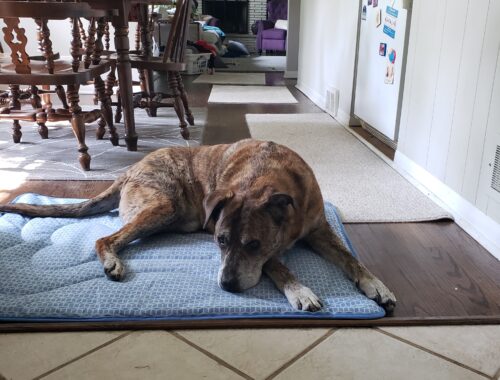
A brindle dog laying on a mat on a tile floor.
Allie's handsome Oso (literally) chilling on his cooling mat.

Can we create a cool surface? 

Tile, stone, linoleum, vinyl, really anything other than carpet tends to be cooler than carpet. Is there a place that your pup can lie on that is a cooler floor? 

If you’re outside, a damp towel or a shallow pool can be a way to create a cooler space. (Make sure it is in the shade, or you’re regularly rotating the water if it is in the sun.)

Cooling mats can be an excellent option for pups that like to lie on cool things. I sat on one the other day and it gave me chills! Keep in mind that these tend to “lose their cool” until the dog gets up and allows the heat to dissipate again, so sometimes families opt to get two or three. 

For pups that aren’t a fan of cooling mats, but may like something like stone, a stone bathmat has been an option that many clients report their pups like. 

I’ve had families go to the hardware store, either get the materials to make a metal “bed” structure for their pets or a steel shelving unit. This really depends on their baseline level of building skill or the skill of someone in their lives. Having a smooth sheet of metal raised a few inches off the ground can be a really nice, cold spot to lie down for a hot dog.

Can we increase ventilation or air circulation? 

Fans, either box, oscillating, ceiling, or other, really anything that gets the air moving can be helpful, both inside or out. Some dogs are going to want to lie down right in front of them, while other dogs loathe the feeling of air blowing on them. Remember, we want the enrichment to be something they engage in, so trial and eval your dog’s preferences. 

AC units, either window units, single room units, full house units, or even DIY swamp coolers are all options depending on your home and your resources. Sometimes you don’t need to cool the whole house, just a small area.

In the Pacific Northwest, where we don’t have a lot of AC, we default to having two states of the house: evening/night, crack every window you safely can, and day, close all the curtains, all the blinds, and pretend you live in a dark dungeon. If it is cooler outside than in, getting some air flow from outside can help bring down the temperature.

A fluffy brown dog lying on the bare floor of a hallway.
Corinne's bestie, Opie, chooses the bare floor life when it's hot. Lying on his side increases airflow over his fluffy bod.

Can we reduce extra stimulation? 

Can we turn the lights off, reduce foot traffic, or overall create a quiet area for our pup to calm and cool? While some things may not elicit anxiety or fear, they may still be irritating to our pets, and disruptive to that peaceful space we’re looking for. Eileen Anderson talks about tolerance in this fantastic blog


Can we increase shade? 

We have curtains in our bedroom that are touted to be both sound-dampening and to prevent heat transfer in and out of the windows. During the day, when the sun is high, we can close those curtains to keep the heat out. 

Outside, utilizing things like umbrellas, shade cloth structures, and long-term strategic planting can be great ways to increase shade in your space. 

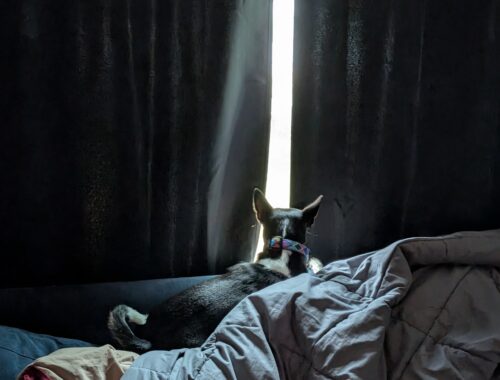
A tri-colored dog on top of a pile of blankets peeking out between some dark curtains. The room is dark and the sun is shining through between the curtains.
Emily's puppy Miley still finds a way to do neighborhood watch even if the blackout curtains are closed to keep the room cool.

Can we use additional cooling aids? 

Frozen treats in the space can be a way to keep our pets’ activity level lower, help them stay in the cooler area, and provide them with that cool, little sweet treat during the peak of the heat. Stay tuned for next week’s blog, where Claire will have some suggestions for stuffed frozen 

Back when I worked in zoological, wildlife rehab, and outdoor dog daycare, we would leverage exterior mist systems to help cool the ambient air outside. It doesn’t need to be fancy or permanent (unless that makes sense for your life), it can be simple, like this one

DIY Chill Zones: Options for Every Home

Remember to test the elements one by one to see how your pet feels about them. They may love 90% of the setup, but really, really, dislike 10%. That doesn’t mean the 90% won’t work, we just need to adjust!

I know, I just gave you a ton of options, and that can be overwhelming, so here are some selections that piece elements together:

  • Creating a shaded area on your patio with a raised dog bed and a plastic water bowl. 
  • Setting up their crate in a quiet bedroom with a cooling mat next to it, and a fan blowing on a different dog bed. 
  • Creating a cooled office space, with a single-room AC unit, a dog bed, and blackout curtains. 
  • Pushing the kitchen table to the side, giving them a station under the kitchen table on the stone floor with a water bowl, or a frozen licky. 

What works for you and your pet is going to depend on what you both like, what you already have available, and what your current space already looks like.

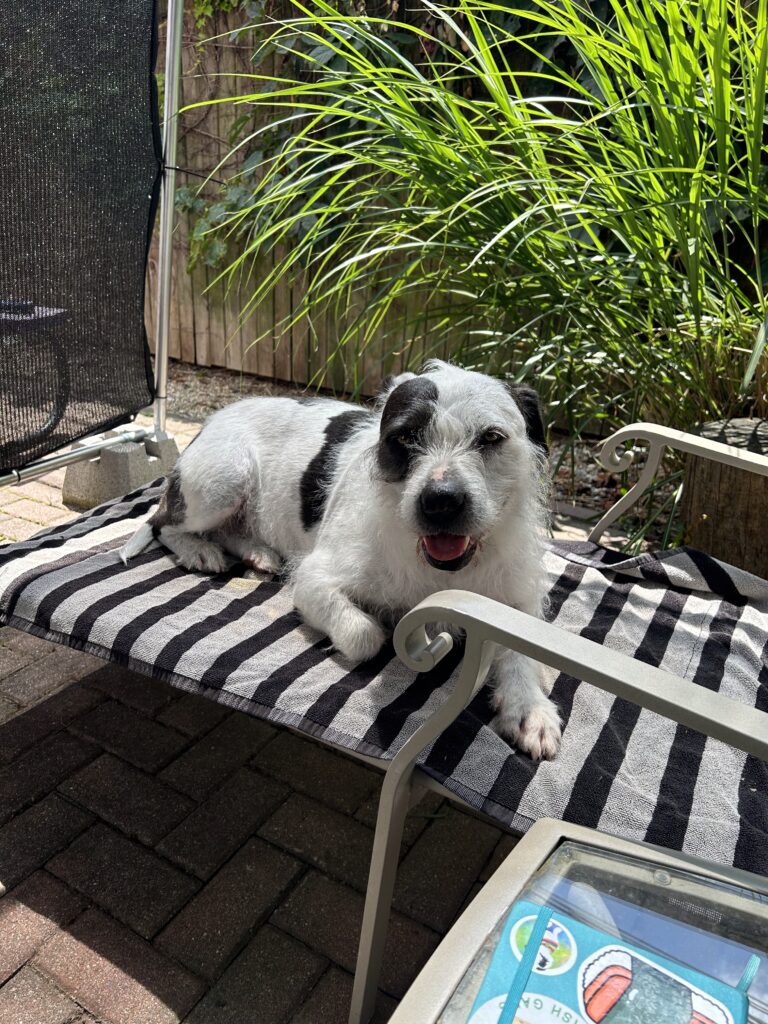
A scruffy white and dark grey dog laying in the shade on a lawn chair. There is tall grass and a fence in the background.
Petey and Tiffany like to work outside together when it's not too hot. Tiffany's Dad put together a shade for Petey (and Tiffany and Big Man) since their yard has none.

Making the Cooling Space Appealing

Building the space is only part of the process; we may need to teach our pet that it is a place they want to spend time!

Sure, we may get lucky with a dog that gets the look on their face that says, “WHERE HAS THIS BEEN MY WHOLE LIFE!?” Or, we may have a pup that is so amped from the heat that they are going to need help to feel the relief before they are going to be bought into the whole idea. 

Depending on what the space entails, you may need to teach things like go to spot, or you may need to build a positive association with things like foraging toys, or quality time together. 

Keep in mind, we’re merely giving suggestions; we aren’t forcing our pets to use the spot. Take the time to observe what your pet is doing and think of little changes you could make. I know Laika loves to be on the highest, cushiest spot in the house. If I needed to create a cooler space for her, it wouldn’t include a cooling mat. Sure, I could take the time to teach it, but that isn’t a good use of our time, energy, or effort.

Supporting Cool-Down Behavior Throughout the Day

Enrichment is about increasing welfare and well-being, and that includes rest. It may seem like your pet isn’t getting “enough” in the summer, but across many species in the animal kingdom, it is normal to primarily rest in the peak of the heat. 

Getting adequate rest is so, so, so important, and helping our pets to wind down after an activity in a way that is safe, and helps their body return to baseline is enrichment.

So, you may want to teach your pet that in the summer, activity -> cool zone time. 

Years ago, I had the opportunity to work with an incredible family and their pup, Bart. Bart ran hot. Like so, so, so hot. And when Bart was hot, Bart became a parkour fiend. Which may be fine, except Bart was also a tank on legs, and really didn’t have the greatest sense of personal space. 

In the peak of the summer, Bart was really struggling to settle. He wanted to go, go, go, go, go, go… which was not feasible for his people, or safe for him.

We worked on helping Bart create a cooling station, and after his normal cup-filling activities, we worked on going to the cooling station for recovery. We had to start by teaching Bart to use the cooling mat and by spending time with him while his body transitioned from the activity. 

Gradually, with practice, Bart would come in, run to his mat, and wait for his person to turn on the fan. It was a beautiful change from Bulldozer Bart barreling through the house!

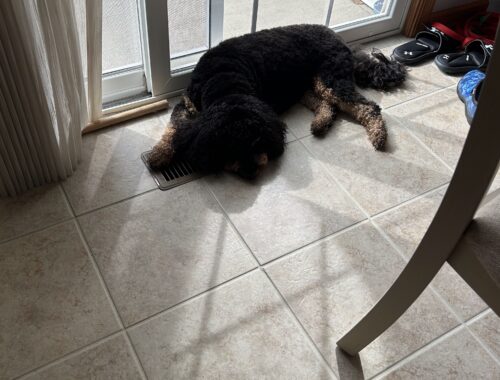
A fluffy black and brown dog lying on an air conditioning vent
MaryKaye's dog niece (her sister's dog), Harriet, knows how to keep cool...right on top of the air conditioner vent.

When to Worry: Cooling Spaces Are Support, Not Treatment

As I mentioned at the beginning of this blog, heat can truly be dangerous. Cooling spaces are intended to help you prevent problems, not treat them. Please familiarize yourself with the signs and risks of heatstroke, and seek medical attention if your pet does overheat. 

Here’s to harmony,

Ellen

Now What?

Now it’s time to trial and eval your pet’s cooling station! Take a walk around your home with your pet in mind. Is there a place that would be an excellent cooling spot? Is there a space outside that would benefit from a little extra cooling effort?

Take one small step toward change today, and see how your pet feels about it. Do you have a fan camper, or a dog that avoids blowing air at all costs? Do you have a dog that splays out on the cold floor, or a dog that you’ve never seen lie down on a cold spot? 

Make one small change at a time so you can assess how your pet feels. And as always, share your findings and your pet’s summer retreat with us!

Copyright 2025 Pet Harmony, LLC. All Rights Reserved.

Terms & ConditionsPrivacy Policy

Results are not guaranteed because behavior, human, canine, or otherwise, are not guaranteeable.
Brown dog laying down with face on paws, looking up. Text reads: Fireworks and Fright: How to Support Your Sound-Sensitive Pet Year-Round

Fireworks and Fright: How to Support Your Sound-Sensitive Pet Year-Round

Hi, hello. How are you doing? If you’re in the US, we just had the 4th of July, and if you’re like many of my clients, you had a rough one. And realistically, it may not be over depending on where you live and the culture around fireworks.

So, seriously, I’m asking, how are you and your pets doing? 

There are a couple of times of year where I consider myself on “standby.” I’m checking in on clients, even if they graduated years ago, to make sure that they are still feeling like they have a handle on the seasons, and June-July is one of those seasons. The toll that those big ol’ booms, or those make-your-eyes-wince whistlers, or the cacophony of little pops has on both pets and their people is real, and big. 

For some of us, watching our pets be that afraid, and feeling powerless to do something is gut wrenching.

For some of us, the damage from this week can last months, where our dogs are afraid at night, or won’t go outside. 

For some of us, we live in places where fireworks aren’t just a 4th of July thing, or even a night time thing. It is a “whenever this person that lives near me feels like it” thing, and that lack of predictability can be debilitating. 

I know that it may seem odd that we’re releasing firework content after the 4th, but for some families, this is the first year their dog struggled, or this is the first year, their current plan didn’t work. So, let’s talk about three elements of preparing for next year: recovery, creating safe spaces, and proactive prep so that next year is a little less chaotic.


After the Boom: Helping Pets Recover from Fireworks

It may seem a little backwards, but let’s start with recovery. Recovery is about helping our pets get back to their baseline and to feel more comfortable and calm in their day-to-day life. We’re looking at helping pets recover from noise, because let’s be honest, it is A LOT.

After the 4th, or really any big boom holiday, it’s common for my clients to see a host of things, and keep in mind this isn’t a comprehensive list, merely just some examples: 

  1. Hiding or self-isolating 
  2. Hypervigiliance, which may look like resting less, radar ears, darty eyes
  3. Increased flinching or cowering 
  4. Increased “clinginess” or spending more time near their people 
  5. Avoiding things like their collar, harness, or leash 
  6. Avoidance or increased stress when going outside or with windows and doors open 
  7. In some cases, increased aggression 
  8. Resurgence of separation-related problem behaviors 
  9. Hypersensitivity or increased reactivity to additional sounds

If you’re seeing any of these things and have a behavior consultant or trainer on your team, let them and your veterinarian know. It’s really important to keep your care team in the loop. I’ll circle back to this later.

As we are focusing on recovery and helping pets recover after fireworks, we want to return to the basics, the things we have already seen work, keep it simple, and keep it low stress. 

To start, get back into a normal, predictable routine. I talked about the importance of predictability in this blog. Even though we have a calendar that we can look at and say, “Oh, look, this weekend there are going to be some big booms!”, our pets don’t have the luxury. This whole thing feels unpredictable to them. So as much as you can, get back into a predictable routine. 

If you already have an effective management routine, get it back into place to reduce the number of additional triggers or stressor your pet needs to deal with right now. That might mean no visitors for a couple of weeks. That might be more daycare instead of your pet staying home alone. That might be turning on your sound masking strategies to drown out the sound of other triggers outside and/or your auditory enrichment that helps your pet find their calm. 

Get back into the routine of bolstering your pet’s safe space and utilizing the long term calming projects that help your pet fill their cup. We’re going to put all our skills and knowledge into place to help our pets recover at their own pace. For some pets, this can take a while, and some bounce back within a couple of days. If you find your pet is still struggling after a few days, it doesn’t mean you did anything wrong. Phobias are real, they are intense, they take a toll, and sometimes, they take us by surprise. You’re here now, which tells me you love and care about your pet deeply.


Safe vs. Secure: What Sound-Sensitive Pets Really Need

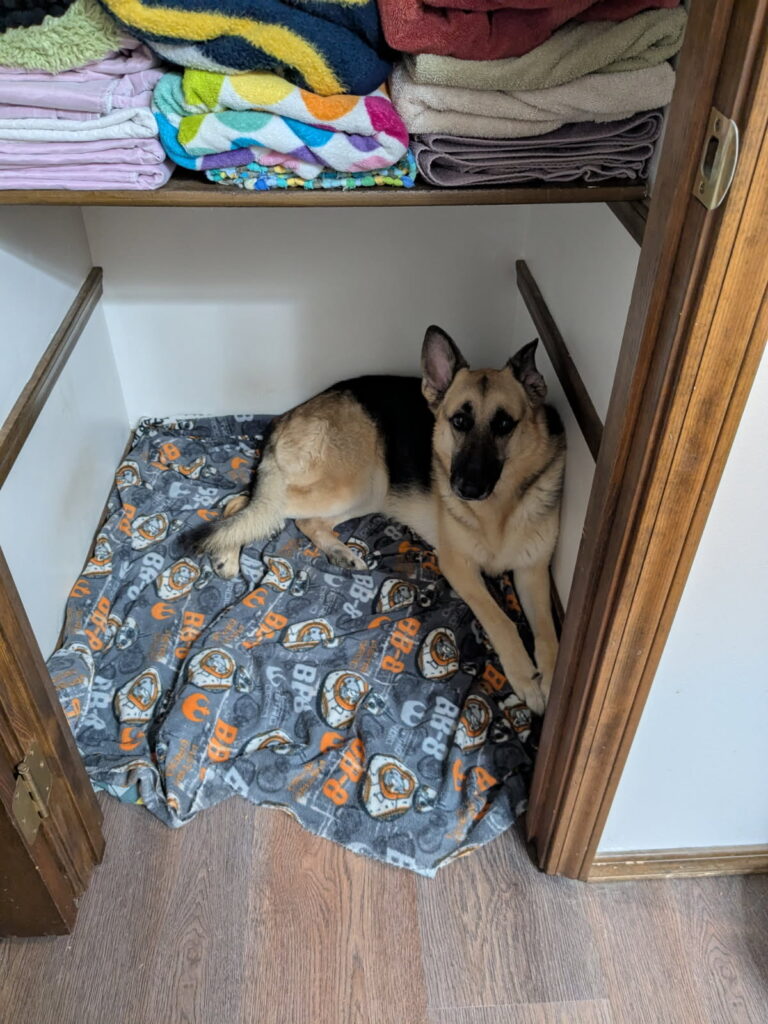
A German shepherd dog laying on top of a blanket in the bottom of a linen closet.
Allie the German Shepherd has chosen the linen closet in the bathroom as her safe space from noises. Her people have removed some of the shelving to make space for her here. Photo courtesy of Jordan Bradley (Click to Communicate)

As a reminder, safety and security are two separate, but often intertwined things. Being safe is being protected from harm, while being secure is feeling like you’re protected from harm. 

You can be incredibly safe, and not feel secure, and our dog, who is trembling and cowering in the shower, is very, very safe, and really, really doesn’t feel secure. 

You can also be incredibly unsafe, and feel very secure, think of the dog who is chasing geese in a field and into the street. They may be having the time of their lives and also, geese. And cars. But mostly, geese. 

What we want to do is help our pet feel more secure during these bouts of fireworks or other big booms. We can do this by trial and evaling sound masking to find something that makes the stressful sounds more difficult to perceive. 

We can build a safe space, a de-escalation station, a relaxation station–ultimately, a place where our pets can go to feel more secure and cope with their stress. This may be a crate, closet, or bathroom. It may be your lap (if that works for you). It may be a blanket on the end of the couch. 

Each dog and family’s safe space is going to look different! Basements and internal bathrooms can be fantastic options for families that have them, and the dog finds them comfortable. Some dogs are going to get really hot when they are stressed, so giving them a cooling mat and a fan is important, while others may need their bed right next to the heat vent.  

Some dogs will LOVE white noise. It will, almost instantly, elicit a deep breath and droopy eyelids. But I’ve met plenty who duck their head and shiver instead. This is why trialing different strategies is important!

We want to learn what the calming setup for your sound sensitive pet is! And of course, this may sound simple but it may not be easy, and if you’re struggling or want a second set of eyes to assess your pet’s safe space, that’s what behavior consultants are for!

Proactive Planning: Getting Ahead of the Next Holiday

And friends, that brings us to being proactive. If your pet struggled this year, don’t wait until July 3rd to deal with next July 4th. 

Over the next year, take time to: 

  1. Check with your pet’s medical care team to ensure there aren’t any medical conditions contributing to their sound sensitivity or noise phobia. They are incredibly common to see together. 
  2. Talk to your vet about potential medication protocols to assist with the acute events. More on both of these topics in this blog by Veterinary Behaviorist, Dr. Kelly Ballanatyne.
  3. Work to build, bolster, and use your dog’s safe space throughout the year, starting now. If you’re looking for direct support with this, we’ve got you! I work with many clients to create a sustainable, long-lasting plan to build their pets’ safe space, and will be helping participants through the step-by-step process in my upcoming At Ease: Safe Spaces for Home and On-The-Go live course through the Karen Pyror Academy. 
  4. Store high-value treats around your house, and when you hear any big boom, clang, whistle, car backfire, or [insert more loud, surprising noises here], give your pet that extra special treat. Working to help our pets be comfortable with loud or startling noises doesn’t require the specific loud and startling noise; we can practice that skill throughout the year with whatever life throws at us. Eileen Anderson talks more about this process here.

And again, if this feels like a lot, know that it doesn’t have to be. At Pet Harmony, our main goal for our private clients is that this process is sustainable, do-able, and achievable. 

Compassion, Not Perfection

I know it is hard. I know that you may read this, coming off an incredibly stressful weekend and feel like there is no hope, that there is no way that you can do *all the things*, help your pet have a smoother 4th next year, or even bring yourself to do that first step. 

Remember, stress takes time to process, so if you’re overwhelmed by everything in this blog, it is okay. That doesn’t make you a bad pet parent and it doesn’t mean that you don’t care about your pet. It means that you’re also a living creature with needs, stress, and responsibilities. 

Here’s to harmony,

Ellen

Now What?

If you read this and think, “Yeah, okay! I got this!” Then go get it! That’s awesome. 

If you read this and immediately enter the overwhelm spiral, then set an alarm, or put it in your planner, or however you track things, to come back in a week or two after you and your pet have gotten some distance from the event and revisit. You may find it much more digestible then. 

If you’re somewhere in the middle and want someone to walk on this journey with you, we’re here for you to help make next year’s 4th much less stressful.

Copyright 2025 Pet Harmony, LLC. All Rights Reserved.

Terms & ConditionsPrivacy Policy

Results are not guaranteed because behavior, human, canine, or otherwise, are not guaranteeable.
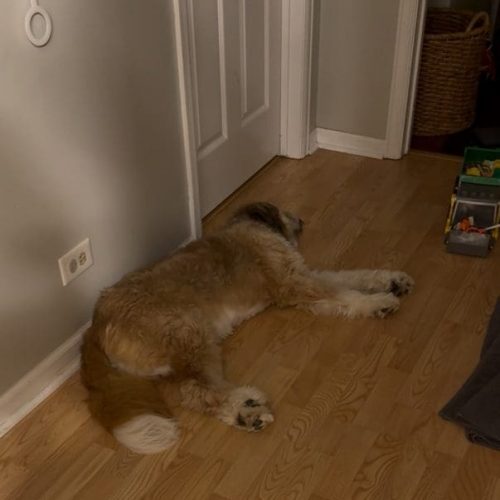
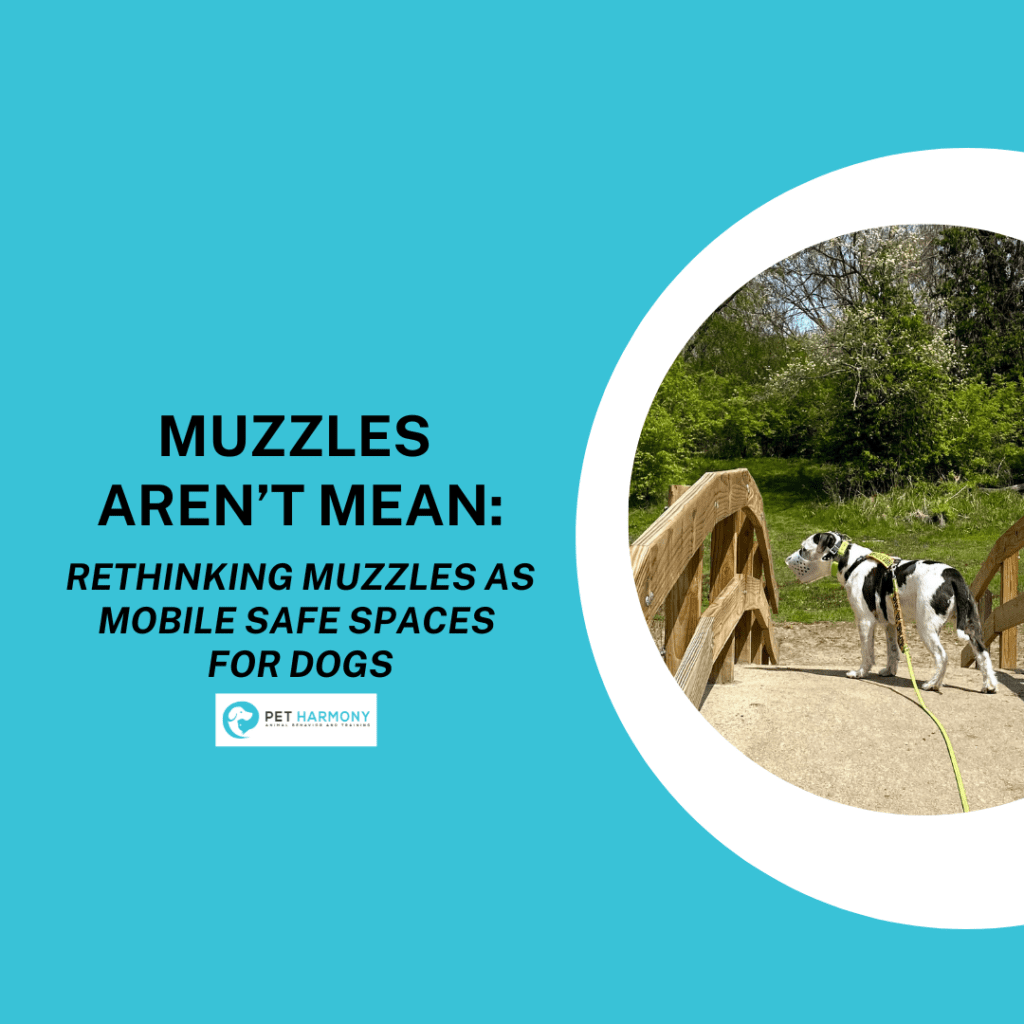
Photo of a dog in a muzzle standing on a bridge with greenery in the background. Image text reads: Muzzles Aren't Mean: Rethinking Muzzles as Mobile Safe Spaces for Dogs

Muzzles Aren’t Mean: Rethinking Muzzles as Mobile Safe Spaces for Dogs

“Wait, You Want Me to What?”

“How do you feel about the idea of muzzle training?”  

This is a question I ask my clients a lot. And as you can imagine, because of the dog muzzle stigma that plagues us, the responses I get can vary a lot. 

Some families:

  • feel that good ol’ pet parent guilt, you know the one I’m talking about, about the fact that their dog needs a muzzle.
  • are worried that people will think that their dog is “aggressive.”
  • struggle with the idea that muzzles don’t address why he feels the need to bite, so why bother?
  • are STOKED about the idea of it. They have wanted to do it for a long time, but didn’t know where to start.
  • are worried that it is a punishment for their dog.
  • know their dog already has a hard history with muzzles, and are scared that we can never make progress.
  • think my dog will never let me put a muzzle on them.

Whether we’re working with a dog that is a known bite risk, a dog that is working toward cooperative care, a dog that picks everything up on walks, a dog with a history of eating everything in sight (food or not), or we’re looking to build general life skills, training dogs to wear a muzzle can be an incredible addition to the plan. Because muzzles are beneficial for a number of reasons, not just for dogs who are a known bite risk. 


Why Muzzles Get a Bad Rap

Socially, at least in the United States, muzzles carry a lot of stigma. Whether these influences are through unintentional imagery and language, intentional systematic institutions, or salacious rage bait for the masses, at the end of the day, we need to look at impact over intent, and the impact of all of these things has been huge.

The associations that folx have with muzzles and their meaning have taken on this big nightmare shadow lurking over them and their pets, and it’s whispering things like, 

“Muzzles are only for bad dogs.” 

“You’re failing as a pet parent.”

“Your dog is beyond help.”

In an effort to improve everyone’s welfare and well-being, pet parents take on slaying this shadow nightmare monster and everything else to keep everyone happy, healthy and safe. 

The good news is, none of that is true. So, let’s talk about what muzzles really are about.


What Muzzles Really Are: Tools for Safety and Comfort

For me, muzzles are up there with crates, baby gates, car seats, leashes, harnesses… the rest of the gear that we use to keep both ourselves, our dogs, and the community safe. 

So, instead of thinking of muzzles as a Hannibal Lecter mask, think of them as a party hat. I know, that’s a big mindset shift, but believe me, muzzles can be FUN. They can be a tool to create a mobile safe space for our pet. A thing that tells them, “Hey, I promise, to the best of my ability, nothing terrible is going to happen to you. It is all going to be okay.” A thing that indicates our intentions and predicts expectations for them. Under some contexts, it may function like the medical cue that Lisa Clifton-Bumpass talked about in her podcast episode

While we often think that muzzles are all about restriction, and start rolling through the things our dogs “can’t” do, a properly fitted muzzle, used correctly, under the right conditions, can open the world up in entirely new ways. It may allow for safe exploration in the world. It may allow for more choice, control, and agency in veterinary procedures. It may allow for everyone to breathe easier. It may even allow for less restriction, as a proper muzzle helps increase safety. 

*Please note, I’m not saying that a muzzle gives you freedom to put your dog in situations where they feel the need to bite.*

In general, a properly fitted muzzle should: 

  1. Allow for a full pant 
  2. Allow for eating 
  3. Allow for drinking 
  4. Avoid excess rubbing 
  5. Prevent biting

The specific criteria for what each family needs from their muzzle will change with each situation. For example, I need Griffey to be able to find and collect treats off the ground while wearing his muzzle. But when I’m looking for a muzzle for a dog that chronically finds and swallows rocks, I’m going to look for a muzzle that impedes collecting things off the ground. 

Along with the basic fitting criteria, I have another set of criteria that I’m working toward to make sure that the muzzle brings joy, rather than the nightmare shadow monster. We want the muzzle to be a party hat. We want the dog to hear the cupboard open, or the jingle of the buckle, and come running with a big ol’ smile on their face. I want the dog to be so insistent that the person almost struggles to put the muzzle away. 

Here are some of our rules for engagement:

  1. We go at the pace of the least comfortable being in the room. Both the human and the dog need to be comfortable. 
  2. The dog does the work, they put the muzzle on, we don’t put it on them.  
  3. The muzzle = WONDERFUL things. 
  4. The muzzle is a cue for us to pause and think twice before doing anything the dog doesn’t like, not a cue to do whatever we want.
  5. We get creative to find ways for the dog to do their favorite things while wearing the muzzle. 
  6. We are going to work on both our dog being safe in hard situations, AND build a plan to help them feel more comfortable. At the end of the day, we don’t want to put our dogs in a situation where they feel the need to bite.

When we take the time to do an intentional, positive introduction to muzzles, we can see joy and excitement in our dog’s body language. We can see that their eyes light up, they get wiggly, they smile, and they push their way into the hat. We can see that it lays a beautiful foundation for a bunch of other skills.

For Griffey, his extensive muzzle training made teaching him to get laser therapy a breeze. 


Kindness, Not Control

Muzzles are for all dogs. Not “bad” dogs, or “aggressive” dogs, or because of “bad” pet parents.

Muzzles are a way to increase safety. Muzzles are a way to help everyone in the room breathe. 

Muzzles let some dogs go on walks. 

Muzzles let some dogs participate in their veterinary care rather than have things done to them. 

Muzzles let some dogs get the space they need while in the world. 

Muzzles let some dogs enjoy hikes without the risk of eating sticks. 

If we aren’t seeing the muzzle increase feelings of safety and security for everyone, that someone is still holding their breath, then we have more work to do. We’re asking ourselves and our pets to be in situations we aren’t ready for yet. And that is okay! We don’t know what we don’t know until we get the opportunity to learn. 

At the end of the day, remember, our goals for muzzles are to increase safety and security, to enable our dogs to do things that fill their cup and meet their needs, and to empower them and us. 


FAQs About Muzzle Training 

How do I introduce a muzzle without stressing my dog out?

That’s a great question! The answer is slowly, thoughtfully, and gradually. We want the muzzle to be paired with lots of wonderful things. We want to go at the pace of the dog, so some dogs are going to need to start with playing “find it” in the room with the muzzle on the counter, other dogs are going to be ready to shove their face right into the thing as long as the straps are out of the way. 

For some great resources, check out The Muzzle Up Project. 


What does cooperative care look like when muzzle training?

Muzzle training is a FANTASTIC first step into cooperative care. When we’re talking about “cooperative care” or “care with consent,”, we’re looking for our pets to be an active participant in their care.

We can teach our pets to say, “Yes, silly human, you may now clip my toenails.” 

We can also teach our pets to say, “Hey, whoa, that’s too much,” without the need for them to use their teeth. 

Teaching our pets a “Go ahead” and “Whoa, Nelly” are important to build that communication, and we can start that with muzzles. 

By ensuring that our dog is the one moving toward the muzzle, putting their own face in, giving them a chance to say “no, please don’t do the straps,” or “yeah, you can proceed,” we’re building that two-way communication between us. 

Our goal is for our pets to have all the choice, control, and agency we can safely provide. 


Can my dog really learn to like their muzzle?

Yes, yes, yes, yes! I know it may be hard thing to imagine, but yes! Dogs can learn to LOVE their muzzle. Sara McLoudrey nicknamed Griffey, “The Muzzle Monster” while working on his training.  We took the time to pair the muzzle with WONDERFUL things, to give him the option to take it off when he needs, to put it on when he wants, and to practice all sorts of behaviors while in it, and he adores his muzzle.


What are some common mistakes to avoid in muzzle training?

Mistake #1: Going too fast. 

Slow down. Seriously. Your expectations should be lower than what your dog is currently capable of. If your dog isn’t ready to take a step toward the muzzle, your expectation should be that your dog can rest or play in the same room as a muzzle, not that they are going to put their face in it. 

Mistake #2: Waiting until safety is on the line. 

Most folx don’t start muzzle training until we already have a safety risk on the line, a bite has occurred, the dog has already had to have foreign object surgery. Start now. You never know what life will throw and you, and in the event your dog needs a really, really hard vet visit, having a well-trained and very loved muzzle can make the experience so much smoother. 

Mistake #3: Only using the muzzle when the icky thing is happening. 

Once we teach our pet to love the muzzle, we HAVE to keep practicing. If we only pull the muzzle out for icky things, the muzzle is going to become icky. If you already have a dog that is comfortable in their muzzle, make an effort to practice wearing it at least once a week to maintain the trust account in the muzzle. 

Mistake #4: The muzzle isn’t fitting quite right. 

Remember, your dog should be able to take treats, drink water, and fully open their mouth in a full pant in their muzzle. Depending on your needs, you may or may not need to make additional adjustments or invest in a custom-fit muzzle to increase comfort. We don’t want the muzzle to rub on the bridge of the nose, around the cheeks, or in the throat. If your muzzle is used, at most, for 5 minutes at a time, rubbing will be much less of a concern than for pups who need the muzzle for longer excursions in the woods or will be wearing a muzzle during high-demand activity, like dog sports. 

Mistake #5: Making it all about food. 

Yes, food is powerful. Yes, we can use food to help pair the muzzle with wonderful things. But at the end of the day, I haven’t worked with a single family where the only goal for the dog is to stay in one place and eat treats while wearing the muzzle. Make an effort to have your dog practice other things they love while in the muzzle. Have them practice moving their body, have them practice lying down, wearing the muzzle on walks, while wresting, etc.


Isn’t putting a muzzle on my dog taking away their choice?

Yeah, sometimes. But not all choices are choices that we should be allowing or making. Our pets aren’t able to see the long, long, long chain of events a singular choice may mean for them.

For example, a pup with a history of eating foreign objects should not be left to eat anything and everything in the name of “choice.” That can result in incredibly invasive veterinary procedures that aren’t fun for literally anyone. A pup with clinical challenges with eating foreign objects also shouldn’t be relegated to a barren room, with nothing to do other than wait for their person to come spend time with them. 

With the facilitation of the muzzle, they can’t eat the rocks, sticks, or poisonous plants on a hike, but they can go out, sniff things, watch critters, be with their family, and enjoy so many other opportunities. 

I spoke with a family a couple of days ago that uses a muzzle for lure coursing with their pet. Their dog has a history of biting the lure, and that can be really, really dangerous. Instead of saying, “No lure coursing for you until you stop biting the lure”, they opted to teach the pup to lure course while wearing a muzzle. Now the pup gets to do one of their favorite activities, and do it safely. 

As I have said before, the point of the muzzle isn’t to take away the dog’s choice and then do whatever we want or put the dog in uncomfortable, aversive, or dangerous situations. If you’re thinking, “But doesn’t the muzzle impede the dog’s ability to protect themselves?” 

My question to you is, “How do we adjust things so that your dog isn’t in a situation where they feel the need to protect themselves?” And you don’t need to have an answer; that’s why behavior consultants are here. To help you get creative!


Can I use treats when my dog is wearing a muzzle?

Yes! Any muzzle you choose should enable your dog to eat, and with some skill building, allow you to deliver treats safely. I’ve used squeeze tubes, longer treats, and practiced different eating skills with my clients. 


In Closing

If the different situations and contexts for which muzzles are used is surprising to you, you’re not alone! We’re all out here working against the stigma, and the more ways we integrate and normalize their use, the more useful they become. 

Here’s to harmony,

Ellen


Now What?

Muzzle training can, and should be, fun, compassionate, empathetic, and effective. It isn’t something you need to try to tackle alone if the idea of muzzle training sends a pit in your stomach. We love integrating the needs of everyone involved in a dog’s muzzle training, so reach out if you need help!

Trick or (go Find a) Treat in Your Safe Space!

A harvest moon settles in the sky shining brightly through the hazy clouds. The house is warm and toasty with the smell of chili wafting through the kitchen. A candy bowl perches proudly on the hall table waiting to be emptied.  A deep wind blows– Fido pulls his ears back. A shadow creeps past the window– Fido lifts his head. The crunch of tiny feet on leaves– Fido sits up tall and begins to pant, his ear high and attentive. The footsteps get closer to your front door and Fido closes his mouth to halt all inefficient movement beside the twitch of his curious nose. The footsteps stop. . . he lowers his head. The whispers echo. . . he slowly inches forward.  The door bell rings. . . “TRICK OR TREAT!!!” (and Fido bumbly runs to the door knocking over the candy bowl and you to greet the visitors who are surely only here to see him and not get their loot).

Sound familiar? 

Whether it’s Lock, Shock, and Barrel, the UPS person, a solicitor, or just a family member that wasn’t thinking, these people ringing the doorbell can put your pup into a spiral of exuberance/fear and it can be hard to reign them back into their thinking brains. My suggestion is to give them something TO do when they hear the doorbell to provide comfort, predictability, management, and a new learning history. Let’s teach them that:

DOORBELL = GO TO SAFE SPACE!


If your dog already has a cue to go to their safe space, now might be the perfect time to experiment with this new doorbell cue (if they don’t have a cue yet, why not try it with this!). This is known as a cue transfer, and the order it’s taught is:

New cue > old cue > [behavior] > reinforcement


You may have already done this accidentally with other things.  Maybe you taught sit with just a lure, which became the hand signal, and then you added a verbal cue.

“Sit” [new cue] > hand signal [old cue] > butt contacts floor > treat


After enough consistency, you might be able to say “sit” and the pup would put 2+2 together and put his butt on the ground before you even do the hand signal. Cue transfers like this happen all the time even without our conscious effort, but knowing how to do it intentionally is a super helpful tool.

That means that for this cue transfer we’ll do:

Doorbell [new cue] > “go to place” [old cue] > goes to place > treat (or other reinforcement)


Let’s put it together, people! Here’s the steps I would use in a 3-5 min training exercise (modifying as necessary):

  1. Get a bunch of yummy treats and one long term calming project.
  2. Practice “go to your place” for a few reps to create some behavioral momentum. If you haven’t taught this yet, start close to their safe space, lure them on the target, mark, reward.
  3. Either using an audio doorbell sound or your brother (to give him something useful to do) staged outside, sound the doorbell, give the old cue, and wait for behavior to reinforce.
  4. Once you’ve all done it with at least 80% accuracy, you can try to wait a little longer in between the sound of the doorbell and the old cue to see if he offers the behavior you want to see, in this case, going to his place. This is how you phase out the old cue!
  5. When you’re finished with your last rep, reward the pup with a long term calming project to transition him to relaxation.


It sounds pretty simple right? It can be! But it also can be less straightforward than you’d expect.  If you’re hitting some speed bumps, consider the following:

  • Does your body position to his safe space affect his behavior?
  • Do you really say “go to your place” or is the cue actually leading him there (doesn’t matter if it is, you’ll just need to start with the cue that he knows)?
  • Is there already a strong/over excited/aversive learning history with the doorbell that needs to be addressed before using it in a training exercise?
  • Is his safe space a space he actually chooses to go to?
  • Is his safe space too far/too close to the door?


…and probably a million more things that could be affecting clean training. Once you get this down, it’s time for proofing the behavior to the impending distractions that come after the “going to placing” (read more about proofing here).

With that being said, I love having the doorbell be a cue to do something that is incompatible with what we don’t want him to do (rush the door) as a practiced tool in our toolbelt. I also love that for the fearful kiddos it could also become a flight cue to his safe space if people coming over makes him uncomfortable. 

For Halloween, it’s super helpful to get the pup safely to a place that helps everyone be successful (pro tip: also add a physical barrier because Halloween is a TOUGH night for these kiddos who just don’t understand why Spidermen keep coming to their door making their parents squeal). 

Trick or Treat (and treat and treat and treat and treat)!


Now What?

Think about what Halloween (or similar holiday/gathering if this isn’t a practice where you live) looks like in your household. Consider what gaps you’d like to work on before the event happens to help everyone feel prepared. It might mean training, it might mean management, it might mean something else totally different!


Happy Training! 

Corinne

A brown dog relaxed and sleeping under a blanket.

Creating a Relaxing Environment for Your Pet

A brown dog relaxed and sleeping under a blanket.

Creating a Relaxing Environment for Your Pet

Updated: June 23, 2026

Estimated reading time: 3 mins

Relaxation: it’s a skill that’s so important, that it even has its own category in Canine Enrichment for the Real World. Over on the podcast, we’ve talked about what relaxation really is, how to help our pets learn these skills, and some of our favorite approaches to teaching relaxation. 

There are tons of ways to help your pets with their relaxation skills, and now we challenge you to create a relaxing environment for your pet! 

What does a relaxing environment look like?

Why thank you for asking, that’s a great question, and I would love to tell you. The catch is, that, like so many answers in the behavior world, “it depends.” 

There are a lot of factors that go into what a living being finds relaxing, and let’s explore those a bit!

Step 1: Know how your pet naturally sleeps

The first step to understanding what your pet might find comforting and relaxing is to understand what that looks like for your pet’s species. Different species will need different things. For a dog, being stuck on a tree limb is going to require active muscle engagement, balancing, and full-body awareness. For a bird, laying on the ground may be stressful, in the wild, which would expose them to predators, and put them in a vulnerable spot. 

Ask yourself: Do I know how [insert your pet’s species] typically sleep? 

Is it up high or down low? Is it in something, under something? What time of day do they typically sleep? Do I really know, or is this based on something that I’ve been hearing all my life that I should fact check?

Step 2: Learn what relaxation actually looks like in your pet

The next element of this is to know what relaxation looks like on your pet’s species, and on your pet. Just because they are still, does not mean they are relaxed.

I can be perfectly still on a rollercoaster, and you better believe I am not feeling relaxed! Relaxation is about the body moving through the stress response cycle, physiological changes like heart rate, respiration, and the like. 

Ask yourself: Do I know what my pet looks like while they are relaxing? 

What are their eyes doing? Are they blinking slowly, or are their eyelids looking droopy? How deep and slow are their breaths? How do they position their body? How much muscle tension do they have in their back, neck, and/or shoulders? 

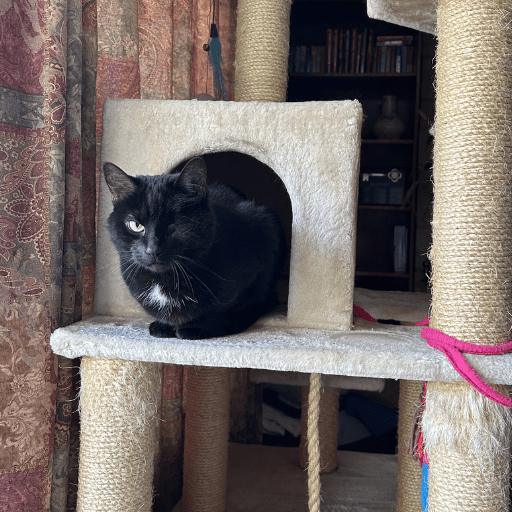
A black cat with a white patch on her chest and one green eye. Beans the cat perched inside of a small carpeted box on top of her cat tree.

Like many cats, Beans likes a small space above the ground where she can relax and observe her surroundings. This cat tree is next to a window. Photo courtesy of Karla Alexander

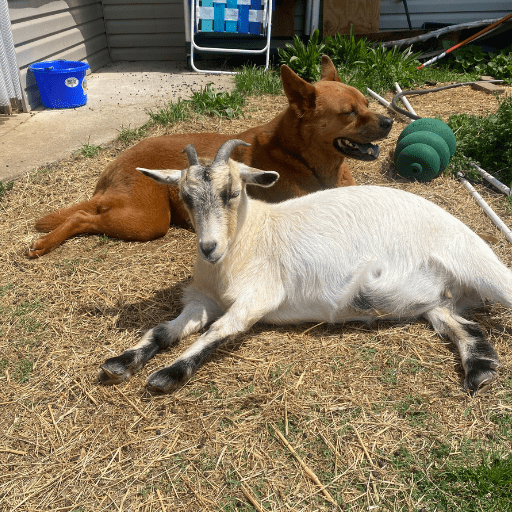
Sundae the goat relaxes in a sun spot with her brother Sully the dog. Consultant Beccy has a variety of spaces set up for the goats to use and some to share with humans and dogs.

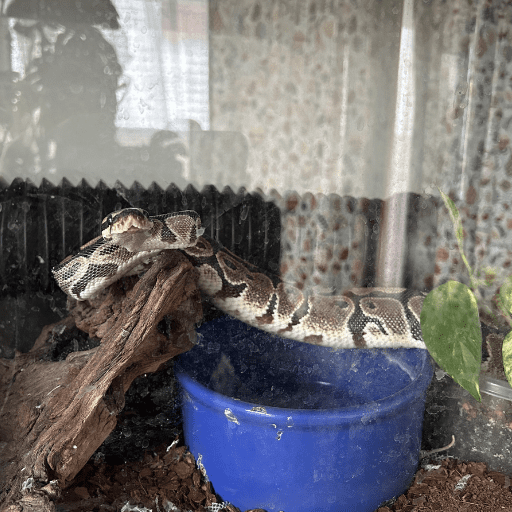
Holding still but not relaxed: Consultant Tiffany’s ball python Artie has his head pulled back, with white gaps showing between the brown scales on his neck. His neck is puffed up and rigid, indicating discomfort. Artie’s tank has many places for him to hide, since he prefers to rest curled up in an enclosed space.

Step 3: Notice where and when your pet unwinds

Now, sometimes, we are starting from scratch on this, but you may find that your pet has already given you some information on what they find relaxing. And, keep in mind, these can be locations or activities! 

You may start to see a pattern to what your pet finds relaxing. When we know what relaxation looks like, we can let them tell us what they need to have a relaxing environment.

Where do you see signs of relaxation? When do you see signs of relaxation? Do they gravitate to the same spot to sleep? Do they prefer a wood floor over a dog bed? Do they sleep under or behind something? Do they spend a lot of time next to a fan, heater, or searching out a sunspot? Do they rest more after certain activities like a sniff walk, shredding a destructible toy, licking on a lick-mat, or using a flirt pole? Do they seek out a dark, quiet place?

Ask yourself: What are some things that help my pet relax? 

Is there a type of bed that you see more relaxation on? For example, a cot might get a different response than a plush bed. Is there a time of day when you see the most signs of relaxation? 

Are there activities that you do with your pet that either get or are followed by an increase in signs of relaxation? 

Step 4: Create your pet's ideal relaxation spot

You’re ready to start building your pet a relaxing environment!

Create a spot where your pet can start relaxing more often. Take the information you collected and build your pet’s ideal relaxation station. In this spot, you can try providing them with some of those activities you identified that elicit an increase in signs of relaxation. You can practice mat work or relaxation protocols to help your pet learn to relax in this location.

Here’s to harmony,

Ellen

Now What?

Build your pet’s ideal relaxation station! This might be a dark, quiet room with a cozy dog bed, or it might be a high shelf in your office for your cat. After you’ve observed their behavior, take their preferences into account, so that you’re starting from a place of success. 

Continue to teach your pet to relax here, whether that’s with opportunities to engage with activities that help them relax during or after the fact. 

If you want to practice some of those relaxation protocols that were mentioned in the podcast episodes, awesome! Here’s a blog for that!

Tag us on Facebook or Instagram @petharmonytraining, so we can see your pet’s relaxation station! 

PS: Capitalism

Want to support our free, public content? Check out our Amazon shop. It’s full of enrichment and pet care items (that we really, actually use). Our team spends a significant amount of time working on content every week. We love it! But we’re also out here trying to pay our bills. 

*  Pet Harmony, LLC is a participant in the Amazon Services LLC Associates Program, an affiliate advertising program designed to provide a means for sites to earn advertising fees by advertising and linking to Amazon.com.

Copyright 2025 Pet Harmony, LLC. All Rights Reserved.

Terms & ConditionsPrivacy Policy

Results are not guaranteed because behavior, human, canine, or otherwise, are not guaranteeable.