
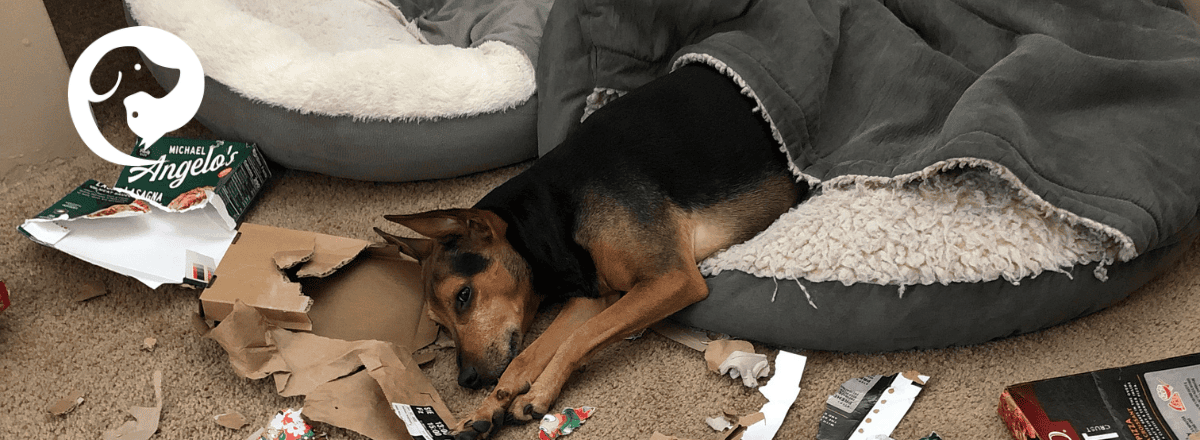
Haunted by Bad Advice - Separation Anxiety Myths, Busted
Estimated reading time: 7 mins
If you have a dog with separation anxiety, I’m guessing you’ve also already been trying to find any and all information you can on what to do. Whether your dog struggles when you take a shower or try to go to the bathroom alone, or cries so loud while you’re at work the cops are getting called, or you’ve just stopped going out all together because it’s pain for you and your dog, you’ve likely already done a scan for anything you can do to alleviate that pain.
Because it is spooky season, and I am, at my core, a pumpkin spice loving, flannel wearing, mason jar using basic b…londe, we’re playing into the season with this one. Let’s talk about some common myths about separation anxiety that haunt not only my dreams, but my clients as well.
Myth #1 - Some flavor of "they're spoiled" or "it's bad training" or "it's spite"
First things first, just…no. And I’m not going to get into all the reasons this just, isn’t it, but let’s start with some of the fundamental flaws, why this advice is so harmful to clients, and what I tell my clients instead.
At its core, this particular flavor of myth is doing two things: blaming the pet parent, and attributing a type of cognition to dogs they have yet to demonstrate within the literature. A dog with separation anxiety isn’t struggling because their guardian spoiled them (whatever that means), or because they didn’t do that second puppy class, or because they are “showing their guardian who’s boss.” Separation anxiety is much more complex than that. It is influenced by genetics, early learning history, environmental stressors (including medical history), life experience, and more.
For my clients who have been told this myth, there are a few things that happen:
- They may start to worry they are providing too much and, in response, may start providing less – less attention, less social time, less toys, less enrichment – and thus, end up meeting less of their pet’s needs. For dogs who panic when their person, the controller of literally everything in their life, leaves, making the wonderful things even more contingent on us is a really, really inadvisable plan.
- They may start trying to take their dog to more classes to work on “training”–and while those classes may provide some good stimulation, social bonding, and even fun for the family, it is time, energy, bandwidth, and resources allocated to something that, ultimately, isn’t going to make a huge difference.
- They start to pull away from their pet. When we frame our dog’s struggle as spite, it pits us vs. them. They are doing this to us. Luckily, that’s just fundamentally not what’s happening, but when it feels like there is conflict in the relationship, that bond can start to break down. And when you feel like a prisoner in your home AND really need some space from your dog, resentment and grief can bubble to the surface.
Why it haunts me
A deprived environment isn’t where your dog will feel safe, secure, and comfortable home alone. An environment plentiful in choice, control, agency, enrichment, and reinforcement is how we teach our pets to be comfortable when we leave. Instead, for my clients, we look at ways to craft independence and to teach their pet to meet their own needs, rather than placing the responsibility for all of that on those of us with thumbs and credit cards.
Myth #2 - Some flavor of “just do this quick fix”
This one is everywhere. Of the things I’ve seen that will “solve” or “fix” separation anxiety: more exercise, less exercise, a Kong or puzzle feeder, leaving the radio or TV on… and the list goes on and on.
Now, here’s the thing. Just by the sheer nature of how individual every situation is, I am certain that for every single one of these, for at least one dog, it was that simple. One small tweak and this dog was now comfy cozy on the couch. I mean, for Griffey, just getting him a Snoozer cave bed was the difference between him needing to touch me All. The. Time. and him resting while I got up to get water.
But for most, changing one simple thing isn’t going to result in huge sweeping changes in a cluster of behaviors as complex as separation anxiety. And it may seem innocuous enough. Really, for most dogs, if they get a little extra exercise, or a little canine sweet treat when you leave, what’s the big deal?
Why this haunts me
When you find yourself missing friends’ events, skipping going to the gym, paying a little more to get your groceries delivered so your dog isn’t left home alone, distressed, and these things that seem to work for others aren’t for you, it can be incredibly disheartening. And when someone makes it seem so simple, it is very easy to postpone getting real help to try that one more thing.
When I work with clients, we do finesse the exercise routine. We incorporate foraging devices like kongs, toppls, foraging boxes, for example. We experiment with sound masking to reduce exposure to triggers. Each of these pieces does have a role. But how you do it, when you do it, what it looks like, and what additional strategies are required differs for each family. Griffey’s safe space is very different from some of my clients’ pets. He’d give us those big ol’ ASPCA commercial eyes if we dared ask him to lie on the cold stone floor.
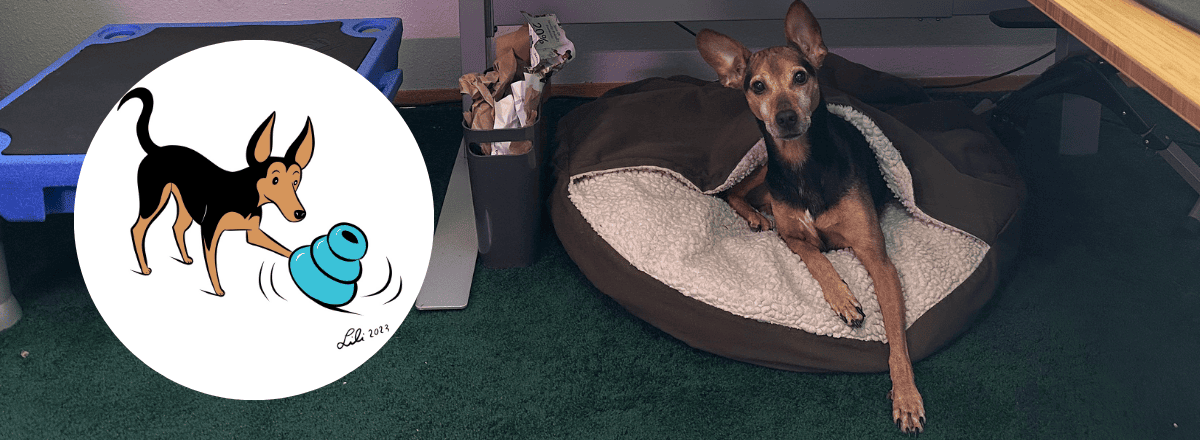
Griffey is our model for the Independence enrichment category because of the lessons he’s taught me about separation anxiety.
Myth #3 - Some flavor of “be more controlling”
This cluster of myths is often a little sneakier. It’s things like “don’t greet them when you get home,” or “ignore them for 10-minutes before you leave,” or “just crate train,” or “add a minute every session”.
On the surface, most people might read these and think, “yeah, that makes sense.” And there are little kernels of truth in each of these:
- If we get our dogs AMPED every time we come home or right before we leave, we can expect that our arrival or departure will cue that suite of AMPED behaviors.
- For lots of dogs, their crate is their safe space; it’s a quiet location where no one messes with them, and they get some extra special googies.
- In the grand scheme of time, a minute is quite small, and especially once you are comparing a minute to 120 minutes, it’s itty bitty.
Why this haunts me
For a social creature, stonewalling is incredibly distressing. When requests for attention or other needs are ignored, it can hurt the relationship. It can signal a lack of safety and cue a sense of insecurity. If my partner refused my interaction, especially bookending a time that was incredibly distressing to me, I can’t even finish this sentence with how awful it would feel. And how much it would breed distrust. Foundationally, for pets who struggle with separation anxiety, we want to foster a secure attachment, which is done by meeting those requests for attention and needs.
On the pet parent side, many clients come to me struggling with this. It doesn’t align with how they want to care for and support their pet, but they are worried that greeting and engaging with their pet will make matters worse. We shouldn’t strive to ignore; we should strive to be even, calm, and grounding in our interactions.
Many dogs with separation anxiety are already struggling with the lack of choice, control, and predictability they can exert over their world. When we confine them even further, in a crate, without the ability to do things like move their body to regulate, find a sun spot to lie in, or get water if they are thirsty, we are reducing their choice, control, and agency even more. For most dogs with separation anxiety, getting them comfortable in the crate AND THEN in the crate home alone is just adding another step to the process, and not an easy one at that.
And when the advice doesn’t center the dog’s experience, “add a minute every session” doesn’t account for how the dog is feeling. A minute is a really, really, really long time when your body is convinced you’re in grave and mortal danger. Something like, “If your dog is snoozey on the couch, add another minute next session,” accounts for both your goals and the dog’s experience.
Haunted by Grief
At the end of the day, the myths and advice that haunt me are really ghosts of grief. Grief for the families who feel like they are not enough. Grief for the pet parents who are feeling pressured to be cold, withdrawing, or distant from their pets. Grief for the pets whose agency, choice, control, and predictability shrink with each stage of intervention. Grief for the families who are in impossible situations, choosing between their self-care and their pet’s comfort.
Here’s to harmony,
Ellen
Now What?
If you’re someone who is struggling with separation anxiety and want to provide your pet with a full, plentiful, and enriched life, we’re here for you. It doesn’t need to be you or them. It doesn’t need to require restriction and rigid schedules. You can build a beautifully strong and fulfilling relationship with your pet and still foster independence.
Schedule a free 15-minute discovery call to discuss how we can help.
PS: Capitalism
Want to support our free, public content? Check out our Amazon shop. It’s full of enrichment and pet care items (that we really, actually use). Our team spends a significant amount of time working on content every week. We love it! But we’re also out here trying to pay our bills.
* Pet Harmony, LLC is a participant in the Amazon Services LLC Associates Program, an affiliate advertising program designed to provide a means for sites to earn advertising fees by advertising and linking to Amazon.com.
About the Author
Ellen Yoakum, KPA-CTP, CSAP-BC
Ellen Yoakum joined Pet Harmony in 2020. She is also a Pet Harmony co-owner, trainer and behavior consultant. Ellen is a Certified Separation Anxiety Pro Behavior Consultant, and Certified Training Partner through the Karen Pryor Academy (KPA-CTP). She loves helping families build communication and cohabitate successfully by developing strategies and plans that will benefit everyone.
Ellen has been working within animal care and behavior in multiple capacities including: dog daycare and boarding, wildlife rehabilitation, zoological, captive animal welfare research, and private training.
Copyright 2025 Pet Harmony, LLC. All Rights Reserved.
Terms & Conditions, Privacy Policy
Results are not guaranteed because behavior, human, canine, or otherwise, are not guaranteeable.