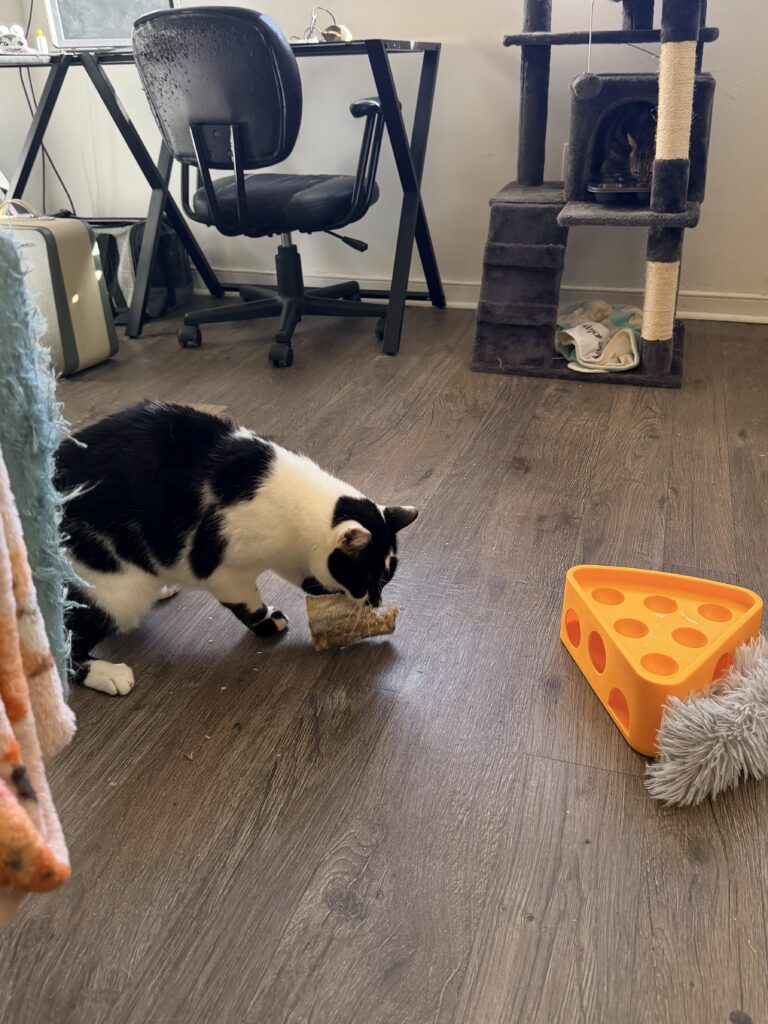
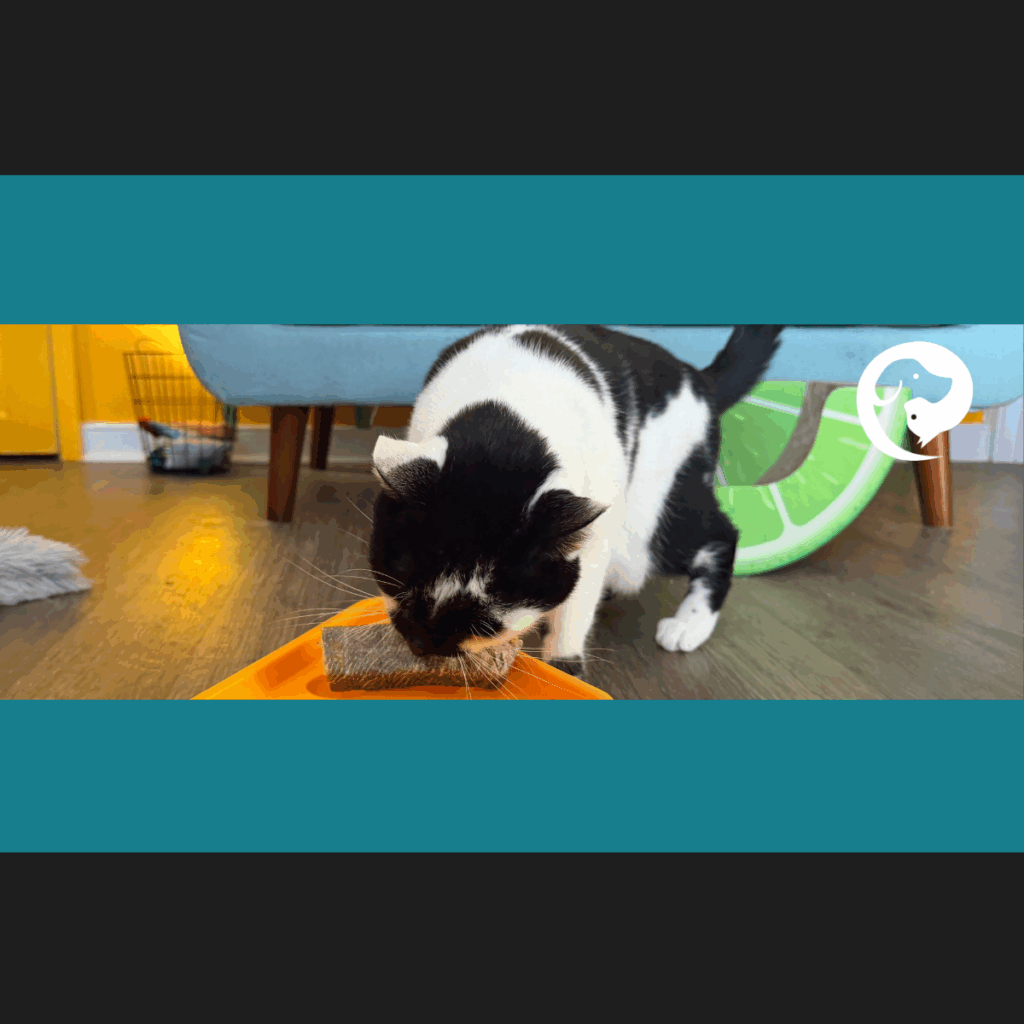
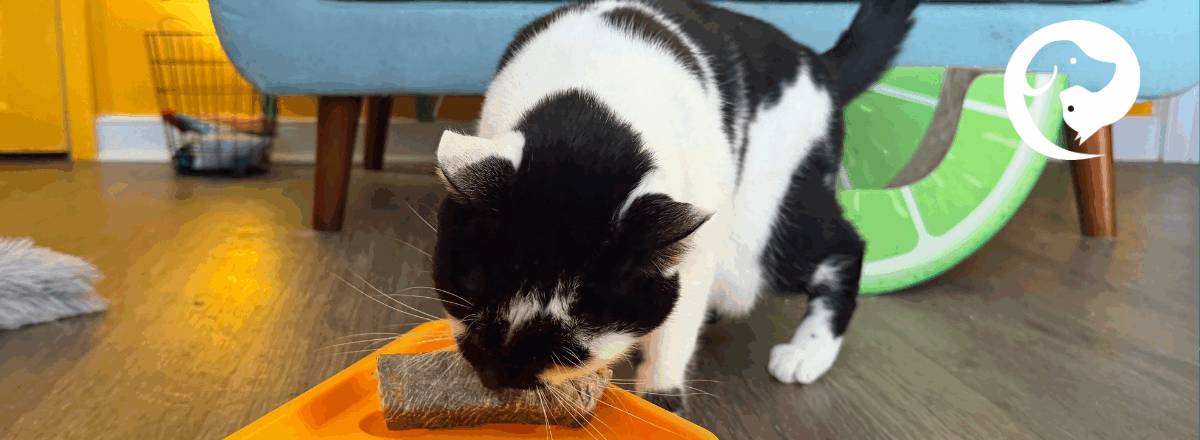
A white and black cat pulling a fish skin out of a toy.

Set it and Forget it: Enrichment Strategies for Busy Times

Set it and Forget it: Enrichment Strategies for Busy Times

A white and black cat pulling a fish skin out of a toy.

Cover image courtesy of Sam Pierce (Dognitive Behavior and Training)


Life sure is funny. It seems like just yesterday that I was talking to you about preparing the household for the transition of returning to school and here we are again, preparing for yet another transition.

Holiday season, winter doldrums, arctic freeze, anyway you slice it, things are in the process of changing…again. And if you have been following us for any length of time, you will already know that we are particularly passionate about three things around these parts: welfare and wellbeing, meeting an animals’ needs and responding proactively to the changes that living life on the daily brings. 

We humans are really good at putting pressure on ourselves and especially around holiday time it can feel like things need to be “just so” in order to be good. I am here to both challenge the notion that things have to be perfect to be good and that it is ok to take some shortcuts every now and then especially if they help us ease into a new transition. 

Now I want you to imagine your best cheesy salesperson voice and let me introduce you to the concept of Set it and forget it Enrichment Strategies: the One and Only True Way to Survive the Holiday Season! New and improved and guaranteed to make your lives easier! 

Ok, all joking and hyperbole aside, I am going to present to you some ideas to help you make meeting your dog’s needs just a little bit easier during the upcoming busy season. I promise that it will be manageable and take just a wee bit of effort on your part but you will get paid exponentially in doggy kisses, kitty purrs, a more satisfied pet and hopefully a little more wiggle room in your already busy schedule. How’s that for a sales pitch? Are you ready to read on? 

What Does “Set It and Forget It” Enrichment Mean?

The whole idea of “set it and forget it” essentially means that once you arrange something, it will then work automatically and thus requires little to no further attention. When it comes to enrichment our goal for “set it and forget it”  includes the following concepts: 

  • Enrichment doesn’t have to mean daily crafts or complicated activities.
  • Enrichment systems can keep working even when you’re busy.
  • The enrichment strategies should build consistency, predictability, and calm for both pets and people.

The goal is to have our strategy be low-effort for you, foster independence in your pet and be sustainable in the long term. A quick overview of some examples might include: 

  • Rotating enrichment stations
  • Safe spaces that stay stocked
  • Long-lasting chews or puzzle feeders that don’t require supervision

Build Your Enrichment Menu

Ask any chef and they will tell you one of the most important parts of cooking is not the finished plate but rather two important aspects that come before the cooking. Chefs spend time creating a menu in its entirety and then prep by creating something called the mise en place. Which is just the fancy French way of saying everything in its place. Meaning that before a chef cooks the meal, they first must decide what it is they will be cooking and then prepare and organize all the tools and ingredients they will need to cook it. Veggies must be chopped, herbs and spices measured, workstation cleaned, equipment readily accessible and knives at the ready. Only then does the true artistry of cooking commence. 

Part of “setting it and forgetting it” is to create your menu first and your mise en place second. Just like a chef, creating an enrichment menu for your pet will help lessen your labor in the long run. You can read more about this here: Create Your Pet’s Enrichment Menu but here are some easy steps to create a menu:
Identify your pet’s favorite enrichment types (eating, chewing, foraging, destructables, exploring, playing, etc)

  1. Identify your pet’s favorite enrichment types (eating, chewing, foraging, destructables, exploring, playing, etc).
  2. Gather a few go-to items for each category.
  3. Keep materials organized and easy to access in a location where you can gather everything you need. This might be a shelf in the pantry, a corner of the freezer, a section of a closet or even a storage bin.

Creating an inventory of what material you will need for your mise en place may feel like a bit of labor now, but once it is done, will save time in the long run. Creating a visual menu or checklist or spreadsheet now will help for those times when we need to make quick decisions, especially when time or energy is low. 
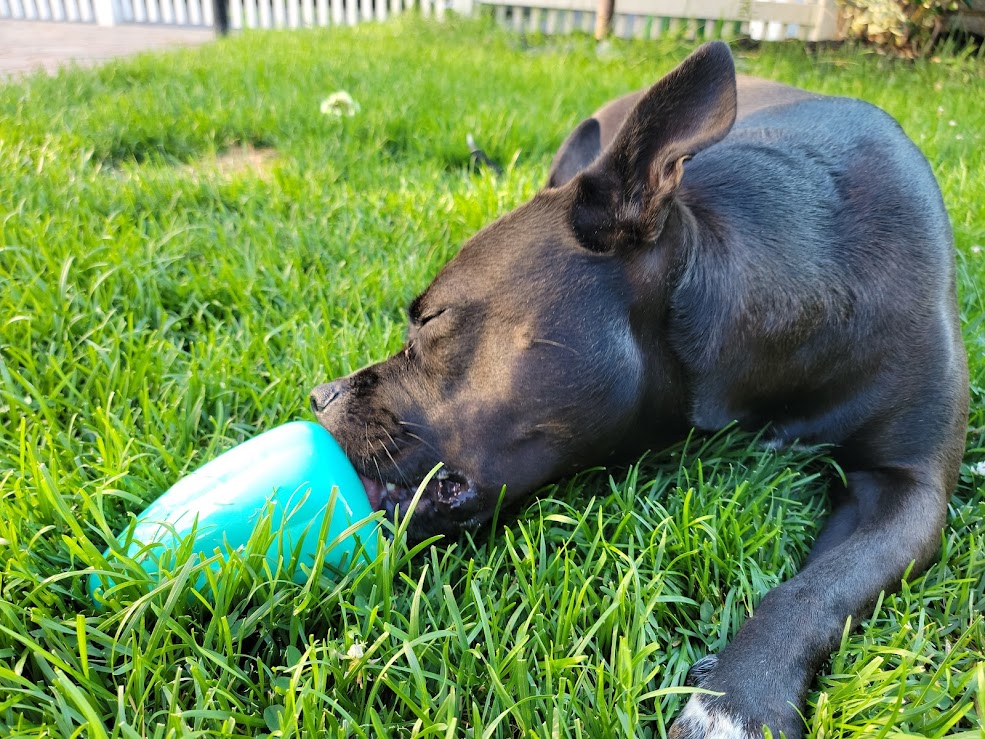
A black dog lying in the grass licking food out of a toy.
Minnie relaxing in the grass with a toy stuffed with frozen food. Photo courtesy of Katie Nahabedian (Pride and Joy Dog Training)
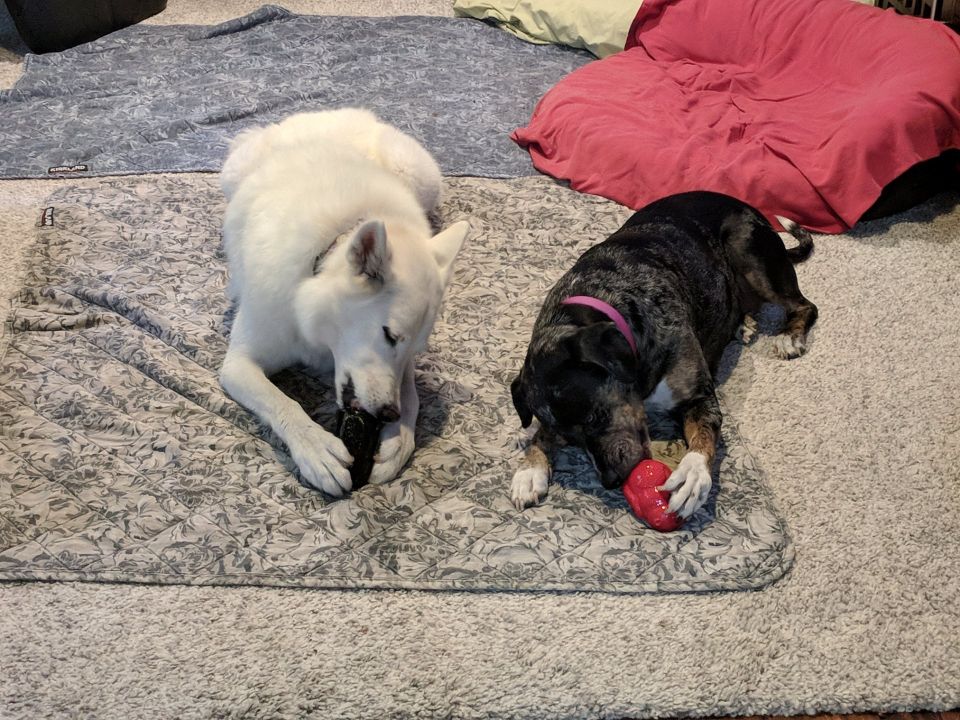
Some besties prefer to work on projects together, like Kara (left) and Georgia (right). Photo courtesy of Susan Cripps (A Dog's Tail)

Long-Term Calming Projects

One of my personal favorites for “set it and forget it” enrichment is a category that Pet Harmony refers to as long term calming projects

Long term calming projects are enrichment activities whose goal is to help your pet better self-regulate, gain independence, de-escalate, and ease into rest and or relaxation. Resting, self regulation, independence and learning how to de-escalate are skills that can be taught, practiced, and learned, and long term calming  projects are a big component of that process for our consulting team. 

Here are some examples of long term calming projects for dogs: 

  • Snuffle mats 
  • Licki mats
  • Stuffed Kongs or Toppls 
  • Chewing preferred items

And for cats and other obligate carnivores (such as ferrets): 

  • Small stuffed Kongs 
  • Licki mats
  • Snuffle mats  

Safe Spaces That Work on Autopilot

The holiday season can be stressful for everyone including our pets. Schedules are upended, visitors are more frequent and predictability and routine are tossed by the wayside. Creating a safe space that your pet can retreat to when things feel overwhelming for them is a crucial part of a set it and forget it strategy. 

We want our pets to know that they have a space that is always available to them if they need time away from the hustle and bustle. This can be a crate, a room or a section of the home where they will feel secure, they can rest, and where they will not be disturbed.

If your pet doesn’t have a defined safe space yet, watch where they currently rest and see if that will function as one. Remember though, if your pet’s preferred resting location is the family room couch and that is where a lot of activity will be happening in the next several weeks, you may want to help them learn that another location is quieter, calmer, and more relaxing. 

Providing a long term calming project in the new location, and pairing it with sound masking to cut down on ambient noise and your pet’s favorite blanket or bed can help boost the overall performance of the safe space.

When it comes to safe spaces it is incredibly important to understand that the safe space is not just about a location. It is mostly about the feeling of security it brings to your pet when the guests are gathered around the turkey and the egg nog is freely flowing. A safe space’s goal should not necessarily be about isolation but rather about the comfort that it provides for pets who may be overstimulated by changes in their routine. If you would like more tips on how to help your pets survive the holiday season read here and here

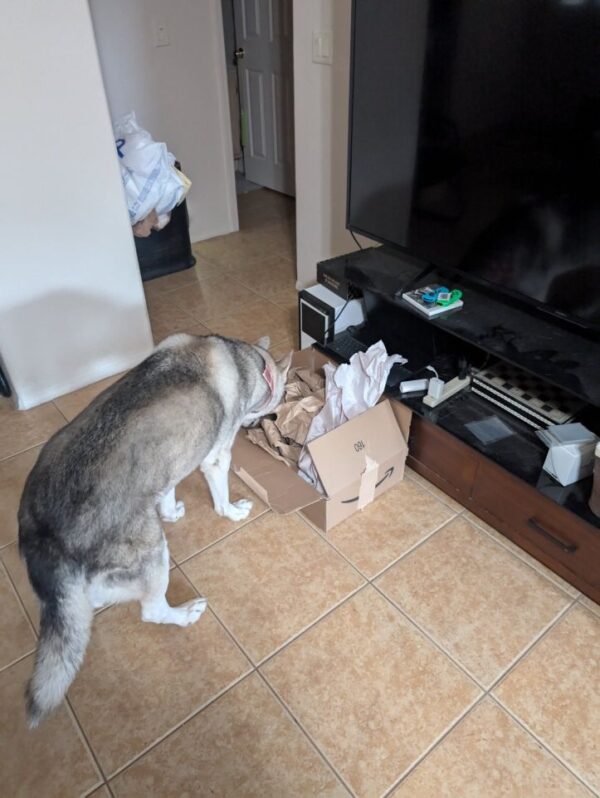
A grey and white dog snuffling treats out of a cardboard box with crumpled paper inside.
Turk snuffling out some snacks from a box full of shreddable materials. Photo courtesy of Rebecca Najarian (Dogs Plus Love).
A white and black cat chewing on a fish skin. In the background, a tabby cat in a cat tree is eating treats out of a muffin tin.
Cowboy (foreground) chews on a fish skin while Joylyne (in her safe space--the cat tree) eats treats out of a muffin tin. Photo courtesy of Sam Pierce (Dognitive Behavior and Training).

Results May Vary–Observe and Adjust

Good enrichment strategies of any kind should be guided by results, not by expectations. You might expect that once your pet engages with a preloaded snuffle mat they will then settle in for a long winter’s naps. However, what works for one individual may not work for another and it is important to adjust not only our expectations but also our plans if needed. Here are some tips to help with that: 

  • Observe outcomes so you can see what truly meets your pet’s needs.
  • Watch body language and look for signs that the enrichment is working, ie-relaxed body language, longer rest periods, lower intensity of undesired behaviors and faster recovery time are just some of the signs that tell us our strategies are going well.

Even though we are talking about set it and forget it, it is important to note that changes occur and we should expect to pivot when necessary. Developmental stages, health status, and physicality all will vary throughout a pet’s life and we should be prepared for adjustments in our plans as needed.

Here’s to harmony,

MaryKaye

Now What?

Preparedness makes for smoother transitions and preparing for the busy weeks ahead should include your pets so that you don’t have to panic at the last minute when Fluffy decides they can’t tolerate Uncle Bub half way through the holiday feast. 

To recap, ways that you can proactively prepare for the weeks ahead include the following:

  • Decide on a location for where you can store prepared enrichment items for your pet
  • Decide on a location that will function as your pet’s safe space 
  • Create your enrichment menu 
  • Gather the supplies and ingredients you will need to create your enrichment items 
  • Have young kids in the family? See if you can get their help with creating the enrichment activities. There are some great pet safe recipes online that can be used for licki mats, Kongs or Toppls 
  • Organize by day so that you can easily rotate items 
  • Pull out when you need them 

Copyright 2025 Pet Harmony, LLC. All Rights Reserved.

Terms & ConditionsPrivacy Policy

Results are not guaranteed because behavior, human, canine, or otherwise, are not guaranteeable.

Agency: What It Is & Why Your Pet Needs It

A few weeks ago there was a discussion in our Enrichment for Pet Behavior Issues Community Facebook group where I realized that I’ve never actually written a post about agency itself. Sure, I’ve included this topic in other posts but I’ve never devoted an entire post to this topic alone. It’s about time that changed! So this week is solely devoted to a topic that I don’t think gets near enough attention in the pet community: agency.


What is agency?

Agency is the ability to have some level of control in our environment and be able to make choices that will result in a desirable outcome. One of the important factors here is that agency requires at least two desirable choices. A “cake or death” decision a la Eddie Izzard doesn’t fly. 


Doesn’t meet the 2+ desirable choices criterion


A pet example of a choice that fits the criteria would be the choice to sleep on comfy bed A or on comfy bed B. An example of a choice that doesn’t fit the criteria would be come when I call or get shocked. Make no mistake, though, it’s entirely possible to use food coercively as well. Such as, you can have delicious treats but only if you approach a person you find scary. Those examples don’t have at least two great choices to choose from. 


Why agency is important

There are so many reasons why agency is important that it would take me an entire book chapter to explain them all 😉 The short answer is it’s helpful in:

  • Combating learned helplessness
  • Creating resilience
  • Improving behavioral health
  • Improving quality of life (I don’t have research to back this bullet point up since “quality of life” is pretty subjective, but I think it’s safe to say that this is likely true from an anecdotal capacity and if we look at all the other things agency does for an individual.)

On a more practical note, having agency can be huge when it comes to how an individual reacts in certain situations. Here’s the example I use with my clients to illustrate this point:

Say that you’re at an educational wildlife event. The presenter is holding a snake. You hang out at the back of the room, fearful to move closer. The presenter continues talking about the snake they’re holding and offers for anyone to touch the snake who would like to do so. By the end of the presentation you’ve made your way to the front of the room and touch the snake. This was not a scary experience because you had full control over whether or not you put your hand on the snake. 

Now, let’s say you’re having a picnic. You’re sitting and chatting with your friends when you put your hand down– right on top of a snake. Chances are you’re not okay with this scenario, even though it’s the exact same behavior– hand on snake– as above. You may scream, run away, or perform some other fight or flight behavior. The difference between these scenarios is that you didn’t have the choice to touch the snake in the picnic but did in the presentation. 

We seem to see this with our pets, too. I often see reactive dogs who are far less reactive when they’re able to move away from the scary thing than when they’re made to sit there and watch it. Or dogs with separation anxiety who display fewer stress-related behaviors or less intense stress-related behaviors when they’re given more space to move about in the house (though, confinement anxiety is also a thing). While we can’t necessarily ask our pets in these situations if it’s agency that’s truly causing the change in behavior, we see it consistently enough that it’s a valid hypothesis. 


How can I provide more choices in my pet’s life?

There are so many ways to do this and we have a lot of examples in our book, Canine Enrichment for the Real World. Here are some easy options:

  • Multiple sleeping areas to choose from
  • Being able to choose where they go and what they sniff on a walk
  • Food preference tests
  • Toy preference tests

Here are couple that are more involved but also allow for even more agency in situations where it really counts:

  • Cooperative care & start button behaviors for medical and grooming procedures
  • Being able to choose whether or not they move closer to a stressor– without luring with food


But… what if they make poor choices?

Agency doesn’t mean that your pet has full authority to do whatever they want. If you have a pet who bites people coming into the house they still need to be managed to ensure they don’t bite people coming into the house. We should not diminish safety to increase choice. 

Agency means providing choices that don’t compromise safety, physical health, mental or behavioral health, or enable them to practice unwanted behaviors. That sometimes means that our pets may not have multiple choices in a situation. When that happens we can acknowledge that and work on training a skill that allows our pet to have choices in future similar situations. For example, a dog who doesn’t have a rock solid recall (come when called) shouldn’t be off-leash even though being off-leash allows for more agency. Instead of resigning to that, we can work on training a rock solid recall for future use. 


Now what?

  • Assess the choices your pet currently has. Don’t be critical or hard on yourself; we’re simply assessing to see where we have room for improvement. 
  • In those areas where you find your pet doesn’t have agency, ask yourself why that is. Is it to mitigate safety concerns? Is it to mitigate unwanted behaviors? Or, are there situations where you’re not quite sure or because it’s what someone once recommended or you think it’s what you should be doing? Keep probing until you find those answers. 
  • If you’re newer to agency and thinking about your pet’s choices, choose one of those easier situations to increase your pet’s desirable choices. 
  • If this is something that you’ve been working on or thinking about for a while, you may want to consider one of the more involved options. Cooperative care is a great place to start for almost everyone. 
  • If you’re interested in learning more about agency and how to incorporate it into your pet’s life, check out our book Canine Enrichment for the Real World and be sure to join us in our Facebook group.


Happy training!

Allie

October 2020 Training Challenge: Assess Your Home Alone Activities Efficacy


Part of me can’t believe it’s already October and part of me reminds the first part that this has been the longest year ever. Regardless, it’s time for our October training challenge!

List enrichment strategies you employ while you’re gone and objectively go through the list to determine if those strategies are effective. 

Not only is this training challenge dedicated to the “Independence” chapter of our book, it’s also a great exercise in taking a descriptive vs. prescriptive approach to your enrichment plan. (Note: we decided what the training challenges were going to be well before Covid hit. While you may not be gone at work all day at the moment, this exercise still applies for shorter outings!)


Descriptive vs. Prescriptive

For those of you who’ve heard us speak this year, you’ve heard us talk about taking a descriptive approach to your enrichment plan.

Descriptive: “I see a change in my animal’s behavior because of the activities we’ve done or provided.”

Prescriptive: “I provided an activity for my pet therefore he’s enriched.”

With the descriptive approach, we observe behavior to determine if the activity was effective instead of assuming that it was. Did it actually meet the animal’s needs as we intended? If it did, great! We can keep doing it. If it didn’t, well, then it’s back to the drawing board. Emily wrote a great blog post about this here. It’s not enough for us to just assume that our pet’s needs are being met while we’re gone, we need to actually observe that that’s true. 


How can I tell if those activities are effective?

There are a few ways we can tell if these activities are effective:

  • They’re being used. If you leave a stuffed Kong for your pet and it’s untouched when you return, that’s not an effective strategy. 
  • Watch your pet on video. Want to know if the window film you put up for your pet’s reactivity is actually decreasing reactivity throughout the day? It’s time to break out a recording option and see what your pet is up to during the day. 
    • Recording options can be high-tech, like Furbo and Nest (these are affiliate links), or low-tech, like Skyping or Zooming yourself or setting up a laptop to record shorter absences.
  • Observe your pet’s behavior when you come home. Providing activities while you’re gone can be the determining factor between having an adolescent dog who’s bouncing off the walls when you come home vs. one who’s excited but not uncontrollable. 


Now what?

  • Make a list of the enrichment activities you utilize while your pet is home alone. 
  • Make a list of desirable and undesirable behaviors that you’re hoping these enrichment activities address.
  • Observe your pet’s behavior. Are those activities effective in increasing desirable behaviors and decreasing undesirable behaviors?
  • Adjust your enrichment plan accordingly. 
  • Share your findings with us on social media! @petharmonytraining on Facebook and Instagram


Happy training!

Allie

September 2020 Training Challenge: Teach Your Pet to Use a New Food Puzzle

This month’s challenge is:

Teach your pet how to use a new food puzzle

As I mentioned in the beginning of the year (and throughout the other challenges), this year’s training challenges are dedicated to our book Canine Enrichment for the Real World. Each month focuses on a different category of enrichment. This month’s focus is “Mental Exercise”. 

To effectively meet the mental exercise component, make sure that your new puzzle is challenging enough for your pet to employ their problem solving skills but not so challenging that they get frustrated and give up. There’s often a fine line between the two and that’s often why we need to teach our pets how to use their new toy.

From “They Won’t Do It” to “They Love It”

While foraging (searching for food) is a natural behavior for all species, food puzzles aren’t natural. There are no food puzzles growing in the wild so that the ancient dog or cat ancestor learned how to use them and pass that knowledge down to future generations. This is why we frequently need to teach our pets how to use a particular puzzle, especially if they haven’t used one before. 

Check out our video below on how to teach your pet to use a food puzzle:

Here are some tips for teaching your pet a new food puzzle:

  • Choose a puzzle with your pet’s preferences in mind. Our pets have preferences just like we do. For instance, Oso is a rough-and-tumble kind of dude. He’s great at the puzzles that he can knock over and roll around with his nose. He doesn’t mind the noise those make though he does prefer to use them on carpeted areas. I know that if I give him a new puzzle he can roll around I don’t need to show him how to to it. However, he’s not as adept at the intricate food puzzles that require a lot of small motions and steps. His way of solving those is dropping them on the floor so they break open (which, while a valid way to solve the puzzle is also expensive to buy replacements.) If I give him a more complicated puzzle I’ll have to teach him first before he can use it without breaking it. 
  • Choose a puzzle with your pet’s experience in mind. Giving a challenging food puzzle to a novice dog is likely to lead to frustration. On the other hand, giving a simple food puzzle to an experienced dog is not going to provide much of a challenge. Think about how much experience your dog has with food puzzles and choose a new one accordingly. 
  • Work up to the most challenging setting. Many puzzles have ways to make them more or less difficult. Instead of starting with the most difficult setting we should work our way up to it by first starting on the easiest, then easy-medium, medium, medium-hard, and finally the hardest setting. This allows our pet to master each setting and build a history of getting food from the puzzle. That history will help them keep at it for longer when it becomes more challenging. 
  • Show them how but try not to do it for them. It was once thought that only primates could learn through watching others but we now know that our pets can do this too! We can encourage them to use their new puzzle by showing them how to get the treats out a few times. Be careful though not to do it every time for them. Some learn that the best way to get the food out is to let the human do it! While that’s a clever solution in using their resources it doesn’t necessarily meet the goal we’re hoping to achieve by introducing a new puzzle. Show them how a few times then let them at it. 
  • Use a higher-value food. Higher-value food helps build more motivation in almost all training scenarios: this is no different! Up the ante when they’re first learning and save the kibble for when they’ve got the hang of it. 

What food puzzle should I try?

Here are some of our favorite store bought options for dogs (Disclosure: These are affiliate links. We receive a small commission for purchases made through these links at no extra cost to you. This helps us continue to put out free content to help you and your pets live more harmoniously!):

Here are some of our favorite store bought options for cats (Disclosure: These are affiliate links. We receive a small commission for purchases made through these links at no extra cost to you. This helps us continue to put out free content to help you and your pets live more harmoniously!): 

Small dogs and cats can often choose between these lists, too!

Don’t forget DIY!

Food puzzles don’t need to break the bank. There are a lot of simple, cheap, DIY options like these:

Now what?

  • Buy and/or make your new puzzle!
  • Teach your pet how to use their new toy, if needed. 
  • Share videos of your pets having fun and using their brains with us on Facebook or Instagram: @petharmonytraining

Happy training!

Allie

August 2020 Training Challenge: Work on a Relaxation Protocol or Mat Work

This month’s training challenge is dedicated to the “Calming Enrichment” chapter of our book Canine Enrichment for the Real World and is one of my favorite exercises for clients:

Work on a relaxation protocol or mat work

This exercise is something that most pets can benefit from. I incorporate it into flight training, building a sense of security, teaching pets to be calm, and teaching them to hang out in a particular location. Almost all of my clients working through anxiety and aggression behavior modification plans get this exercise!

Oso demonstrating mat work on a pillow case.

Different options:

There are several different types of relaxation protocols and ways to do mat work. Even though some of the protocols don’t require performing them on a mat (or bed, blanket, towel, etc.), I still like to include one. Options include:

  • Dr. Karen Overall’s Relaxation Protocol
    • This is my favorite for so many reasons: the frequency of treating is higher than most people do on their own which lends itself to it working faster and more consistently & it tells you exactly what to do so there’s less room for error as long as you’re following the instructions. 
    • Emily has further developed this protocol and put a special agency twist on it which we’re finding makes it even more effective! She’ll be teaching a course on Pet Harmony’s version of this protocol for the International Association of Animal Behavior Consultants. Stay tuned for more info on that upcoming course.
  • Suzanne Clothier’s Really Real Relaxation Protocol (this link contains the first half of this protocol; the full protocol is available for sale here.)
    • I like this one for pets and people who need less rigidity than Dr. Overall’s RP and who also have some training prowess under their belt. It can sometimes be too loosey goosey for someone newer to training. 
  • Mat work
    • Similar to the Really Real Relaxation Protocol, but I would say even more loosely structured when it comes to relaxation as our goal. Some people start with this to teach their pet to go to a mat and then switch to one of the above protocols. 

There are other options out there but these three are my go-to exercises. No matter which option you choose, start working on this in just one location before taking it on the road. 

Now what?

  • Choose an exercise that you’d like to work on. 
  • Choose a mat, bed, blanket, towel, rug, or whatever works for you and your pet! We want to pair this mat with relaxation. I like bath mats quite a bit; the rubber backing helps it to not slide when you’re practicing. 
  • Start practicing! Remember that the goal is relaxation– not stay. I advise against using a “stay” cue and having that be the primary criterion. It’s okay if they’re not perfect at this yet! 
  • Send us your pics and videos of your pet working on the August training challenge! Email us at info@petharmonytraining.com or connect with us on Facebook or Instagram @petharmonytraining.

Happy training!

Allie

Shifting the Focus

“It’s not all about you.” How many times have you heard this statement? We could all probably be rich if we had a dollar every time we heard that phrase (okay, maybe not rich but could at least buy a new food puzzle for our pets). Well, I’m here to give you one more dollar; this time, in relation to our pets’ behavior. 

Others’ behavior often feels very much about us. It can feel like a slight, like retaliation or revenge, or purposefully trying to get our goat. But – here’s your dollar – your pets’ behavior isn’t about you. It’s about them. This isn’t to say that we don’t cause or influence certain behaviors to happen. It’s not to say that your relationship with your pet isn’t a factor in their behavior. It means that they’re behaving this way to meet their own needs first and foremost. 

Let’s narrow our focus a bit to look at the situations where I find myself having this conversation with clients. Common statements that start this discussion include:

He gets mad at me when I leave and pees out of spite. 

She’s protecting me whenever someone comes to the house. 

He won’t listen to me when he’s reactive; he’s stubborn.

Why is he doing this to me?

In each of these statements, the focus is on the human. What if we assumed it had nothing to do with the human? What if we put the focus on the animal? In that case, those statements could become:

This cat is anxious when left alone, and elimination can often happen due to fear or stress. 

This dog is afraid of strangers, and is protecting herself from a perceived threat.

This dog currently has “mountain lion brain” and can’t respond to you because the fear center of his brain has taken over everything else.

Your pet isn’t giving you a hard time, they’re having a hard time. 

Okay, that last one I stole from a social media meme that was going around a while ago. If anyone knows who the original source is please let me know so I can give them credit! 

When we change the stories we tell ourselves about why our pets do what they do, it can be not only eye-opening, but also relieving. I wrote about that in this blog post last year. 

Behavior serves the individual who’s doing the behavior and all behavior serves a function (except arguably for stereotypic behavior, which is beyond the scope of this post). Behavior serves to meet needs, from physical to mental to behavioral needs. Reactivity and aggression serve to tell a threat to go away. A recently declawed cat eliminating outside of the box serves to relieve the pain litter often causes on sore paws. Not coming when called from the yard serves to prolong the fun they’re having. It’s about them, not about you.

Now what?

  • The next time you catch yourself thinking about your pet’s behavior with yourself as the focus, try reframing it and put your pet as the focus instead. What need could they be trying to meet?
  • Not sure what’s included in your pet’s needs? We go in-depth into those categories in our book Canine Enrichment for the Real World. Join us in our Enrichment for the Real World Community group on Facebook for more free info, too!
  • Speak with a consultant if you need extra help shifting the focus of your pet’s behavior.

Happy training!

Allie

scent work challenge

May 2020 Training Challenge: Play “Find It” 3 Times a Week

For those of you who have been doing training challenges with us for a while, you’ll recognize this one. It’s so beneficial to our pets that I had to bring it back!

Play Find it 3x per week

I’m a big fan of “lazy person’s” find it: scatter a bunch of treats or food on the floor and let your pet search for them. I play this with Oso while I’m watching TV at night. He has a great time and I get to relax. Win-win! 

I recommend playing for just 10-15 minutes to start with, 3x/week and see how that impacts your pet’s behavior. For many pets I see that this relatively small amount of scent work is sufficient to decrease attention-seeking behaviors and increase periods of rest. You may decide to increase or decrease how frequently and how long you play for depending on what you see from your pet! And keep in mind that this isn’t just for dogs; there are many species who would love to play this game, too. I’ve known many cats who love this!

Why Find It?

There are several reasons why we love this game and it’s one that we recommend to almost all of our clients. Here are some of our favorite reasons:

  • Great for relationship-building, especially for kids.
  • Ticks the box for several categories of enrichment: foraging, mental exercise, and for some individuals the calming category.
  • Fantastic for animals with anxiety, fear, and compulsive behaviors.
  • Can be built upon for behavior modification techniques later.

Now What?

  • Grab some treats and start playing!
  • If your pet doesn’t already have a cue to search for food on the ground, teach them a word or phrase (the video above tells you how).
  • If your pet is already a pro, you can increase the difficulty by playing outside in the grass or by hiding treats under furniture or items. 
  • Make sure you’re only hiding food in places where your pet is allowed to search. For instance, don’t place food on a table or counter if you don’t want your dog to search there normally!

Happy training!

Allie

Dog enrichment ideas

April 2020 Training Challenge: Explore DIY Destructible Toys

We hope you’re all doing well and staying safe in this crazy time! I’m personally really excited about this month’s training challenge as it’s something that I recommend to clients all the time:

Explore DIY Destructible [Trash] Toys

Not only is this a simple and cheap activity, but it’s often great enrichment, too! Dogs were made to destroy and gut things. But, unfortunately for them, we humans don’t love that natural doggy behavior. We get upset when they destroy their toys. We get upset when they steal tissues and paper towels and shred them to pieces. We get even more upset when they destroy our furniture. 

Toys that we purposefully give to dogs to destroy serve a wonderful purpose. Our pets get to do what they were made to do and we don’t get upset with them for it. It’s a win-win! An even larger bonus is that when we allow our pets to express their natural behaviors in appropriate ways, they are less likely to express them in ways that we’ve deemed inappropriate. Yep, that means that you can curb that annoying stealing-tissues-and-playing-keep-away-before-your-dog-inevitably-shreds-it behavior by providing these sort of toys. 

I’m always looking for a cheaper way to provide enrichment for Oso (who LOVES shredding things), so while I’ll occasionally get him stuffed toys to de-stuff from clearance bins, our go-to’s are DIY trash toys. As the name suggests, I make them out of literal trash. Supplies include:

  • Newspaper
  • Toilet paper rolls
  • Paper towel rolls
  • Empty tissue boxes
  • Granola bar, cereal, and similar boxes
  • Take out beverage holders
  • Treats

Check out our video on how to put it all together here:


And here’s a video of Oso enjoying one of those creations:


It’s truly as simple as it sounds!

Now what?

  • Make some of your own destructible trash toys! Watch the above video for tips on how to make them. 
  • Give one to your dog and let them go to town! Watch your pup the first few times you’re giving them new items. While the majority of dogs will not ingest inedible items (especially if you’re not actively trying to get the item away from them), we want to double check to make sure they’re not ingesting them. A little bit of paper swallowed along with the treat isn’t a big deal but we don’t want them eating the whole thing!
  • Routinely provide your dog with these items for a couple of weeks. Do you notice any changes in their behavior? Tag us on Instagram @petharmonytraining with your findings, pics, and videos!
  • We frequently recommend these toys for dogs who have behavior issues- everything from demand barking and playful mouthing to anxiety and stress-related behaviors. Click here to work with one of our behavior consultants to learn how to use these toys to help your dog de-stress and incorporate them into your dog’s behavior modification plan! 

Happy training!

Allie

When is Enrichment Not Enriching?

When Allie and I first started writing our book, Canine Enrichment for the Real World, we had a conversation with Dogwise about what exactly the book would cover. When we submitted the outline, our publisher’s comment was, “This is a lot more comprehensive than I imagined!” And, yes. That’s precisely the point.

The thing about the pet-owning community is that we want to learn more about the animals in our care, and we often do so by passing information around, rather than learning about these topics in a more formal, structured way. This isn’t necessarily a bad thing, but community-shared information doesn’t come without its risks: namely, that we end up playing a game of Telephone, and as information gets shared it gets watered down and misinterpreted, until no one is really sure what’s true, what’s false, and what’s somewhere in between the two.


The Whole Picture

The topic of enrichment has not been immune to this game of Telephone. Most folks in the pet community don’t realize that enrichment started in zoos, and that the concept was created to improve the welfare of captive wild animals. As such, what zoos, aviaries, and aquariums mean by enrichment is often significantly different than what pet parents and dog trainers mean. For zoos etc., enrichment is the means by which they ensure that the animals in their care are physically, behaviorally, and emotionally healthy. When the pet-owning community talks about enrichment, they generally talk about it in terms of keeping pets occupied, making their life more interesting, or giving them things to do—keeping them busy, in other words. Which, to be clear, is certainly an important aspect of enrichment! But by no means the whole picture.

During the process of writing the book, I spent a solid three months trying to get in touch with people from the zoo and dog training world who had been in this profession in the 70s and 80s, trying to figure out when and how the concept of enrichment made its way from zoos into the pet community—to no avail. No one could tell me how it happened, or when. It just… kind of… did. So it’s no wonder that much got lost in translation!

So our goal for the book was to bridge the gap between enrichment as it was originally intended, and as zoos etc. currently use it, and how the pet-owning community thinks of it. We want pet parents, behavior professionals, shelter workers, veterinarians, and anyone else in the pet community to have access to the same information that zookeepers have. We want the people in our community, which we love so much, to be empowered by more and better information.


Outcomes vs. Intentions

And here’s the reason this matters so much: our community has a strong tendency to approach problems prescriptively. We look at a situation – whether it’s a specific behavior issue or just a general, overall welfare issue – and we say to ourselves, “I’m going to use positive reinforcement,” or, “I’m going to give this animal more enrichment,” or, “I’m going to provide foraging.” Those are all fabulous goals! The problem is that we tend to get stuck at the stage of our intentions, without paying much attention to whether or not our outcomes match our intentions. We often keep doing something because we believe that we’re achieving our intended goal without actually measuring whether or not we truly are. This often leads to us doing a whole lot of work without seeing a whole lot of improvement. Which can be frustrating and demoralizing.

But enrichment isn’t what we do or the things we give them; enrichment is what happens as a result of what we do and the things we give them. Toys aren’t enrichment. Playgroups aren’t enrichment. Nose work classes aren’t enrichment. All of those things have the potential to make enrichment possible, but enrichment itself doesn’t happen until the animal chooses to engage with those things, and as a result of that engagement, is able to meet one or more of their own needs. We can only know if enrichment has happened after the fact.


Prescriptive vs. Descriptive

This approach to enrichment is descriptive, rather than prescriptive. When we learn how to take a descriptive approach to enrichment, it looks like this instead: “This dog loves to spend time with other dogs but is not currently getting enough play opportunities. So I am going to take him to some playgroups to see if playing with dogs in that setting will meet that need. Oh yes! Look! It does! Look at him having fun playing with those dogs. Wonderful. For this dog, at this stage in his life, playgroups are a good form of social interaction enrichment.” Or, “This dog is destroying my furniture when I leave her at home alone. This tells me she needs more opportunities to chew, tear, and shred appropriate objects rather than my sofa. I’m going to give her some foraging toys that have to be chewed, torn, and shredded in order to access the food. Oh look! Now that she has these toys to keep her occupied during the day she’s no longer destroying my stuff. For this dog, at this stage in her life, destructible foraging toys are a good form of foraging enrichment.”

Being able to take this descriptive, goal-oriented approach to enrichment requires an understanding of what our pet’s needs truly are. It requires learning a bit more about their species – their body language, common motivators, and species-typical behaviors – and it also requires carefully observing the individual animal in front of us to see what behaviors they’re offering, what needs they have, and how we can best meet those needs. It requires learning to see with our eyes, rather than our ideas. And all of that is very doable! We’re here to help you do exactly that.


What Now?

Want to dive deeper into this topic with us? Want to learn about how taking a descriptive approach to enrichment can improve your relationship with your pet? Here are some related resources:

Here’s to harmony!

-Emily

February 2020 Training Challenge: Explore New Indoor Physical Activity Options for Your Pet

I can’t believe it’s already February! That means it’s time for this month’s training challenge:

Experiment with, and incorporate 1 new indoor physical activity into your pet’s repertoire. 

I’ve been talking quite a bit about “Winter Oso”: how Oso’s behavior changes in the winter when his physical activity decreases. I know many other dogs start getting “cabin fever” around this time of year so this challenge seemed fitting for February. It’s always great to have more activities that both you and your pet enjoy up your sleeve when the weather gets bad! 

Here are 10 examples of indoor physical activities that you can experiment with:

  1. Jump to target: if your pet already knows a cue to touch their nose to something (ie: your hand, tennis ball on a stick, etc.), then gradually raise the target up so they have to jump to reach it!
  2. Jump up/off furniture: if your pet is allowed on the furniture, ask them to jump up and back off several times in a row. 
  3. Recalls throughout the house: wait until your pet is farther away from you (I toss treats down the hall to get this!) then ask them to “come”. The faster they come the more treats they get!
  4. Running up and down the stairs: run with your pet or stand at the top of the stairs and have them run down and back up by tossing treats or toys down (like fetch!) Be sure to put a mat at the bottom of the stairs so they don’t slide. 
  5. Fetch (down a hallway or up/down stairs): all you need is a long hallway or set of stairs and you can play fetch inside!
  6. Tug: a great strength-building game! It’s an old wives tale that this increases aggression so tug away! 
  7. Flirt pole: these are like giant cat wand toys made for dogs. They are great for exercise and can still be done inside if you have a large enough space or small enough dog!
  8. Long-distance “place”: similar to recalls throughout the house, wait until your pet is farther away and then ask them to sit or lie on their place/mat/bed.
  9. Balance activities & other physical therapy-type activities: get out the balance boards and exercise balls! These activities require extra training and can benefit from the recommendations of a professional, but are wonderful for senior pets. 
  10. Tricks that use extra muscle (I.E. sit pretty, army crawl, etc.): another that requires training but these can be a great way to get both mental and physical exercise in in one fell swoop!

Oso and I demo several of these activities in our February 2020 Training Challenge FB Live video (find our FB videos here). 

Now what?

  1. Pick an activity that sounds fun for you and your pet. 
  2. Try it out! Whatever you pick may require some time, patience, and training. Troubleshoot if necessary!
  3. Does that activity actually wear your pet out? If yes, then it’s an appropriate form of physical exercise for them. If not, go back to step 1. 
  4. Post pics and videos of your pet enjoying their new exercise on our Facebook page
  5. Need extra help? We offer enrichment consultations for things just like this! Email Emily at emily@petharmonytraining.com to schedule yours. 

Happy training!

Allie