

Training advice can quietly warp into impossible standards. “Daily sessions” becomes “if I miss one, I’ve failed.” Here’s how to name that trap and see why consistent, sustainable effort beats flawless execution every time. Through real examples, you’ll see what “good enough” training actually looks like — tossing treats instead of running a perfect protocol, swapping a hike for a cardboard box to shred. Find out why sustainable plans, not comprehensive ones, are the ones that actually create lasting change.
Tag: enrichment


Why Your Cat Needs a Safe Space (and How to Build One That Works)
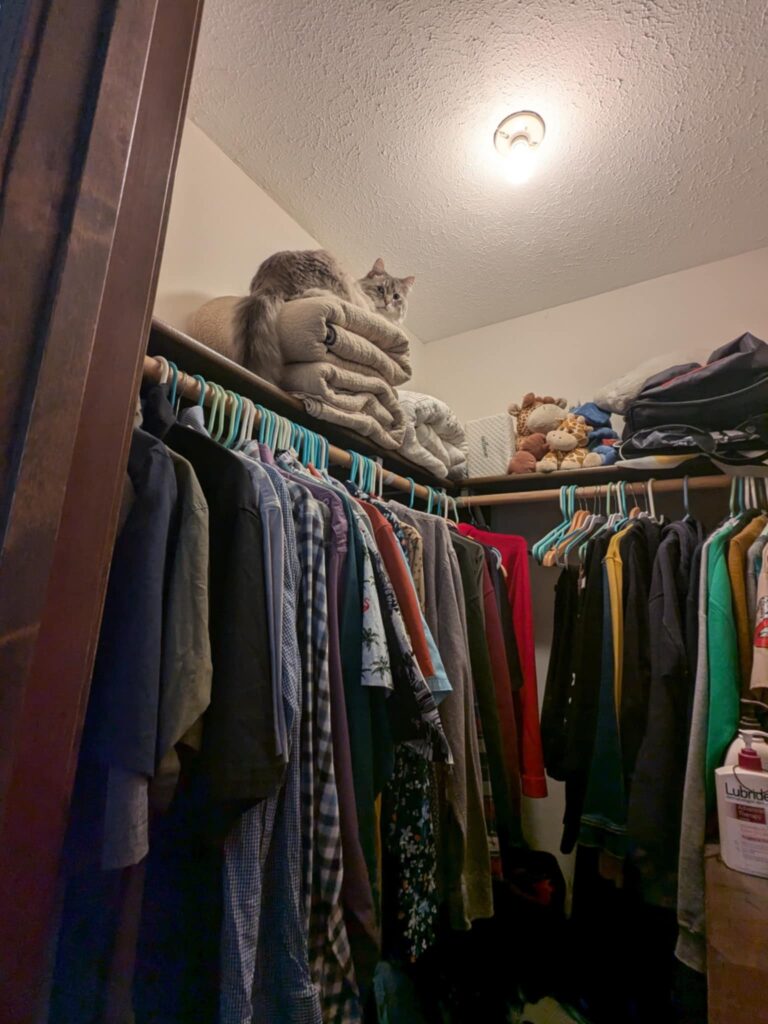

Trick or (go Find a) Treat in Your Safe Space!
A harvest moon settles in the sky shining brightly through the hazy clouds. The house is warm and toasty with the smell of chili wafting through the kitchen. A candy bowl perches proudly on the hall table waiting to be emptied. A deep wind blows– Fido pulls his ears back. A shadow creeps past the window– Fido lifts his head. The crunch of tiny feet on leaves– Fido sits up tall and begins to pant, his ear high and attentive. The footsteps get closer to your front door and Fido closes his mouth to halt all inefficient movement beside the twitch of his curious nose. The footsteps stop. . . he lowers his head. The whispers echo. . . he slowly inches forward. The door bell rings. . . “TRICK OR TREAT!!!” (and Fido bumbly runs to the door knocking over the candy bowl and you to greet the visitors who are surely only here to see him and not get their loot).
Sound familiar?
Whether it’s Lock, Shock, and Barrel, the UPS person, a solicitor, or just a family member that wasn’t thinking, these people ringing the doorbell can put your pup into a spiral of exuberance/fear and it can be hard to reign them back into their thinking brains. My suggestion is to give them something TO do when they hear the doorbell to provide comfort, predictability, management, and a new learning history. Let’s teach them that:
DOORBELL = GO TO SAFE SPACE!
If your dog already has a cue to go to their safe space, now might be the perfect time to experiment with this new doorbell cue (if they don’t have a cue yet, why not try it with this!). This is known as a cue transfer, and the order it’s taught is:
New cue > old cue > [behavior] > reinforcement
You may have already done this accidentally with other things. Maybe you taught sit with just a lure, which became the hand signal, and then you added a verbal cue.
“Sit” [new cue] > hand signal [old cue] > butt contacts floor > treat
After enough consistency, you might be able to say “sit” and the pup would put 2+2 together and put his butt on the ground before you even do the hand signal. Cue transfers like this happen all the time even without our conscious effort, but knowing how to do it intentionally is a super helpful tool.
That means that for this cue transfer we’ll do:
Doorbell [new cue] > “go to place” [old cue] > goes to place > treat (or other reinforcement)
Let’s put it together, people! Here’s the steps I would use in a 3-5 min training exercise (modifying as necessary):
- Get a bunch of yummy treats and one long term calming project.
- Practice “go to your place” for a few reps to create some behavioral momentum. If you haven’t taught this yet, start close to their safe space, lure them on the target, mark, reward.
- Either using an audio doorbell sound or your brother (to give him something useful to do) staged outside, sound the doorbell, give the old cue, and wait for behavior to reinforce.
- Once you’ve all done it with at least 80% accuracy, you can try to wait a little longer in between the sound of the doorbell and the old cue to see if he offers the behavior you want to see, in this case, going to his place. This is how you phase out the old cue!
- When you’re finished with your last rep, reward the pup with a long term calming project to transition him to relaxation.
It sounds pretty simple right? It can be! But it also can be less straightforward than you’d expect. If you’re hitting some speed bumps, consider the following:
- Does your body position to his safe space affect his behavior?
- Do you really say “go to your place” or is the cue actually leading him there (doesn’t matter if it is, you’ll just need to start with the cue that he knows)?
- Is there already a strong/over excited/aversive learning history with the doorbell that needs to be addressed before using it in a training exercise?
- Is his safe space a space he actually chooses to go to?
- Is his safe space too far/too close to the door?
…and probably a million more things that could be affecting clean training. Once you get this down, it’s time for proofing the behavior to the impending distractions that come after the “going to placing” (read more about proofing here).
With that being said, I love having the doorbell be a cue to do something that is incompatible with what we don’t want him to do (rush the door) as a practiced tool in our toolbelt. I also love that for the fearful kiddos it could also become a flight cue to his safe space if people coming over makes him uncomfortable.
For Halloween, it’s super helpful to get the pup safely to a place that helps everyone be successful (pro tip: also add a physical barrier because Halloween is a TOUGH night for these kiddos who just don’t understand why Spidermen keep coming to their door making their parents squeal).
Trick or Treat (and treat and treat and treat and treat)!
Now What?
Think about what Halloween (or similar holiday/gathering if this isn’t a practice where you live) looks like in your household. Consider what gaps you’d like to work on before the event happens to help everyone feel prepared. It might mean training, it might mean management, it might mean something else totally different!
Happy Training!
Corinne

The Stigma of Using Treats (AITA?)
Alright y’all, am I the asshole?
I went to see a mobile vet with my newly adopted dog, Eden. He was (and still is) cute, fluffy, and came with a bite record towards people and dogs. Body sensitive, healed injuries to his front legs, and the softest fur I’ve ever touched. It’s a confusing dichotomy.
When Eden and I stepped into the camper-turned-vet-clinic, there was the wonderful veterinarian we had been working with–but also another person I didn’t know. He was present the whole time, and, I learned later, turned out to be the owner of the area where the vet regularly parks. At the time, I had no idea what his purpose there was. Was he shadowing? Or driving the vet? Was he just a really lazy assistant? No clue. Not my focus as long as he didn’t try to interact with Eden.
Eden needed to get vaccines and a check up before being officially adopted. I let him go onto a lifted up platform, and started handing him treats. I wasn’t interested in timing or markers, I was simply handing him treats with regularity. He ate, tentatively. The vet started to go over his back. As she looked him over, the additional person suddenly said, “Stop giving him treats.”
I said “No, thank you,” and kept handing my dog treats.
I wasn’t expecting a comment about it, or what to take from that interjection, or why he thought I cared about his opinion? He said nothing for a while. Eden continued to eat food and eye the veterinarian, but let her do her thing. We went through the exam without any issues and when the vet was done the treats went back in my pocket.
Later, while the vet was getting Eden’s medication refilled and his forms completed, I felt this punch of guilt about my response. Had I been rude? Was this guy trying to help and I just shut him down? Or (more of a hit to my pride) did he think I was inexperienced and didn’t know what I was doing?
So I said hello to the person and launched into explaining my purpose for giving Eden so many treats.
“If he stops eating, I know he’s over threshold and more likely to bite. That’s why I gave him all those treats during a situation like this. If he stops eating we’ll likely need to pause or consider putting a muzzle on.”
The guy shrugged and we made small talk about something related to the camper, since I had zero idea who he was still. The veterinarian gave me Eden’s refills and his paperwork and we left and went home. And then it hit me how absolutely rude the guy’s comment had been to comment about it at all. “At least ask me why,” I said to Eden… and also to my partner when I got home… and also to my mom when I called home… and to my best friend over dinner. It wasn’t bothering me, obviously.
Well??? Who’s the Asshole??
I’ve had clients visibly blanche when they see me dole out treats for exercises. I’d be encouraged to use less food when filming a dog’s progress to seem more… impressive? Even my dad, who genuinely respects and appreciates the work I do, will roll his eyes about using treats with his dog.
When I asked some colleagues and fellow dog people if they’ve felt stigma about using food, the results were mixed. But when people did experience some stigma that was direct, it often sounded like this:
“Am I going to run to get food every time I need him to do something?” “When do I stop using treats?” “How long do I have to train with food?” “Yeah but what happens when I don’t have a treat on my person?” “It feels like bribery.”
Positive Reinforcement is…? Cookies?
“Am I going to run to get food every time I need him to do something?”
Okay let’s clear up one concept first.
Reinforcement is not just food. Reinforcement is any consequence that increases, or strengthens, the behavior it follows. Dog trainers talk a lot about food when we teach skills like introducing a marker/clicker. It’s a fair assumption that most dogs will work for food. It’s also a fair assumption that most people will work for food**.
But! Training with food sometimes is not reinforcing. Why? Cause we don’t get to decide what is reinforcing for the learner (dog/person/rat/etc). We’re going to back track to my elementary school days for a minute and take advantage of the fact that I have a twin brother for our examples:
- For dinner, my mom made my twin and I buttered noodles; my twin loved it and I would rather eat almost anything else. My dad made my twin and I spicy stir fry; I was in heaven, but my twin picked out the single vegetable he liked. He wouldn’t eat anything else until offered the leftover butter noodles. The goal was for the kids to finish their meals and put some kind of nutrient in our bodies, so technically both goals were accomplished.
- Getting home from school, I sat down with my mother and spilled the tea. She knew more about the dynamics of an elementary school playground than she could ever possibly care about. Getting home from school, my brother went straight to the bedroom and played with legos, or blocks, or video games. The purpose for us as kids was to decompress from learning and the adrenaline-fueled interactions with our peers, and to get into the rhythm of being home. But if you had forcibly switched either of our experiences post-school, there would have been tears and yelling and bad moods all around. Even if you filled either experience with unlimited cookies. So I’ll repeat:
We don’t get to decide what is reinforcing to the learner (dog/person/rat/etc). Whether that is a primary reinforcer like sleep or food, or secondary reinforcers like access to the environment, access to sniffing spots, the clicker (or whatever marker you’re using), or the sound of a crinkly plastic bag.
**We spend roughly 12.8% of our money on food in 2022, and that’s only beaten out by transportation to get our food and housing to store our food. We work for food too, dude.
Okay, but Specifically the Food Part?
“It feels like bribery.” What is bribery!? Bribery is defined as attempting to make someone do something for you by giving them money, presents, or something else they want, usually somewhat dishonest or illegal. (Thanks Cambridge Dictionary).
Last I checked, asking for a ‘sit’ isn’t horribly nefarious?
There are plenty of dogs that can’t do skills without the treat being present, especially in the pet world, but that may mean less about the use of the treat and a little more about the training skills of the person using it. Using food to help create a clear 1:1 can be a handy communication tool between us and our dog. Recognizing the plentitude of rewards in our environment can help people feel less ‘bribery-y’ and also flex those observation practices!
For example, training a recall can be challenging, but is a great example of what reinforcers can look like.
My go-to recall training technique starts with creating enthusiasm and excitement for the key word (“Here!”, “Come”, etc). A really popular way to do this is having a super high value reward in your hands, and also to add motion to our recall word by running away and having a little chase game. But! Let’s consider our environment and what happens after the recall is done to add more enthusiasm!
Let’s use my dog Ghost as an example. When in the backyard, I love practicing recall. But, I don’t recall Ghost to go inside! She loves to be outside, especially in the woods. Sniffing, exploring, chasing, all the best things are outside! So when we practice recall, after she comes to me, she may get some cookies but the better reinforcer, from what I can observe, is that she gets to stay outside.
Now let’s use my dog Eden as an example. I love him dearly, but he is what we call an inside dog. Too hot, too cold, too hard, too soft; let’s just say, the couch by the AC is his favorite place to be on any given day. When we’re in the backyard, and I practice recall… That’s right, we’re going inside!
The food hangs out as a happy in-between, especially if I ever am wrong in my assumption of what will be rewarding for my dogs. Did I accidentally call Eden away from a very exciting bug mystery? Did Ghost have a hurt paw and walking up the stairs into the house started to hurt without me noticing for a little bit? The food is a happy in-between if I can set it up–but in the same way that I really enjoy writing, but the paycheck is an added bonus to make sure I complete it efficiently.
Responding in Our Community and IRL
While this is a conversation on food specifically, this section is structured towards any level of unsolicited advice!
Unsolicited advice and conjecture always comes as a bit of a surprise to me. Sometimes it happens in the wide world, or the vet office, or even what was originally thought to be a learning environment. Taking classes and courses, working around colleagues or other dog lovers, means opening up the way you train directly to a bunch of eyes that may have thoughts about what you are doing.
Whatever the comment, keep in mind your goal and what you’re looking for. I’ve felt pressured to adjust my goals based on other’s comments, or other’s eyes, expectations, judgements, etc. Unless you have expressly asked for help or opinions, no one has the right to assume you were looking for advice just for being in public. This goes for using food, or any other aspect of training!
When it comes to dealing with people who don’t agree or have their opinions coming in, how can we respond? How do we make space to learn and not also fall into the same problem that person has; judging what someone else is doing without understanding why? Well, in short, you don’t need to.
Here are some responses when you’re not looking for further conversation on the matter:
- That’s not what I’m working on right now.
- I don’t feel the need to do that with my dog right now.
- No, thank you.
Let’s say this is an environment that we are discussing or able to discuss longer. Or it’s a coworker, or a friend:
- I can explain my process later but right now I would like to focus on what I’m doing.
- If you want to demonstrate what you’re describing, you can with your dog. But I want to finish working with my dog first.
- I don’t think we have similar goals in mind.
The Importance of Community While Learning
Training with treats can sometimes come across as aligning with a certain ideology in the training field when, really, it is not as divisive as many people imagine.
Consider how you would like to hear critique and who might be the most beneficial person to deliver it to you. Even though in my example I knew why I was rewarding Eden with food, there were plenty of times in my life I didn’t know! Asking questions and wondering if you were doing the right or wrong thing is an inherent part of this training journey. It wouldn’t hit so hard if we didn’t believe it a little when we heard it, especially as young trainers!
But finding others in our community to work through the learning pains can help us navigate the experience when comments or critiques negatively affect us. Finding a community of people who are willing to give and receive constructive feedback can help us feel safe enough to assess why we are using food or whether we’re applying training techniques in a productive manner. I would hope this article encourages people to cultivate supportive communities where they can ask more questions instead of limiting their learning to only their perception. And build the skills to recognize when comments like, “How long will I need to use food?,” have pretty simple resolutions when we’re looking through an enrichment and welfare lens.
Why didn’t I include saying, “Shut up,” as a response? Not because it isn’t a valid response (it can be). But because my goal with this article is to talk about how we can guard ourselves from stigma while also improving our relationship with the person offering the criticism when possible. That being said… Some people will not be interested in the reason behind your actions. Some people will not be open to conversation. Some people will not be in your life long enough to deserve your level of introspection, growth mindset, or concern.
And if that is the case, the ethical and kind response to their request that you “stop giving your dog treats” can be a plain and simple:
“No.”
Now What?
Write out responses and ways to handle situations, before you have to encounter them out in the wild. I have below the responses I had listed earlier in the article for easy reference and so that you can start to build your own list!
- That’s not what I’m working on right now.
- I don’t feel the need to do that with my dog right now.
- No, thank you.
- I can explain my process later but right now I would like to focus on what I’m doing.
- If you want to demonstrate what you’re describing, you can with your dog. But I want to finish working with my dog first.
- I don’t think we have similar goals in mind.
Consider practicing saying all of these out loud! May sound silly but practice makes perfect, and could also help you move through conflict a little easier if you feel confident in what you’re saying.
Happy training!
Taylor
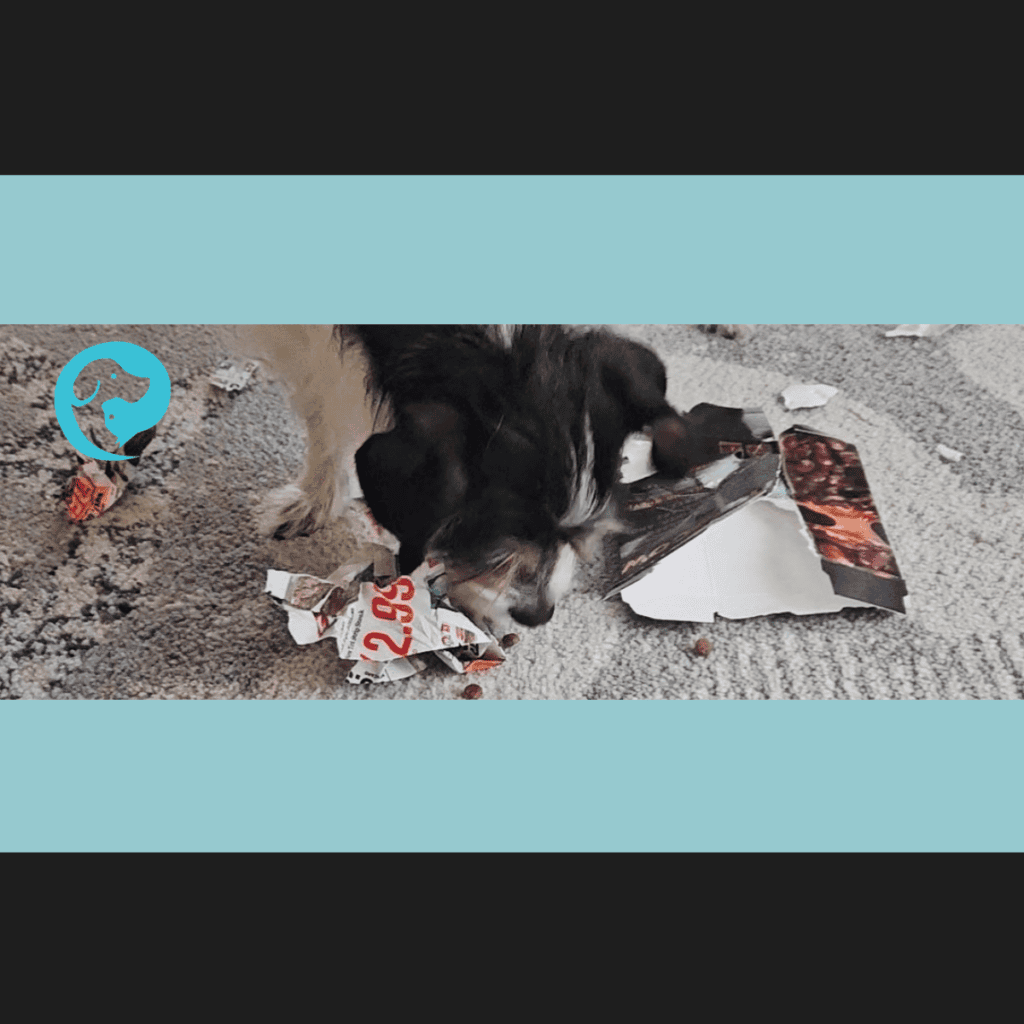
5 DIY Dog Puzzle Ideas for Cheap Canine Enrichment
Want to enrich your dog’s life without spending a fortune? These 5 DIY dog puzzles are made from stuff you probably already have around the house — cabbage, muffin tins, an old bottle, even cardboard. Each one taps into natural behaviors like sniffing, foraging, and shredding, so your dog gets real mental stimulation, not just something to keep them busy. You’ll also learn how to match a puzzle to your dog’s goals, from burning energy to redirecting destructive habits, plus simple safety tips for introducing them.
Agency: What It Is & Why Your Pet Needs It
A few weeks ago there was a discussion in our Enrichment for Pet Behavior Issues Community Facebook group where I realized that I’ve never actually written a post about agency itself. Sure, I’ve included this topic in other posts but I’ve never devoted an entire post to this topic alone. It’s about time that changed! So this week is solely devoted to a topic that I don’t think gets near enough attention in the pet community: agency.
What is agency?
Agency is the ability to have some level of control in our environment and be able to make choices that will result in a desirable outcome. One of the important factors here is that agency requires at least two desirable choices. A “cake or death” decision a la Eddie Izzard doesn’t fly.

A pet example of a choice that fits the criteria would be the choice to sleep on comfy bed A or on comfy bed B. An example of a choice that doesn’t fit the criteria would be come when I call or get shocked. Make no mistake, though, it’s entirely possible to use food coercively as well. Such as, you can have delicious treats but only if you approach a person you find scary. Those examples don’t have at least two great choices to choose from.
Why agency is important
There are so many reasons why agency is important that it would take me an entire book chapter to explain them all 😉 The short answer is it’s helpful in:
- Combating learned helplessness
- Creating resilience
- Improving behavioral health
- Improving quality of life (I don’t have research to back this bullet point up since “quality of life” is pretty subjective, but I think it’s safe to say that this is likely true from an anecdotal capacity and if we look at all the other things agency does for an individual.)
On a more practical note, having agency can be huge when it comes to how an individual reacts in certain situations. Here’s the example I use with my clients to illustrate this point:
Say that you’re at an educational wildlife event. The presenter is holding a snake. You hang out at the back of the room, fearful to move closer. The presenter continues talking about the snake they’re holding and offers for anyone to touch the snake who would like to do so. By the end of the presentation you’ve made your way to the front of the room and touch the snake. This was not a scary experience because you had full control over whether or not you put your hand on the snake.
Now, let’s say you’re having a picnic. You’re sitting and chatting with your friends when you put your hand down– right on top of a snake. Chances are you’re not okay with this scenario, even though it’s the exact same behavior– hand on snake– as above. You may scream, run away, or perform some other fight or flight behavior. The difference between these scenarios is that you didn’t have the choice to touch the snake in the picnic but did in the presentation.
We seem to see this with our pets, too. I often see reactive dogs who are far less reactive when they’re able to move away from the scary thing than when they’re made to sit there and watch it. Or dogs with separation anxiety who display fewer stress-related behaviors or less intense stress-related behaviors when they’re given more space to move about in the house (though, confinement anxiety is also a thing). While we can’t necessarily ask our pets in these situations if it’s agency that’s truly causing the change in behavior, we see it consistently enough that it’s a valid hypothesis.
How can I provide more choices in my pet’s life?
There are so many ways to do this and we have a lot of examples in our book, Canine Enrichment for the Real World. Here are some easy options:
- Multiple sleeping areas to choose from
- Being able to choose where they go and what they sniff on a walk
- Food preference tests
- Toy preference tests
Here are couple that are more involved but also allow for even more agency in situations where it really counts:
- Cooperative care & start button behaviors for medical and grooming procedures
- Being able to choose whether or not they move closer to a stressor– without luring with food
But… what if they make poor choices?
Agency doesn’t mean that your pet has full authority to do whatever they want. If you have a pet who bites people coming into the house they still need to be managed to ensure they don’t bite people coming into the house. We should not diminish safety to increase choice.
Agency means providing choices that don’t compromise safety, physical health, mental or behavioral health, or enable them to practice unwanted behaviors. That sometimes means that our pets may not have multiple choices in a situation. When that happens we can acknowledge that and work on training a skill that allows our pet to have choices in future similar situations. For example, a dog who doesn’t have a rock solid recall (come when called) shouldn’t be off-leash even though being off-leash allows for more agency. Instead of resigning to that, we can work on training a rock solid recall for future use.
Now what?
- Assess the choices your pet currently has. Don’t be critical or hard on yourself; we’re simply assessing to see where we have room for improvement.
- In those areas where you find your pet doesn’t have agency, ask yourself why that is. Is it to mitigate safety concerns? Is it to mitigate unwanted behaviors? Or, are there situations where you’re not quite sure or because it’s what someone once recommended or you think it’s what you should be doing? Keep probing until you find those answers.
- If you’re newer to agency and thinking about your pet’s choices, choose one of those easier situations to increase your pet’s desirable choices.
- If this is something that you’ve been working on or thinking about for a while, you may want to consider one of the more involved options. Cooperative care is a great place to start for almost everyone.
- If you’re interested in learning more about agency and how to incorporate it into your pet’s life, check out our book Canine Enrichment for the Real World and be sure to join us in our Facebook group.
Happy training!
Allie
December 2020 Training Challenge: Holiday Safety
It’s time for our last training challenge of 2020! Keeping with our holiday and enrichment theme from last month, this month’s training challenge is inspired by the “Safety” chapter of our book, Canine Enrichment for the Real World.
Create a holiday safety enrichment plan
Holidays often bring about a lot of décor changes within our homes and some of those changes are safer than others. Plants like poinsettias and mistletoe are toxic to our furry family members (and us). Candles and wagging tails present fire hazards. Extra candies around the house make for prime counter surfing targets.
Then there are those holiday decorations that aren’t necessarily dangerous in and of themselves, but that we still need to include in holiday safety plans, like Christmas trees. Or things like decorations with sentimental value that need to be protected from our pets rather than the other way around. And that’s just the decorations!
Here are 7 tips to creating your holiday safety enrichment plan:
- Manage during meals. Just like we talked about last month with Thanksgiving, sometimes management during family meals is the easiest solution. Set up the environment to keep your pet out of the kitchen or in another room entirely during holiday meal prep and eating if need be.
- Manage stranger danger issues. Holiday parties are not a great time to work on your pet’s stranger danger issues. This is probably not as much of a problem with this year’s holidays, but something to keep in mind for the future. Put your pet completely away so that you don’t have to worry about anyone’s safety while you’re celebrating. They’ll be happy to be away from the festivities, too.
- Keep ornaments, lights, and tinsel off the bottom branches of your tree. All can pose as hazards, whether ingested, tangled up in, or knocked off by your pet.
- Keep candles out of reach. This is easier said than done for those of you with cats in your home.
- Keep hazardous gifts out of reach. Make a note of any gifts (especially food items) that are hazardous for your pet to get into and ask anyone else sending gifts if their presents should be kept out of reach too.
- Watch the wires. Make sure that wires are well-hidden from pets who are prone to chewing.
- Exercise pens are a Christmas tree’s best friend. Do you have a dog who’s a little too interested in your tree? Put a free-standing baby gate or exercise pen around your tree. Here’s the link to our Amazon storefront where you can find the exercise pen that we like (also pictured below). Disclosure: This is an affiliate link. We receive a small commission for purchases made through these links at no extra cost to you. This helps us continue to put out free content to help you and your pets live more harmoniously!
There are, of course, many other things that you may want to include in your holiday safety enrichment plan and each person’s plan is going to look different depending on how they celebrate during this time of year. We’d love to hear what’s included in your plan!

Now what?
- Decide how you’d like to create your holiday safety enrichment plan. Does it make sense to create it as you decorate? Are there parts you need to plan for before you start?
- Gather any management tools you need. Pick up baby gates, exercise pens, and the like before you need them.
- Discuss your pet’s holiday safety enrichment plan with your entire household and anyone else who is visiting your house. Make sure that everyone is on the same page to limit slip-ups.
- Be prepared to tweak your pet’s plan based on how it’s going. The best plans are dynamic.
- Share your plan with us on Facebook and Instagram @petharmonytraining
Happy training & happy holidays!
Allie
Pet Behavior During & After the Pandemic
It’s been hard to write this post. Heck, I’ll admit that I didn’t want to and wasn’t planning to, but have gotten requests from some of you and feel a sense of obligation to our readers and clients who are searching for information. We try to be a pretty upbeat, positive company but the reality is that we’re scared, too. We’re not sure of all the effects that this pandemic will have in the years to come. And it’s hard for all of us, ourselves included, to be at our best when we’re struggling to make sure that our most basic needs are being met. Often I can use writing and focusing on other projects as a way to step out of reality, even just for a moment. And, because of that, I often avoid writing about things that are still quite fresh and heavy on my heart: like this post. The one that I knew I would eventually have to write. The one that I know that you guys are looking for.
I suppose this is all to say that this article isn’t meant to be a comprehensive guide to your pet’s behavior during the COVID-19 pandemic. We, like you, are still learning what the ramifications are and how this impacts animal behavior. There are things we may be wrong about. There may be experts who disagree with something here. There are things that we may say later that contradict something written today. That’s okay. Part of the beauty of a learning journey is being vulnerable and honest throughout, and admitting when we’ve learned something that is different to what we used to think. And, I’ll be frank in saying that this will be one of the more candid posts you read from me (as you can already surmise). It’s just plain hard for me to be eloquent and concise at the moment. But, I’m allowing myself some grace in the name of helping pets, and I hope you can do the same. So, without further ado and with no more disclaimers, I bring you Pet Harmony’s take on pet behavior during the 2020 pandemic. Buckle up; it’s a long one.
What we’ve been seeing
Emily and I joke that behavior challenges come in waves. Sometimes it makes sense as to why that happens, like when we suddenly get a burst of leash reactivity cases every spring. Or why we sometimes see a surge of stranger danger cases right after Thanksgiving leading into Christmas. But other times there doesn’t appear to be any rhyme or reason. Just a few months ago it seemed like the only new cases I was getting were dog and kid cases; but I digress. This pandemic has brought forth a few behavior challenges that we’re getting many requests for, including:
- Reactivity (on leash and behind a barrier)
- Intraspecies aggression with housemates
- General anxiety (especially regressions)
These make a whole lot of sense and, you’ll notice, that these are all anxiety-related behaviors. So why would we expect to see an increase in anxiety-related behaviors right now? A few reasons:
- Change in routine. Individuals with anxiety do quite well with routines; they can help to lessen stress. It’s quite common to see individuals who experience anxiety normally to have regressions in their otherwise improved coping skills when their routine is disrupted. Like, say, when their humans are now home 24/7 and schedules are complete anarchy.
- Less nap time. I have spoken with a number of clients, and my husband, about how pets who don’t get enough sleep can wind up like cranky toddlers, thus increasing agitation, reactivity, and anxiety. Oso had a hard time the first couple of weeks that we were home and I realized it was because he wasn’t napping as much throughout the day (us pesky humans wanting to cuddle him got in the way of that).
- More togetherness. This is along the same vein as routine changes and less nap time. I’m seeing an increase in clients asking for help with their pets suddenly not getting along in the house. Oftentimes, when I learn what their routine was before and after shelter-in-place procedures, I find that the animals are spending a lot more time together than they once did. We all need breaks from our housemates no matter how much we love them; especially when we’re with them 24/7. Many people are acutely feeling that fact right now.
- Everyone and their dog, quite literally, is outside walking. I get it; I also try to get out and walk daily. But for pets who already have reactivity or anxiety from people passing by their house, yard, or while they’re on leash are now experiencing a lot more triggers than normal. And, not only are there more triggers, they’re far less predictable than they used to be. We used to know when the quieter walking times and areas were and people with reactive pets could gauge when and where it was better to walk to avoid stressors. It’s far harder than it used to be to do that.
- Some household triggers are increasing. If triggers outside increasing weren’t enough, there are plenty of pets out there whose fears are coming from inside the house. This can include things like noises, household members moving around or doing certain activities, and, for some of those newly adopted pets, fear of their new humans altogether. More triggers means more stress and more stress often manifests itself in anxiety-related behaviors.
- Our stress adds to their stress. You’ve probably heard this adage before, that when we are stressed our pets become more stressed, too. It can be true! Dogs can even smell our stress hormones so it’s very hard to fake it with them. We’re all stressed right now. That can further lend itself to our pet’s new or exaggerated behaviors.
What we expect to see
We’ve now been in this long enough that it appears the above are primarily where people are currently feeling friction. But what happens when the world resumes to some semblance of normality? There are two concerns that I’ve seen over and again: separation anxiety and puppy development. Let’s briefly explore both.
Separation anxiety
I’ll confess, I have a pet peeve (well, more than one but this one is relevant to the topic). I’ve seen a lot of articles talking about “Preventing Separation Anxiety” and it frankly gets under my skin. Separation-related disorders are complex and there are several factors that are involved, including genetics and other contributing factors we have no control over. Prevention is not guaranteed and we shouldn’t be talking about it as if it is. Additionally, development of a separation-related problem is also not guaranteed and we shouldn’t be talking about that as if it is, either. We need to strike a balance.
Experts in the field all seem to be speaking right now about their fear of a rise in separation-related disorders when people start leaving for work again. I’d be remiss if I didn’t pay attention to what they’re saying. It’s wholly possible that we will see many more separation-related cases in the future. There is certainly anecdotal evidence of pets having separation-related disorders crop up after their humans start a new job and their hours change.That will happen to some pets soon, unfortunately.
That said, it’s still a complex issue and there are many, many factors involved, some of which scientists are just scratching the surface of (like epigenetics). I expect to see an uptick in these cases in the future, but I’m not concerned about every single pet out there. I am, certainly, concerned about pets who’ve shown inklings toward this in the past and those with general anxiety. If that’s your pet, let’s do something now to address it. If that’s not your pet, let’s keep it in the back of our minds but focus on other things.
Puppy Development
Hoo boy there are a lot of new puppies out there! In addition to the wave of cases I’m currently seeing above, I’ve also gotten more requests for puppy sessions than I have in the past several months combined (to be fair, I don’t often get many puppy requests since aggression, reactivity, and anxiety are my passion, but still). The question that’s on everyone’s mind is: how will these puppies who are experiencing their critical socialization period during shelter-in-place behave when they’re older? I’m curious to know the answer, too.
Puppies’ critical socialization period is from about 3-5 to 12-14 weeks. During this time they’re like sponges absorbing information about the world around them: the good, the bad, the familiar, and the dangerous. Learning continues throughout their entire lives, but the socialization window is over far before they reach mental maturity. So what will happen when we are limiting our own exposure to the world, and consequently theirs?
Honestly, I’m not quite sure. I can see it going a lot of different ways. An interesting thing about the critical socialization period is that it’s actually composed of two parts: one where they’re learning how to be a member of their species and the other where they’re learning about the rest of the world. While there’s a huge emphasis on socialization with other dogs in American culture, the truth is that by the time puppies enter our households at 8 weeks old they’re ending the period where they’re learning how to dog and entering the period where they’re learning how to live in a human world. The puppy should’ve already been meeting other dogs before they came to us (within the safety protocols for their health). So is it necessary for puppies to practice their social skills with other dogs after that first half of the socialization period? Absolutely. Is it necessary for them to learn how to keep their cool when seeing other dogs out in the world? Absolutely. Is it necessary for them to interact with a bunch of other dogs while they’re learning how to be in our world? Probably not. But we’ll certainly learn more as these pandemic puppies grow up.
The reason that I’m skeptical as to the claims that this will be terrible for puppy development is two-fold. One: people have more opportunities to interact with their puppies, to build relationships with them, to teach them how to interact with our human world, and to build their confidence and resiliency when they’re home all day with their puppies. Two: most other countries put far less emphasis on dog-dog interactions than the United States does, and they also have lower incidences of reactivity. When we put more of an emphasis on relationships with humans than other dogs, we see a difference in behavior. Maybe this won’t be the worst thing from the lens of dog-dog socialization.
Where I am more concerned is with these dogs having a harder time when folks go back to working in offices and when meeting other people. Specifically, I’m concerned that these puppies won’t learn how to cope with being alone, learn how to entertain themselves, and be properly socialized with people of all sorts of shapes, sizes, ages, genders, and ethnicities. The first is taught early on in day to day life and the latter often happens in puppy classes without the owners realizing it. New puppy owners will need to be more cognizant of working on these things; they are still quite possible to do even with social distancing. We’ll get into that in the next section.
What to work on now
Alright. We’ve spoken about what’s currently happening and what may happen in the future. Let’s talk about what we can do right now for our pets.
- Develop a new routine, including nap time and decompression time from housemates.
- Get window film. Seriously. If I had a dollar for every time a client thanked me for suggesting window film for their reactive pet I would be rich. It’s hard to yell at things out the window when you can’t see them (though, noises are still fair game). [P.S. That’s an affiliate link. We receive a small commission for purchases made through these links at no extra cost to you. This helps us continue to put out free content to help you and your pets live more harmoniously!]
- Tweak your management plan to accommodate new or increasing triggers. What used to work might not work right now and that’s okay. Avoid triggers for now and your behavior consultant can help you modify the behavior later.
- Build calming activities into your day. Things like calming music or background noises, aromatherapy, and massage are often calming to members of all species (but not all individuals!)
- If you haven’t already been dealing with separation-related behaviors, leave your house. Go for a walk without your dog; it will be just as beneficial in the long-run as going on a walk with him. Give him a stuffed Kong, food puzzle, or chewy when you leave so he gets to party while you’re away.
- If you have already seen separation-related behaviors, start (or continue) working with a consultant now. I would also be rich if I had a dollar for every time someone told me, “I tried to do a bunch of suggestions that I found or heard and wish I’d started with a professional sooner.” Gimmicks are just that. They don’t work for every individual. Honest to goodness behavior modification done at a pace that doesn’t elicit anxiety will yield results far more efficiently and effectively than trying a bunch of gimmicks to see if they work. Now is the perfect time to work on separation anxiety with the help of your consultant.
- Work on puppy socialization at home. I love Dr. Yin’s puppy checklist found here. Other great resources include those from Puppy Culture and Puppy Start Right. There are a whole heck of a lot of ways to build confidence and resilience in your puppy right from home.
- Take your puppy out and about and teach them humans and dogs are great at a distance. Your puppy doesn’t need to meet someone to know that they’re alright! Simple things like playing, basic training, and treats falling from the sky can tell your puppy that great stuff happens with you when all those other people and dogs are around. You become more fun and others become less scary. Win-win!
- Focus on enrichment as a way to meet all of your pet’s needs. Building a solid enrichment plan can help with all of the above and more. We can help with this; more info below.
Now what?
- Just as I mentioned in the beginning of this post, I’m giving myself some grace to not be at my best right now. I invite you to do the same. Focus on just one thing that you can do right now. When that feels manageable, add another if it makes sense to do so.
- When in doubt, increase management. We can modify behavior later. Right now just focus on the behavior not getting worse.
- Reach out to a behavior consultant if you need help developing a management plan and/or if you have the wherewithal to start on a behavior modification plan. Remote sessions are just as effective as in-person sessions with a seasoned consultant!
- Register for our FREE enrichment workshop: 5 Days to a More Effective Enrichment Strategy. We’ll give you tools to create a more effective plan efficiently and without breaking the bank. Register here: https://petharmonytraining.com/freeenrichmentworkshop
Happy training,
Allie
Conversations with My Dog
A lot of people talk to their pets. I’m one of them. I ask Oso questions he’ll never be able to answer, I sing him songs that he doesn’t understand, and I occasionally throw in something that he does know like, “Do you want to go outside?” Humans are talkative beings. Sorry, Oso. But what if I told you that Oso can hold his own in some of our conversations? I sound crazy, right? Let me explain.
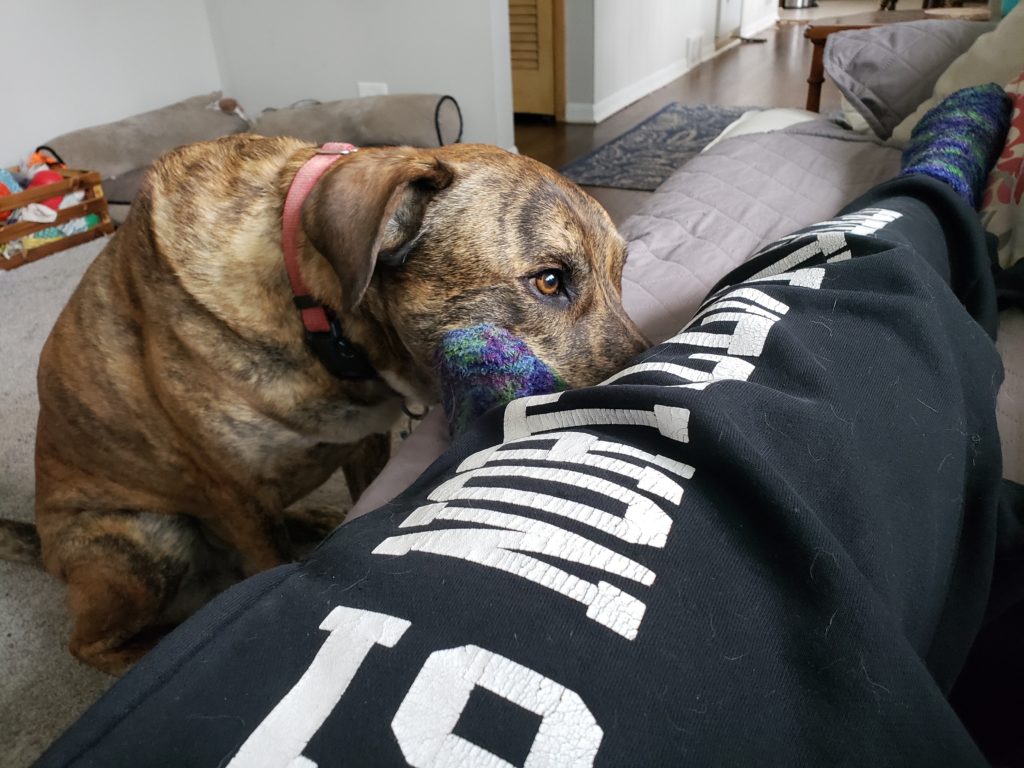
This may just look like a super cute picture of Oso, but it’s actually the beginning of a conversation. Here’s what he’s saying:
Oso: *puts head on couch* I’d like to come up on the couch.
Me: Okay, come up then.
At this point, one of two scenarios play out:
Scenario 1:
Oso: *comes up on couch and snuggles* Hooray snuggle time!
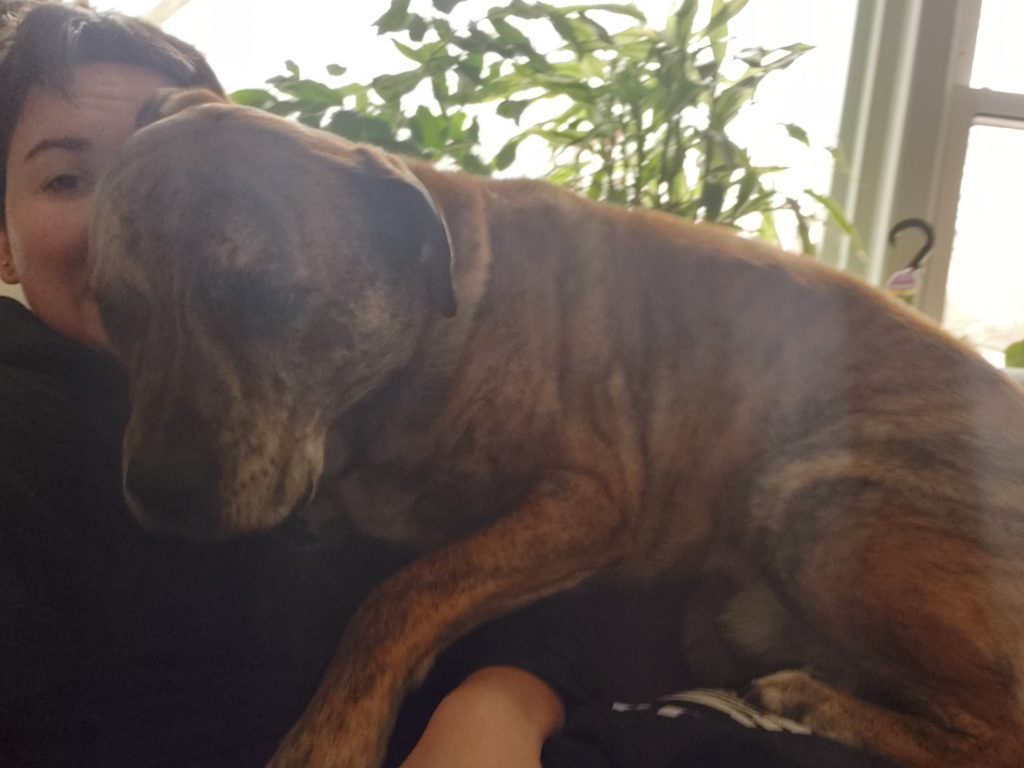
Scenario 2:
Oso: *looks at me without moving his head* There’s stuff in my way.
Me: Is something in your way? You’re ridiculous. *Continues chattering while clearing space for him on the couch* Come up then.
Oso: *looks at me without moving his head* There’s still not enough room.

Me: *Sigh* You’re the worst. *Moves my legs to give him even more space*
Oso: *comes up on couch, sprawls out, and falls asleep*
Now, I’ve clearly anthropomorphized some of this. I don’t *really* know his side of the story. But, what I do know is that we very consistently have this interaction. We have both learned this way of communication from one another. His head-on-couch behavior prompts me to create space for him and he comes up after I do so. He continues to put his head on the couch because he gets the space he’s looking for and I get snuggles so I continue giving him space. It may look unconventional but it definitely qualifies as a conversation. Communication is so much more than talking.
Expanding the picture
Oso learned how to use a “head down” behavior as a conversation starter not through this couch behavior, but during our training sessions. We often start our training sessions with his nail file board. However, after he scratched for a varied length of time, he consistently would become disinterested in continuing. In the beginning I took that to mean that he wasn’t interested in continuing our training session in general and would move on to my own thing. He would continue putzing around the room, though, as if to say that he wasn’t done with the interaction. Maybe I had gotten it wrong?
Around this same time, I was teaching him a “head down” behavior as a new trick. While I don’t remember the actual interaction, my assumption is that during a training session he decided to do a “head down” behavior instead of continuing to use his nail file board and I started reinforcing him for that. We continued the session but switched to a new activity. It only took a few of these interactions for us to finally be on the same wavelength (humans are slow, aren’t we?): he wanted to continue training but didn’t want to do his nail file board anymore.
The “head down” behavior took off after we learned how to communicate together in this way. He started doing it during training sessions any time that he wanted to switch to a new activity. I learned that he likes switching up what we’re working on far more than I was doing previously. He started doing it whenever he got frustrated because I wasn’t clear in what I wanted. He started doing it to ask to get up on the bed or when he wanted me to create space for him on the couch. He started doing it to ask for most things that he wanted (the only different one is when he wants to go outside). He learned that that behavior works for getting him things he wants.
The Applied Behavior Analysis (ABA) term for this type of behavior is called, “manding”. Essentially, it means requesting something that you want. Oso learned “head down” as a manding behavior because I treated the behavior as a form of communication instead of a random or coincidental occurrence. Not only is his “head down” behavior cute and unobtrusive, it is so much less annoying than many of the behaviors he could have chosen: barking, pawing, nudging my hand.
Here’s my challenge for you: start treating your pet’s behavior as a form of communication instead of a random occurrence. Look around and assess the situation. What could they potentially be saying to you? What has your pet “gotten” for doing this behavior in the past (attention, petting, treats, play time starts, etc.)?
What conversations will you have with your pet?
Now what?
- Observe your pet’s behavior free from judgment. Take away the morals– good behavior and bad behavior– and simply watch. Is there something that they do fairly regularly?
- After observing their behavior, start noticing the situation around that behavior. What happened before? What happens after? Again, this step should be free from judgment.
- Are there conversations that you and your pet already have? Your observations may uncover some form of communication that you weren’t cognizant of!
- Is there a way that you’d like your pet to communicate with you? One of the easiest ways is to choose a behavior that your pet is already performing and reinforcing it. You can also choose to teach a new behavior and use that instead!
- Start training! I chose to reinforce Oso’s manding behavior not with food, but with “real life” reinforcers like access to furniture and fun training exercises.
- Post pics and videos of the conversations you have with your pet on our Facebook page! We’d love to see them.
Happy training!
Allie