
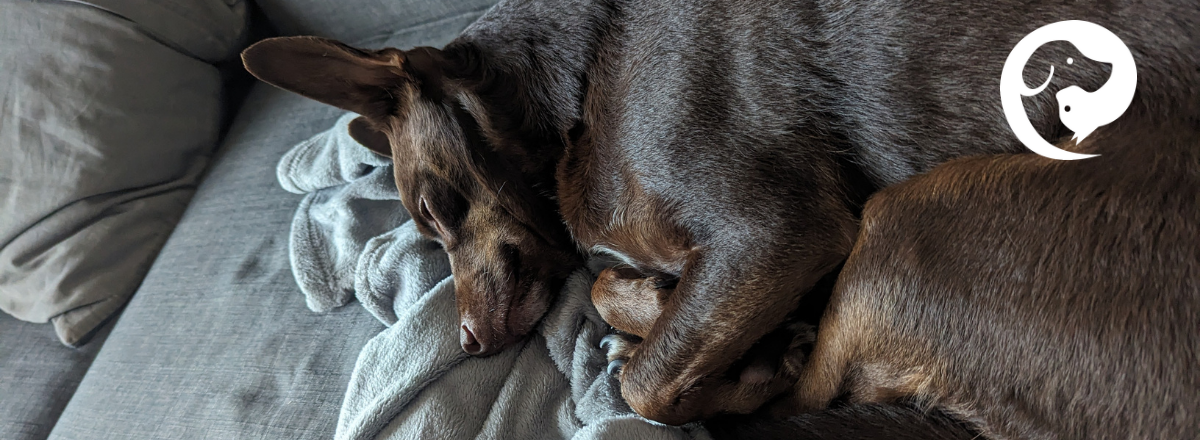
I would be remiss if I didn’t start this blog by stating how vital the skill of self-regulation is for our pets. The intensity and distress of a household in a constant state of hyperarousal is where I often feel the most imminent need to establish quick relief. The outcome of much of our dog’s behavior stems from adequate rest. Without the ability to calm and settle, pets are preventing themselves, and their families, from receiving quality rest, a cornerstone of health and wellbeing.
How often do you look at a dog who is jumping on the counter, getting into the trash, or being what I like to call “aggressively friendly” to guests and think “Why can’t you just go lay down!” Interestingly, when I have encouraged pet parents to reward their dog for relaxing, I sometimes receive the response “But they aren’t doing anything…” I want to scream “Exactly!! That’s what we want them to do! But they might not know that until we tell them.”
I have found that every dog seems to have a different amount of ingrained tendency to “do nothing.” This can be influenced by breed, their stress levels in-utero and during their neonatal period, learning history, daily routine and so much more! I have seen the most chill puppies who make puppyhood look like a walk in the park, and I have seen some where I think these must have been the puppy parents who coined the phrase “puppies are not for the weak.”
I believe that 99% of the time what pet parents want for their dogs is either to communicate in a way that works for everyone (i.e., instead of jumping and mouthing me when you want to play, bring me a toy) and skills to self-regulate (calm yourself down after play and settle for a nap.) In this post, we’ll be delving deep into self-regulation, what the heck it is, and how to get your dog to do it!
Different Approaches to Teaching Calm
The idea of rewarding your dog for being calm seems like an easy target, but often the dog doesn’t know what that looks or feels like! I affectionately call this “cranky toddler syndrome.” Everyone has experienced when a child is way over tired, but doesn’t know how to move from being awake and active to resting. We usually end up with an over-tired, grumpy tantrum.
What follows are different ways to help your dog learn what calming behavior looks AND feels like that ease this transition and help everyone settle and rest.
Be Proactive, Not Reactive
Set yourself up for success when an event that tends to amp up your dog is planned. This can look like:
- Ensuring each of your dog’s fundamental needs are met (they’ve gone potty, have eaten and drank water, had some level of physical energy burned)
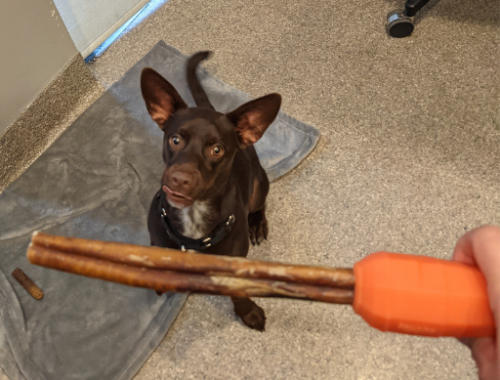
- Pre-set calming activities (explained in more depth below) like a bully stick or frozen kong in an area you’d like them to relax
- Stock treats in convenient places to scatter or reward them with
- Ensuring their resting spots are easily accessible and available
Identify Your Dog's "Melty" Activity
What activities help them settle and “melt” into a cozy spot? When do you observe the behaviors that tell you they are about to settle? This is valuable information!
Pet Harmony makes no secret of our love of nosework. Sniffing can be an excellent calming activity, especially if your dog’s brain is still in overdrive!
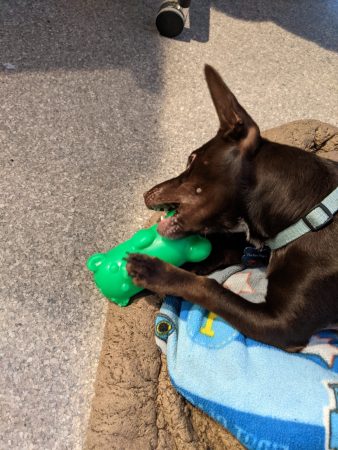
Chewing and licking activities tend to induce almost a meditative state, where your dog’s licking is rhythmic, and we see body language like soft, blinky eyes and slow movement.
Shredding can be incredibly relaxing for some dogs! There are dogs who, with surgical precision, will pull apart each little tuft of fabric, woven thread, and piece of stuffing until the toy is nothing but scraps. I see similar body language to chewing/licking like soft blinky eyes and slow movement when this serves effectively as a calming activity.
Pick a Restful Spot
Present different calming activities in a space that you want your dog to feel restful in. This can be a bed, on the couch, in a sunny spot by the window, or a place you have observed them choosing on their own when they are ready for a nap!
Identify and Reinforce De-escalation Using Multiple Calming Activities
De-escalation refers to the behaviors that happen as your pet is starting to relax and move close to resting or sleeping. For our pets to settle, they often need at least one calming activity. It’s a big ask for our pets to return from a high energy situation and expect them to immediately lie down and nap.
Just like when we come home from a big event, we take time to wind down by performing calm activities like making tea, watching some TV, reading, or performing our nightly routine. (I’ve heard some people also doom-scroll but I wouldn’t know anything about that 👀)
Some dogs are miraculous at establishing this on their own, while others will need to be shown the process. As mentioned previously, for many dogs, sniffing, chewing, shredding, and licking are great de-escalation activities. I usually start with an activity the dog already partakes in naturally like chewing on a bully stick. I will encourage them to work on this item for a bit, then move to a frozen treat that they have to lick at for a while.
Establish a Routine
I call it a “routine” rather than a schedule because schedules constantly change! If we can create predictability in actions and events, it’s easier to adapt to late nights at the office or change in walk schedule because of the weather. It’s usually easier if our pup knows that end of walk = chew time rather than 12 pm = chew time. Will they still know how to settle if they don’t get their chew at noon?
Just like when we come home from a big event, we take time to wind down by performing calm activities like making tea, watching some TV, reading, or performing our nightly routine. (I’ve heard some people also doom-scroll but I wouldn’t know anything about that 👀)
Some dogs are miraculous at establishing this on their own, while others will need to be shown the process. As mentioned previously, for many dogs, sniffing, chewing, shredding, and licking are great de-escalation activities. I usually start with an activity the dog already partakes in naturally like chewing on a bully stick. I will encourage them to work on this item for a bit, then move to a frozen treat that they have to lick at for a while.
Reinforce Alternate Behaviors & Calm Choices
If your dog tends to get post-walk zoomies then jump and nip at you, what behaviors would you like to see them offer instead? We might reinforce anything that involves less or slower movement, and four paws on the ground with a treat scatter.
Teach a Relaxation Protocol
Us trainers love a good relaxation protocol! There are many worth taking a look at, but one I use frequently is Suzanne Clothier’s Really Real Relaxation. I like to start with this one specifically because it focuses on pointing out to your dog what calm actually feels like in their own bodies and identifying that they get rewarded for that feeling!
PS – Pet Harmony also has one for the pros in the audience.
Condition Calming Cues
Just like we may play white noise when we go to bed, there can also be cues for our dog that it’s time to get comfy and rest. You can do this by pairing calm music or certain dog-safe scents like lavender with restful periods, closing the window shades or turning off lights to create a low intensity space, or even moving to certain parts of your home that you only go to during restful times.
Behavior is a Study of One
I know you’re tired of hearing it all ready, but it bears repeating many times over. Each dog is an individual, and their version of calm will likely look different than your last dog or your friend’s dog. Here is my metric for whether a calming activity is effective:
- Is their body looser than it was before?
- Are their movements gradually slowing down?
- Are they mostly still, only occasionally changing position to get more comfy?
- Are they offering “sleepy signals” like soft, droopy eyes, big sighs, positioning themselves in the same way they do before napping?
Common Challenges
With teaching any new behavior comes new challenges. Here are some quick tips for common obstacles you may run up against:
- If you say: “My pet never stops moving” → Then: Start small! Reinforce slower movement, pauses, or any moment your dog is stationary. As your dog identifies what is being rewarded, you can increase the criteria of what you’re looking for.
- If you say: “They only calm down in certain rooms” → Then: Use environmental management to expand calm zones. Try moving their sleeping spot if it’s a bed or blanket, or replicating the lighting/sound from that area (i.e., white noise, a fan, etc.)
- If you say: “They get excited when I reach for treats” → Then: Make sure you are using a “boring food,” keeping a low soft voice, and delivering the treats gently.
Remember: progress is about frequency, not perfection.
Doing nothing is something
Calm is a learned behavior like everything else. Let’s teach it like one!
Though to us it may appear that our dog is “doing nothing,” they are, in fact, still offering behavior! They are lying down, engaging with a calming activity, and staying neutral to other stimuli. Since they are still learning, it will only be of benefit to guide, capture, and reward calm behavior you see.
It is also vital to remember that the energy we put out can have a big influence on our dog’s behavior! Check out Help Your Dog Relax—Start with Yourself to help identify areas where your behavior can also help build your dog’s calming skills.
Here’s to harmony,
Claire
Now What?
Try spending one day this week noticing whenever your pet offers calm behaviors. You might be surprised how many are already there waiting for you! You can also check out our November 2020 Training Challenge: Capturing Calm
Helping pets to self regulate and provide relief to the whole family is something we are constantly teaching at Pet Harmony! If you need support in helping your pet relax, we’re always here for you!
Copyright 2025 Pet Harmony, LLC. All Rights Reserved.
Terms & Conditions, Privacy Policy
Results are not guaranteed because behavior, human, canine, or otherwise, are not guaranteeable.

This is such a solid, compassionate guide. I really like that you frame “calm” as a skill you can teach and support, not a personality trait a dog either has or does not have. The mix of management, meeting needs first, reinforcing calm moments, and building relaxation behaviors step by step feels realistic, especially for dogs who get easily overaroused.
If a dog has a hard time settling in the evening “witching hour,” what is the first small change you usually suggest that tends to make the biggest difference fast?
I’m so glad you found it helpful and clear!
The witching hours can be ROUGH. I usually recommend that pet parents spend some time data tracking what times of day their dog tends to go into tornado mode. Once we can see a trend, I usually preset some activities before they’ve gone full chaos mode. So if my dog always gets aroused around 7 pm, I’m going to engage them in activity starting at 6:30, then offer a calming project once we are done there. We will likely need to experiment with what’s most effective in calming them down.
Our other consultants have also found that sometimes changing when exercise/mental stimulation happens throughout the day can help with the witching hour, but this will take some trial and eval.