
5 Signs Your Dog Doesn’t Trust You (and how to Make it Better)
Estimated reading time: 9 min
Did you have feelings about that title? Did it make you feel sad, confused or possibly even ashamed? Afterall, we love our dogs and it seems unlikely that anyone reading this post is intentionally trying to create conflict with their beloved pet. So before I jump into the signs of a trust account that needs some repair, I want to reassure you that trust accounts can feel broken for many, many reasons and the vast majority of them aren’t due to something you are intentionally doing.
Many pet parents assume that if their dog doesn’t trust them, it must mean they did something wrong.
We hear things like:
- “I just adopted him and he won’t come near me.”
- “I’ve never hurt him, so I don’t understand why he’s scared.”
- “My dog only does bad things when I’m not around.”
Trust isn’t automatic. Dogs build trust the same way humans do—through predictability, safety, and consistent experiences over time. For some dogs that process is relatively fast, for others it can take many, many months. Previous learning history, experiences during their critical socialization period, and even genetics can deeply impact how a dog responds to their environment including the humans they share it with.
Which means that a dog can live in a loving home and still feel insecure about how the world works. It also means that you can be the most loving and well intentioned human on the planet and still live with a dog who doesn’t know how to trust.
In this article we’ll look at five common signs your dog doesn’t feel secure yet, and what you can do to build trust through enrichment and daily routines.
1. Your dog avoids or moves away from you
One of the clearest signs of low trust is avoidance behavior. Avoidance behaviors can be a favorite and self reinforcing tactic because they frequently offer temporary relief from stress inducing events.
Examples include:
- Moving away when you approach
- Leaving the room when you enter
- Not wanting to be touched
- Keeping distance during training
This doesn’t mean you should force your dog to interact with you in the hopes that they will “just get over it” or enter a “calm, submissive state” as is sometimes recommended on the internet. If we remove agency, we remove choice and control, and if we remove those two things, trust will not grow. It may in fact evaporate completely.
Many humans interpret this as stubbornness or independence, but often it means the dog hasn’t learned that being near you is safe and predictable. And even if you know your dog is physically safe, if they exhibit signs of not feeling secure, we should focus on helping them get there.
Creating predictable interactions
Focus on your dog’s comfort and not your proximity to them. Focus on predictable positive interactions, such as:
- Tossing treats towards the dog and away from you instead of reaching toward the dog.
- Letting the dog approach you voluntarily at their pace. If they don’t want to approach, they should not be forced to.
- Structured enrichment where you are the source of good things.
Trust grows when dogs control proximity and interactions. The greatest gift you can give a dog who is feeling uncomfortable with proximity is patience and time.
2. Your dog panics when left alone
Separation-related issues are one of the most common behavior questions that is researched online and can be deeply impactful for you and your dog. I also understand that if your dog is experiencing separation related issues and you have other responsibilities such as, oh, I don’t know, a job, it can be very challenging to not leave your dog home alone. If you think your dog might be experiencing separation related behaviors, the best thing you can do is get an expert on your team.
There are some fairly common signs that your dog may be struggling when left alone including the following:
- Bark or howl when left alone
- Destroy things while the owner is gone
- Pace or panic during departures
Again, separation related behaviors can be very complex and there are usually several variables that impact its existence but this isn’t about being “spoiled.”
Often it means the dog doesn’t feel secure navigating the environment without you and doesn’t have the skills to regulate their emotions independently. The good news is that even when the dog has a deficit in these skills, they can be taught.
Building security for time alone
Security-building strategies include:
- Gradual independence training
- Practicing short departures
- Creating predictable routines for leaving and returning
- Providing safe, calming enrichment during alone time
The goal is helping the dog learn: Even when my person leaves, the world is still safe. Ellen wrote an excellent blog recently on separation anxiety if you’d like to learn more.
3. Your dog has no “regulation station”
Have you ever found yourself needing to decompress after a long day? Or maybe you just need a moment to step away from the chaos and noise of daily life. For some of us, being able to find a cozy nook to soak in the silence is directly tied to our feelings of welfare and wellbeing. The same is probably true for most dogs. Having a dedicated space that feels safe, calming and where they can regulate in a way that is restorative is missing from many dog households. Humans who can help their dog learn that they’ve got their back and will advocate for the dog’s needs are much quicker to build a trust account with their dogs.
Without a safe space, dogs can feel constantly exposed to stressors like:
- Visitors
- Household noise
- Children
- Other pets
Dogs who lack a safe retreat may show:
- Over-arousal
- Reactivity
- Chronic stress
- Difficulty settling
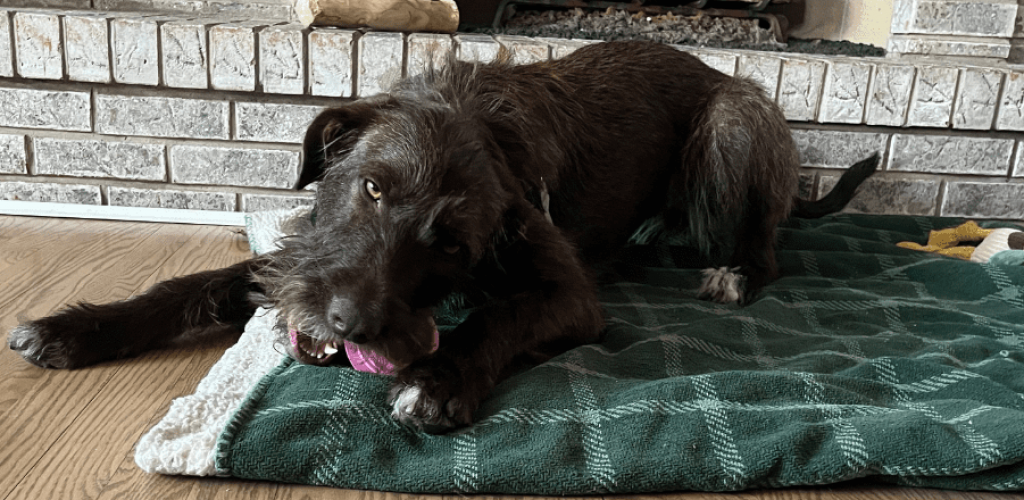
Fostering safety through a safe space
Every dog benefits from a designated safe space, such as:
- A crate
- A quiet room
- A bed or mat that always predicts calm
This is where your dog can opt out of stressful situations and regulate their emotions. It is a location that they can rest in without disturbance from others.
Trust building and security increases when dogs know where they can go to feel safe.
4. Your dog avoids new things
Dogs who lack confidence often show avoidance of novelty. The breakdown in trust happens when we don’t recognize their avoidance as fear or a lack of confidence and/or we force them to approach or otherwise engage with scary stuff.
It is important to remember that we don’t get to decide whether or not something is scary. For example, I’m afraid of snakes (sorry snakes; I’m working on it and I really do think you are cool.) But my fear would be quite surprising to someone who is a reptile zookeeper or has snakes as their pets. Just because you understand that the creepy lawn decoration that wasn’t there a day ago isn’t going to steal all the milkbones under the darkness of night, doesn’t mean that your dog does. Forcing them to “confront their fears” isn’t going to positively build your relationship and will likely teach your dog that you can’t be counted on as a safe space.
Here are some examples of avoidance/fear that you might see:
- Refusing to walk past or approach new objects
- Freezing during new experiences
- Avoiding unfamiliar environments
- Shutting down during training
These dogs aren’t being dramatic and they certainly are not attempting to be nominated for an academy award. They’re trying to protect themselves from unpredictable outcomes and trying to shield themselves from something they perceive as a potential threat.
Working together to build confidence
Instead of forcing exposure, focus on confidence-building enrichment, such as:
- Choice-based exploration and giving your dog the freedom to approach (or not) something on their terms
- Food puzzles
- Gradual introductions to novelty
- Training games that reward curiosity
Confidence grows when dogs learn they can interact with the world safely, at their own pace and with a human who is cheering on their successes and not forcing them to “just get over it” or to “be brave.”
5. Your dog turns into the Grumpmeister when you try to take something from them
You know what I wish for almost weekly as a behavior consultant? I wish that well meaning folks would stop taking every little thing out of their puppy’s or dog’s mouth. I know, I know, it’s scary. You worry about choking, about GI upset, or even the potential for a bowel obstruction. And I also know that you can’t allow your dog to have items that could cause them serious harm such as a box of raisins or chewing gum or chocolate.
I think it is safe to assume that most if not all dog pet parents have been there. Truthfully, I was there just a few days ago.
I was on a walk with my dog and she found the carcass of a long deceased unidentifiable creature. She made the only reasonable choice (if you are a dog) and picked it up. Now, she has a pretty reliable “drop it” cue but it was no match for a tasty decaying carcass. She thought about letting it go when I dropped a handful of high value treats at her feet. She loosened her jaw ever so slightly and I did the thing that I know I shouldn’t do. I gently reached into her mouth and extracted the remains and tossed it as far away as I could. And then promptly played “find it” with her by tossing treats onto the ground in the opposite direction.
Was this situation ideal? No, not really. Here’s the thing though. I have a pretty hefty trust account with my dog even though she hasn’t been living with us for more than a few months. I have built that account one interaction at a time.
When she has things that are safe for her to have, we leave her to it. When she has a bully stick, I use a special holder so that she can’t swallow large chunks of it. I have also taken the time to teach her that when I do have to take something from her, she will get a robust scatter of goodness both before and after taking the item.
How will you know if your dog doesn’t trust you to let them be when they have a coveted treat? Signs to look out for include:
- Moving away with items when they are in their possession
- Freezing or stillness when you approach
- Rigid muscles
- Lowering head over the item
- Growling, or air snapping as you reach towards them
- They may even bite if they have learned that folks are always going to reach into their mouths and remove things.
They have learned that aggression is their only effective tool. And, ya know, it works for them doesn’t it?
Sharing (resources) is caring
Trust grows when dogs learn their humans will leave them alone with safe for them to have objects. It also grows when the human uses a trading game that results in good stuff for the dog when something has to be taken away.
- Prepare the environment so that contraband items are not left out for your dog to be enticed by. Keep your counters clear, keep the laundry room door closed, pick up those dirty socks and undies and GI Joes and Barbie shoes and tissues and, and, and…I think you get the idea.
- Leave your dog alone in their safe space with objects that are appropriate and safe for them to have.
- Start to teach them early (as puppies if possible) that when something does need to be removed, the human will gladly trade them for it.
The bottom line is that dogs who trust their environment and their humans don’t need to escalate to fight as quickly.
Building Trust Through Enrichment
Enrichment isn’t just about keeping dogs busy. It’s about creating experiences that build security, predictability, and independence. It’s also about allowing your dog to experience their environment in ways that are physically safe and provide them with a feeling of security.
A trust-building enrichment plan often includes:
- Predictable routines
- Choice and control
- Safe spaces
- Gradual exposure to novelty
- Opportunities for independent success
These elements help dogs develop something incredibly important: A sense that the world and the people in it are understandable and safe.
Here’s to harmony,
MaryKaye
Now What?
If your dog displays some signs of mistrust, it doesn’t mean you’ve failed. Trust takes time, especially for dogs who:
- Have experienced instability
- Are adjusting to a new home
- Are naturally sensitive or anxious
By focusing on predictability, safety, and thoughtful enrichment, you can help your dog build the confidence they need to feel secure in your relationship. And when dogs feel secure, trust naturally follows. If you and your dog could use some help with a plan to harness these skills, reach out!
Copyright 2025 Pet Harmony, LLC. All Rights Reserved.
Terms & Conditions, Privacy Policy
Results are not guaranteed because behavior, human, canine, or otherwise, are not guaranteeable.