
A fluffy cat resting inside of a cardboard box.

Why Your Cat Needs a Safe Space (and How to Build One That Works)

Why Your Cat Needs a Safe Space (and How to Build One That Works)

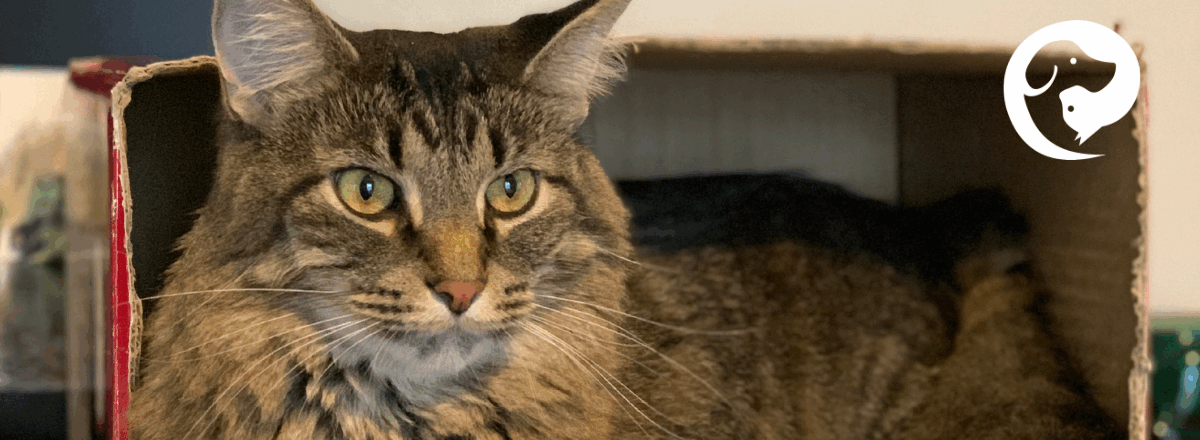
A fluffy cat resting inside of a cardboard box.

Cats, like other sentient beings, can get anxious and/or overwhelmed by their environment and the other beings in it from time to time. And like other sentient beings, if they don’t have a way to escape that chronic stress, it can impact both their physical health and their behavioral health. When I worked with clients I used to tell them that the sustained pressure of living with chronic stress will eventually come out somehow: through explosion, implosion, sublimation, or learned helplessness. 

  • Explosion looks like conflict-seeking behaviors–like cats fighting each other.
  • Implosion looks like self-harming behaviors–in cats, that often looks like overgrooming to the point of damaging their coat and sometimes even their skin.
  • Sublimation looks like acting out in seemingly unrelated ways–like peeing in your boots.
  • Learned helplessness in cats often looks like a loss of personality and behavioral diversity, just doing the bare minimum to take care of themselves and stay alive.

One of the most impactful things we can do to alleviate that chronic stress and prevent any of those kinds of harm from happening to our kitties is create a dedicated safe space just for them. Whether you’re bringing home a new cat, managing a multi-pet household, or simply supporting a shy or anxious kitty, a well thought out safe space can be the difference between a stressed out cat and one who feels confident enough to explore the world around them and genuinely enjoy their life.

At Pet Harmony, we believe in setting up environments that support the behaviors we want to see. So let’s talk about what a feline safe space looks like, why it’s so powerful, and how you can create one that meets your cat’s unique needs.

What Is a Safe Space for a Cat?

A safe space is a quiet, cozy, and low-traffic area where your cat can retreat, decompress, and feel in control of their surroundings. Think of it as your cat’s personal sanctuary—free from stressors, full of comfort, and of course full of opportunities for cats to meet their own needs.

A safe space can be a whole room – like a guest bedroom – or a designated nook—like a cozy corner with a tall cat tree and a hiding spot. The key is that your cat feels safe there, and that security often comes from choice, control, and predictability.

Why Your Cat Needs a Safe Space

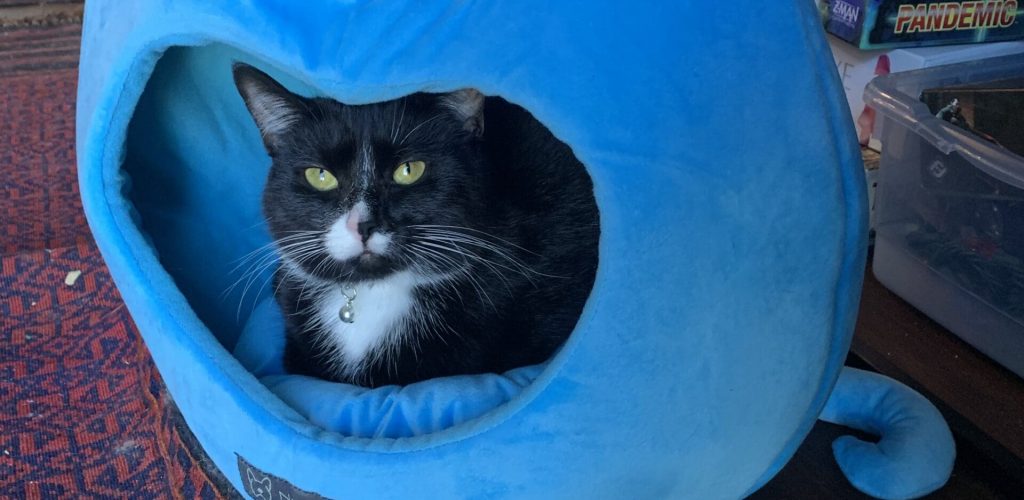
A black and white cat peers out from inside a plush blue fabric hut that is shaped like a creature. It has eyes and the cat enters through the open mouth.
Sushi resting inside her cozy creature. Photos of Sushi and Charm (on the blog title image) courtesy of Sam Griffin (Wise Whiskers Training).

Cats as a species are both predators and prey, which means they can have a tendency to be hyper-aware of their surroundings and therefore can be really sensitive to everything that’s happening around them. Changes in routine, unfamiliar guests, renovations, or even a new smell can be enough of a stressor to set them off kilter.  

On top of that, interpersonal dynamics among cats or between cats and other species can be pretty subtle and hard for us to notice, but can function as significant chronic stressors for them. I had a client where the only sign of conflict between two cats was that one would give the other a hard stare when she tried to approach the litter box, water bowl, or food bowl that the first cat was guarding. That look was enough to cause major distress in the second cat that resulted in a urinary tract infection and persistent inappropriate elimination, even after the infection was resolved. I’ve also worked with multiple clients where the source of the cat’s chronic stress was a mystery until we discovered that a stray cat was marking their territory in their yard.

The take-home point is that the source of a cat’s stress isn’t always immediately obvious to us, and they will do better if they have the ability to move away from their stressors on their own. A safe space gives them the choice to step away and complete their stress response cycle.

How to Set Up a Cat-Friendly Safe Space

Let’s break this down into manageable steps so you can set your cat up for success.

1. Choose the Right Location

Pick a quiet area away from high foot traffic, loud appliances, or busy windows. If you live in a bustling household, a guest room or home office with a door that can close is ideal. If space is limited, try using a tall piece of furniture, curtain dividers, or even a modified closet. If the other pets in your home are contributing to the cat’s stress, make sure their respective safe spaces are separated from each other.

2. Add the Essentials

Here’s your feline-friendly checklist:

  • Hiding spot: A box, covered bed, or carrier are usually good options to trial and eval.
  • Vertical space: A cat tree, shelf, or wall-mounted perch are good, but ideally your cat’s perch will be the highest thing in the room–otherwise, you may find that your cat is just using the vertical space you gave them to access a space that you maybe didn’t want them to access.
  • Litter box: In a discreet but accessible spot. Preferably with a ramp or low point of entry so they don’t have to climb a high barrier to get in and out of it.
  • Food and water: Placed at a distance from the litter box.
  • Toys and enrichment: Interactive toys, puzzle feeders, or a wand toy can all be good options, but if your cat doesn’t currently play with toys you may want to do a play preference test to find out what your cat enjoys. Give them things that they can use to entertain themselves without needing your involvement.
  • Comfortable bedding: Something warm and soft that smells like them.

Pro tip: Let your cat choose where they feel safest within that space—observe and support their choices.

3. Make it Smell Familiar

Scent is a huge part of how cats experience security. Place a used t-shirt, blanket, or towel with your scent in the area. If you’re welcoming a new cat, you can try using synthetic feline pheromones like Feliway to help ease the transition, but if you have something of theirs from their previous home that smells like them, that would be ideal.

4. Limit Unwanted Access

Let your cat know this space is theirs. Keep dogs, kids, or other cats out, especially if your feline is stressed or new to the home. Respect their boundaries—this isn’t the place for unsolicited cuddles or surprise visits.

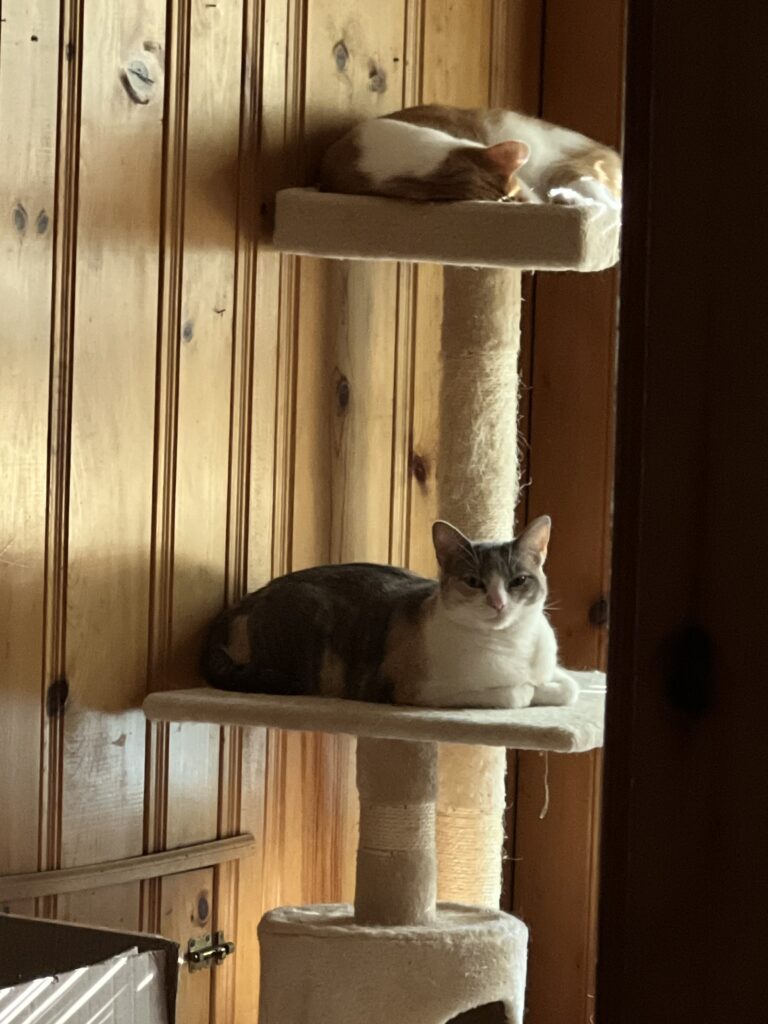
An orange and white and a calico cat perched on different spots on a cat tree, resting comfortably.
Kronk (upper level) and his sister Yzma (lower level) resting on the cat tree in their private area, away from the main part of the house. Photo courtesy of Eric Graf.
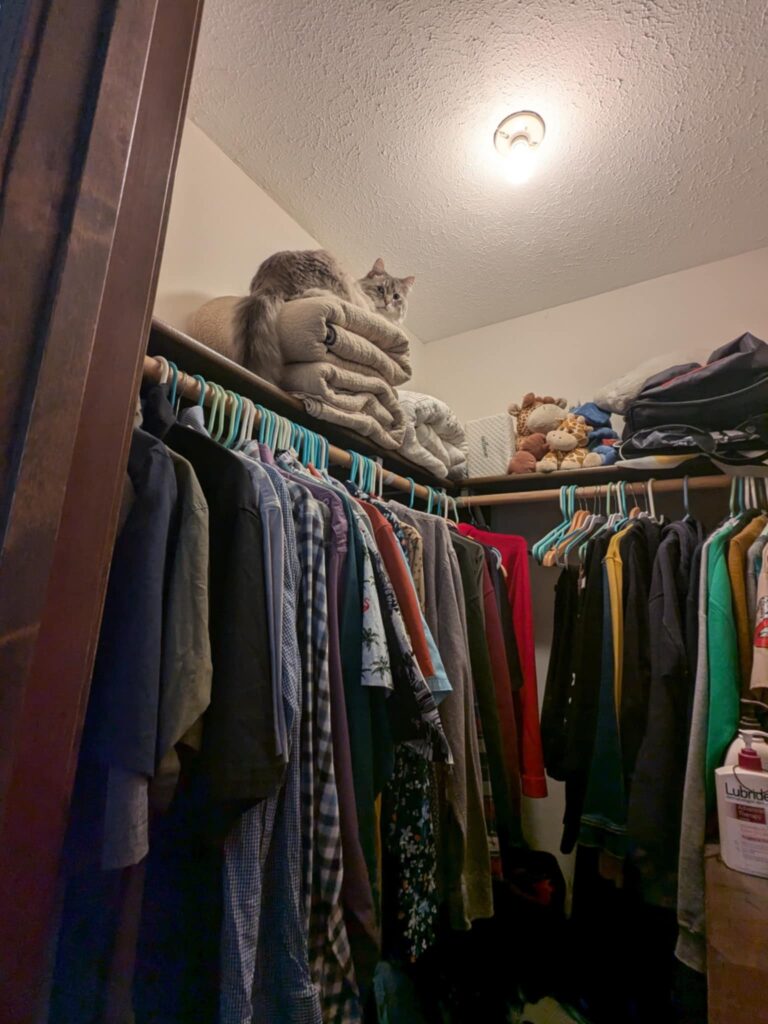
A handsome fluffy cat resting on top of a folded comforter on a high shelf inside a closet.
Finn The Cat (his given full name) has chosen a high shelf inside a closet to be away from his dog brothers and sister. He asks his person to help him onto his cozy perch. Photo courtesy of Jordan Bradley (Click to Communicate).

What a Safe Space is Not

Creating a safe space doesn’t mean isolating your cat or punishing them by locking them away. The goal is to offer choice and control, not confinement. Think of it as empowering your cat to engage with the world at their own pace. times that may mean giving them the ability to come and go from their safe space as they please. When that isn’t an option, the next best thing is to figure out your cat’s cues for requesting to go in and out of their space and facilitating their requests. If even that isn’t an option – because we’ve all got lives and we can’t be watching our pets 24/7 – keep an ear out for when your cat is asking to leave their safe space, so they never feel trapped there.

Safe Spaces and Behavior Goals

If you’re working with a behavior professional to address your cat’s distress – like reducing fear, reactivity, or inappropriate elimination – a safe space is often the foundation of your plan. Why? Because learning only happens when an animal feels safe. And just like us, cats can’t thrive if they’re constantly on edge.

If you’ve been following us for any amount of time you have almost certainly heard us say this: Behavior is communication. If your cat is hiding, hissing, or avoiding someone in your household, they may be telling you they don’t feel safe. Meeting that need is the first step toward changing their behavior and improving their physical, behavioral, and emotional health.

Final Thoughts

Whether you’re welcoming a kitten or supporting a senior cat through a big life change, creating a safe space is a gift of agency and care. It tells your cat, “You’re safe here. You’re in control. You get to choose.”

And from that foundation, trust grows. Confidence builds. And your relationship with them blossoms.

Here’s to harmony,

Emily

Now What?

Need help setting up the perfect safe space for your cat—or navigating behavior challenges? Our team at Pet Harmony offers personalized, evidence-based support to help your pet thrive. Let’s make life easier for you and your feline friend.

Copyright 2025 Pet Harmony, LLC. All Rights Reserved.

Terms & ConditionsPrivacy Policy

Results are not guaranteed because behavior, human, canine, or otherwise, are not guaranteeable.

What Owning a Cat Teaches You About Agency

Why Cats?

I love cats. Cats are regal, majestic creatures. They defy the laws of science by filling any container they curl up into. They purr, and rub on you, and curl up on your lap to snuggle. I have had cats from the time I was small. I cannot remember meeting a cat I didn’t like, though I’m sure I have. 

I once saw a meme that made me laugh out loud. It said:
“What if the Internet is filled with cats because dog people go outside?”


So, if you’re here on our website, then you are obviously a cat person. 


While that may not be true, it is true that if you follow Pet Harmony, you probably care a lot about your pet. You might have a pet whose behavior puzzles you. You may feel frustrated by the behaviors your animal is displaying. I promise to relate my experience with cats to dogs- and to other species, as well.

Cats get a bad reputation. I have heard many people describe cats as jerks. They’re not loyal like dogs. They make their own decisions. They never consider what you need. They’re independent, and they don’t really need us. Cats are lazy and prefer humans to dote on them like the feline gods they are!           

After getting my first two dogs, and becoming a dog trainer, I’ve met many people and dogs. Often, people are happy with their dogs, only wanting to prevent future problems with a new dog. Just as often, however, I’ve run into people who are frustrated with their dog’s behaviors. Since I have been a dog trainer for quite a few years now, I’ve noticed a trend among people unhappy with their dogs. They tell me:

“He never listens to me.”

“She only minds when she wants to.”

“He won’t stop getting on the counter!”

“She nips at me when I try to make her do things.”

I understand those feelings. I know it is frustrating to think you got a man’s best friend, just to find they won’t listen to you, destroy your house, steal your food, or even hurt you. Those feelings are totally and completely valid. When I hear these things, what I understand from it is basically this:

Their dog is acting like a cat. Well, a stereotypical one, anyhow.


Cats Are a Lesson in Consent. (And Agency)

What I mean when I say that their dog is acting like a cat is really that their dog has opinions. Their dog has things they like and things they dislike. Their dog likes some things better than listening, especially if they don’t understand why they should listen. Dogs are very social creatures. They descend from creatures that worked together to bring down large prey. Wild felines, however, are usually pretty solitary. What that means is though both wild canids and wild felines are individuals with wants and needs, our concept of “dog-ness” includes a certain level of “clinginess” and working for its “master” (which is a strange use of words we can get into another time). We expect dogs to appease us. However, our society’s concept of “cat-ness” is usually aloof and independent.

What a cat really needs, as well as any pet, is agency and consent. Agency is the ability to have control over certain outcomes in your life. This can usually come in the form of choices given to an individual. Consent is the ability to assent to or approve of something, especially something that is happening to oneself. Each of these creates a sense of freedom in the animal. Trapped animals lash out, bite, and scratch. An animal that is given agency will feel more secure, and less likely to lash out. 

Why Agency? Check out Allie’s excellent post about it, here, or read about it in Emily and Allie’s book, Canine Enrichment for the Real World.

How do I give my pet a sense of Agency?

Give them choices. That doesn’t mean that you open every door and window and take out any safety measure for your pet. It means you offer them choices that don’t endanger your pet or anyone in your home. If your cat (or dog) doesn’t like to be out when new people are over, make them a safe place to hide away from people until they leave. They may surprise you and come to observe the new person. Don’t pick them up and force them to interact. This is removing their ability to control the situation and thus limiting their choices. If you let them choose when, how, and if they want to interact, don’t be surprised if you find they are more willing to come out in the future. Conversely, if you force them to interact with someone, they may become more reclusive in the future.

When we brought home my cat, Sylphrena, she was 6 months old. My husband and daughter had limited experiences with cats, and were upset that she didn’t want to be held by them, but would (often) allow me to hold her. At first, I wasn’t sure why. After watching the way they held her, I realized why. My daughter and husband would often hold her tighter if she struggled to get away. This would result in a teenage kitty tantrum: scratches, bites, and occasionally growling. Obviously, she didn’t like it, but they couldn’t understand why she would let me hold her.

When an animal allows me to pick them up, I give them the choice to leave, by pulling my hands away, while still on level with the animal. If the animal runs away, so be it. Should they choose to stay, I try petting them and see if they settle down to snuggle. Then I can put my arms back around them. If they start to struggle again, I let them go. In this circumstance, I am both giving my pet choices, and allowing them to consent to being held (or not).

Allowing Sylphrena to feel safe by giving her the choice to leave really built her relationship with me. She knew I would let her go if she wanted, and knew she had agency if I tried to hold her. She wasn’t trapped.

 I taught my family how to help her feel secure and safe by allowing her to make the choice whether she wanted to stay (or not), and over time she has become more trusting of my husband and daughter.

 

There are little things you can do every day to give your pet agency and let them consent:

  • Petting consent tests (for any species)
  • Making different textures and types of chews and toys available (for many animals)
  • Sensory areas with pet-safe plants and textures your pet loves. (I will likely be making another blog specifically about this after I make one for my pets!)
  • Allowing your pet the choice to move away from other people or animals (do not force them to say hello!)
  • Making different textures available to scratch on for kitties
  • Having multiple litter boxes available in different areas for your cat (you can even provide different litter options to see what they prefer)

Many times, if we just look at what our pet is telling us with their body language, we can see what they really need or want– and if we can safely provide them with the agency to do that thing, we can improve their quality of life– and, in most cases, our own as well. Because a content and healthy creature doesn’t feel the need to lash out.


Now What?

  • Learn more about your pet’s species-specific body language, so you can tell if they like something or not.
  • Find one way to allow your pet more agency in their life
  • Research and prepare your home with appropriate furniture or enclosure requirements unique to your pet 
  • If you’re not sure where to start, try our free Facebook group, Enrichment for Pet Behavior Issues Community.
  • If you now want to own a kitty, or are just looking for another, check out this article on how to prepare your home for a new kitty!

Here’s an excerpt:

Bringing home a cat is an exciting time for the family. They provide laughter, companionship, and can even teach little ones about responsibility. However, preparing your home for a kitty can bring about some uncertainties and renovations to ensure your cat is well taken care of and comfortable in your home.

To help you get started, Redfin reached out to 14 cat experts, from Seattle, WA to Ottawa, ON, including us. Here is our best advice on how to prepare your home for a kitty. Check out How to Prepare Your Home for a Kitty: 14 Tips from the Pros.