

How to Know Who Belongs on Your Pet's Care Team (and Who Doesn't)
Estimated reading time: 8 mins
If you’re sharing your life with a pet who has behavioral challenges, chances are you’ve realized something along the way: It takes a village.
You might be the person doing the day-to-day work—the training, management, vet visits, enrichment, and constant decision-making—but you were never meant to figure it all out alone.
Over the course of your pet’s life, you’ll probably rely on a whole community of people: your veterinarian, veterinary specialists, trainers and behavior consultants, groomers, pet sitters, daycare staff, rehabilitation professionals, friends, family, and neighbors.And when you have the right people around you? It can make all the difference.
That’s why building a care team isn’t just about finding people with good reviews or impressive credentials. It’s about finding people who are willing to see your pet as an individual and support their physical and emotional well-being.
So let’s talk about who belongs on your care team, what to look for, and how to build a support system that works for both you and your pet.
Green Flags and Red Flags in Any Pet Professional
What to Look For in ANY Professional
Your veterinarian doesn’t need to be a trainer. Your groomer doesn’t need to be a behavior consultant. Your pet sitter doesn’t need a degree in animal behavior. But regardless of their role, I love seeing these qualities in anyone caring for your pet:
| Green Flags | Red Flags |
|---|---|
| Pays attention to body language | Dismisses fear as "stubbornness" |
| Asks about your pet's individual needs | Doesn't want to hear your concerns |
| Is willing to pause and reassess | "Powers through" significant distress |
| Makes reasonable accommodations | Relies on fear, pain, or intimidation |
| Communicates honestly | Promises a guaranteed or instant fix |
| Collaborates with other professionals | Refuses to communicate or collaborate |
| Is willing to learn | Acts like they already have all the answers |
And here’s an important distinction: A professional doesn’t have to know everything about behavior to be a good member of your team.
I would much rather work with someone who says, “I haven’t worked with that before, but I’m willing to learn,” than someone who assumes they already know exactly what your pet needs.
Who Belongs on Your Pet’s Care Team?
1. Your Primary Care Veterinarian
You knew this one already, didn’t you?
Your veterinarian is often the foundation of your pet’s care team. They monitor overall health, provide preventative care, investigate medical contributors to behavior changes, and refer to specialists when appropriate.
For an animal with behavioral concerns, look for a veterinarian who:
- Takes your observations seriously
- Is willing to discuss your pet’s individual needs
- Considers how to make veterinary visits more manageable
- Is comfortable referring to other professionals when needed
- Pays attention to signs that your pet is becoming overwhelmed
- Is willing to perform treatments in the room with you
Your veterinarian doesn’t have to solve every behavior problem.They just need to be willing to be part of the team.
2. Urgent Care & Emergency Teams
Hopefully, you won’t need them often. But knowing where you would go in an emergency is part of being prepared.
Emergency medicine is different from routine care. When your pet is experiencing a life-threatening problem, immediate medical needs come first. They may need procedures or handling they would normally find frightening or uncomfortable. That doesn’t mean emotional well-being has to go out the window.
- Green flags: When time and your pet’s medical condition allow, look for teams that recognize fear and pain, use appropriate pain relief and sedation/anxiety medication when indicated, and consider whether they can accomplish necessary care without escalating physical restraint.
- Red flags: Dismissing obvious distress as “bad behavior,” using punishment or intimidation, or relying on escalating physical restraint when appropriate pain control or sedation could have been reasonably considered.
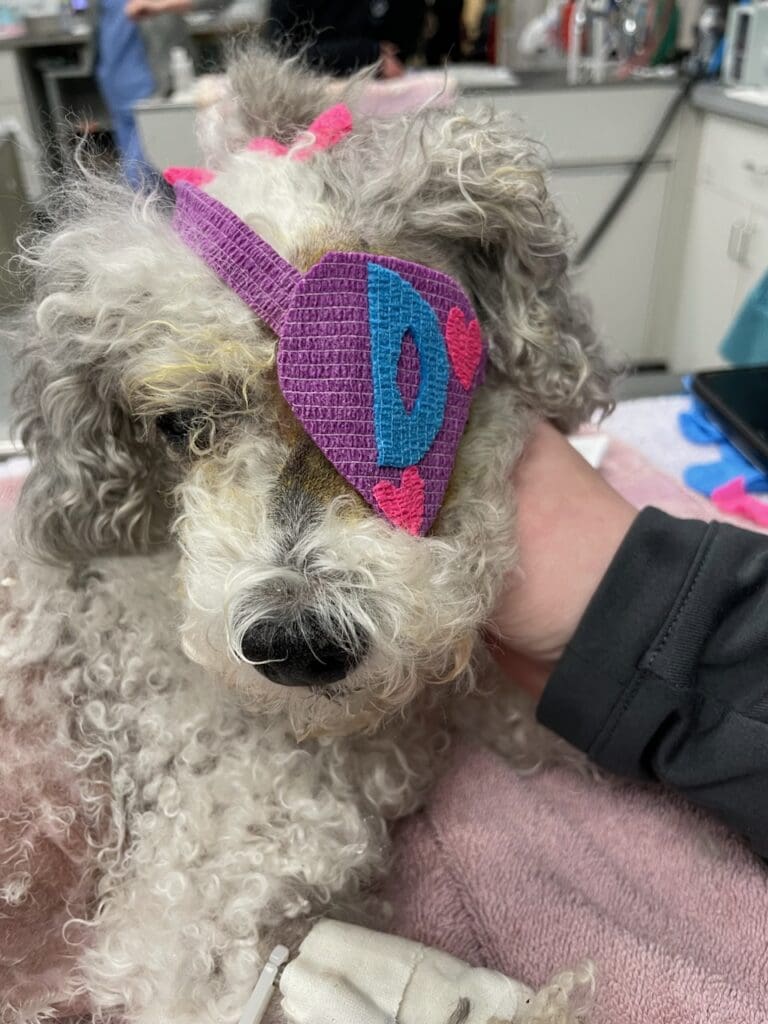
Dash being lovingly cared for by his emergency team (who also knew he needed to look stylish).
3. Trainer or Behavior Consultant
Your trainer or behavior consultant can help you understand why your pet is behaving the way they are and create a plan that fits your actual life. But their role can extend beyond training sessions.
A good behavior professional can also help you:
- Understand your pet’s body language
- Prepare for challenging situations
- Communicate your pet’s needs to other caregivers
- Identify appropriate professionals for your pet’s individual needs
- Build confidence in advocating for your pet
Look for someone whose education and credentials are transparent, who uses humane training practices, and who is interested in addressing the underlying emotions and motivations behind behavior, not just stopping the behavior you don’t like.
4. Groomer
For some pets, grooming is no big deal. For others, it can be one of the most challenging experiences of their lives.
The right groomer may not be the person who gets every service completed every time. Sometimes success means breaking things into smaller steps, making accommodations, or deciding that something can wait.
A successful grooming appointment isn’t necessarily the one where everything gets done. Sometimes it’s the appointment where your pet leaves feeling safer than when they arrived.
5. Pet Sitter, Boarding & Daycare
When someone else is caring for your pet, you’re trusting them with much more than food and bathroom breaks. You’re trusting them to notice when your pet is uncomfortable and respond appropriately.
Before choosing a provider, interview them. Ask:
- How do you handle an animal who becomes overwhelmed?
- Is there a quiet space available?
- How do you introduce dogs to one another?
- What happens if my cat won’t eat?
- How will you contact me if something isn’t going well?
- Are you willing to follow my pet’s existing management or behavior plan?
The right person won’t be offended by these questions. They’ll understand that you’re trying to find the best fit for your family.
6. Rehabilitation & Conditioning Professionals
If you haven’t really considered this, now’s the time! Pain and physical discomfort can have a significant impact on behavior and quality of life, especially as our pets age.
Depending on their needs, a rehabilitation professional or conditioning coach may become an important part of their team, whether you’re supporting recovery from an injury, managing mobility changes, or helping an athletic dog stay strong.
Look for someone with appropriate education and credentials who is willing to work at their pace and considers both physical and emotional comfort.
7. Friends, Family & Other Supporters
Not everyone on your care team needs to be a professional. Sometimes the most important person is:
- The family member who follows your instructions when they’re pet sitting.
- The neighbor who gives your cat space instead of insisting on saying hello.
- The friend who understands why your dog isn’t coming to the farmers market with you.
- The person who listens when you’re having a hard day instead of telling you that you just need to “show your dog who’s boss.”
Behavior challenges can feel isolating. Having people in your corner matters.
When Someone Isn't the Right Fit
Not every professional is going to be the right fit for every pet. And that’s okay.
A busy daycare may be fantastic for a social, outgoing dog but completely overwhelming for a noise-sensitive one.
A groomer may do beautiful work but not have the environment or time your fearful dog needs.
Sometimes it’s simply a matter of finding a better match.
But if someone consistently:
- Dismisses your concerns
- Ignores obvious signs of fear or distress
- Uses fear, pain, or intimidation
- Guarantees a behavior outcome
- Makes you feel ashamed for advocating for your pet
- Refuses reasonable communication or collaboration
…it may be time to look elsewhere.
You don’t have to prove that someone is a “bad professional” to decide they’re not the right professional for you. Fit matters.
A Note for My Fellow Behavior Consultants
One of the most valuable things we can teach our clients isn’t just how to change behavior. It’s how to advocate for their pet.
Our clients’ lives don’t stop when our session ends. Neither do their pets’ lives. They go to the veterinarian. They need grooming. Someone else may need to care for them while their family travels. And not every person they encounter will have extensive behavior knowledge. That’s where we can help.
- Teach body language: Help clients recognize what their individual pet looks like when they’re becoming uncomfortable.
- Help them prepare: Before a client hires a new groomer, sitter, or daycare, help them develop questions to ask.
- Give them the words: Advocacy can feel intimidating. Give clients scripts they can actually use:
- “My dog gets overwhelmed when strangers reach for her collar. Is there another way we can handle that?” Or
- “We’re working on helping him feel safer with handling. Would you be willing to look at the plan we’re following so we can stay consistent?”
- Encourage collaboration: We don’t need every professional on our client’s team to be a behavior expert. We need them to be open to listening, learning, and working together. And when appropriate, we can help facilitate that communication.
At the End of the Day, You Are Your Pet’s Biggest Advocate.
Your pet’s care team can provide expertise, support, and guidance. But you are the person who gets to decide who belongs in their circle.
That doesn’t mean you need to become an expert in veterinary medicine, grooming, behavior, rehabilitation, nutrition, and everything else that comes with caring for your beloved companion.
It means:
- Learning how your pet communicates
- Asking questions
- Finding people who are willing to listen
- Recognizing when someone simply isn’t the right fit
Their care team may change throughout their life. That’s okay. The goal isn’t to find a perfect team. It’s to find people who care enough to keep learning, communicating, and working together.
Because when you’re surrounded by the right people, you don’t just have a list of referrals. You have a community.
And to every veterinarian, vet tech, trainer, behavior consultant, groomer, pet sitter, rehabilitation professional, friend, family member, and supporter who has been willing to listen, collaborate, learn, and care: Thank you. You may only see one piece of the puzzle. But together, we can make a meaningful difference in the lives of the pets—and the people—who need us.
Here’s to harmony,
Veronica
Now What?
Need help finding the right support? Building a care team can feel overwhelming, especially when your pet has behavioral challenges or needs a little extra support. You don’t have to navigate it alone. Learn more about Pet Harmony’s services here.
PS: Capitalism
Want to support our free, public content? Check out our Amazon shop. It’s full of enrichment and pet care items (that we really, actually use). Our team spends a significant amount of time working on content every week. We love it! But we’re also out here trying to pay our bills.
* Pet Harmony, LLC is a participant in the Amazon Services LLC Associates Program, an affiliate advertising program designed to provide a means for sites to earn advertising fees by advertising and linking to Amazon.com.
About the Author
Veronica Garcia, CVT, KPA-CTP, FFCP-V
Veronica Garcia is a trainer and behavior consultant with Pet Harmony. Bringing expertise in both veterinary medicine and behavior, she loves working with clients to help their dog be their best dog self.
She found veterinary medicine in 2008 after moving to northern California. After spending much of her veterinary career in emergency and critical care, she transitioned to veterinary behavior in 2021.
Copyright 2025 Pet Harmony, LLC. All Rights Reserved.
Terms & Conditions, Privacy Policy
Results are not guaranteed because behavior, human, canine, or otherwise, are not guaranteeable.