I know we talk about it ALL OF THE TIME and for that I can make no apologies. It really is just that important. I don’t think I am going out on a limb when I say that understanding your dog’s body language is paramount to your relationship with them. There I said it.
Why? Because your dog can not communicate with you verbally. But they are communicating with you and not just some of the time. To that end, what if I told you that there’s a way to make your dog’s behavior more predictable? A way to better avoid unfortunate incidents? A way to communicate better with your non-human family members? There is and it’s not at all magical.
All of this becomes possible when we can proficiently read our dog’s body language. I’d say that most of us can pick up on big emotional “tones” with our animals. But body language can be so much more subtle than that and that is where the “secret sauce” to understanding how your dog communicates lives. Understanding body language nuance is one of the key ingredients to a more harmonious relationship.
Here we go again: Why talking about dog body language will never get old
Every time I start with a new client, a large percentage of my initial session is dedicated to teaching the skill of observing the way in which their pet communicates. Sometimes, I will get a look or a question regarding the validity of spending valuable time on teaching this skill. My response is always the same, and it is this: learning how your dog communicates is the single most important skill that I can teach you. I truly believe that. And this is not something inherently easy or a skill that some people are “born with.” Yes, it takes good observation and interpretation skills, but it also takes practice – and lots of it.
The purpose of this blog is to give you a primer on observing and practicing, understanding and interpreting, and ultimately how to make decisions on how you interact with your dog based on what they are “saying.” Let’s get busy and break it down so that you know what you are looking at and for.
First step: observation skills
Observation is the first step; it doesn’t matter if you know the signals if you can’t see your dog using them! While there are a lot of jokes about observant vs. unobservant people, this too is a skill that can be learned like any other! Here are some tips for beefing up your observation skills:
Play games! Activities like scavenger hunts, find the difference photos, and even Eye Spy games are great for sharpening your observational skills.
Observe with all 5 senses. There’s an anxiety-reducing exercise that is great for building observational skills as well: acknowledge 5 things you see, 4 things you touch, 3 things you hear, 2 things you smell, and 1 thing you taste. This will come in handy when we get to the interpretation section.
Separate observation from interpretation by watching animals you know nothing about. So often we immediately jump to interpretation instead of simply observing what’s going on and taking it at face value. I find it’s easier for my students to do this when they practice watching videos of an animal they’re not familiar with first. Dog parks are also a great place to go watch dogs, especially if you leave your own dogs at home.
Here are some tips to help you observe your pet’s signals:
Focus on one body part at a time. For an entire day solely focus on your pet’s ears and nothing else. The next day focus on your pet’s mouth, and so on. Become proficient reading one part then move on to the next.
Video your pet. Watch and rewatch the video focusing on different body parts and signals. How many do you see when playing it frame by frame vs. at normal speed?
Practice! Learning another language takes time and practice, plain and simple. The only way to see more signals is to practice frequently.
Recommended resources
After or alongside building observational skills we can start learning the body language signals. As with anything, there are some great resources and some inaccurate resources on the internet. Here is a very short list of resources we recommend:
Email us at info@petharmonytraining.com if you’re looking for resources on a different species!
Interpretation comes next
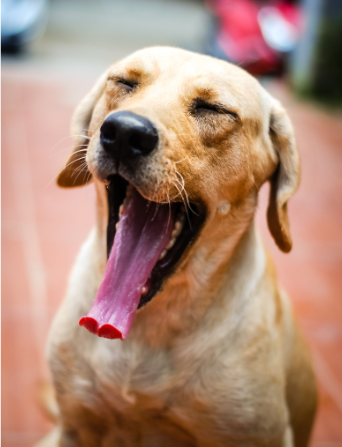
Interpreting body language signals is not always black and white. For example, a yawn may be a stress signal or related to sleep. Interpretation and context are important! We must always remember, though, that our interpretation is just that. It’s not a 100% accurate fact. It’s our best guess as to what the animal is experiencing and we will not really be able to confirm our assumptions with our dogs. As such, it’s important that we always make training and behavior modification decisions based on observable behaviors instead of our interpretations.
This step is the hardest because we can’t verify our answer to see if it’s right. This might be a step that you prefer to leave to a professional (which is a great call!)
Here are some tips to help you become more proficient at interpreting your pet’s signals:
Stick to simple interpretations like comfortable vs. uncomfortable. The more involved your interpretation the more likely it is to be incorrect.
Observe your dog’s entire body. Is their body language overall comfortable or uncomfortable? Are you seeing multiple stress signals in a row and/or simultaneously?
Video your dog. Watch and rewatch the video focusing on different body parts and signals. How many do you see when playing it frame by frame vs. at normal speed?
Watch for the cause and effect in your videos. What happens before and after your dog displays certain signals? What else is happening around them (in the environment)? Remember to observe with all of your senses.
Focus on one body part at a time. For an entire day solely focus on your dog’s ears and nothing else. The next day focus on your dog’s mouth, and so on. Become proficient reading one part then move on to the next.
Practice! Learning another language takes time and practice, plain and simple.
Watch videos of animals interacting together. One of the best ways to glean conversations in another language is to listen to native speakers! Again, watch for the cause and effect.
Get a professional’s (or twos or threes) opinion. Professionals have simply watched a whole lot of animals and that helps build a mental database that we can reference against, so to speak. That doesn’t mean we don’t get it wrong too. We just have more experience observing different individuals.
Body language: a study in features and photos
As our next step, I am going to start with neutral body language descriptions and photos so that you can compare and contrast what your dog might look like when they are just cold chillin and relaxed/calm versus what it looks like when they are experiencing possible fear/anxiety/stress and/or are feeling threatened.
Before we dive in, I think it is important to stipulate that dogs come in many, many variations. There are dogs with cropped ears, prick ears, floppy ears. Dogs with cropped tails, no tails, curly tails. Dogs with dense fur covering much of their faces and bodies. Dogs with long muzzles, brachycephalic (squished/short) faces and everything in between. The point is that the physical features of a particular dog or a particular breed can and most likely will matter. Which is even more reason why it is important to learn who your dog is and how they use their body.
Now that I have gotten that off my chest, onward we forge.
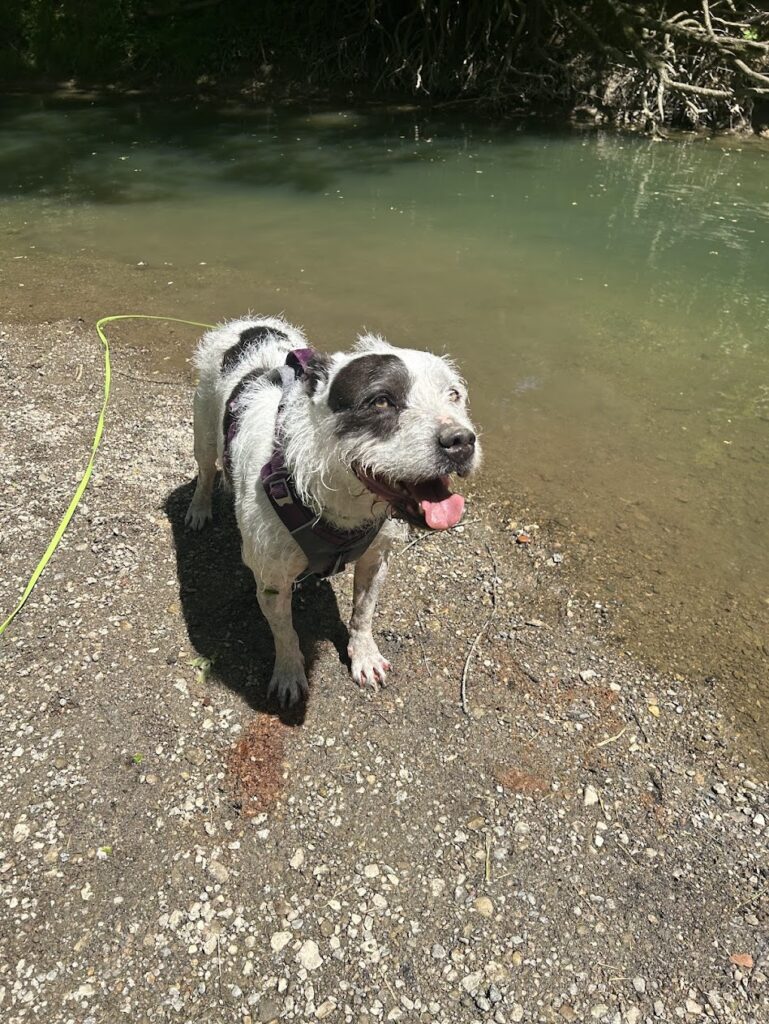
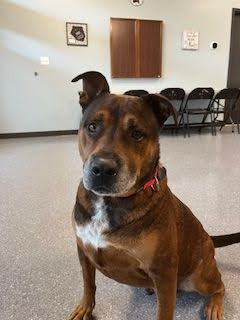
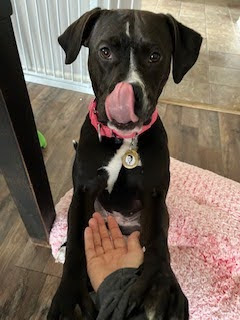
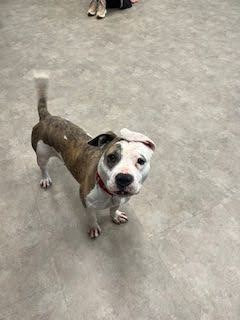
Neutral body language
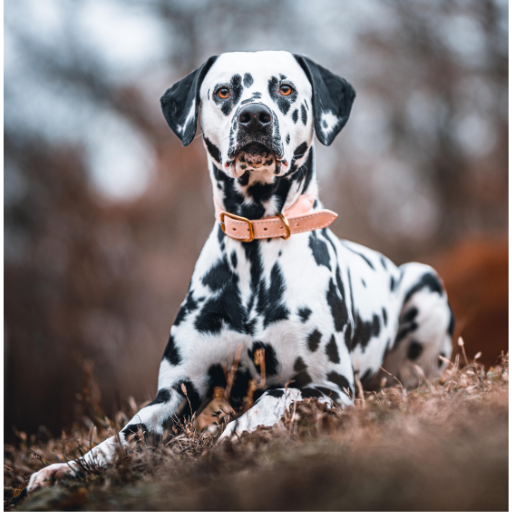
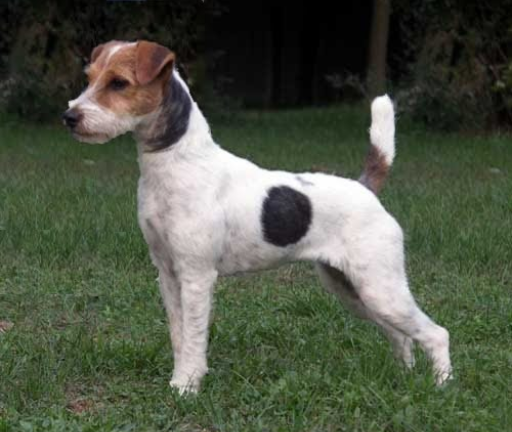
Dogs who are feeling no specific kind of way about their surroundings may display some of the following characteristics:
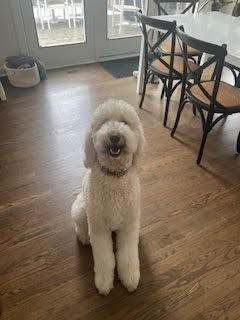
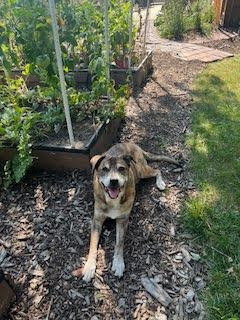
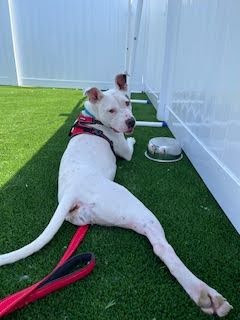
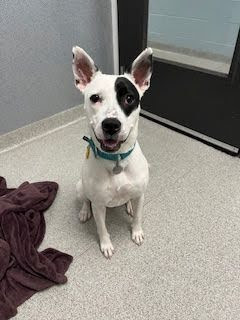
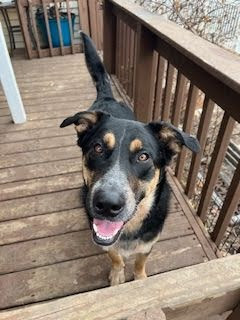
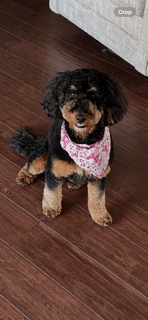
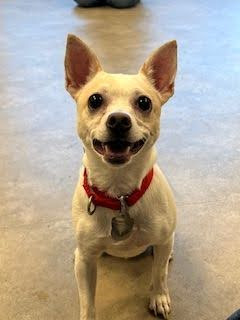
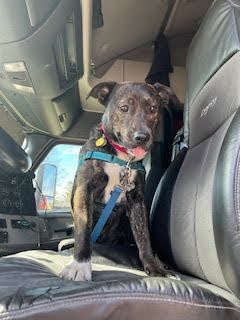
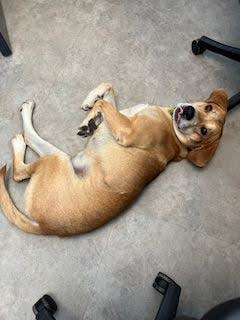
Body: Loose musculature; weight equally distributed when standing; if laying down or sitting, body is loose and relaxed
Ears: in a natural position; neither pulled back or pricked forward
Mouth: Loose with no rigidity around it; can be slightly open with soft panting or closed
Tail: held at a comfortable, natural height for that dog; no rigidity at the base of the tail
Eyes: soft, normal pupil size; no tension above or below the eyes
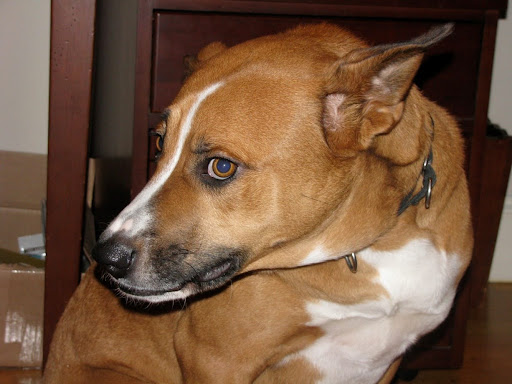
Photos of neutral body language
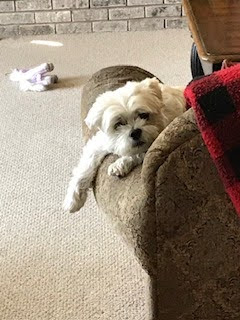
What do you observe in the photos above? What about each dog and each body part is saying that we most likely have dogs who are exhibiting signs of comfort/relaxation (at least while the photo was being snapped?)
Fear/stress/anxiety body language
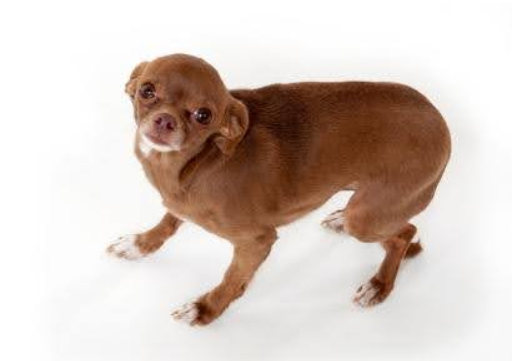
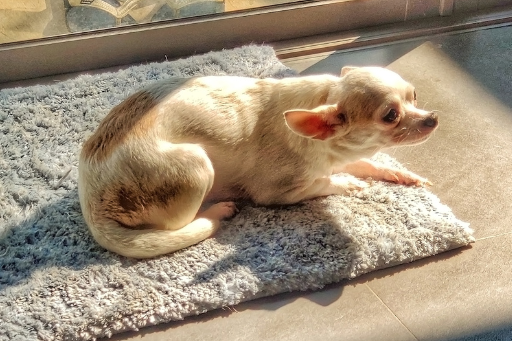
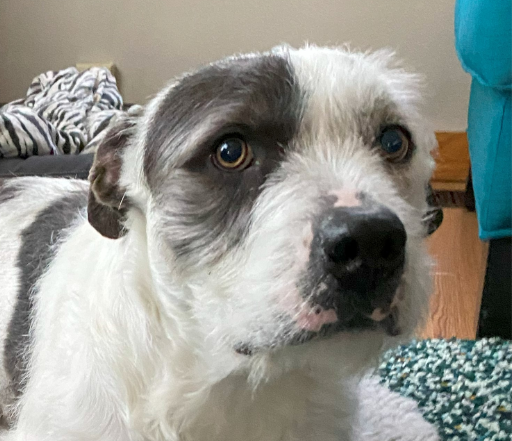
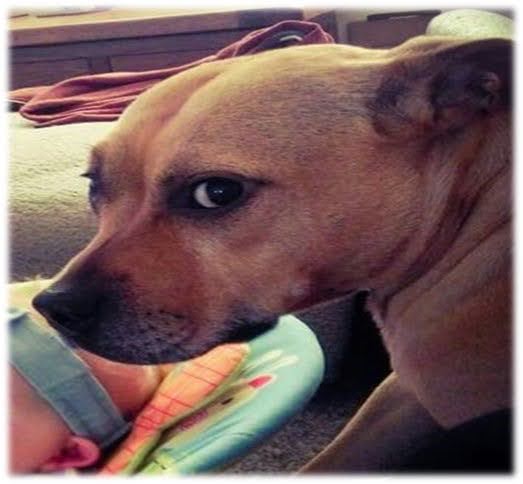
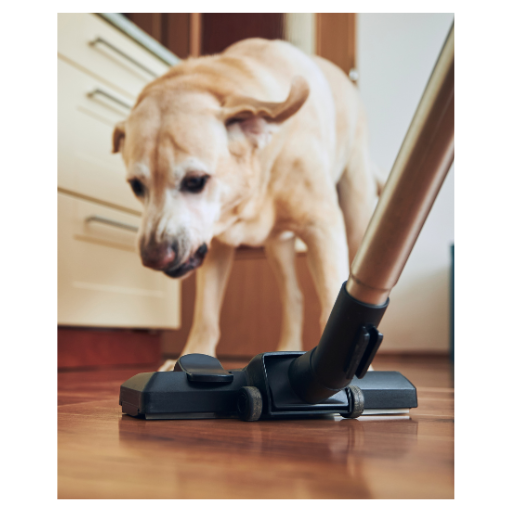
In dogs experiencing some kind of low-level fear, anxiety, or stress (abbreviated FAS in veterinary settings), you may notice some of the following:
Body: weight shifted to front or rear legs; low head carriage; roaching of the back; body can be shifted away from whatever it is that is making them feel stressed
Ears: ears can be in various positions, often moving from forward and upright to back. The more stress the dog is under, the more likely that the ears will be back against the head, sometimes tightly pinned against the skull.
Mouth: Lip licking; mouth tightly closed with tension/wrinkling around it; may be panting with corners of the mouth pulled back; yawning when not sleepy
Tail: lowered or below where the individual normally carries it; tucked under body
Eyes: pupils may be dilated; tension and wrinkling in the area around the eyes; the whites of eye may be more prominently exposed than normal (whale eye)
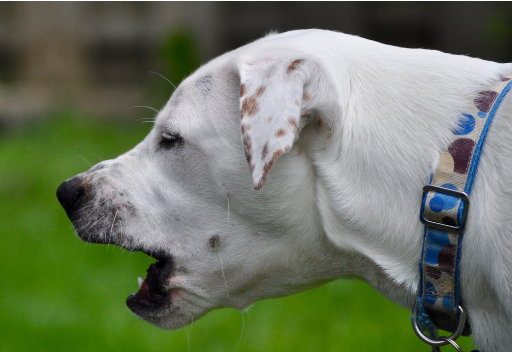
Photos of fear/anxiety/stress body language
The differences between the top photos and these ones are kind of subtle right? It might even be hard to put your finger on it. It could be a slight change in the eyes or the ears, or tension in the facial muscles or body that at first glance doesn’t seem like it would mean very much. And yet…it means everything. And it is truly important that we understand why. Because if you can notice and observe these smaller changes, then the bigger ones to come are less likely to catch you off guard or take you by surprise.
Let’s move on to more signs of stress that might be easier to observe.
Increased fear/anxiety/stress body language
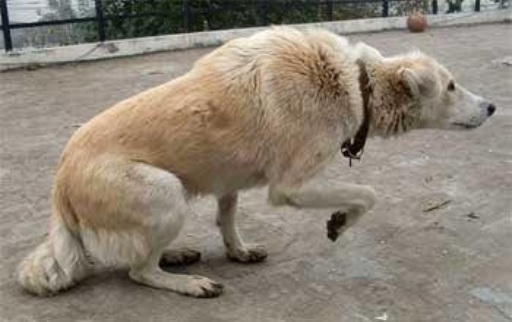
As a dog’s level of FAS increases, you may see some of the following:
Body: weight can be shifted forwards or back; head can be high/alert position or lowered and turned away; muscle rigidity; stillness/stiffness; hackles raised (piloerection)
Ears: high and forward or back against the head; possibly pinned to the skull
Mouth: tightly shut with rigidity around the mouth or mouth open; panting with corners of mouth pulled into a “grimace.” Also look for whether the tongue is showing or is retracted into the mouth. Retracted into the mouth may mean that the dog is getting ready to bite.
Tails: either raised very high, rigid at the base with possible rapid wagging or lowered below the spine or tucked under the body
Eyes: large dilated pupils; whale eye or direct hard stare
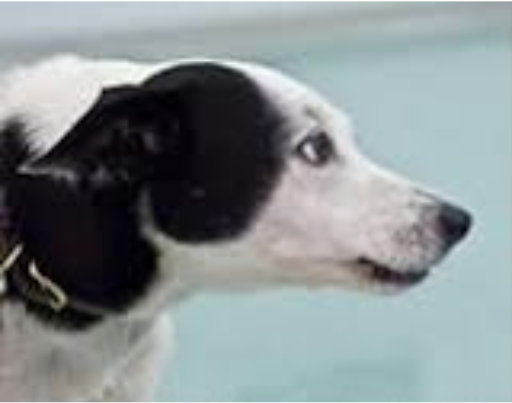
Photos of increased fear/anxiety/stress body language
Was it easier to see the signs of stress in each of the above photos? Was there anything that surprised you? Can you think of a time when your own dog would have exhibited some of these body language signals?
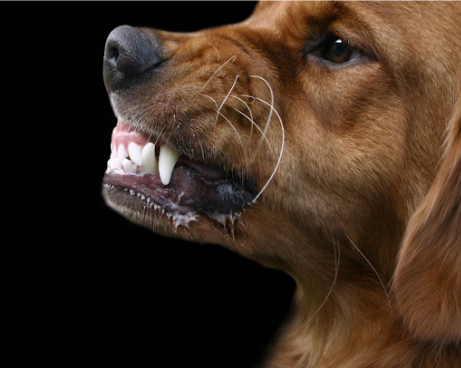
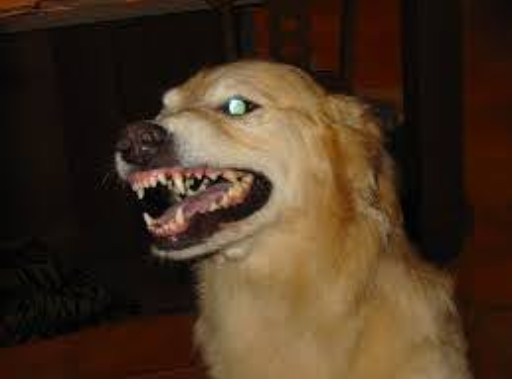
Signs of discomfort/warning signs
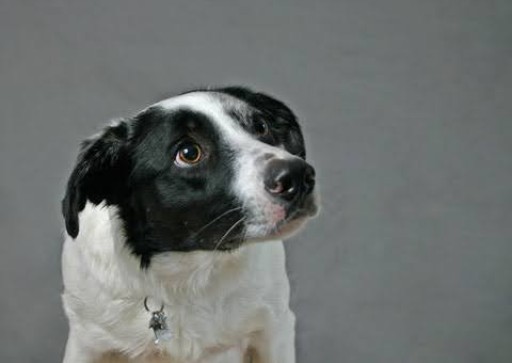
As you can see, dogs express discomfort in many ways. These warning signs become more and more obvious, and can include:
Body: Stiffness/stillness/freezing, rigidity through the body
Ears: pulled far back against head or raised and rigid
Mouth: corners of mouth puckered forward, mouth tightly closed or lips and tongue may be retracted and you see a snarl or lip curl and/or teeth exposed
Tail: Can be high, rigid and still, wagging upright very quickly or lowered or tucked against the body
Eyes: hard stare, pupil dilation
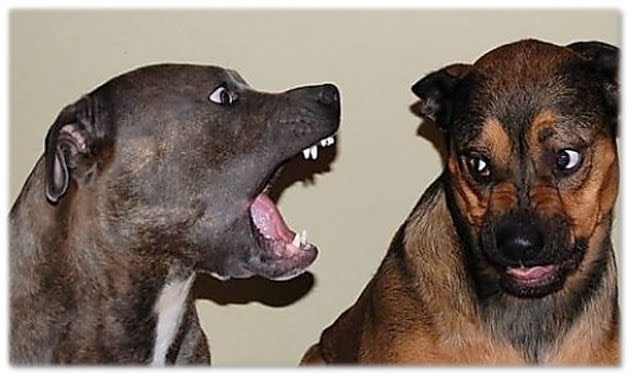
Photos of discomfort/warning signs
Ok, so I am guessing that the last group of photos were fairly easy to identify as dogs who were feeling overwhelmed, threatened or deeply scared. And I am also guessing that most folks know not to approach dogs who are exhibiting those signs. Except we live in the age of the internet and there is lots of really bad advice out there about how you should be the “boss” of your dog and all that jazz. I am not here to debate such philosophical hogwash, but I am going to say that you assume an extraordinary amount of risk if you approach a dog who is exhibiting body language like in the last series of photos above.
The goal of saying this is not to alarm or scare you. I am saying it so that we can all learn together, tune-in, pay attention, and make empowered choices about how to interact with the dogs we share our lives with. So that we can learn how to recognize and diffuse tension before it turns into something no one wants. Afterall, we are their providers and protectors, their guides and companions. They can’t “speak” to us in any other language than the one they were evolutionarily wired to use. We have invited them to live in our homes and in our hearts and I think the onus is on us to make sure that we understand what they are communicating. Our goal, as always, is harmonious households for all the creatures living it.
Here’s to harmony!
MaryKaye
Now What?
Identify which step you should start with: observation, learning the signals, or interpretation.
Build the habit into your day. Devote at least a few minutes each day to becoming fluent in your dog’s language.
Try the above steps and do some research on your own. Get your friends and family involved so you can practice with them, too!
Move on to the next phase when you feel confident in the one you’re currently on.
Reach out to a professional for help. Pet Harmony has dedicated consultants who can help you learn how to identify what your dog is trying to say and teach you how to “speak dog!”
Copyright 2025 Pet Harmony, LLC. All Rights Reserved.