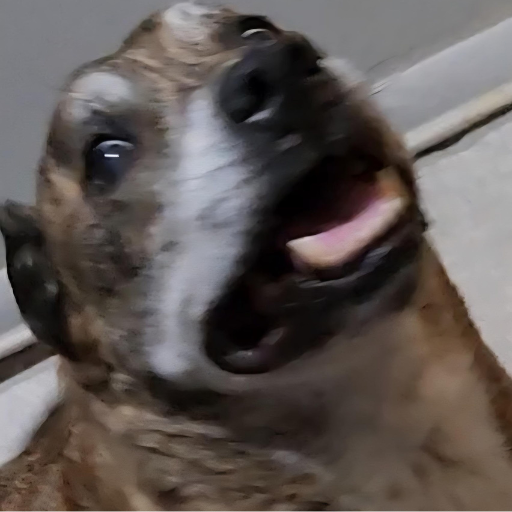
When is Enrichment Not Enriching?

When Allie and I first started writing our book, Canine Enrichment for the Real World, we had a conversation with Dogwise about what exactly the book would cover. When we submitted the outline, our publisher’s comment was, “This is a lot more comprehensive than I imagined!” And, yes. That’s precisely the point.

The thing about the pet-owning community is that we want to learn more about the animals in our care, and we often do so by passing information around, rather than learning about these topics in a more formal, structured way. This isn’t necessarily a bad thing, but community-shared information doesn’t come without its risks: namely, that we end up playing a game of Telephone, and as information gets shared it gets watered down and misinterpreted, until no one is really sure what’s true, what’s false, and what’s somewhere in between the two.


The Whole Picture

The topic of enrichment has not been immune to this game of Telephone. Most folks in the pet community don’t realize that enrichment started in zoos, and that the concept was created to improve the welfare of captive wild animals. As such, what zoos, aviaries, and aquariums mean by enrichment is often significantly different than what pet parents and dog trainers mean. For zoos etc., enrichment is the means by which they ensure that the animals in their care are physically, behaviorally, and emotionally healthy. When the pet-owning community talks about enrichment, they generally talk about it in terms of keeping pets occupied, making their life more interesting, or giving them things to do—keeping them busy, in other words. Which, to be clear, is certainly an important aspect of enrichment! But by no means the whole picture.

During the process of writing the book, I spent a solid three months trying to get in touch with people from the zoo and dog training world who had been in this profession in the 70s and 80s, trying to figure out when and how the concept of enrichment made its way from zoos into the pet community—to no avail. No one could tell me how it happened, or when. It just… kind of… did. So it’s no wonder that much got lost in translation!

So our goal for the book was to bridge the gap between enrichment as it was originally intended, and as zoos etc. currently use it, and how the pet-owning community thinks of it. We want pet parents, behavior professionals, shelter workers, veterinarians, and anyone else in the pet community to have access to the same information that zookeepers have. We want the people in our community, which we love so much, to be empowered by more and better information.


Outcomes vs. Intentions

And here’s the reason this matters so much: our community has a strong tendency to approach problems prescriptively. We look at a situation – whether it’s a specific behavior issue or just a general, overall welfare issue – and we say to ourselves, “I’m going to use positive reinforcement,” or, “I’m going to give this animal more enrichment,” or, “I’m going to provide foraging.” Those are all fabulous goals! The problem is that we tend to get stuck at the stage of our intentions, without paying much attention to whether or not our outcomes match our intentions. We often keep doing something because we believe that we’re achieving our intended goal without actually measuring whether or not we truly are. This often leads to us doing a whole lot of work without seeing a whole lot of improvement. Which can be frustrating and demoralizing.

But enrichment isn’t what we do or the things we give them; enrichment is what happens as a result of what we do and the things we give them. Toys aren’t enrichment. Playgroups aren’t enrichment. Nose work classes aren’t enrichment. All of those things have the potential to make enrichment possible, but enrichment itself doesn’t happen until the animal chooses to engage with those things, and as a result of that engagement, is able to meet one or more of their own needs. We can only know if enrichment has happened after the fact.


Prescriptive vs. Descriptive

This approach to enrichment is descriptive, rather than prescriptive. When we learn how to take a descriptive approach to enrichment, it looks like this instead: “This dog loves to spend time with other dogs but is not currently getting enough play opportunities. So I am going to take him to some playgroups to see if playing with dogs in that setting will meet that need. Oh yes! Look! It does! Look at him having fun playing with those dogs. Wonderful. For this dog, at this stage in his life, playgroups are a good form of social interaction enrichment.” Or, “This dog is destroying my furniture when I leave her at home alone. This tells me she needs more opportunities to chew, tear, and shred appropriate objects rather than my sofa. I’m going to give her some foraging toys that have to be chewed, torn, and shredded in order to access the food. Oh look! Now that she has these toys to keep her occupied during the day she’s no longer destroying my stuff. For this dog, at this stage in her life, destructible foraging toys are a good form of foraging enrichment.”

Being able to take this descriptive, goal-oriented approach to enrichment requires an understanding of what our pet’s needs truly are. It requires learning a bit more about their species – their body language, common motivators, and species-typical behaviors – and it also requires carefully observing the individual animal in front of us to see what behaviors they’re offering, what needs they have, and how we can best meet those needs. It requires learning to see with our eyes, rather than our ideas. And all of that is very doable! We’re here to help you do exactly that.


What Now?

Want to dive deeper into this topic with us? Want to learn about how taking a descriptive approach to enrichment can improve your relationship with your pet? Here are some related resources:

Here’s to harmony!

-Emily

Conversations with My Dog

A lot of people talk to their pets. I’m one of them. I ask Oso questions he’ll never be able to answer, I sing him songs that he doesn’t understand, and I occasionally throw in something that he does know like, “Do you want to go outside?” Humans are talkative beings. Sorry, Oso. But what if I told you that Oso can hold his own in some of our conversations? I sound crazy, right? Let me explain. 

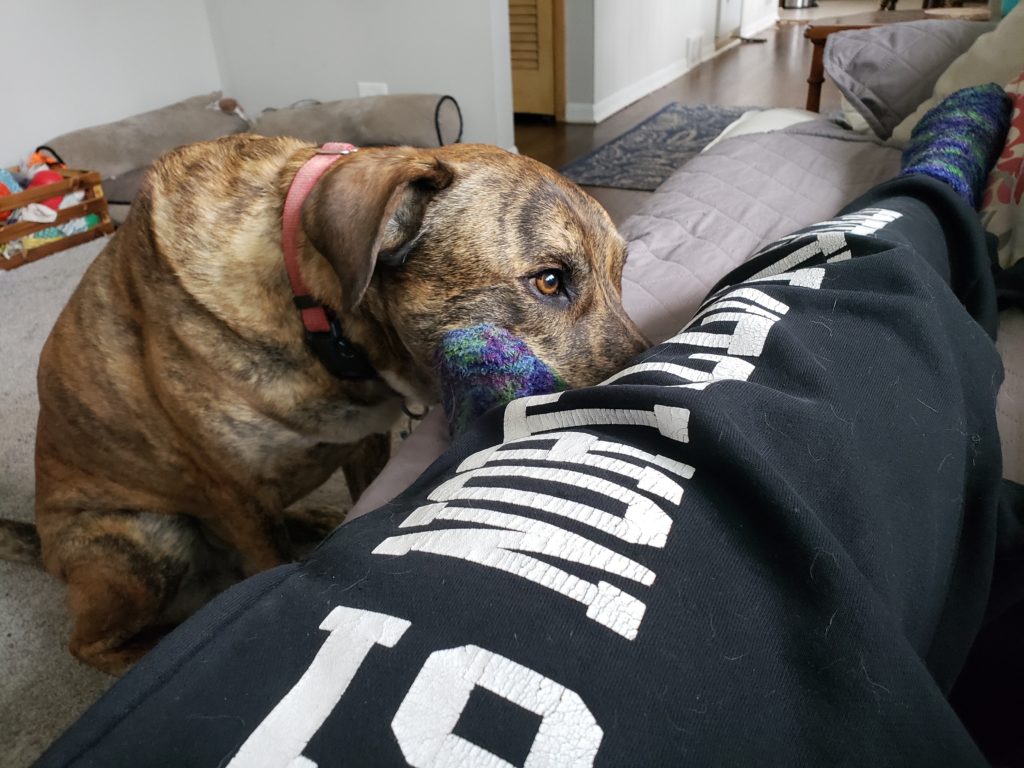
This may just look like a super cute picture of Oso, but it’s actually the beginning of a conversation. Here’s what he’s saying:

Oso: *puts head on couch* I’d like to come up on the couch. 

Me: Okay, come up then.

At this point, one of two scenarios play out:

Scenario 1: 

Oso: *comes up on couch and snuggles* Hooray snuggle time!

Intense snuggling: the result of missing yesterday’s snuggles.

Scenario 2: 

Oso: *looks at me without moving his head* There’s stuff in my way.

Me: Is something in your way? You’re ridiculous. *Continues chattering while clearing space for him on the couch* Come up then. 

Oso: *looks at me without moving his head* There’s still not enough room.

The subtle eye movement here is impressive.

Me: *Sigh* You’re the worst. *Moves my legs to give him even more space*

Oso: *comes up on couch, sprawls out, and falls asleep*

Now, I’ve clearly anthropomorphized some of this. I don’t *really* know his side of the story. But, what I do know is that we very consistently have this interaction. We have both learned this way of communication from one another. His head-on-couch behavior prompts me to create space for him and he comes up after I do so. He continues to put his head on the couch because he gets the space he’s looking for and I get snuggles so I continue giving him space. It may look unconventional but it definitely qualifies as a conversation. Communication is so much more than talking.

Expanding the picture

Oso learned how to use a “head down” behavior as a conversation starter not through this couch behavior, but during our training sessions. We often start our training sessions with his nail file board. However, after he scratched for a varied length of time, he consistently would become disinterested in continuing. In the beginning I took that to mean that he wasn’t interested in continuing our training session in general and would move on to my own thing. He would continue putzing around the room, though, as if to say that he wasn’t done with the interaction. Maybe I had gotten it wrong?

Around this same time, I was teaching him a “head down” behavior as a new trick. While I don’t remember the actual interaction, my assumption is that during a training session he decided to do a “head down” behavior instead of continuing to use his nail file board and I started reinforcing him for that. We continued the session but switched to a new activity. It only took a few of these interactions for us to finally be on the same wavelength (humans are slow, aren’t we?): he wanted to continue training but didn’t want to do his nail file board anymore. 

The “head down” behavior took off after we learned how to communicate together in this way. He started doing it during training sessions any time that he wanted to switch to a new activity. I learned that he likes switching up what we’re working on far more than I was doing previously. He started doing it whenever he got frustrated because I wasn’t clear in what I wanted. He started doing it to ask to get up on the bed or when he wanted me to create space for him on the couch. He started doing it to ask for most things that he wanted (the only different one is when he wants to go outside). He learned that that behavior works for getting him things he wants.

The Applied Behavior Analysis (ABA) term for this type of behavior is called, “manding”. Essentially, it means requesting something that you want. Oso learned “head down” as a manding behavior because I treated the behavior as a form of communication instead of a random or coincidental occurrence. Not only is his “head down” behavior cute and unobtrusive, it is so much less annoying than many of the behaviors he could have chosen: barking, pawing, nudging my hand. 

Here’s my challenge for you: start treating your pet’s behavior as a form of communication instead of a random occurrence. Look around and assess the situation. What could they potentially be saying to you? What has your pet “gotten” for doing this behavior in the past (attention, petting, treats, play time starts, etc.)? 

What conversations will you have with your pet?

Now what?

  • Observe your pet’s behavior free from judgment. Take away the morals– good behavior and bad behavior– and simply watch. Is there something that they do fairly regularly? 
  • After observing their behavior, start noticing the situation around that behavior. What happened before? What happens after? Again, this step should be free from judgment. 
  • Are there conversations that you and your pet already have? Your observations may uncover some form of communication that you weren’t cognizant of!
  • Is there a way that you’d like your pet to communicate with you? One of the easiest ways is to choose a behavior that your pet is already performing and reinforcing it. You can also choose to teach a new behavior and use that instead! 
  • Start training! I chose to reinforce Oso’s manding behavior not with food, but with “real life” reinforcers like access to furniture and fun training exercises. 
  • Post pics and videos of the conversations you have with your pet on our Facebook page! We’d love to see them. 

Happy training!

Allie

February 2020 Training Challenge: Explore New Indoor Physical Activity Options for Your Pet

I can’t believe it’s already February! That means it’s time for this month’s training challenge:

Experiment with, and incorporate 1 new indoor physical activity into your pet’s repertoire. 

I’ve been talking quite a bit about “Winter Oso”: how Oso’s behavior changes in the winter when his physical activity decreases. I know many other dogs start getting “cabin fever” around this time of year so this challenge seemed fitting for February. It’s always great to have more activities that both you and your pet enjoy up your sleeve when the weather gets bad! 

Here are 10 examples of indoor physical activities that you can experiment with:

  1. Jump to target: if your pet already knows a cue to touch their nose to something (ie: your hand, tennis ball on a stick, etc.), then gradually raise the target up so they have to jump to reach it!
  2. Jump up/off furniture: if your pet is allowed on the furniture, ask them to jump up and back off several times in a row. 
  3. Recalls throughout the house: wait until your pet is farther away from you (I toss treats down the hall to get this!) then ask them to “come”. The faster they come the more treats they get!
  4. Running up and down the stairs: run with your pet or stand at the top of the stairs and have them run down and back up by tossing treats or toys down (like fetch!) Be sure to put a mat at the bottom of the stairs so they don’t slide. 
  5. Fetch (down a hallway or up/down stairs): all you need is a long hallway or set of stairs and you can play fetch inside!
  6. Tug: a great strength-building game! It’s an old wives tale that this increases aggression so tug away! 
  7. Flirt pole: these are like giant cat wand toys made for dogs. They are great for exercise and can still be done inside if you have a large enough space or small enough dog!
  8. Long-distance “place”: similar to recalls throughout the house, wait until your pet is farther away and then ask them to sit or lie on their place/mat/bed.
  9. Balance activities & other physical therapy-type activities: get out the balance boards and exercise balls! These activities require extra training and can benefit from the recommendations of a professional, but are wonderful for senior pets. 
  10. Tricks that use extra muscle (I.E. sit pretty, army crawl, etc.): another that requires training but these can be a great way to get both mental and physical exercise in in one fell swoop!

Oso and I demo several of these activities in our February 2020 Training Challenge FB Live video (find our FB videos here). 

Now what?

  1. Pick an activity that sounds fun for you and your pet. 
  2. Try it out! Whatever you pick may require some time, patience, and training. Troubleshoot if necessary!
  3. Does that activity actually wear your pet out? If yes, then it’s an appropriate form of physical exercise for them. If not, go back to step 1. 
  4. Post pics and videos of your pet enjoying their new exercise on our Facebook page
  5. Need extra help? We offer enrichment consultations for things just like this! Email Emily at emily@petharmonytraining.com to schedule yours. 

Happy training!

Allie

January 2020 Training Challenge: Draft and Enrichment Plan for Your Pet – Part 2

Last week we started in our our first training challenge of 2020: Draft an enrichment plan for your pet. We had just finished filling out the first two columns for Winter Oso and were about to start in on the “Priority” and “Plan of Action” columns. Let’s pick up where we left off!

Here’s where we left off:

Aspect of Enrichment Is this need being met? Agency? Priority Plan of Action
Health/Veterinary   Likely  IP: cooperative care & happy vet visits    
Hygiene   IP: working on back nails   Appropriate    
Diet/Nutrition   Likely   Appropriate    
Physical Exercise Potential Room for Growth: winter behavior   Appropriate    
Sensory Stimulation   Likely   Appropriate    
Safety   Likely   Appropriate    
Security   IP: counterconditioning to fireplace   Appropriate    
Instinctual Behaviors  Potential Room for Growth: destuffing bed in winter   Inappropriate: destuffing bed    
Foraging   Likely   Appropriate    
Social Interaction   IP: meeting more people   Appropriate    
Mental Exercise   Potential Room for Growth: winter behavior   Appropriate    
Independence   Likely   Appropriate    
Environment   Likely   Appropriate    
Calming   Likely   Appropriate    

Oftentimes when people fill out an enrichment chart for the first time they’re overwhelmed with how much there is to work on and even feel a little guilty. We all want to meet our pet’s needs as best as possible and many times seeing everything in one place lets us know that we have more work to do than we were expecting. That’s okay! Oso’s enrichment chart definitely did not look like this when I first started on his enrichment plan; you’re looking at something that’s a few years in the making. It’s okay if there’s a lot to work on! We all have to start somewhere.

To help with the overwhelm, we put the “Priority” column next. It’s unrealistic and usually unproductive to tackle everything all at once. Additionally, if you add a bunch of things at the same time you don’t necessarily which is helping to change your pet’s behavior. The systematic approach is better in the long run.

When looking at prioritizing Winter Oso’s plan, I specifically want to pay attention to the new winter behaviors that I put on his list earlier (from Part 1). The other things that we’re already working on are built into his schedule, for the most part, and are a part of our routine. I can stay at a maintenance level with those for now and mark them as lower priorities.

Aspect of Enrichment Is this need being met? Agency? Priority Plan of Action
Health/Veterinary   Likely  IP: cooperative care & happy vet visits   Low  
Hygiene   IP: working on back nails   Appropriate   Low  
Diet/Nutrition   Likely   Appropriate    
Physical Exercise Potential Room for Growth: winter behavior   Appropriate   High  
Sensory Stimulation   Likely   Appropriate    
Safety   Likely   Appropriate    
Security   IP: counterconditioning to fireplace   Appropriate   Med.  
Instinctual Behaviors  Potential Room for Growth: destuffing bed in winter   Inappropriate: destuffing bed   Med.  
Foraging   Likely   Appropriate    
Social Interaction   IP: meeting more people   Appropriate   Low  
Mental Exercise   Potential Room for Growth: winter behavior   Appropriate   High  
Independence   Likely   Appropriate    
Environment   Likely   Appropriate    
Calming   Likely   Appropriate    

You’ll see that while destuffing his bed was on our “Undesirable Behaviors” list earlier, I marked it as a lower priority here. That’s because I believed the behavior to be a result of a different category (either mental or physical activity) instead of this one. If addressing the high-level priorities didn’t change this behavior then I would address this category. [Note about prioritization: Emily and I are working on a specific Prioritization Protocol at the time of writing this but it’s not quite ready for release nor did it greatly impact this post’s content. Stay tuned!]

Finally, we can get to our plan of action. What are we going to do to address those high priority categories? Those of you who’ve recently read the Winter Oso blog post, you’ll remember that I first tried increasing how frequently we played “find it” to address mental exercise. Here’s what the chart looks like with that added in:

Aspect of Enrichment Is this need being met? Agency? Priority Plan of Action
Health/Veterinary   Likely  IP: cooperative care & happy vet visits   Low  
Hygiene   IP: working on back nails   Appropriate   Low  
Diet/Nutrition   Likely   Appropriate    
Physical Exercise Potential Room for Growth: winter behavior   Appropriate   High  
Sensory Stimulation   Likely   Appropriate    
Safety   Likely   Appropriate    
Security   IP: counterconditioning to fireplace   Appropriate   Med.  
Instinctual Behaviors  Potential Room for Growth: destuffing bed in winter   Inappropriate: destuffing bed   Med.  
Foraging   Likely   Appropriate    
Social Interaction   IP: meeting more people   Appropriate   Low  
Mental Exercise   Potential Room for Growth: winter behavior   Appropriate   High   “Find it” with all dinners
Independence   Likely   Appropriate    
Environment   Likely   Appropriate    
Calming   Likely   Appropriate    

However, I didn’t see as much of a change in his behavior. Remember: activities must serve a function to be classified as enrichment! Even those “find it” and foraging are absolutely great exercises, do meet his needs in several categories, and theoretically could address the behaviors I didn’t actually see a significant decrease in his undesirable behaviors. That means that it’s not the activity he needs at the moment. With that in mind we increased his physical activity:

Aspect of Enrichment Is this need being met? Agency? Priority Plan of Action
Health/Veterinary   Likely  IP: cooperative care & happy vet visits   Low  
Hygiene   IP: working on back nails   Appropriate   Low  
Diet/Nutrition   Likely   Appropriate    
Physical Exercise Potential Room for Growth: winter behavior   Appropriate   High   Fetch outside daily, tug inside daily
Sensory Stimulation   Likely   Appropriate    
Safety   Likely   Appropriate    
Security   IP: counterconditioning to fireplace   Appropriate   Med.  
Instinctual Behaviors  Potential Room for Growth: destuffing bed in winter   Inappropriate: destuffing bed   Med.  
Foraging   Likely   Appropriate    
Social Interaction   IP: meeting more people   Appropriate   Low  
Mental Exercise Likely   Appropriate    
Independence   Likely   Appropriate    
Environment   Likely   Appropriate    
Calming   Likely   Appropriate    

Eureka! That worked! We started with a hybrid game outside (we’ve since taught him to play fetch) and tug inside each day and that has significantly decreased his undesirable behaviors and increased the desirable ones. It was physical exercise that he was lacking!

There you have it: a full example from start to finish of creating an enrichment plan. In our experience, it takes quite a bit of practice to look at behaviors in relation to their needs, so take it slow and go easy on yourself. And remember, we’re here to help!

Now what?

  • Time to finish up your enrichment plan for your pet!
  • An enrichment plan is fine and well, but the more important part is implementing it to see if your plan is beneficial. Have fun and experiment with some new activities! Check out our book if you need some ideas for the different categories.
  • Does this seem like a lot of work? Or overwhelming? Email Emily at emily@petharmonytraining.com for an enrichment consultation and let her create your plan for you!

January 2020 Training Challenge: Draft an Enrichment Plan for Your Pet – Part 1

Happy New Year everyone! I can’t believe we’re already into our 2nd year of training challenges. Thank you to everyone who has participated thus far and posted your progress on social media. I’m excited to get this year started! 

A little debrief about training challenges this year: they’re all enrichment-focused! Most of you know by now that our book, Canine Enrichment for the Real World, came out a few months ago (a huge thank you to everyone who’s purchased!) In honor of that, we decided to go through the book and set a training challenge based on the different categories of enrichment. So if you find yourself needing a little extra help in completing challenges in addition to the FB Live videos and these blog posts, there is plenty more info in the book. 

For those of you who aren’t familiar with the concept of enrichment, the simple definition is: meeting all of an animal’s needs. We can expand that to a full definition: enrichment means meeting all of an animal’s needs in order to empower them to perform species-typical behavior in healthy, safe, and appropriate ways. One of the challenging things about working on enrichment with our pets is that there are several species-typical behaviors that we don’t like: chewing, digging, barking, scratching, etc. But just because we don’t like a particular behavior doesn’t mean that we don’t have to meet that need. It means that we often need to think outside of the box on how we can meet our pet’s needs in a way that we also enjoy or at least don’t mind. 

Additionally, we need to actually see a change in our pet’s behavior to count that activity as enriching. If we provide our pets with activities or items that don’t elicit them performing species-typical behavior in healthy, safe, and appropriate ways then those activities or items are not enriching. If your dog is afraid of going on walks, then walks are not enriching. If your cat doesn’t use the scratching post, then the post is not enriching (without some training to teach her how!) We need to see the results to determine if what we’re doing is working. 

What I love about enrichment is that it helps improve behavior! There are many times where clients come to me for help with their pet’s behavior and it’s the simpler enrichment activities that give them the desired outcome instead of complicated training activities. When animals’ needs are being met they behave better. 

All of that leads us into our January 2020 challenge: 

Draft an enrichment plan for your pet 

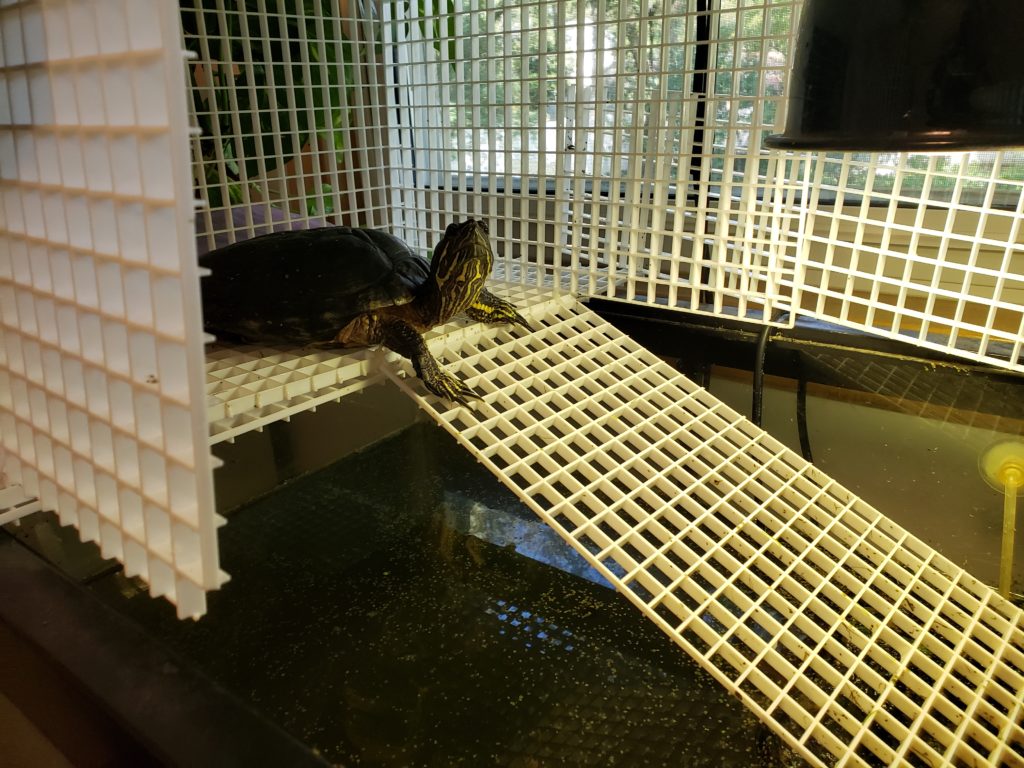
Specifically, I want you to look at one or two undesirable behaviors that your pet does, consider what needs those behaviors are meeting (because all behavior serves a function to the individual performing it), and figure out how you can meet that need in a more desirable way. While the materials we’re providing are dog-centric, you can do this challenge with any species! I’m considering drafting an enrichment plan for my turtle, Zorro. 

I talked a bit about using enrichment to mediate frustrating behaviors in a fairly recent blog post about my nemesis: Winter Oso. Check out that post here if you haven’t read it already. “Winter Oso” is what we call our dog when it starts getting cold out and he starts getting squirrely. I knew that this behavior change was because I wasn’t meeting his needs well in the winter, but I wasn’t sure exactly which was deficient. Let’s go through creating an enrichment plan for Winter Oso. I’ll use our enrichment chart (pages 195-196 of the book) to make it easier to plan:

Aspect of Enrichment Is this need being met? Agency? Priority Plan of Action
Health/Veterinary        
Hygiene        
Diet/Nutrition        
Physical Exercise        
Sensory Stimulation        
Safety        
Security        
Instinctual Behaviors        
Foraging        
Social Interaction        
Mental Exercise        
Independence        
Environment        
Calming        

The first step is listing out the undesirable behaviors you’d like to see less of and the desirable behaviors you’d like to see more of. For Winter Oso, it looks like this:

Undesirable behaviors:

  • Increased activity at night
  • Destuffing his bed
  • Inappropriate investigation of household items within his reach

Desirable behaviors:

  • Sleeping in the evenings

After you have your desirable and undesirable behaviors, fill out the first column “Is This Need Being Met?” based on the behaviors you previously listed. What categories of needs do those undesirable behaviors likely fall in? What function do they serve? Here’s what that looks like for Winter Oso (I threw in other things we’re working on not listed above as well to give you a full picture):

Aspect of Enrichment Is this need being met? Agency? Priority Plan of Action
Health/Veterinary   Likely      
Hygiene   IP: working on back nails      
Diet/Nutrition   Likely      
Physical Exercise Potential Room for Growth: winter behavior      
Sensory Stimulation   Likely      
Safety   Likely      
Security   IP: counterconditioning to fireplace      
Instinctual Behaviors  Potential Room for Growth: destuffing bed in winter      
Foraging   Likely      
Social Interaction   IP: meeting more people      
Mental Exercise   Potential Room for Growth: winter behavior      
Independence   Likely      
Environment   Likely      
Calming   Likely      

The categories that his undesirable behaviors might be meeting include: Physical Exercise, Mental Exercise, and Instinctual Behaviors (specifically chewing/gutting). We now go to the next category: Agency. Agency can be defined as: the ability to have some level of control in our environment and be able to make choices that will result in a desirable outcome. If an animal doesn’t have agency within a category then that category doesn’t meet the definition of enrichment either.

Aspect of Enrichment Is this need being met? Agency? Priority Plan of Action
Health/Veterinary   Likely  IP: cooperative care & happy vet visits    
Hygiene   IP: working on back nails   Appropriate    
Diet/Nutrition   Likely   Appropriate    
Physical Exercise Potential Room for Growth: winter behavior   Appropriate    
Sensory Stimulation   Likely   Appropriate    
Safety   Likely   Appropriate    
Security   IP: counterconditioning to fireplace   Appropriate    
Instinctual Behaviors  Potential Room for Growth: destuffing bed in winter   Inappropriate: destuffing bed    
Foraging   Likely   Appropriate    
Social Interaction   IP: meeting more people   Appropriate    
Mental Exercise   Potential Room for Growth: winter behavior   Appropriate    
Independence   Likely   Appropriate    
Environment   Likely   Appropriate    
Calming   Likely   Appropriate    

Oso has a lot of agency in his daily life and we’ve spent a good deal of time teaching him that he has choices in difficult situations. We’re still working on medical handling but you can also see that one area that he has too much agency in is having access to his bed so as to destuff it. Last winter we put one of them away before he destroyed it completely. This year we’ve been working on teaching him more appropriate choices.

Phew! If you’re following along with your own enrichment plan these two columns alone probably took quite a while to complete. Let’s put a pin in this here and get into the second two columns next week.

Now what?

Happy training!

Allie

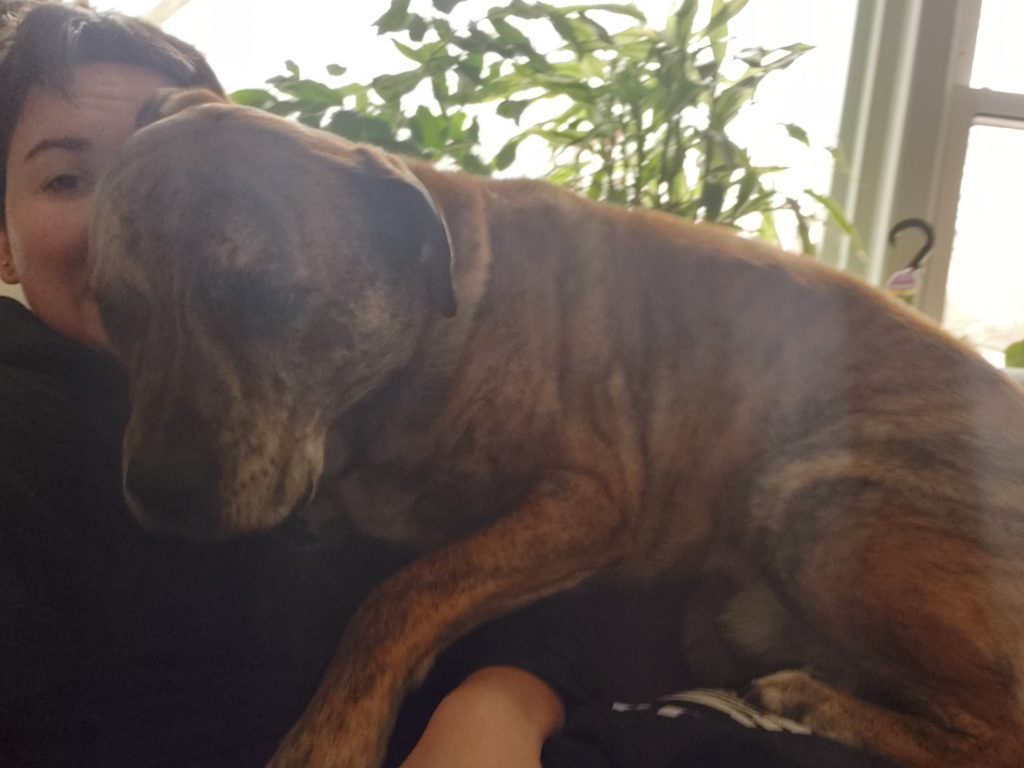
A large brindle dog laying on top of a person.

Winter Oso

If you’ve followed Pet Harmony for probably any length of time you’ve heard me talk about the four-legged love of my life, Oso.

But let me introduce you to my four-legged nemesis: Winter Oso. 

I first met Winter Oso in the winter of 2018. I wish I could blame it on the polar vortex but he arrived prior to that. Winter Oso is squirrely. He cruises around in the evenings looking for mischief and driving us crazy. He destroys his bed. He decides to bark at the birds on the feeder for the first time ever. He gets into things he’s left alone for years. He’s such a nuisance that my husband and I actually, truly call him “Winter Oso” when he’s like that. And the worst part? Winter Oso is our fault.

Oso generally gets a lot of enrichment: playtime in the yard, training sessions, daily food puzzles, regular scent work, lots of toys, chews, and destructible items, and lots of snuggle time. He’s 7 years old and pretty happy to lounge on the couch with us in the evenings. This enrichment routine was enough to keep him calm and even keel for a year and a half after we adopted him.

A side view of a brindle dog calmly looking over the back of a couch (out a window)
Regular Oso
A brindle dog with an excited expression, eyes wide with his mouth open.
Winter Oso

It Was Enough...Until It Wasn't

When Winter Oso arrived, I went through the same thing that a lot of my clients go through: But I do so much for my pet. Are you saying that it’s not enough?

I was in denial that Winter Oso was a product of me not meeting his needs. “I do all this stuff for him! It should be enough!” While I thought that I was doing enough, Winter Oso was clearly telling me through his behavior that his needs weren’t being met. If I were meeting his needs better, he would be acting like his normal self instead of this new, squirrely beast.

It took a couple weeks of being annoyed and angry with him (hello, prelearning dip) for me to accept that I had to change course. If this were a client, I would tell them to increase or explore different options for mental and physical exercise. I was letting ideology—what it should be– get in the way of observation—what it actually is.

Solving Winter Oso

Increasing mental and physical exercise is just what we did. We played “find it” with every dinner spanning two floors of the house and getting in a lot of time up and down the stairs. It took 45 minutes. Every. Night. But it worked. Winter Oso was held at bay as long as we did this exercise.

We’ve now reached the one-year anniversary of meeting our four-legged nemesis. But this year, we were prepared. Winter Oso arrived during that cold spell we had in October: early but recognizable nonetheless. He started being more active in the evenings. He started destroying his bed: something we only saw during winter of last year.

We knew what to do, but… we moved into a new house this spring and no longer have the option of the exact same exercise that I was doing before (no stairs). That meant that I had to figure out exactly what was different about his enrichment schedule now vs. in warmer months and what the previous dinner exercise was actually doing to meet his needs.

We tried “find it” in the yard with his entire dinner a few days in a row. It took a little of the edge off but he was still squirrely. That meant it wasn’t a mental exercise problem. Aha! It was specifically going up and down the stairs during that dinner exercise that improved his behavior. He needed more physical exercise. But, why then, did we not need to worry about his physical exercise needs in the warmer months but did in the winter even if he spent the same amount of time in the yard on a warmer winter day?

It took me a few days to figure it out, but I realized two components that were different about his summer and winter yard times. 1) He’s more active in general when we’re outside too and we’re outside with him quite a bit when it’s warm out but not when it’s cold. 2) The reason we can get away with yard time as his primary form of physical exercise (besides age) is the wildlife.

Oso is a hunter and a threat to all things cute and fuzzy. He chases the squirrels, digs for voles, and gives birds a run for their money. We don’t mind it as long as he’s not incessantly barking; he’s a dog after all and it’s all normal dog behavior. In short, he gets a ton of exercise by just being a dog hunting for critters. In the winter, there are far fewer critters for him to antagonize and that means we need to step up our game and be the ones to provide him with his physical exercise needs.

We now play together in the yard almost every day for at least 5-10 minutes. We’ve invented a yard game that has him running for a large part of that time and that often does the trick. If he still needs more exercise a hardcore tug session with him and the husband will take care of the rest of his energy. The best part of this new routine is that its far more sustainable than our previous exercise. Winter Oso is no more and I have the four-legged love of my life back.

Here’s to harmony,

Allie

Now What?

Are there times where your pet is squirrely and you wished they’d just calm down? That is often a result of not meeting all their needs, like with Winter Oso. Take a step back and truly evaluate your pet’s behavior. Don’t let what you think it should be cloud your view of what it really is. For example:

    • If your pet is like Oso in that their behavior changes with the seasons, evaluate what is different. It might be something that’s not as easy to notice, like a change in critter density!
    • If your pet has undesirable behaviors regularly, evaluate what the function of their behavior is. What do they get out of doing it? What needs are the undesirable behaviors meeting?

Start experimenting with different activities and track the outcome. Here are some ideas:

  • Play with duration, time of day, and type of activity. It’s not necessarily about adding “more.” Often, it’s just about “different.” For example, instead of a 10-minute walk try a 10-minute flirt pole session if your pet needs more physical exercise. 
  • Keep track of what works and doesn’t work to address your pet’s behavior. That way the next time you see the change in behavior start you know exactly what to do and when!

Check out our book Canine Enrichment for the Real World for ideas and information on meeting your pet’s needs. Do you recognize that you have a Winter Oso on your hands but want professional help with addressing it? We got you.

Copyright 2025 Pet Harmony, LLC. All Rights Reserved.

Terms & ConditionsPrivacy Policy

Results are not guaranteed because behavior, human, canine, or otherwise, are not guaranteeable.