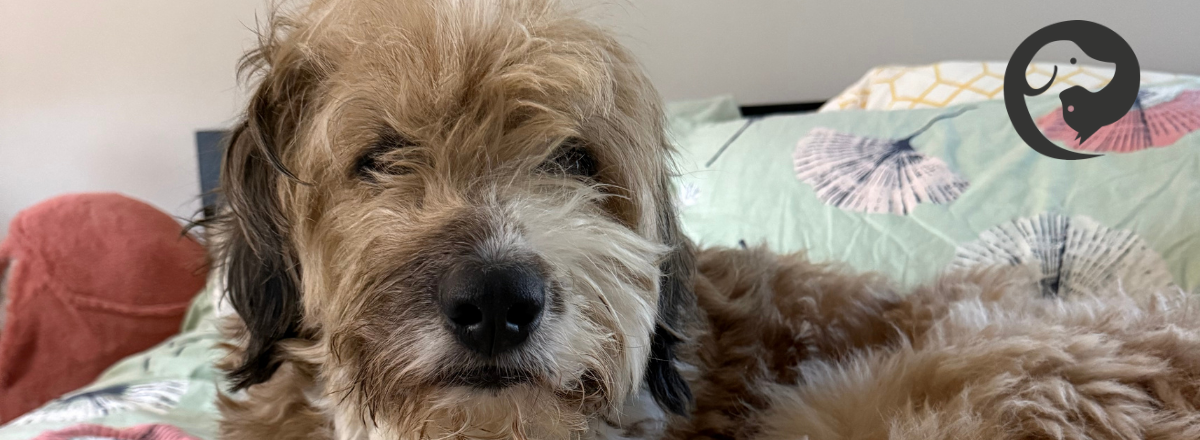
A fluffy brown and white dog looking into the camera while he relaxes on the bed.

Navigating Transitions With Kids and Pets

Navigating Transitions With Kids and Pets

A fluffy brown and white dog looking into the camera while he relaxes on the bed.

This blog is coming at ya from Corinne: trainer, behavior consultant, former teacher, and (among many other things) mom of 3 (2 human, 1 fluffy). My dog is 9 and my kids are 3 and 5 years old and it feels like every 6 months we’re hitting a new milestone/struggle/personality trait/anything to make you laugh at yourself when you thought you had it all figured out.

People. Having kids is hard. Not like oh, how do I keep them alive and what do I do with them when they misbehave, kind of hard but, like, I’m constantly having to make choices based on many thoughts, many opinions, and many outcomes while also controlling my own emotions and protecting the lives of these helpless beings kind of hard. I didn’t know that (sorry, Mom). 

Let me be the first to tell you that I don’t have it all figured out. And neither do you. And neither does anyone. And my guess is that if you’re feeling challenged by all these changes as the badass caregiver that you are, the other creatures are probably also feeling the challenge as well… but showing it a little differently. But that doesn’t mean we can’t navigate through it with a mix of confidence, reflection, and flexibility. In those stages where I feel like I’ve really been able to go with the flow, I’ve realized it’s usually because I was mentally, and sometimes physically, prepared before we got there.  

Understanding Developmental Stages—For Kids and Pets

Ok, let’s go back to where I always go back to (thanks Dr. Friedman): why does behavior occur? A very bastardized simplification of the study of behavior sciences is that behavior occurs as a response to the environment. So a change in environment can likely cause a change in behavior, especially if the learner doesn’t recognize the available consequences. 

Developmental stages? Socialization periods? Schedule changes? All things for us to keep an eye out for in how our learners are experiencing the world.

Before we can have a plan to know what to do when, we have to understand the aspects of what happens when. So let’s take a look at both human and dog developmental stages.

On the human-kid side of things, we can roughly break it down into the following stages:

  • Newborn: Potatoes that mostly sleep/eat/poop, but those little coos and stretches can be very alarming for a dog who has never heard/seen that before and just wants predictability.
  • Baby: Big-brained blobs that still need to be transported everywhere and are starting to figure out their limbs as well as cause-and-effect, which again, can be alarming for a dog who just wants predictability.
  • Toddler: Big-brained, mobile wobblers who don’t have self-awareness or empathy of other creatures that have realized they can also manipulate the environment to get what they want, but sometimes their bodies can’t do what their minds tell them to, which again, can be alarming for a dog who just wants predictability.
  • School-aged: Big-brained, super agile ninjas who want to be independent and contribute, but can’t/don’t exactly know what to be doing and also are realizing that they can have an effect on the world.
  • Teenage: Big-mushy-brained individuals who are finding themselves in the world and asking the BIG questions and feeling the BIG feelings and can confidently carry out their actions with independence, regardless of the forethought. 

Just bringing a child into the home and meeting their needs alone comes with a constant change of how we and they are interacting with the environment. As they get older their own awareness of their impact on their surroundings change, and their desire to be a part of the plan changes, and the schedule of the days changes, and the amount of people visiting the house changes, and the tuba drones from the basement add a particularly tasty seasoning to the ambiance of the house.  All of this can be really stressful on pets, so it’s no surprise when we see new behaviors pop up because the environment has changed.

Add to that, if you’re working with kids and a puppy, you’ve got all the things listed above going on as well as the dog’s critical socialization period, their fear periods, their teething phase, the possible hormonally dictated cycles starting, and the classic about-to-be-a-year-and-I-forgot-we-don’t-eat-out-of-the-garage pitfalls. As a dog enters their senior years (which happens way too fast for our brains to comprehend) they may start having physical limitations that we’ve never considered before or feeling more ouchy after lots of rest or exercise.

A fluffy brown and white dog with his head on his person's knee.
Corinne admiring Opie's big, beautiful brain (and his soft fluffy head).

For both our kids and our pets, they are going through lots of change, so regression is normal and to be expected. It doesn’t necessarily mean that you’ve done anything “wrong”, but I do think that it makes you feel less frustrated when we can go into it knowing what the developmental periods are for both species and feeling prepared that you’ll probably hit some potholes.

When it comes down to it, they’re both learning how to “life” and they’re looking to you for the “how”, so put on that oxygen mask, toots.

Take a breath–these new stages don't have to mean new stress

Let’s brainstorm some solutions for common chaos moments to get the problem-solving juices flowing (and here’s a podcast episode where Emily and I discuss incorporating kids into enrichment plans). Again, remember that tiny Dr. Friedman in your ear– if you want to change behavior, think first on changing the environment.

  • Morning chaos: Pup gets breakfast in a snuffle mat on the other side of a baby gate away from flailing arms and open exits.
  • Changing schedules: Before the end of the summer, do a couple trial runs of what the new routine is going to be, giving yourself plenty of days to alter. 
  • Less time to get everything done: Replace your morning walk with a game of hide and seek, followed by some scatterfeeding/foraging with breakfast.
  • Empty house during the day: Honestly my dog has been thriving, so maybe it’s fine, but maybe adding some sound masking can help the silence or hiring a local college-aged kid to pop in for some cuddles.
  • Kids are too loud after school: practice incorporating a relaxation project in a separate safe space. 
  • Kids are running amok: Involve them! Let them spread the yogurt on the lick mat, spray the cheese into the Kong, fill the toilet paper tubes with kibble, hide the foraging surprises around the house, read to the pup while they do a calming project, count the kibble in a cup of food and place into the dinner dish.

If you want more thoughts on school schedule changes and how to prep, check out these two blogs and a podcast: Back to School, Not Back to Stress & 5 Ideas for Bark to School & Podcast Episode #63 – Bark to School: Helping Pets with Routine Changes

Again, you’re going to be experiencing so much “new” with kids and dogs, it’s not always going to be smooth sailing. Normalize baby gates, boundaries, & “go do your thang” projects. If you’re planning on expecting anything, expect that there will be adjustments, not that there will be perfection.
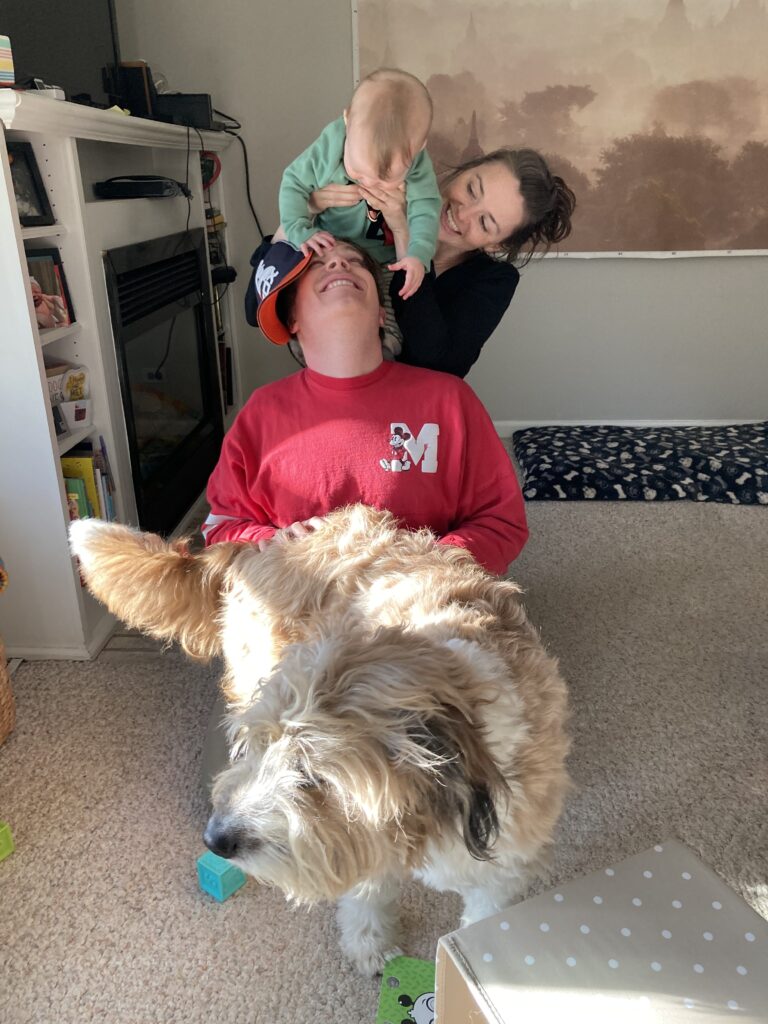
A fluffy brown and white dog with his family sitting behind him.
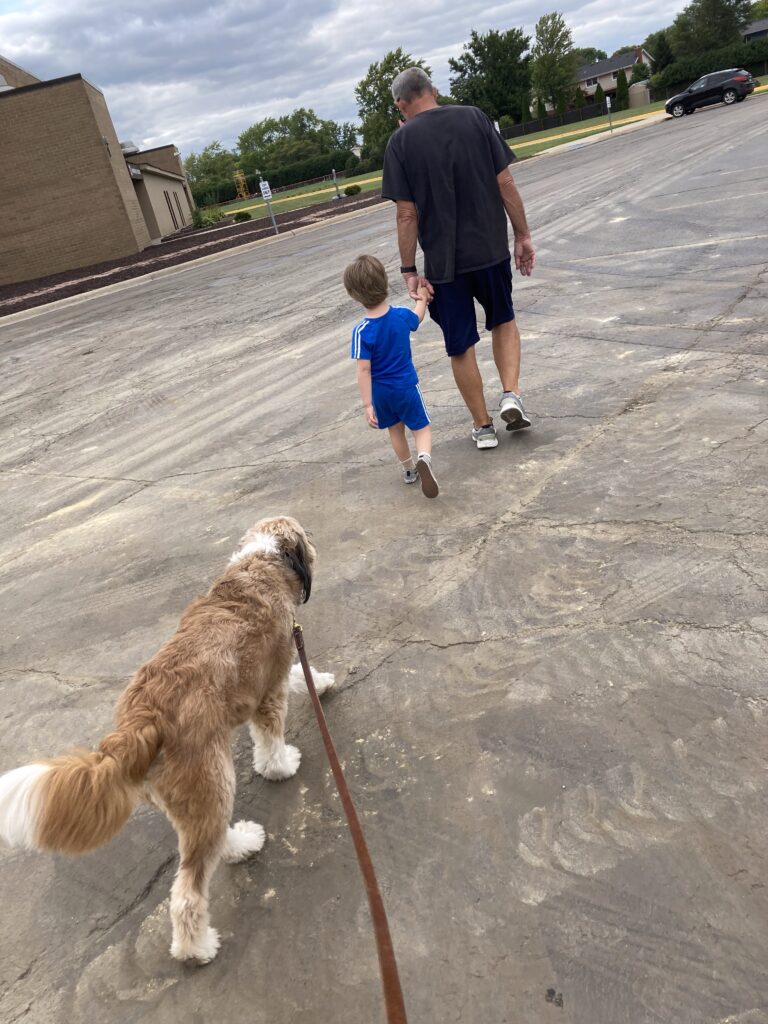
A fluffy brown and white dog following a man and a child who are holding hands.
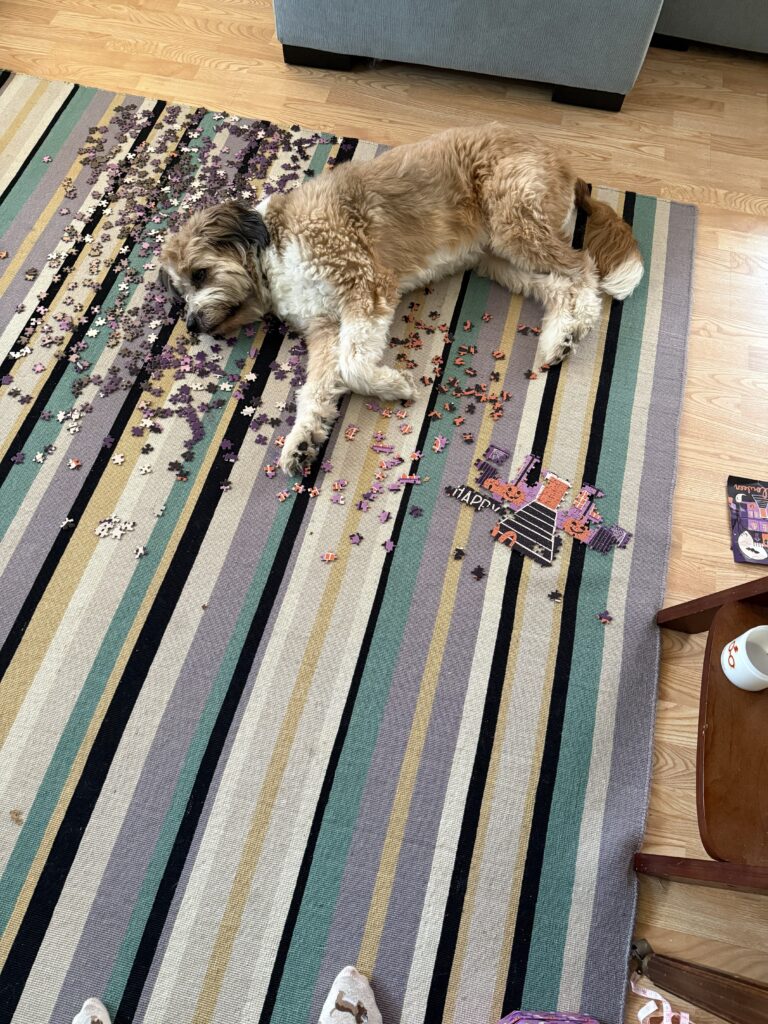
A fluffy brown and white dog lying on the floor on top of puzzle pieces. There is a partially assembled puzzle in front of him.

Playtime, family walkies, and even a puzzle. Opie and his kiddos are always learning and growing together!

Our kids and pets (and us!!!) have amazing, big, beautiful, complex brains. If we are living, we are learning, so all these tough transitions can be opportunities for growth. Let the frustration that come with setbacks be the trigger for you to take a step back and observe with your senses, not your stories, not a trigger to tell you that you are a failure, because you aren’t. We can teach our kids and pets resiliency and flexibility, and that comes from them watching you do your amazing thang.

You can bend but not break

Yes, preparation will help physically and emotionally, but it’s not going to be perfect, and that’s perfectly fine. Do you remember that Dashboard Confessional lyric “I can bend but not break?” Well, thank you prep plans and Chris Carrabba! (Also, did you know little kid bones can experience what’s called a “buckle fracture” where they bend but don’t break but they still need a boot? Now I do.) 

Celebrate those small wins where you saw something start to go sideways and you pivoted. Party on when your planning and preparation work (hint: if the management worked, the management worked, that’s good!). Smile at that moment when you see your 3-year-old reach out towards his dog, stop himself, turn his hand upside down, and wait to see if the pup puts his chin in his hand. 

People. It’s worth saying again, having kids is hard. 

Life changes. Preparation, empathy, and grace make those changes smoother for everyone.

Here’s to harmony,

Corinne

Now What?

  • Take a few minutes this week to look ahead—what transitions are on your horizon, and how can you set everyone up for success?
  • Comment below with a success you’d like to brag about, really!

Copyright 2025 Pet Harmony, LLC. All Rights Reserved.

Terms & ConditionsPrivacy Policy

Results are not guaranteed because behavior, human, canine, or otherwise, are not guaranteeable.
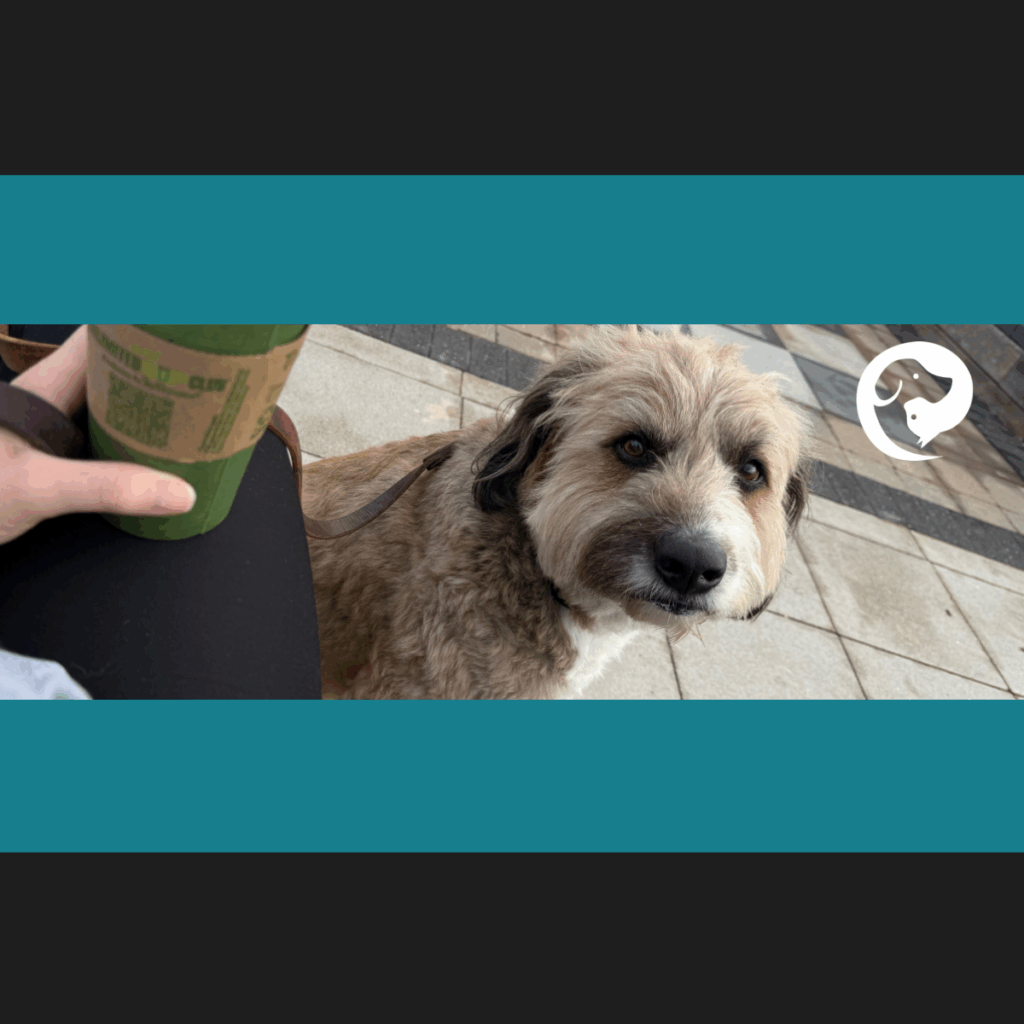
A fluffy brown and white dog looking up at his person who is holding a cup of coffee. There is a giant game of chess in the background.

Back to School, Not Back to Stress: Helping Your Pet Adjust to a New Routine

New Season, New Schedule—Same Sweet Pet

It’s back to school season for many locations and that means the lazy, relaxed days of summer are coming to a close. Even though my kids are adults now, I remember the hustle and bustle of preparing for back to school well. There was an excited anticipation and maybe some trepidation in the air as we planned for the new school year. Right about now, parents are most likely busy planning new schedules, routines, lunches, and after school activities while the kids might be busy planning their first day of school outfits and organizing their school supplies. 

The days of going to bed at various hours of the night and sleeping in “just because” will be on hiatus for the next nine months or so. After school will be filled with homework assignments, after-school activities and possibly more structured evening and bedtime routines. In other words, every member of the family will be impacted as they adjust to the new schedule and routines and that includes the family pets as well. 

The goal for today’s blog post is to help you develop simple strategies to help prepare your pet for the change from summertime fun to school year structure. 

Predictability Matters—Even for the Four-Legged Members of the Family

Are you a creature of habit? I know I am. That which is familiar feels safe and comfortable for many of us. Shifting from familiar territory to unfamiliar territory can rock our world depending on how sensitive we are to change.  Most of us thrive on predictability and our four-legged friends are no stranger to the feeling of comfort and familiarity that routines help create.

New school years can be disruptive to routines that have been established over the summer whether we intended to establish them or not. We may have let rigid bedtimes fall by the wayside. We may have shifted dinner time to later in the evening after we returned home from the pool. Staying up later to watch a movie or sleeping in later because we stayed up later, are all common routine changes that we might have made without even intending to do so. 

And just like we will need to help any children in the household adjust to the schedule changes from summer time to school year time, we will want to be aware of helping our pets adjust too because just like us, most pets truly do thrive on the predictability of a well established routine.

While children may be able to articulate that they are feeling cranky after a long day of school or are having a hard time getting up in the morning, our pets can not communicate in a way that might be apparent to us. 

Some common signs your pet may be struggling with the routine change include:

  • Decreased appetite
  • Restlessness or difficulty settling
  • Increased vocalizations
  • Increased comfort seeking or clinginess 
  • Increased sensitivity to things they usually tolerate well or enjoy, such as tactile stimulation

While these changes in behavior are pretty typical and mostly temporary, we do want to be as proactive as possible when it comes to helping our pets adjust. Just as children will need time to reacclimate to the schedule changes that a new school will bring, our pets do too!

Practice Makes Predictable

By the time you are reading this, your family might already be in the throes of new school year’s blues, but if you are one of the lucky ones, maybe you still have a week or two of summertime left to savor. Either way, it is not too late to start shifting summer schedules in preparation for the school year calendar. Some easy things that you can start to shift now include: 

  • Adjusting walks and feeding time by 10-15 minutes in either direction in accordance with the changes in morning, afternoon or evening routine shifts. 
  • If your pet is already used to brief periods of being left alone, you may want to increase the duration of time that your pet will be flying solo in short increments. 
  • Do a “trial” run through of what a typical school day might look like for your family once or twice before the school year begins to help your pet start adjusting now. 
    • This can also help you identify who in the family will be responsible for taking care of your pet during the morning and after school rush and establish it as a routine before you are feeling stressed by the scurrying and chaos that school day mornings often bring.  
  • Writing things down on a calendar, or better yet, having the kids create a Back to School Countdown calendar that includes Fido or Fluffy can help everyone to remember that pets need support too! 

Our goal is to establish routines so that the routine itself becomes the cue for your pet to understand what comes next. Whether it is a stuffed Kong in the crate, or a relax on the mat, when repeated often, your pet will know what to expect. 

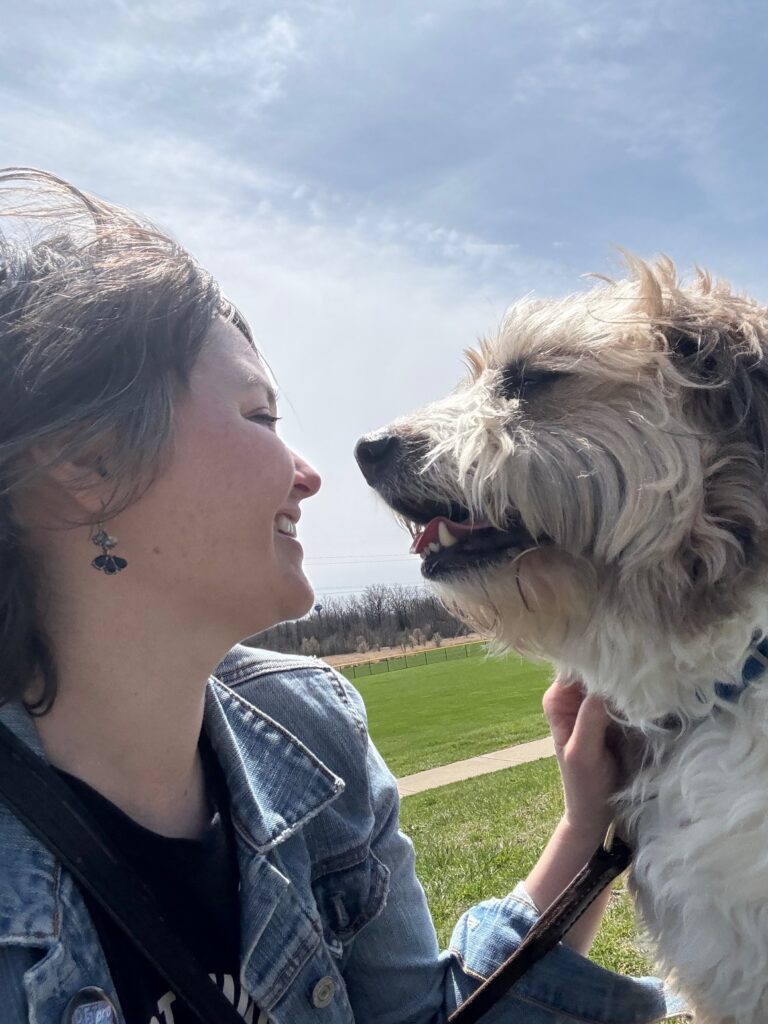
A fluffy brown and white dog looking at his person's face.
Sometimes Opie gets to be Consultant Corinne's favorite co-worker as well as her bestie. Here, she and Opie are out and about while the kids are at school--helping Consultant Claire work with a client (not pictured) by being cute and neutral.
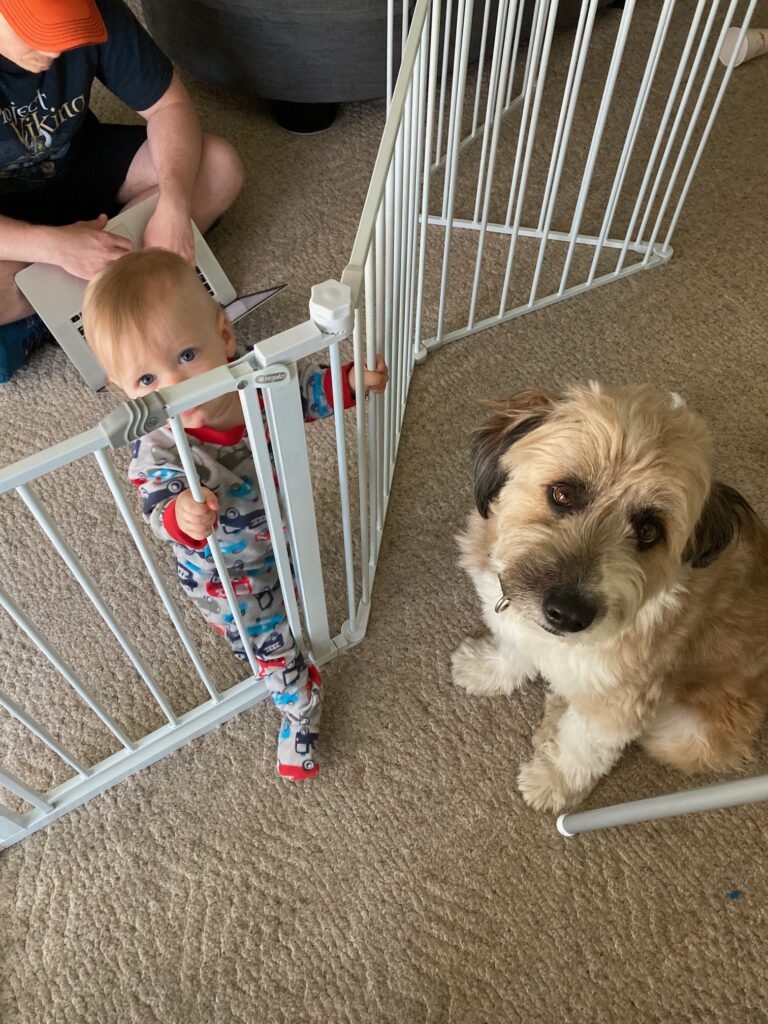
A fluffy brown and white dog sits on one side of a gate while a small child is on the other side.
Opie is a champion of life stages and the changes that come along with kids. Here he is hanging out on his side of the barrier while the toddlers be toddling. Barriers help create predictability in interactions and create separate spaces for chliling.

Keep Their Brains Busy While You’re Away

If your pet was kept busy during the summer months by the comings and goings of kids, friends and visiting family, it may be difficult to start spending more time alone. Preparing them for more alone time actually starts before they are left alone. Keeping them mentally and physically active can help them look forward to a little alone or downtime. Here are some suggestions for doing just that: 

It’s always important to remember that in order for enrichment to do its job, your pet must actively engage with it. We want to be mindful of the various activities we present to our pets as options and watch the results. Some things to be on the lookout for include: 

  • Does your pet interact with the option you have provided? Do they seem engaged? 
  • We are looking for a good match in terms of your pet’s ability or desire to engage. Too hard and they might not try at all. Too easy, and there will be no challenge. We want that Goldilocks “just right” fit! 

What is the result of the option you provided? Is your pet completely amped up or ready to settle into a nap? Depending on your desired outcome, choose wisely! 

Alone Doesn’t Have to Mean Lonely

All pets should have a location in the house that is really and truly theirs. Because just like us, sometimes we just need to retreat into a quieter, more peaceful space in which to regroup, rest or relax. At Pet Harmony we call this space a safe space but whatever you call it, make sure you are building a lot of value into the location by giving your pet plenty of good things there. 

A safe space for your pet can be a remarkably effective answer for the chaos that typically occurs during the morning rush or right after the kids arrive home from school looking for a snack. Allowing your dog to retreat to a space they can call their own can make a huge difference for times of day when you don’t have the time or energy to supervise interactions between possibly overstimulated kids or overstimulated pets. 

Safe space locations don’t have to be overly complicated. Watching where your pets’ preferred resting spots are and just capitalizing on the choice your pet is already making is easy enough. Of course, if your pet has decided that the center of the kitchen floor is the place to be because they have FOMO and want to be in the “room where it happens” we will want to encourage an alternate location that is away from the hub of the home at its busiest times. 


A “cool down” corner for your pet can be encouraged by making it a kid free zone meaning they should not bother the pet when the pet is resting there. Kids can, however, get involved by creating a cozy nook for your pet by choosing the bedding, toys, food or anything else your pet might find comforting and placing them in the location. Cuter still, have the kiddos create a sign that declares this is Sparky’s space so that everyone knows that when Sparky is resting there, they are to be left undisturbed. Why? Because tired pets = cranky pets just like tired kids = cranky kids. Here’s to more rest, less crank! 

Sometimes the Transition Is Too Big to Handle Alone

Transitions can be hard especially for those of us who thrive on predictability and routine. As you are transitioning from summer to school year there are definitely some indicators to be aware of that your pet is struggling more than is typical. It is especially important to be aware of any indicators that your pet is having a difficult time with being left alone. Pay attention to the following red flags and seek assistance if you are feeling out of your depth:

  • Destructive behavior such as destroying furniture
  • Potty accidents especially if your pet has been fully house trained
  • Increase in howling/barking/other vocalizing or neighbors complaining about the noise
  • Escape attempts or damage at exit points such as chewing or clawing at windows or doors
  • Obsessive pacing or lack of ability to rest or sleep 
  • Unexplained heavy panting and/or drooling 

If you do see any of these signs, the first thing I want you to do is not panic. While not at all desired (because who wants to watch their pet suffering) these issues are fairly common and treatable. Working with a qualified behavior professional, especially someone who has experience working with pets who are experiencing separation related behaviors is a very much recommended action to take. The sooner, the better for your pet and for you.

You’ve Got This (And So Does Your Pet)

If you know me at all, you know that one of my favorite things to say to clients is to try your best to be proactive instead of reactive. That means strategizing before you see a problem arise is often the most effective strategy for preventing problems from occurring. Which means that you can start preparing your pet for the inevitable back to school routine changes without delay. 

You’ve already created a trust account with your pet and we want to make sure that we continue to make deposits into the account even when life feels a little topsy turvy as everyone adjusts to a new schedule. You can do this and your pets will thank you with sloppy little (or big) kisses because you have their backs as a new school year begins! 

Here’s to harmony,

MaryKaye

Now What?

Think about what changes you anticipate in your upcoming routines and start preparing in advance so that you aren’t scrambling after the fact. 

Remember, change doesn’t have to happen all at once. Smaller changes count too so don’t be afraid to try things out to see if they have a lasting impact, especially if you are feeling overwhelmed yourself. 

There are lots of blog posts on our website that you can check out for further information and to help get you started including these: 

And of course, we are here to help if you are feeling overwhelmed or stuck or would just like an expert’s eyes on things! You’ve got your pet and we’ve got you! 

Copyright 2025 Pet Harmony, LLC. All Rights Reserved.

Terms & ConditionsPrivacy Policy

Results are not guaranteed because behavior, human, canine, or otherwise, are not guaranteeable.