
This blog is coming at ya from Corinne: trainer, behavior consultant, former teacher, and (among many other things) mom of 3 (2 human, 1 fluffy). My dog is 9 and my kids are 3 and 5 years old and it feels like every 6 months we’re hitting a new milestone/struggle/personality trait/anything to make you laugh at yourself when you thought you had it all figured out.
People. Having kids is hard. Not like oh, how do I keep them alive and what do I do with them when they misbehave, kind of hard but, like, I’m constantly having to make choices based on many thoughts, many opinions, and many outcomes while also controlling my own emotions and protecting the lives of these helpless beings kind of hard. I didn’t know that (sorry, Mom).
Let me be the first to tell you that I don’t have it all figured out. And neither do you. And neither does anyone. And my guess is that if you’re feeling challenged by all these changes as the badass caregiver that you are, the other creatures are probably also feeling the challenge as well… but showing it a little differently. But that doesn’t mean we can’t navigate through it with a mix of confidence, reflection, and flexibility. In those stages where I feel like I’ve really been able to go with the flow, I’ve realized it’s usually because I was mentally, and sometimes physically, prepared before we got there.
Understanding Developmental Stages—For Kids and Pets
Ok, let’s go back to where I always go back to (thanks Dr. Friedman): why does behavior occur? A very bastardized simplification of the study of behavior sciences is that behavior occurs as a response to the environment. So a change in environment can likely cause a change in behavior, especially if the learner doesn’t recognize the available consequences.
Developmental stages? Socialization periods? Schedule changes? All things for us to keep an eye out for in how our learners are experiencing the world.
Before we can have a plan to know what to do when, we have to understand the aspects of what happens when. So let’s take a look at both human and dog developmental stages.
On the human-kid side of things, we can roughly break it down into the following stages:
- Newborn: Potatoes that mostly sleep/eat/poop, but those little coos and stretches can be very alarming for a dog who has never heard/seen that before and just wants predictability.
- Baby: Big-brained blobs that still need to be transported everywhere and are starting to figure out their limbs as well as cause-and-effect, which again, can be alarming for a dog who just wants predictability.
- Toddler: Big-brained, mobile wobblers who don’t have self-awareness or empathy of other creatures that have realized they can also manipulate the environment to get what they want, but sometimes their bodies can’t do what their minds tell them to, which again, can be alarming for a dog who just wants predictability.
- School-aged: Big-brained, super agile ninjas who want to be independent and contribute, but can’t/don’t exactly know what to be doing and also are realizing that they can have an effect on the world.
- Teenage: Big-mushy-brained individuals who are finding themselves in the world and asking the BIG questions and feeling the BIG feelings and can confidently carry out their actions with independence, regardless of the forethought.
Just bringing a child into the home and meeting their needs alone comes with a constant change of how we and they are interacting with the environment. As they get older their own awareness of their impact on their surroundings change, and their desire to be a part of the plan changes, and the schedule of the days changes, and the amount of people visiting the house changes, and the tuba drones from the basement add a particularly tasty seasoning to the ambiance of the house. All of this can be really stressful on pets, so it’s no surprise when we see new behaviors pop up because the environment has changed.
Add to that, if you’re working with kids and a puppy, you’ve got all the things listed above going on as well as the dog’s critical socialization period, their fear periods, their teething phase, the possible hormonally dictated cycles starting, and the classic about-to-be-a-year-and-I-forgot-we-don’t-eat-out-of-the-garage pitfalls. As a dog enters their senior years (which happens way too fast for our brains to comprehend) they may start having physical limitations that we’ve never considered before or feeling more ouchy after lots of rest or exercise.
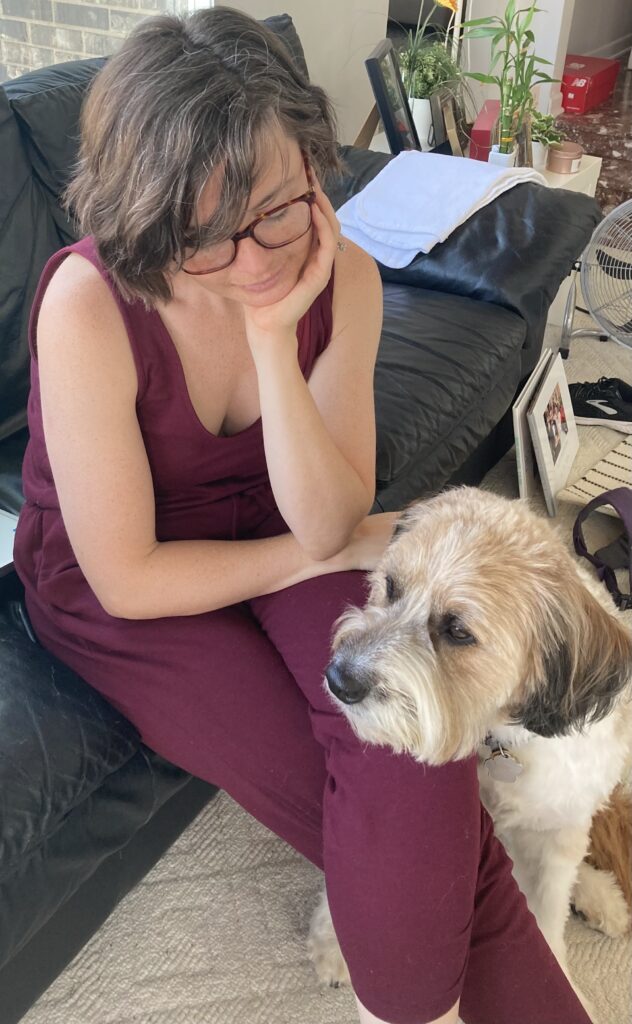
For both our kids and our pets, they are going through lots of change, so regression is normal and to be expected. It doesn’t necessarily mean that you’ve done anything “wrong”, but I do think that it makes you feel less frustrated when we can go into it knowing what the developmental periods are for both species and feeling prepared that you’ll probably hit some potholes.
When it comes down to it, they’re both learning how to “life” and they’re looking to you for the “how”, so put on that oxygen mask, toots.
Take a breath–these new stages don't have to mean new stress
Let’s brainstorm some solutions for common chaos moments to get the problem-solving juices flowing (and here’s a podcast episode where Emily and I discuss incorporating kids into enrichment plans). Again, remember that tiny Dr. Friedman in your ear– if you want to change behavior, think first on changing the environment.
- Morning chaos: Pup gets breakfast in a snuffle mat on the other side of a baby gate away from flailing arms and open exits.
- Changing schedules: Before the end of the summer, do a couple trial runs of what the new routine is going to be, giving yourself plenty of days to alter.
- Less time to get everything done: Replace your morning walk with a game of hide and seek, followed by some scatterfeeding/foraging with breakfast.
- Empty house during the day: Honestly my dog has been thriving, so maybe it’s fine, but maybe adding some sound masking can help the silence or hiring a local college-aged kid to pop in for some cuddles.
- Kids are too loud after school: practice incorporating a relaxation project in a separate safe space.
- Kids are running amok: Involve them! Let them spread the yogurt on the lick mat, spray the cheese into the Kong, fill the toilet paper tubes with kibble, hide the foraging surprises around the house, read to the pup while they do a calming project, count the kibble in a cup of food and place into the dinner dish.
If you want more thoughts on school schedule changes and how to prep, check out these two blogs and a podcast: Back to School, Not Back to Stress & 5 Ideas for Bark to School & Podcast Episode #63 – Bark to School: Helping Pets with Routine Changes
Again, you’re going to be experiencing so much “new” with kids and dogs, it’s not always going to be smooth sailing. Normalize baby gates, boundaries, & “go do your thang” projects. If you’re planning on expecting anything, expect that there will be adjustments, not that there will be perfection.
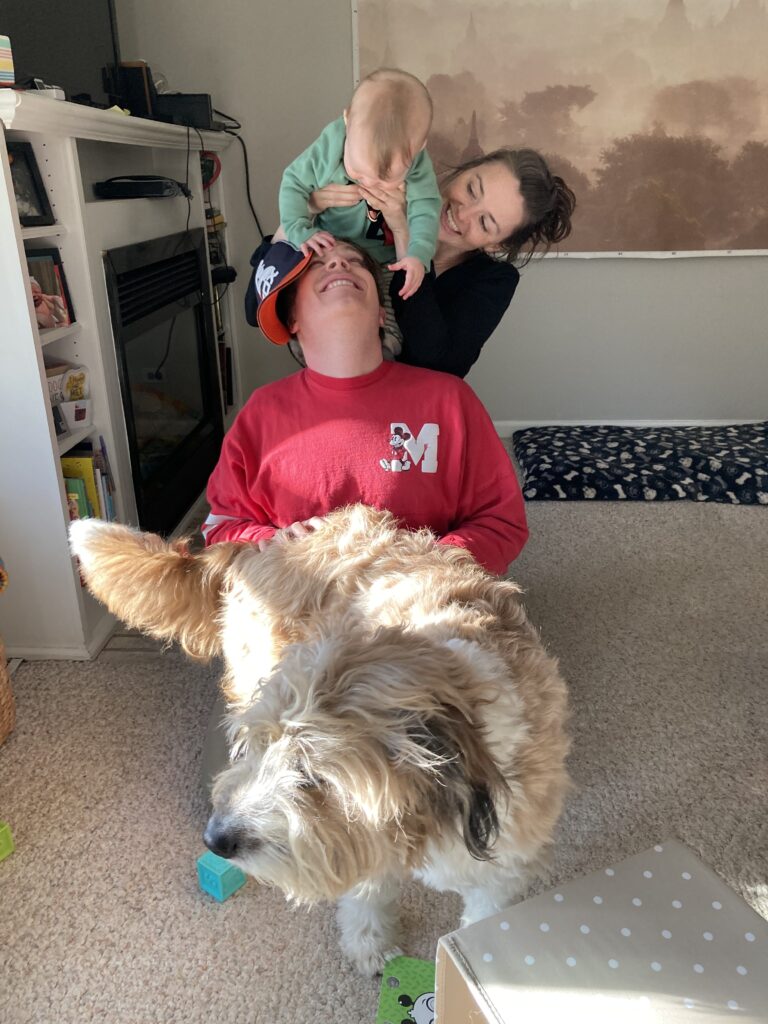
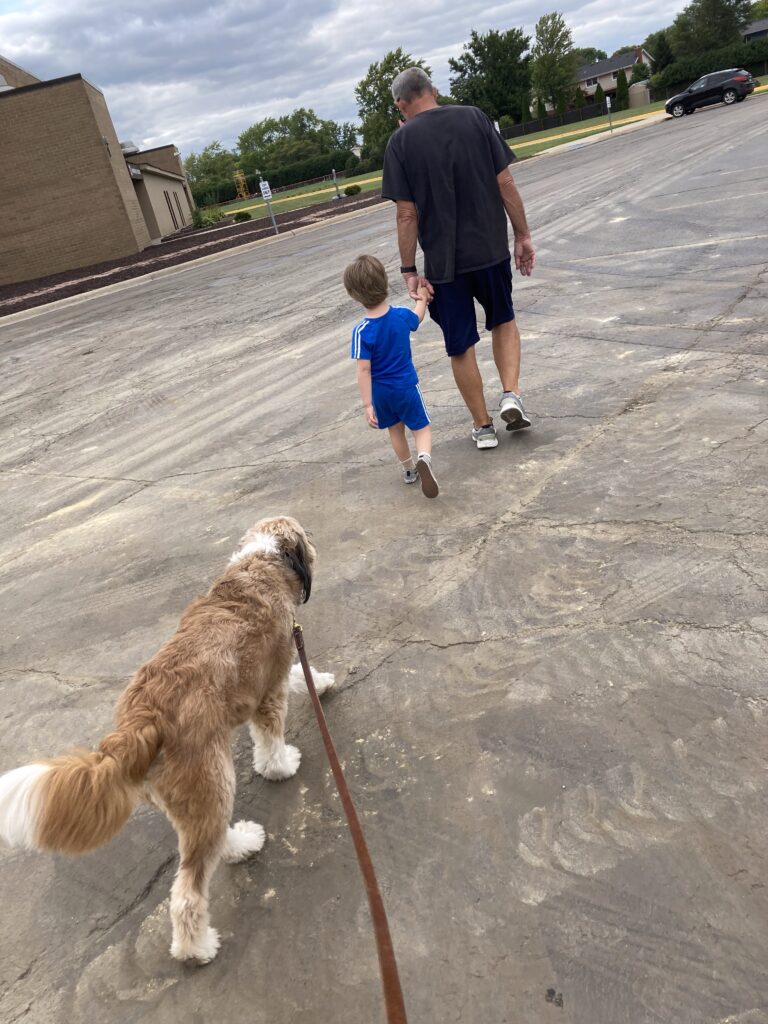
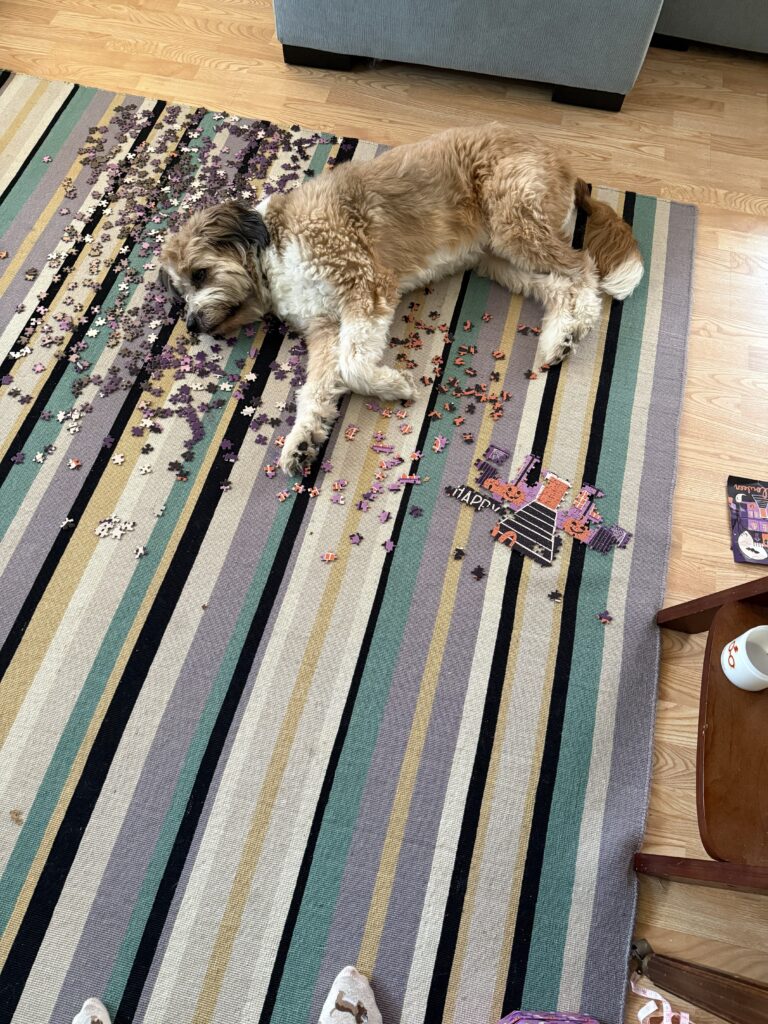
Playtime, family walkies, and even a puzzle. Opie and his kiddos are always learning and growing together!
Our kids and pets (and us!!!) have amazing, big, beautiful, complex brains. If we are living, we are learning, so all these tough transitions can be opportunities for growth. Let the frustration that come with setbacks be the trigger for you to take a step back and observe with your senses, not your stories, not a trigger to tell you that you are a failure, because you aren’t. We can teach our kids and pets resiliency and flexibility, and that comes from them watching you do your amazing thang.
You can bend but not break
Yes, preparation will help physically and emotionally, but it’s not going to be perfect, and that’s perfectly fine. Do you remember that Dashboard Confessional lyric “I can bend but not break?” Well, thank you prep plans and Chris Carrabba! (Also, did you know little kid bones can experience what’s called a “buckle fracture” where they bend but don’t break but they still need a boot? Now I do.)
Celebrate those small wins where you saw something start to go sideways and you pivoted. Party on when your planning and preparation work (hint: if the management worked, the management worked, that’s good!). Smile at that moment when you see your 3-year-old reach out towards his dog, stop himself, turn his hand upside down, and wait to see if the pup puts his chin in his hand.
People. It’s worth saying again, having kids is hard.
Life changes. Preparation, empathy, and grace make those changes smoother for everyone.
Here’s to harmony,
Corinne
Now What?
- Take a few minutes this week to look ahead—what transitions are on your horizon, and how can you set everyone up for success?
- Comment below with a success you’d like to brag about, really!
Copyright 2025 Pet Harmony, LLC. All Rights Reserved.
Terms & Conditions, Privacy Policy
Results are not guaranteed because behavior, human, canine, or otherwise, are not guaranteeable.