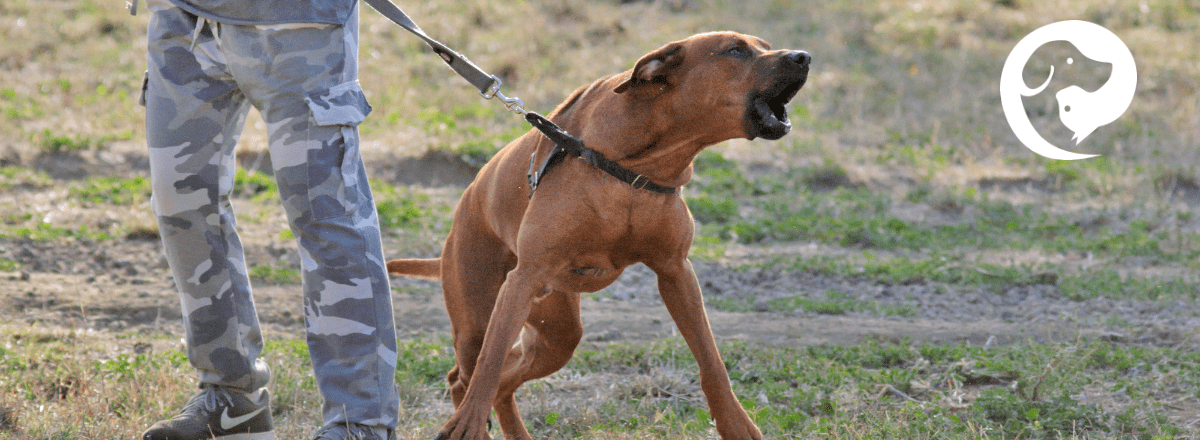
Does your dog growl, bark, and attempt to launch their body like a missile when they see another dog, human, car, runner, skateboarder, or something else when they’re on leash?
If so, you’re not alone! Leash reactivity is a common canine issue in the United States; it’s one of the behaviors that we see and work with most.
In this post, I’m defining leash reactivity as: a set of aggressive-looking behaviors such as barking, lunging, and/or growling, when a dog sees an external trigger while on leash. I often hear new clients describing this behavior like:
He goes crazy when he sees another dog.
I have trouble controlling her when joggers go past us on the trail.
He’s leash aggressive.
All of those typically fall under what I would define as leash reactivity.
Why is my dog leash reactive?
There are a lot of factors that go into an individual’s behavior; we’ll get into all of those in a future blog post. For now, you’ll just need to trust me that this is usually a fear/stress/anxiety-related behavior. The best defense is a good offense. Yes, even if your dog plays great with dogs off-leash or at daycare, leash reactivity can still be a fear-related behavior!
Every now and then I see a case where it’s excitement-based, but it’s far less than people typically think. And, it’s important to note that excitement can turn into frustration which can turn into anxiety. Speak with the behavior consultant working on your case to learn more about the factors involved in your individual dog’s behavior.
Tips for working with your leash reactive dog
Here are a few of my best tips for helping yourself and your dog if you are struggling with behaviors related to leash reactivity.
1. Manage
The more your dog practices his reactivity the better he’s going to get at it. The first step to working with reactivity is building a solid management plan to prevent your dog from practicing the unwanted behavior; this also lowers his stress levels. Management can look like: discontinuing walking in general and getting exercise in a fenced-in yard, walking during quiet times and in quieter locations, and crossing the street when you do see a trigger. It’s difficult to make expedient progress without a solid management plan.
2. Learn your dog's body language
New clients are often amazed that I can tell them their dog is about to react before it actually happens. It’s not magic; it’s body language! When that happens, I explain to them everything that I saw that told me what was about to happen and teach them how to see all of that too. In no time they’re able to predict their dog’s reactivity outbursts just as well as I can! When you know your dog’s body language inside and out you can better predict their behavior and make more effective management and training decisions more quickly. This component quite frequently makes the difference between dogs who make a little bit of progress and dogs who make a lot of progress.
This blog on body language is a great place to start your learning journey!
3. Distance is your best friend
Our goal is to keep our dogs under threshold and away from mountain lion brain so that we can teach them new skills when they’re capable of learning. There are a few ways to do this, but increasing the distance between your dog and the trigger when you see their body language signals escalating is one of the simplest. Subdivisions rudely are not constructed to provide great training spaces; you may need to go outside your regular walking areas to get the distance you need at the beginning of the process. I like giant parking lots and parks.
"But what if I can't work through my pet's leash reactivity on my own?"
Then you’re in the right place! At Pet Harmony, we’re here to meet you where you are at! We’re ready to give your pet the most up-to-date, science-based, empathetic behavior modification journey we can provide. Most of us have been down this path ourselves, so when we say we get it, we mean it. Click the button below to schedule a free 15-minue discovery call.
Behavior modification is a hard process for both you and your dog. You’re both learners in this! I rarely see clients perform spectacularly when they go for a walk and employ a new technique immediately after learning it. It’s like taking the test right after you attended the class with no study time in between. And, to add to that, working on leash reactivity while on a walk is hard regardless of your skill level. It takes a long time to master watching your dog and your environment at the same time, get the mechanics between handling your dog, leash, and treats, and you have triggers popping up unexpectedly.
Start practicing your behavior modification techniques in the house, yard, or car (again, parking lots are great!) so you can get the mechanics down first. Start implementing techniques on a walk only when you feel completely comfortable and confident in easier scenarios. Your behavior consultant can help you come up with ways to practice in easier scenarios before the big test.
5. Watch your leash length
Have you ever heard that your stress travels down the leash to your dog? One of the unconscious ways that we do that is by tightening the leash when we see a trigger, especially before our dog sees it. Your dog can associate the leash tightening with the trigger and make them even more reactive. I know it’s hard, but keep that leash the length you normally have it at (unless you have a retractable leash, which I don’t recommend using for a leash reactive dog) and cross the street instead of walking your dog nearer to the trigger on a tight leash. If you find it difficult to break this habit then have someone walk with you to help hold you accountable.
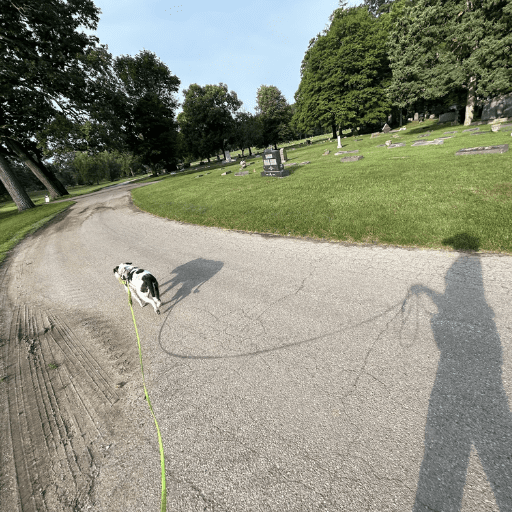
You can find some of our recommended walking equipment for reactive dogs here. *
A long line and well-fit harness in a quiet place is a great way to get in a nice slow decompression walk.
6. Work slowly and purposefully
I see the following mistake happen frequently: the dog is doing great across the street so the person decides to practice on the same side of the street. It rarely goes well. There’s a whole lot of distance between the opposite side of the street and the same side! I recommend decreasing distance only a foot or two at a time. When the dog (and you) has mastered that distance then decrease by another foot or two. Slow and steady wins the race; pushing rarely goes well in the long run.
7. Respect your dog's requests by working on a flight cue
Your dog has a few options when he is put into a scary situation; the most common we think about are “fight” or “flight.” The goal of these is the same: put distance between yourself and the scary thing. The first option involves telling the scary thing to go away whereas the second involves you choosing to move away yourself. We like the second option way more! But that means we need to respect that option and allow our dogs to move away when they ask to do so. I like to teach dogs that they have this option– even on leash– by teaching them a flight cue that means we’re moving away. We can then expand that by building a dialogue between the dog and handler so the handler can respect any dog-initiated flight requests when they happen.
Here’s to harmony,
Allie
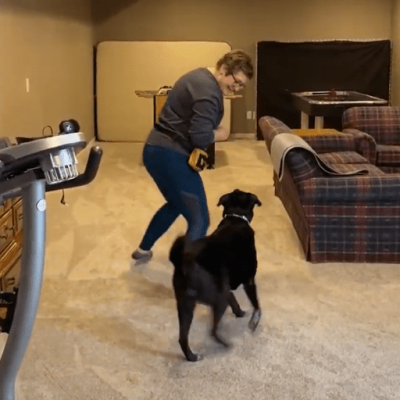
Bailey and Macklin working on a flight cue on leash. (Photo courtesy of Bailey Kuhn, Tinker Tails Behavior and Training, Indianapolis, Indiana)
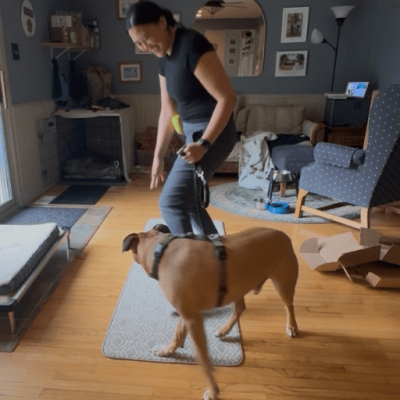
Learning and practicing skills at home helps to nail those mechanics. Katey is learning a flight cue with Tiffany.
Now What?
Go through the above tips again. What is the one category that you want to focus on? Where do you either need the most help or do you think with a little tweaking it can be an easy win for you?
Write it down.
Next, write down how you’re going to improve within that category. Your behavior consultant can help you here! This could include watching videos on YouTube to better see dog body language as it happens, videoing your own dog and yourself to see if you tighten your leash, or scouting out some additional areas to work in!
Schedule your tasks for improvement in your calendar. Aim for 5 minutes per day.
Get to work! If what you’re working on seems too difficult then break it into evensmaller pieces. Again, your behavior consultant can help you with this.
If you’re not already working with a behavior consultant I highly recommend it. It’s hard to learn a brand new set of skills by yourself without guidance. A behavior consultant can set you on the right path and help you troubleshoot when things don’t work as expected. You can work with us here!
PS: Capitalism
Want to support our free, public content? Check out our Amazon shop. It’s full of enrichment and pet care items (that we really, actually use). Our team spends a significant amount of time working on content every week. We love it! But we’re also out here trying to pay our bills.
* Pet Harmony, LLC is a participant in the Amazon Services LLC Associates Program, an affiliate advertising program designed to provide a means for sites to earn advertising fees by advertising and linking to Amazon.com.
Copyright 2025 Pet Harmony, LLC. All Rights Reserved.