
How to Build a Daily Pet Routine When You're Overwhelmed (and It Actually Lasts)
Estimated reading time: 5 min
When Everything Feels Like Too Much
Are you a human who thrives on routines and predictability in their life? Does the idea of spontaneity send you into a tailspin of dread? When you don’t have predictability does your day feel topsy turvy? Essentially, are you a creature of habit?
If you answered yes, it makes sense. There is a lot of good research that supports the idea of predictability helping with things like providing security and boosting cognitive stability and emotional regulation.
When we know what to expect next, it typically helps ground us.It can help build confidence, reduce anxiety and help us build understanding into our day.
You know what helps build predictability? Routines! And you know who else responds well to routines? Your pets, that’s who!
I would imagine that you have probably witnessed how routine oriented your pet is. They typically wake up at the same time, play at around the same time, eat, nap, and go to the bathroom at the same time. If we know that most pets thrive on some structure in their day, it makes sense that we would use that to our advantage when life feels extra “lifey.”
Decision Fatigue Is Real — And Your Pet Is Feeling It Too
If you don’t have a set routine, it is not too late to get started. Applying routines, structure, and predictability into your pet’s day can be a gift not only to them but to you as well. Because when life feels overwhelming and everything feels like just too much, having a routine that is familiar can really help with things like a too long to-do-list. Listen folks, I am here to tell you that decision fatigue is real. Routines can be an essential part of reducing decision fatigue because you already know what to anticipate and don’t need to add to your already overloaded cognitive load.
Decision fatigue can become even more overwhelming if you share your home with a behaviorally complex animal. Reactivity, separation struggles, fear/anxiety/stress, training regressions and management challenges can all contribute to a near constant state of feeling drained and mentally exhausted.
And when you go searching for help online, you get a different solution for each one. The result? Your to-do list suddenly looks like this:
- Do separation training protocols
- Work on counterconditioning triggers
- Add enrichment
- Practice training exercises
- Prevent rehearsals
- Track behavior data
- Adjust your pet’s sleep schedule
At some point you’re staring at the list thinking: “There is absolutely no way I can do all of this.”
What if you had a routine instead?
Build a Routine That Supports the Whole Pet
Instead of tackling every issue individually, focus on creating daily structure that supports emotional regulation and looks at your pet as a whole. Instead of seeing a list of undesired behaviors and what you need to do about each one, focus on structuring things that will have impact across multiple issues. More bang for your buck if you please. Here’s how:
1. Create Anchor Points in the Day
Pets benefit from predictable moments they can rely on. Things like:
- consistent meal times
- predictable enrichment periods
- regular rest windows
- consistent bedtime routines
These anchors create stability and a foundation of understanding of what their day will entail and what to expect next. That structure can really help your pet feel more comfortable and lessen stress not only for them but for you too.
2. Enrichment That Runs on Autopilot
Enrichment is most helpful when it’s repeatable and easy.
Examples include:
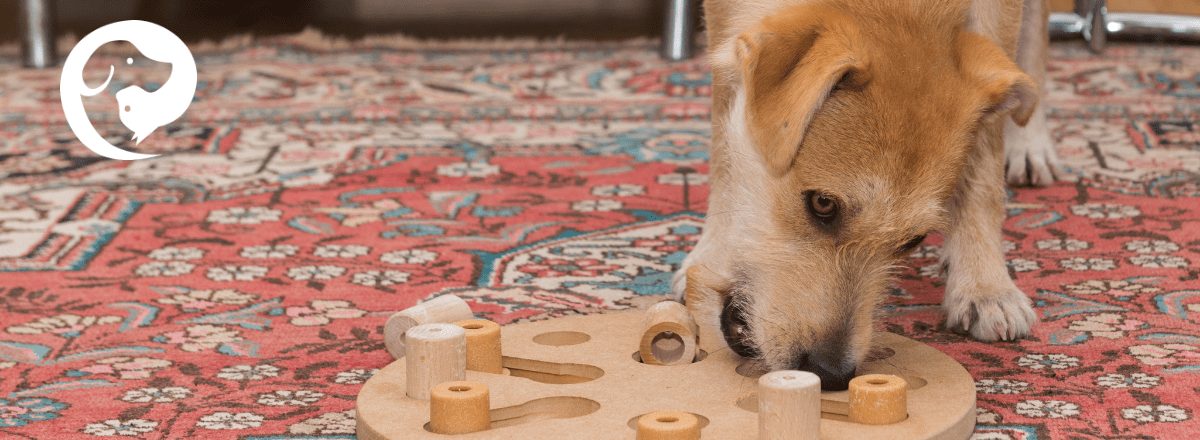
- food puzzles during work hours
- sniffing games during walks
- chew items during downtime
The goal isn’t constant novelty. It’s about creating a plan that is replicable especially when you have no spoons.
It’s a consistent outlet for natural behavior that your pet enjoys engaging with. Pets who are allowed to engage in behaviors that are species typical have better welfare and wellbeing which can help to reduce things like fear, anxiety and stress and help build confidence and resilience.
3. Management That Reduces Daily Friction
Management strategies can dramatically lower stress for both pets and humans. The goal of management is to lower the likelihood of undesirable behaviors being executed by your pet. Good management strategies can be built into routines in consistent ways so that they are easier to implement and rely on, like:
- baby gates
- long lines
- visual barriers
- quiet rest areas and/or safe spaces
- Sound masking
These tools reduce the number of situations where problems can occur which in turn can allow you the ability to keep your blood pressure in check and get other important things done without the frustration and worry about your pet’s behavior.
4. Build Independence in Small Steps
Pets struggling with confidence or being alone are among those where routines can make an enormous difference. That predictability factor can help them learn to ease into transitions and environmental shifts because they learn to anticipate what is next on the agenda. To help with this, implement these strategies:
- Focus on gradual independence.
- Practice short, predictable absences.
- Create independent enrichment.
- Provide calm decompression time.
- These small repetitions build emotional resilience over time.

Sustainability Matters More Than Perfection
This is not the time to focus on being a perfect pet parent. As long as everyone is safe, it is ok to let things slide a bit. There are going to be days when your tank is running on empty and you have nothing in your reserves. I want to normalize that for you because behaviorally complex pets coupled with living in the modern age are not for the faint of heart. It’s not only ok to give yourself grace when you don’t have it in you; it’s normal. There will be days when you will need to:
- skip a training session
- take a shorter walk
- rely more on management
- phone it in a little
And that’s okay! Sustainable systems work because they still function on imperfect days. Perfection isn’t the goal, stability is.
For the Pros
If you’re writing plans for clients, it may be worth asking:
- Are we asking this person to change their entire life?
- Is this plan sustainable during busy weeks?
- Does this system work even if the client is tired?
It is vitally important to check in with your client about their bandwidth and support them when it is low. Sometimes the best training plan isn’t the most comprehensive one. It’s the one the client can actually live with. Training plans can be adjusted, added to and subtracted from. Listen to your client and make sure you are providing them with sustainable solutions. The most brilliant training plan in the world won’t have any impact if your client is too overwhelmed to get started.
Here’s to harmony,
MaryKaye
Now What?
If your pet has multiple behavior challenges, it’s easy to feel overwhelmed, but you don’t have to solve everything at once.
Instead of chasing individual solutions, start by building a daily system that supports both of you. Over time, that system creates:
- more predictability
- less stress
- better learning opportunities
- Greater welfare and wellbeing for the entire household, humans included because, yeah, YOU MATTER TOO
Copyright 2025 Pet Harmony, LLC. All Rights Reserved.
Terms & Conditions, Privacy Policy
Results are not guaranteed because behavior, human, canine, or otherwise, are not guaranteeable.