June 2021 Training Challenge: Focus on One Thing

Happy June! Let’s get right into our June Training Challenge:


Focus on one thing


This one’s pretty straightforward, but let’s talk a bit about why it made the cut. 


If you chase two rabbits, both will escape

There’s a Chinese proverb that says, “If you chase two rabbits, both with escape”. While I wouldn’t condone literally chasing rabbits, figuratively, the proverb is spot on when it comes to behavior modification. 

Because of the nature of cases that come to us, we see pets who exhibit a vast array of maladaptive behaviors in just one individual. Rarely is there ever just one thing going on. I’ll often ask folks to prioritize the laundry list of issues they gave to me and ask which is the most pressing one. Essentially, what should we focus on first. For some people, that thought exercise is really easy. They may say something like, “We’ll manage the resource guarding and stranger danger, but the leash reactivity is really challenging because we don’t have a fenced-in yard.” Perfect! We’ll start with the leash reactivity and go from there. These folks tend to make progress more quickly and then we can focus on the next thing when the first item is in a good place.

Other times, though, I see folks who have a hard time prioritizing. They want to work on the resource guarding, stranger danger, and leash reactivity all at the same time. Or, I’ll sometimes see where in the first session we agree to focus on the leash reactivity, but when I see them a couple of weeks later they’ve been working on the stranger danger instead and haven’t progressed very much with either issue. 

If you split your attention between two issues, you won’t make a lot of progress with either. When you chase two rabbits, both will escape. You’ll make progress faster by managing the issues that can be managed and working on just one issue at a time. There are, of course, situations where that’s not entirely possible, but it’s possible to an extent in almost every situation. Focus and you’ll get faster results. 


Now what?

  • Make a list of the behaviors your pet does that you’d like to change. 
  • Go through your list and determine which of those are manageable and which aren’t. That will help you prioritize. 
  • Of the behaviors that aren’t manageable, determine which is the most pressing. It might be the one that’s the biggest safety concern or the one that’s the biggest annoyance.
  • Start working on your one thing! If it’s a safety concern, while highly recommend seeking professional help to make sure you go through the process safely. We’re here to help you with that with private sessions or our Roadmap for Behavior Solutions Program. If you’re not quite ready to take the leap into a behavior modification journey, our Beginning Behavior Modification course is right for you. 


Happy training!

Allie

5 Tips for Your Pet’s Best Halloween

My favorite holiday, Halloween, is almost here! But while this holiday is often a favorite for humans it’s rarely a favorite for pets and that makes it stressful for their owners. The doorbell ringing all night often sends our pets into a loud tailspin. It’s a battle to get to the door when pets are crowding it. And let’s not forget the pets who get into the bowl of Halloween candy when no one is looking.

Let’s make this year different by following these 5 simple tips:

  1. Put your pets away. There’s no reason your pet absolutely needs to greet trick-or-treaters or attend your Halloween party (unless contraindicated for separation anxiety). If you’re worried about your pet running out the open door or how they’ll act around people in costumes then let them hang out in another room for the evening. Many will thank you for leaving them out of the commotion! 
  2. Drown out the doorbell. Some people go as far as to disconnect their doorbell or simply turn off their porch light and leave a bowl of candy out, but if you’d like to participate in trick-or-treating then leave the TV or music on for your pet so they can’t hear the doorbell.
  3. Update your pet’s ID tags and microchip info. Better safe than sorry! 
  4. Put candy bowls out of your pet’s reach. Pets are opportunistic and just because something is toxic to them doesn’t mean they won’t ingest it (like humans and alcohol). This might mean setting the bowl not right near the front door to keep it out of reach.
  5. Create an airlock around the door. Set up a freestanding gate around your front door to create an airlock that you can get in but your pet can’t. You can find some of our favorites on our Amazon storefront! (Disclosure: We receive a small commission for purchases made through these links at no extra cost to you. This helps us continue to put out free content to help you and your pets live more harmoniously!)

Happy Halloween!

Allie

A scruffy white and dark grey dog standing in front of a tree with yellow fall foliage. There is a deflated jackolantern next to him.
You don't have to feel as deflated as Petey's jack-o-lantern this Halloween!

Now What?

Want some more ideas for helping your pets during the chaos of holidays? Here are a few posts from our team:

If you want more enrichment and training tips delivered directly to your inbox, join our email list! Keep up with the blog, podcast, and events too. 

Copyright 2025 Pet Harmony, LLC. All Rights Reserved.

Terms & ConditionsPrivacy Policy

Results are not guaranteed because behavior, human, canine, or otherwise, are not guaranteeable.

Work Smarter, Not Harder: Treat Jars


This week’s “Work Smarter Not Harder” entry is devoted to the following phrase:

“So do I have to walk around my house with treats in my pocket all the time?”

The answer is no! There are easy ways to always have quick, easy access to treats when you’re training. My favorite is setting up treat jars where you need them most. 

There are 3 places in my house where I typically hang out or need access to quick reinforcers for training:

At night we’re usually curled up on the couch. Oso used to be incredibly reactive (ie: barky) at passersby when we first adopted him so when we moved to our new house with these gorgeous picture windows we were concerned about regressions in his behavior. He’s come a long way but every now and then he’ll see someone concerning. There’s a treat jar and clicker on the end table where we can easily grab it and work on some behavior modification. It’s come in handy for his fear of thunderstorms and fireworks, too. 

Treat jar right next to the couch makes training at the window easy!

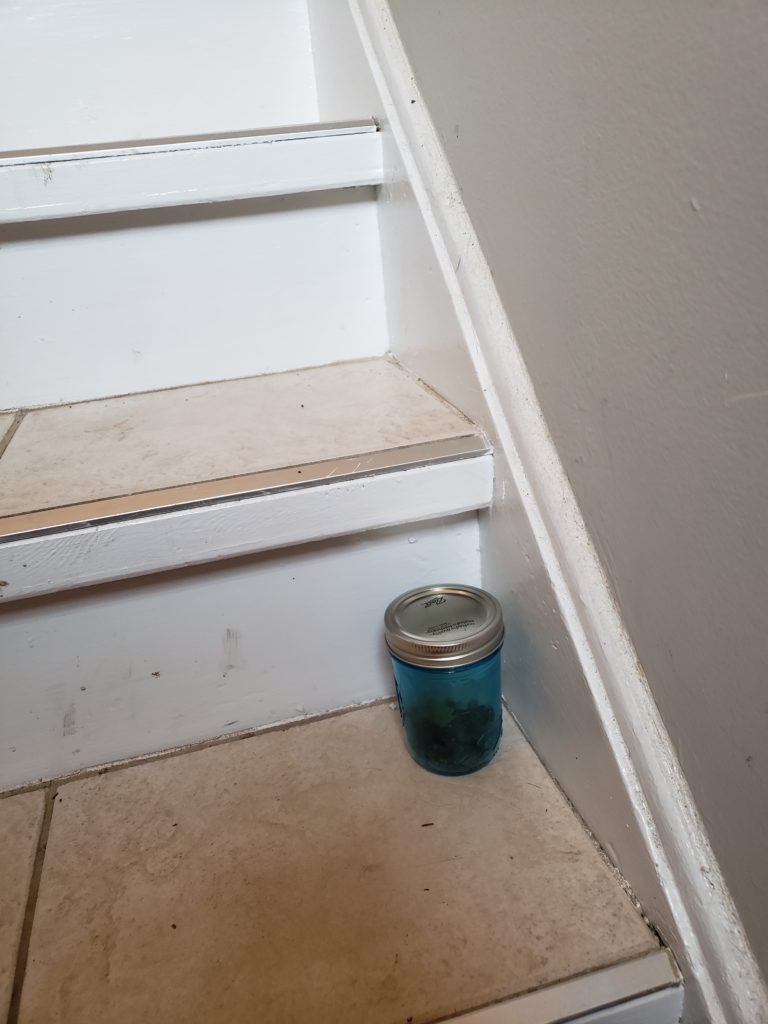
Oso LOVES being outside. He’d be happy if we all just lived in the yard instead of the house. That made training recalls (come when called) to come inside harder. We keep a treat jar right by the back door and reinforce him for coming inside every time. His recalls are so much better now!

We’re never without treats to reinforce Oso coming when called!

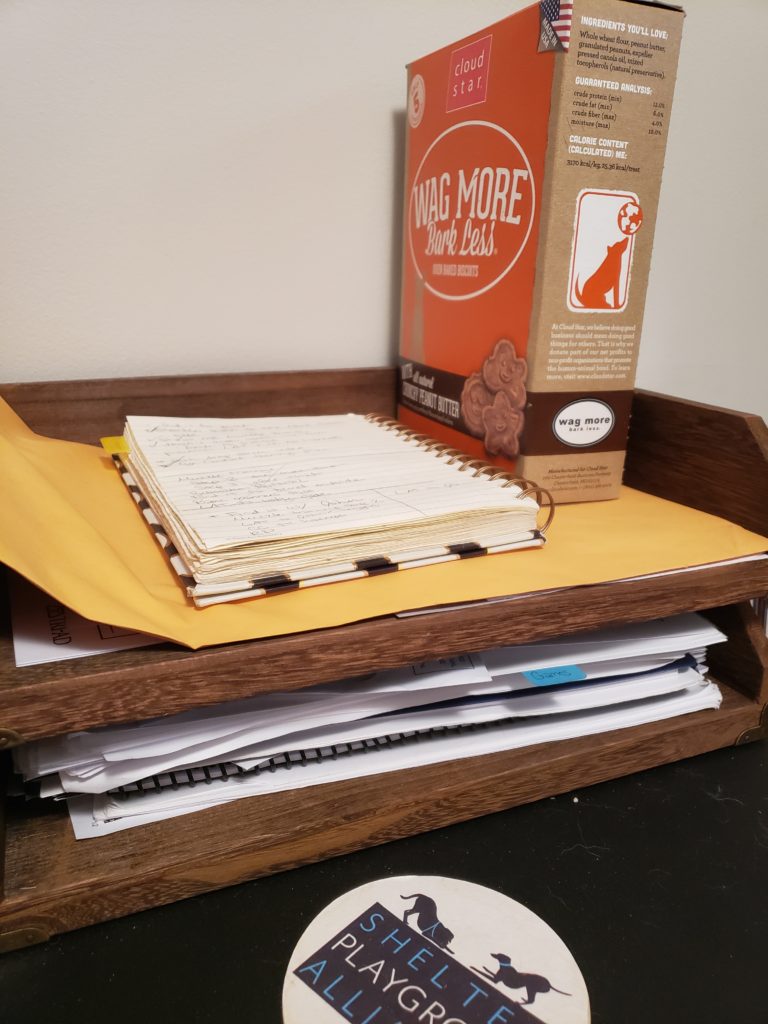
If I’m home on a workday I’m in my office. You can get away with just the treat box and not look tacky when it’s your profession. 

You can get away with the treat box itself in the office of an animal behavior consultant.

Now what?

  • Where do you normally hang out and find yourself needing some quick reinforcers? Ask everyone in your household. 
  • Pick out treat jars that you like. I use little mason jars because they keep treats fresh, don’t look out of place with our decor, and frankly because I had them on hand. I’m also not worried about Oso stealing them whereas plastic bags would be pretty enticing. 
  • Put treats in your jars and place them around the house! Grab some treats whenever your pet needs a quick training moment. 
  • Enjoy the convenience and speed with which you can treat your pet! No more rushing to the pantry and missing the moment. 

Happy training!

-Allie