
Note: This blog is for pros or enthusiasts with training experience. Although there are lessons here for anyone who approaches life with other species with curiosity and a growth mindset, there are many concepts here that require some additional background and knowledge.
They say curiosity killed the cat, but in my experience, curiosity hasn’t killed anything—if anything, curiosity is one of the best ways we can improve our lives. This is true in many ways and for many different reasons, but since this is a blog about enrichment for different species, let’s focus on how curiosity can help us take what we know about dog training and apply it to the other species in our lives.
Over the years, working with a variety of species has taught me the value of curiosity in learning how to better communicate with and support the individuals in my care. When working with a new species, this is the process I recommend:
- Step 1: Learn the foundations of behaviorism to understand how learning and behavior work across species. For pet parents: A competent professional should understand these foundations and help you understand practical ways to implement them in your household.
- Step 2: Learn the natural history, or ethology, of that species. Where do they come from and what is the climate like there? What and how do they eat? What are their sleep and wake patterns? What do their social structures look like? What innate, species-typical behaviors might we expect to see?
- Step 3: Look at the animal in front of you and get curious. We at Pet Harmony have a saying: Observe with your senses, not your stories. What we mean by this is that when we’re in front of a learner, we are mindful to set aside our beliefs about that species or breed, set aside the stories we’ve told ourselves (or perhaps others have told us) about either the species, the breed, or the individual, and just listen to our learners.
By taking this curiosity-forward approach, it allows us to connect the dots between our past experiences with other learners and our present experience with the learner in front of us so we can leverage what we’ve already learned while holding space for our current learner to teach us things we didn’t already know.
Behavior Is Behavior: Universal Concepts Across Species
So let’s start with that first step: learn the foundations of behaviorism.
No matter who you’re working with—dog, cat, bird, or even human—the building blocks of behavior don’t change.
A few basics principles:
- Reinforcement drives behavior.
- Motivation matters.
- Antecedents set the stage and consequences shape what happens next.
- Learning is cyclical, repetition cements memory, and the combination of accuracy + speed creates fluency.
- Learner agency is a crucial component of welfare and wellbeing.
- Excellent observation skills are necessary to effectively provide agency.
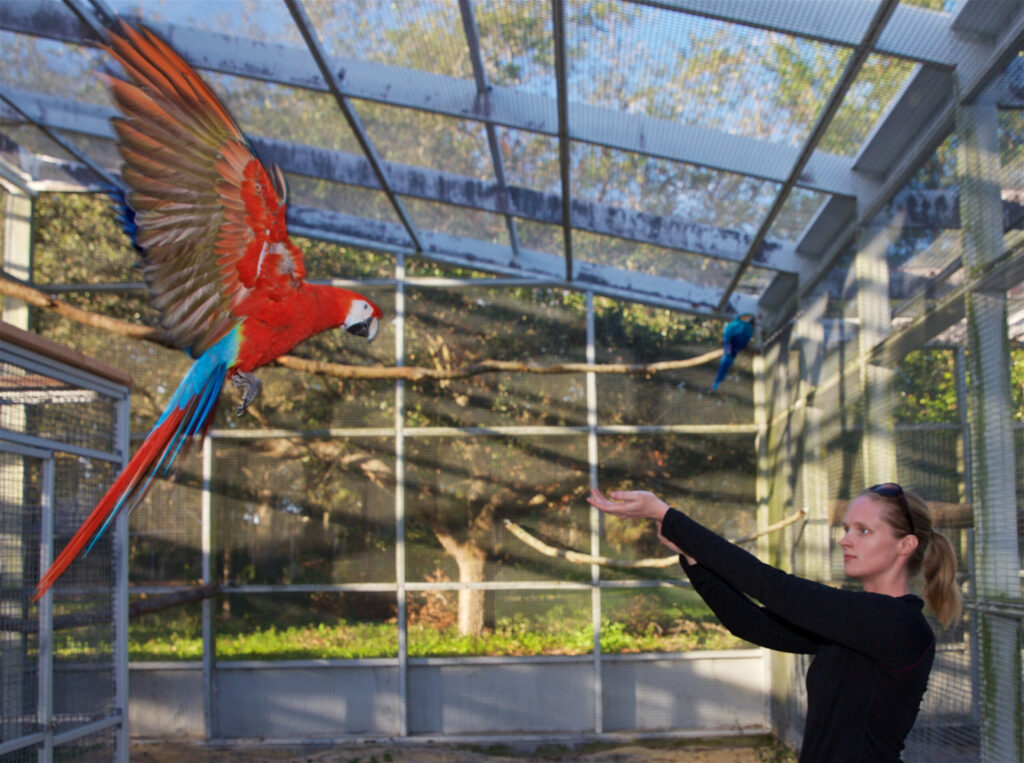
These are the foundations upon which every successful behavior plan is built. They are how all pets learn–and people too, for that matter. What changes is how these concepts show up in practice. Some examples:
- Reinforcers and motivations will vary across species and individuals.
- Antecedents shift with time, place, and context.
- Consequences gain or lose value with time, place, and context.
- Learning is impacted by stress, relevance, and relationship.
- Observational skills exist on a spectrum.
This is why the first step should never be the only step. So let’s move on to Step 2.
The Importance of Knowing Species-Typical Behavior
Here we start digging in and learning the natural history or ethology of the species.
One of the reasons it can be so scary to work with a new species is because you don’t understand them. Their behavior and body language seems unpredictable. It may be hard to gauge how they’re emotionally responding to you–or, when their emotions are so big they’re obvious, those emotions can seem unreasonable.
There’s a well-known saying whose author I was unable to find that goes: “What we don’t understand, we fear. What we fear, we judge as evil. What we judge as evil, we attempt to control. And what we cannot control, we attack.” While I wouldn’t go so far as to say that most people think of animals as “evil,” I do see this pattern repeat itself over and over when people try to interact with species they don’t understand. Most of the conflict I see between humans and non-humans happens because the humans are fundamentally misunderstanding the non-humans.
One big facet of understanding an individual animal is understanding their species. Knowing what’s “normal” for the species you’re working with is what keeps you calm, confident, and focused enough to remain curious.
I like to say that species-typical behaviors are the innate (unlearned) behaviors that come as a part of an animal’s “evolutionary starter kit” to increase their chances of surviving and thriving in the environment their species inhabits.
Let’s take a look at a few of the species-typical behaviors in some common pet species:
- Dogs: sniffing, scavenging, barking
- Cats: climbing, scratching, stalking
- Parrots: vocalizing, shredding, chewing
These behaviors serve them well in the environments they evolved to live in. The trouble starts when we’ve taken them out of their original environment and placed them in our homes. Suddenly, those behaviors can present some difficulties.
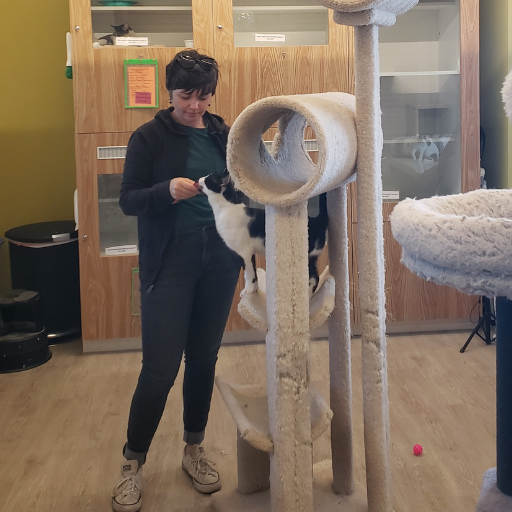
And when we misunderstand these behaviors, conflict arises:
- A cat scratching the couch isn’t “acting out”—they’re meeting a biological need.
- A dog consistently getting into your trash isn’t “being stubborn”—they’re following their nose, a primary survival tool.
- A parrot making repeated loud sounds that stress out their humans are contact calling because they are social animals.
Understanding and honoring these behaviors allows us to design enrichment plans and training strategies that work with the animal, not against them. It’s how we adapt those universal principles from Step 1 to the new species we’re just starting to work with.
And yet, if our curiosity stops at Step 2 and we get stuck in a mindset of “because X species, therefore Y behaviors, personality, and preferences,” we can still really miss the mark.
That’s why we need to keep on going to Step 3.
Behavior is a Study of One
While curiosity is important in all three steps, it’s most important in this last one. I often joke that if I tattooed all of the impactful sayings I’ve learned from Dr. Susan Friedman, my entire body would be fully covered. But while that’s true, the one I think I say the most often is, “Behavior is a study of one.” That’s the tattoo that would live on my forehead.
Knowing the foundations of behaviorism and understanding the ethology of the species you’re working with are important tools, but none of that matters to a learner who is being ignored anyway. Your learner doesn’t care what you know, they only care what you do. Your beliefs, your ideologies, the methodological camp you identify with, and the stories you’re telling yourself about your learner’s behavior are both invisible and deeply unimportant to them. They don’t know what’s in your head, they only know what they are experiencing at your hands.
So all of the knowledge you acquire in Steps 1 and 2 are useless if you are not carefully and thoughtfully observing the learner in front of you and collaborating with them instead of dictating to them. And this is where curiosity becomes crucial.
Practicing Curiosity
To be fair, our society neither teaches nor rewards curiosity. Our entire education system overtly prioritizes compliance and conformity over asking questions, exploring ideas, or imagining alternatives. So if curiosity is a new skill for you, here are some ways you can practice when you’re working with a new species. Let’s use the statement “This cat isn’t food motivated” as an example.
“The Cat isn’t food motivated.”
- Turn a statement into a question.
- Is this cat food motivated?
- What do I mean when I say food motivated?
- What behaviors am I seeing that lead me to that conclusion?
- Find the origin of your beliefs.
- Where did I get the idea that seeing this set of behaviors means an animal isn’t food motivated?
- How reliable is that information?
- What reasons might a cat be unmotivated by food but also a healthy weight?
- Challenge your belief by exploring other possibilities.
- What else could be true when I see this set of behaviors?
- In what contexts will this cat not eat food?
- In what contexts will this cat eat food?
- What do those different contexts suggest about these behaviors?”
- Trial and eval to test your ideas and gather more information.
- What happens if I try to train this cat before dinner instead of after dinner?
- What happens if I set aside some of their regular meal to use in training instead of trying to add more food?
- What happens if I offer a higher value food in training?
- What happens if we train during a time of day when the cat is more active instead of sleepy?
- What happens if we train in a place where my cat feels safer, more comfortable, and less distracted?
The more curious, collaborative, and observant we are when working with a new species, the less likely we’ll end up in conflict with them. And the more you practice this with new species, the more you’ll learn from each one.
Self care sidebar: It’s ok if this is hard! It’s ok to realize that you don’t have the time or bandwidth to cultivate curiosity with a new species at the moment. This is a project you can always take up later, when you have more resources available to you!
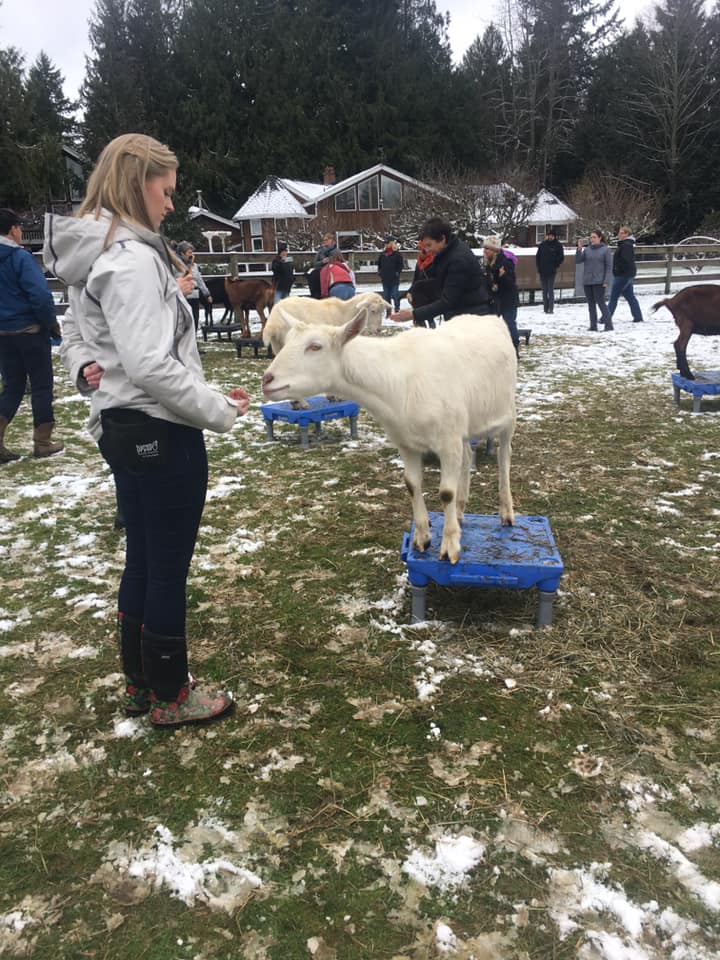
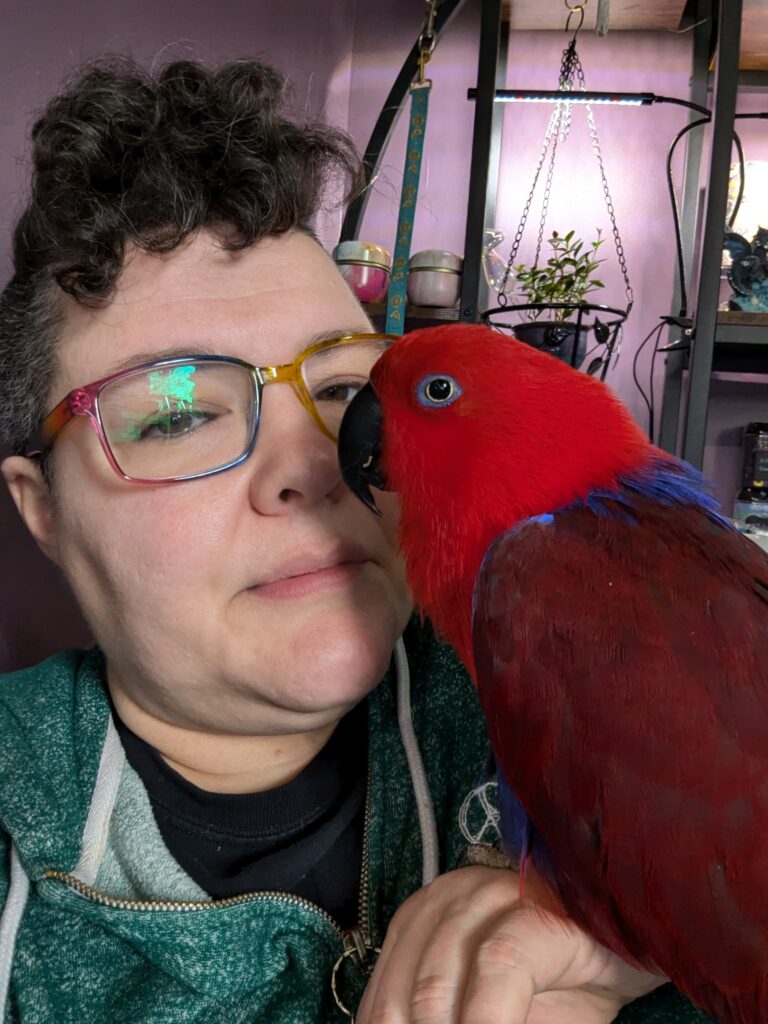
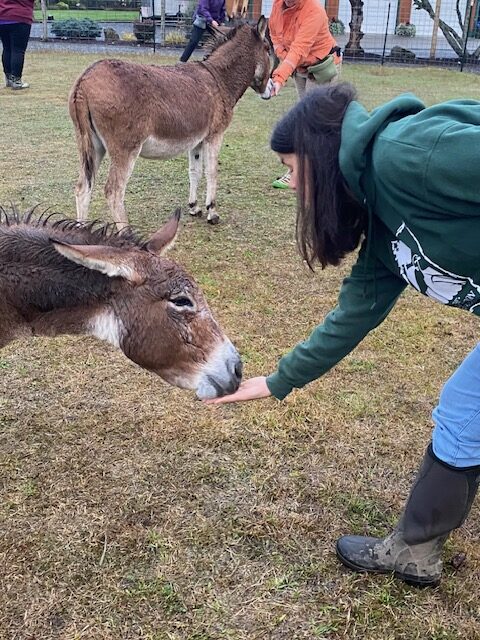
Understanding biological and behavioral details about a species doesn’t paint the full picture of the individual you’re working with. We must observe their behavior to learn more. When we challenge our own beliefs about what that behavior indicates, we have a lot more information to work with!
Lessons from the Litter Box (and the Leash)
Working across species reveals patterns you might miss if you only work with one. House-training puppies and litter box training cats, for example, are both about identifying their preferred substrate, establishing a routine, and reinforcing desired behaviors consistently.
Post-surgical enrichment plans? Same concept, whether it’s a dog recovering from a knee surgery, a cat healing from a dental, or a rabbit after a neuter: pain management, managing activity levels while finding other veterinary-approved ways of meeting their needs, and supporting emotional well-being during recovery.
Even nighttime restlessness can sometimes come down to the same principles: unmet enrichment needs during the day, combined with natural activity rhythms, can lead to late-night chaos—whether that’s a kitten scaling your curtains or a dog barking at shadows in the backyard.
When working with a new species, think about what you’d do with a species you’re more familiar with in a similar situation. Then think about why what you do in that situation works for that species. Then figure out what that strategy would look like in this new species.
If your dog barks at the window when they get bored and you’ve discovered that giving them more foraging toys while you’re at work prevents them from annoying the neighbors, and now you’ve got a parrot who’s also being loud while you’re at work, try a similar strategy to see if it has a similar effect! The foraging will look different, since the species are different – you’ll probably need more palm leaves and fewer Kongs – but the concepts are the same.
When Learning Doesn’t Go as Planned
Of course, animals don’t come with manuals—and if they did, they probably wouldn’t read them anyway. Sometimes what “should” work on paper just… doesn’t.
When that happens, our best tools are observation, creativity, and adaptability. Maybe the cat who “should” love vertical spaces prefers cozy ground-level nooks. Maybe the Heeler who “should” enjoy herding livestock actually finds it stressful.
It’s a great idea to start with activities that you think your learner “should” like based on their species or breed, if you don’t yet have enough information to make a more targeted plan. But it’s important not to get stuck there.
Listen to your learner. Watch how they respond to what you’re offering them. Troubleshoot to try to identify why what you offered isn’t working. Continue the trial and eval until they tell you what works.
Every individual teaches us something new when we stay curious and responsive.
Embrace the Learning Journey
Let me break the suspense for you: you will not be perfect at this. Don’t worry, it’s not a you thing. It’s just impossible for anyone to be perfect at anything all of the time–especially when we’re talking about trying to communicate across multiple species.
And that’s ok. Life is messy, communication is messy, relationships are messy. Everything is messy. The important thing is to keep showing up, keep trying, keep listening, and keep learning. Because here’s the very best thing about curiosity: it reframes this whole experience as being a fun and fascinating journey rather than feeling like you have to get it “right” and then feeling ashamed or defensive when you don’t.
As long as you maintain a curious and collaborative mindset, your learner, regardless of species, will meet you halfway.
And this is the beauty of cross-species learning: when we understand the universal principles of behavior while honoring the natural history of the species we’re working with and remaining open to what the individual in front of us is telling us, we become better learners, better teachers, and better partners to the animals in our care. And we have a lot more fun, because we’re on that journey together.
Here’s to harmony,
Emily
Now What?
- Are you a pet parent who just got a new species and are struggling to understand them? Our team would be happy to help you learn how to communicate with your new non-human friend! You can reach us at info@petharmonytraining.com to get the ball rolling.
- Are you a pet professional who wants to branch out and start working with a new species? We can help you with that in PETPro!
Copyright 2025 Pet Harmony, LLC. All Rights Reserved.
Terms & Conditions, Privacy Policy
Results are not guaranteed because behavior, human, canine, or otherwise, are not guaranteeable.