
Special thanks to Dr. Colleen Quinn of Quinn Veterinary Clinic & Behavior Center!
Content warning: Discussions of serious medical conditions that can result in death.
Disclaimer: This blog is not medical advice. Read that again. If your dog exhibits behaviors that are out of the ordinary after being in the heat, it is best to err on the side of caution and contact a veterinarian.
It seems like every summer we see an unfortunate article about a dog stuck inside a hot car. But this isn’t the only way pets can end up in dire circumstances due to heat. As average summer temperatures continue to rise around the world, so do incidents of heat related illnesses (in humans and pets), the most serious of which is heatstroke. More than 700 people die each year from heat-related causes. Pet deaths are under-reported, so I did not find a stat I was confident was reliable, but a UK-based study using an electronic vet med database reported 1259 heat-related illness events, including 99 deaths, from 1222 dogs in 2016. Let’s dive into why this is such a common risk.
Temperature Regulation and Heatstroke: Defining Our Terms
The clinical term for heatstroke is nonpyrogenic hyperthermia, which just means body temperature over 104 degrees (farenheit) that is not caused by a pathogen, such as bacteria or virus. Heatstroke is more than just being hot or feeling a little off after being out in the sun. What begins as the body’s normal processes that regulate temperature sets off a response that eventually shuts down organs.
Heatstroke occurs either during exercise (exertional heatstroke), and/or due to environmental temperatures (nonexertional heatstroke). Dogs can acclimate to activities in the heat over time, but special care should be taken around outdoor activities in the heat for all dogs, especially if they are not acclimated. The same obviously goes for humans. Think of how it feels to work outside in the heat for the first time in the summer vs. the 50th time.
Thermoregulation, or keeping the body’s internal temperature in check, is one of the most essential things animals do to stay alive. All mammals have physiological mechanisms for dissipating heat from their bodies, fitting into these general categories:
- Radiation – Transferring heat from the body’s surface to cooler surroundings (via infrared waves, which I will not attempt to explain, thankyouverymuch).
- Convection – Heat is transferred by the movement of air. When warmed air rises (in this case from the body) and is replaced by cooler air to the air surrounding the skin. Heat loss is increased by the movement of air. The process of convection also happens in water.
- Conduction – The transfer of heat by two objects in contact. Here the body is in direct contact with a cooler surface. Ever noticed your dog laying on cooler bare floors when it heats up?
- Evaporation – Transfer of heat by evaporation of water. In humans, this is facilitated by sweat. Dogs only sweat through their paw pads, but evaporation happens during panting.

Under normal environmental conditions (ambient temps under ~89.5°F) body heat is dissipated through radiation and convection from body surfaces. When ambient temperatures approach the dog’s body temperature, conduction and evaporation through panting dissipate heat.
But in hot and humid environments, especially with added physical exercise, it becomes harder to keep up with temperature regulation. This is why it’s important for dogs to have access to water, shade, and moving air for thermoregulation.
So our dogs’ bodies have plenty of ways to help them out with heat, but what happens when the heat gets to be too much? I asked my favorite veterinarian, Dr. Colleen Quinn of the fabulous Quinn Veterinary Clinic & Behavior Center in Huntington, Indiana about this so you don’t have to.
Warning Signs and the Bodily Processes of Heatstroke
When the available methods can no longer keep up with the environmental temperature, an inflammatory response is triggered. Blood vessels dilate, helping the surface of the body cool faster. This is where the early warning signs of heatstroke start. Here are some things to watch for:
- Heavy panting
- Drooling
- Dark red gums or tongue
- Restlessness, agitation, pacing–seeking shade, cool, or water
The inflammatory response cascades, causing organs and vascular tissues (like blood vessels) to move their contents along more rapidly. Here you might see:
- Increased heart rate
- Vomiting or diarrhea
- Lethargy
- Disorientation
So what’s the difference between conditions like heat stress, heat exhaustion, and heatstroke? Dr. Quinn says the difference is at the cellular level.
Diagnosing Heatstroke: What the Heck is Going On?
The normal body temperature range for dogs is 100.5°F (some individuals run lower) to 102.8°F. At 104°F, the body can no longer cool itself adequately. Heat stress or heat exhaustion can occur at this point, and it is important to seek veterinary care.
In a clinical setting, heatstroke is diagnosed based on the heat exposure and recognized clinical signs. A veterinarian performs a physical exam and uses blood work to check for organ damage. Additional testing and monitoring may include blood pressure exams, ECG (electrocardiogram, records electrical activity of the heart), bloodwork to see blood clotting times, sugar and electrolyte levels, and more. They look for a certain type of red blood cell (peripheral blood nucleated red blood cells) in the bloodstream, which helps them provide a more accurate prognosis.
Here’s a very brief look at the types of systemic damage that occurs to the body due to heat:
- 105°F: heatstroke begins; damage to heart, liver, and kidneys is possible
- 105.8°F: Nerve damage
- Over 106°F: Cells rupture
- 109°F: Clots form in small blood vessels and block flow to organs–this is a life-threatening condition known as disseminated intravascular coagulation (DIC), which causes internal bleeding and organ damage
- 120°F – 122°F: If the body reaches this temperature for even a short time, cells swell and burst (cellular necrosis), releasing their contents into surrounding tissues
When more blood is pumped into the organs, it causes low blood volume/blood pressure and organ dysfunction. This is known as inflammatory or septic shock. Dr. Quinn compared this to the stress a body would endure being hit by a car. “Everything ramps up and then it slows down,” she said of the inflammatory response that eventually causes the blood pressure to drop.
To ensure the best outcome, prompt cooling, early admission, diagnosis and intensive treatment are required. Treatment and monitoring of heatstroke is intensive and prolonged, as many complications, which can be deadly on their own, occur later.
If the rest of this blog didn’t get this message across yet, I’ll say it here: heatstroke is a serious medical issue. It is best to err on the side of caution if you suspect your dog is displaying signs of heatstroke. Dr. Quinn recommends seeing a vet if you see combinations of signs such as:
- Your dog is lethargic or displaying weakness
- They are panting heavily and disinterested in things they would usually be interested in
- They have pale or bright red gums
- Their eyes are glazed (unfocused, distant expression)
Get them somewhere cooler in front of moving air while you make your way to the vet. It’s okay to mist or pour tepid (not cold) water on them–particularly on their head, the front of their neck, arm pits, belly, groin, and paws. Let them drink water, but don’t force it. You’re trying to use evaporation to your advantage, cooling them through the natural processes of radiation and convection, as described in the beginning of the blog.
Do not submerge a dog you suspect is suffering heatstroke in cold or ice water, and do not feed them ice. Ice and cold water cause blood vessels to constrict. Remember, vasodilation (widening the blood vessels) is an important mechanism for cooling the body. Once a dog’s body starts responding to heat with the inflammatory responses described earlier, constricting blood vessels with very cold water or ice, blood flow is reduced, as is their ability to cool down.
Note that cool or ice water is a fine way to keep dogs cool if they are not experiencing distress related to heat. It becomes unsafe only once the processes related to heatstroke have already started. This article from the Royal Veterinary College in London has some useful information on warning signs, first aid, and avoiding heatstroke.
How to Prevent Heatstroke
Your weather app may get it wrong sometimes when it comes to rain, but it’s pretty easy to keep an eye on the temperature and humidity. “Hot” can be subjective. I happen to be a sweaty human, and will begin sweating at about 75°F if it’s sunny.
It should come as no surprise that I’m going to say you need to observe your dog when they are outside to see what temperature ranges seem to work well for them. I know, for example, that Petey will occasionally try to sun himself on our brick back patio when temps are in the upper 80’s (°F). In the direct sunlight, the bricks are getting warm to the touch at that point, which apparently feels great to him. I will give him a few minutes and then politely revoke his agency card and ask him to come inside so that he doesn’t bake like a ham. He usually saunters in and immediately flops down on the cool bare floor.
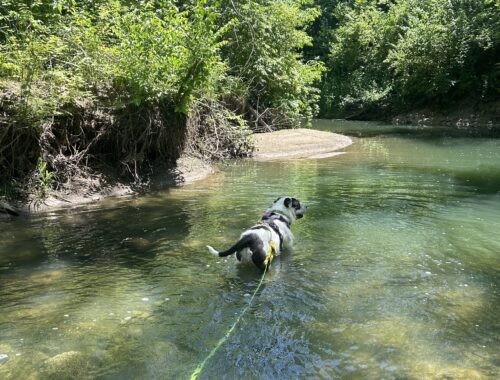
Along with observation, here are a few ways to help your dog avoid heatstroke:
- Do not leave your dog in a car unattended in sunny, hot weather.
- As subjective as the word “hot” can be, remember that regardless of the temperatures outside, the temps inside a car increase by around 20 degrees Fahrenheit in just 10 minutes, even with the windows cracked. 1
- Avoid strenuous exercise in hot and humid weather
- Make sure they have access to shade and water while outside
- Avoid walks or exercise during the hottest hours of the day
- Remain indoors during periods of extreme heat and humidity
For dogs with thick, heavy, or double coats, appropriate grooming is super important in the heat. Their coats are supposed to provide protection. A retired groomer I spoke with put it this way: “It’s the same theory as insulation. If your house insulation gets matted down, it loses effectiveness. Same as a sleeping bag in cold weather.” If the coat is packed or matted, there is no airflow for cooling.
If you’ve made the call to stay inside due to the heat and need ideas for indoor activities, check out these blogs:
- Indoor Adventure Time
- August 2023 Enrichment Challenge: Make Plans to Combat the Heat
- July 2023 Enrichment Challenge: Try a New Active Foraging Option
Next week’s blog on creating cooling spaces is a great reference if you are looking for some tips on helping your pets regulate their body temperature and stay cool and comfortable this summer, so stay tuned!
Wrapping Up a Complex Topic
When dogs experience heatstroke, the signs can be sudden and severe. They may breathe rapidly, collapse, or show unusual behaviors like confusion or seizures. From the many internal processes kicked off during heat stroke, they may suffer massive internal damage. Even with quick action—like cooling the body and providing intensive care—there’s currently no specific treatment that can reverse the dangerous inflammation and blood-clotting problems heatstroke causes. Sadly, the survival rate for heatstroke is only about 50%, which is similar to what is seen in humans.
The purpose of this blog wasn’t to freak you out about heatstroke or tell you to keep your dog inside all summer. There is risk involved in, well, living. Assessing risk, providing options, monitoring your pets, and awareness of the signs of heatstroke are all important when it’s hot and humid outside.
Here’s to harmony,
Tiffany
Now What?
Along with the physiological processes our dogs have to dissipate heat and maintain their body temperature, they also have behavioral responses. The next time you’re chilling outdoors with your dog, observe their habits. Think about things like:
- How long do they like to bask in the sun before you see them get up, get a drink, and move into the shade?
- Do they gravitate toward different surfaces (warm or cool) in different weather?
- Do you notice differences in panting or other cooling techniques when it’s humid or breezy or overcast?
Practice your observational skills in different conditions and see if you can notice some of your dog’s temperature-related preferences. It’s great information to have when you’re setting up comfortable spaces for them indoors as the seasons change! Drop us a comment here on the blog or share on social media your pets most adorable preferences in regulating their body temperature.
References
- 1 https://www.avma.org/resources-tools/pet-owners/petcare/pets-vehicles
- https://pmc.ncbi.nlm.nih.gov/articles/PMC5800390/
- https://www.who.int/news-room/fact-sheets/detail/climate-change-heat-and-health
- https://pmc.ncbi.nlm.nih.gov/articles/PMC7459873/
- https://www.cdc.gov/climate-health/php/resources/protect-yourself-from-the-dangers-of-extreme-heat.html
- https://todaysveterinarypractice.com/emergency-medicine-critical-care/todays-technician-heatstroke-in-dogs/
Copyright 2025 Pet Harmony, LLC. All Rights Reserved.
Terms & Conditions, Privacy Policy
Results are not guaranteed because behavior, human, canine, or otherwise, are not guaranteeable.