
“We thought we’d already worked through this.”
If you’ve ever said that about your dog’s behavior, you’re not alone.
Maybe the food bowl guarding had improved. Maybe the growling at the couch stopped. Maybe your adolescent dog seemed to be settling down…and then one day it feels like they woke up and thought to themselves, “Wait a minute, I’m supposed to be an adolescent hellion! Release the Kraken!” I definitely have never experienced that with Miley. I don’t know what you’re talking about. Definitely not talking about Miley and me.
Behavioral regressions in dogs can feel frustrating, confusing, and even demoralizing. It’s easy to wonder things like:
- Is this just a developmental phase?
- Did we do something wrong?
- Is my dog defective?
- Am I a bad pet parent?
- Or is this something that needs professional support?
One of the most common issues we at Pet Harmony see when our clients’ pets (or, let’s be real, our pets, too) experience regressions is resource guarding. Let’s talk about why these setbacks happen—and how to tell what’s normal and when to seek help.
Developmental Stages in Dogs and Behavior Changes
Dogs move through multiple developmental periods throughout their lives—not just puppyhood.
Key developmental stages in dogs include:
Each of these stages brings neurological, hormonal, and emotional changes. And those internal shifts often show up as external behavior changes.
It’s important to remember: Behavior changes during developmental periods do not mean training failed.
Development doesn’t stop at puppyhood. An adolescent dog is not a “bad puppy.” A dog in heat isn’t being “stubborn.” A senior dog isn’t “forgetting on purpose.” They’re changing. And change can temporarily destabilize behavior.
If you think back to your adolescent years, or you’ve experienced the adventure that is living in an aging body, you can probably relate. As someone who is currently perimenopausal and may or may not be struggle bussing about it in multiple ways, I can definitely relate.
Why Dogs Regress During Developmental Changes
Behavioral regressions in dogs often occur because the nervous system is recalibrating.
Internal changes
During developmental periods, dogs experience:
- Hormonal fluctuations
- Ongoing brain development
- Shifts in emotional processing
- Changes in stress thresholds
An adolescent brain, for example, is still under construction. What we colloquially refer to as “impulse control” and emotional regulation may temporarily become a lot harder for them during this period of their lives—even in dogs who were absolutely nailing these skills as puppies.
Hormonal changes can also affect sensitivity and tolerance. During heat cycles, for example, many dogs become more easily sensitive to changes in their environment, more protective, or more reactive.
For example, when Miley was in heat, she became much more sensitive to body handling and started resource guarding for the first time in her life. If you listen to our podcast, you will already be familiar with that whole saga.
External changes
Development often coincides with environmental shifts:
- New expectations from caregivers
- Less supervision than during puppyhood
- Changes in routine
- Increased freedom
- New stressors
Regressions frequently happen when internal vulnerability meets external pressure.
In humans, there’s a phenomenon called a “quarter life crisis” that essentially boils down to the same thing. The routine and structure of school has been a constant in a young adult’s life for as long as they remember. Then school ends, they have to go out into the world, find a job, and learn how to do adult things–but without the routine and structure that they have been relying on their whole life. That is hard. And humans who are going through a quarter life crisis often struggle to do things that felt effortless to them at an earlier phase of their life.
Dogs and other non-humans might not experience a quarter life crisis exactly the way humans do, but major life transitions impact them similarly.
When behavior shifts during these periods, it’s often the nervous system’s way of saying:
“I need more support right now.”
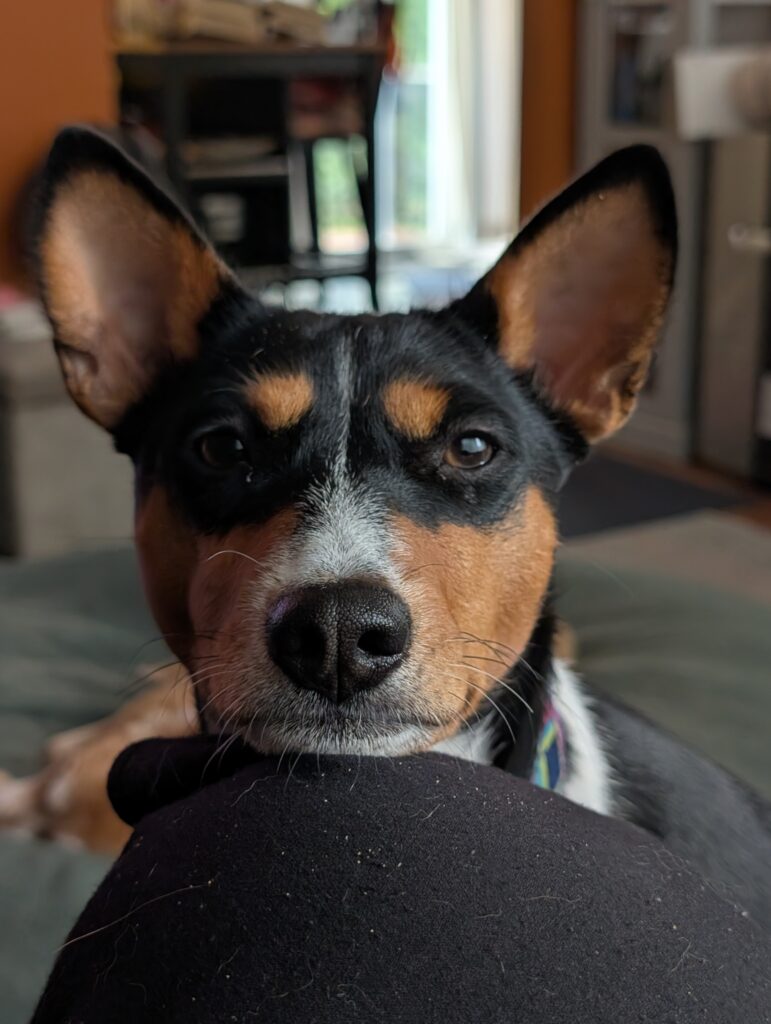
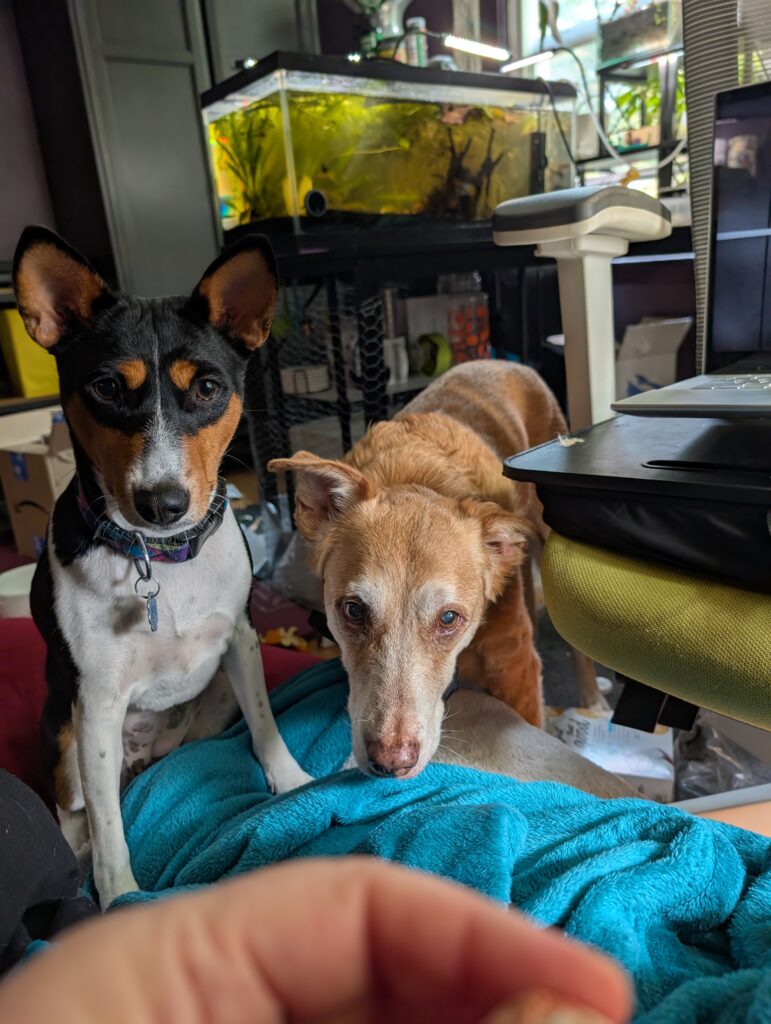
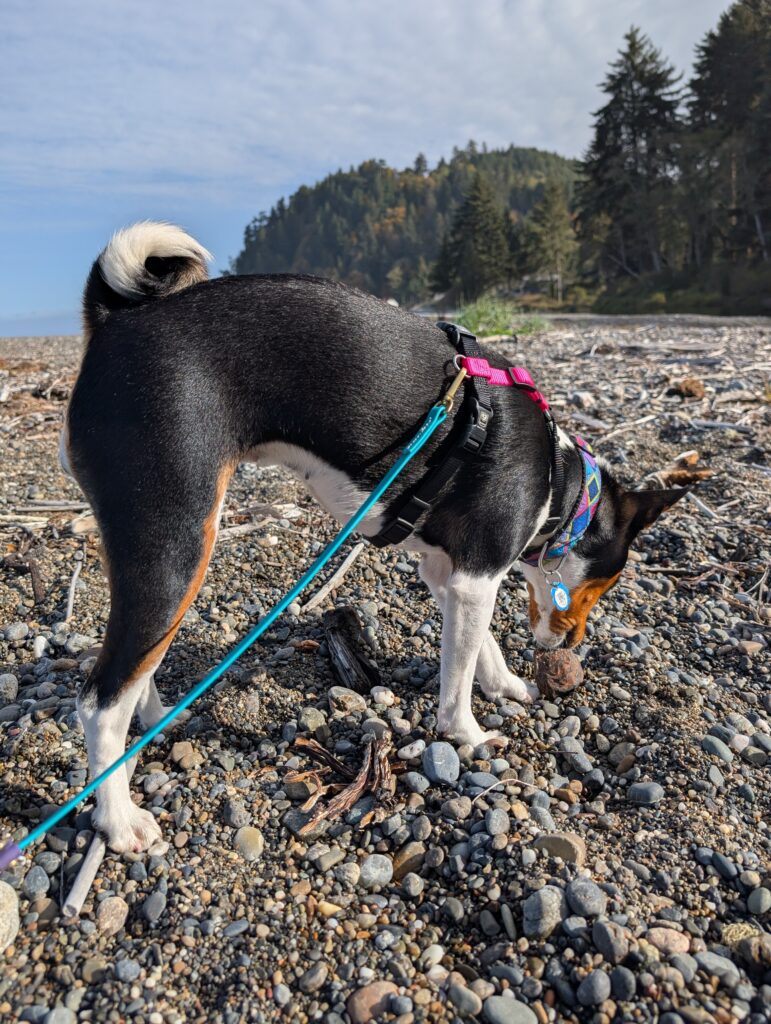
Miley giving a very cute chin rest, hanging with Copper in Emily’s office, and getting her sniff in the Olympic peninsula.
Resource Guarding Regressions During Developmental Periods
Resource guarding regressions are especially common during developmental transitions. Why? Because guarding is closely tied to:
- Sensitivity
- Predictability
- Perceived security
During developmental periods, dogs may experience:
- Increased sensitivity to perceived threats
- Reduced tolerance for proximity
- Heightened need for control and predictability
Common examples include:
- Adolescents beginning to guard food, resting spots, or other valued resources (*ahem* Miley *ahem*)
- Guarding intensifying during heat cycles (*ahem* also Miley *ahem*)
- Increased tension in multi-pet households during transitions (*ahem* Miley again *ahem*)
If you’re navigating guarding, you may find these related resources helpful:
- What’s Ab-Normal with Resource Guarding?
- 5 Tips for Living with a Resource Guarder
- 5 Common Mistakes in Households with Multi-Pet Guarding
Guarding regressions during development are common—but they still require thoughtful handling.
Real-Life Example: Guarding During a Heat Cycle
I know you’re going to be shocked to hear me say this, but… let’s talk about Miley more.
If you’ve been following Miley’s and my adventures together, you’ll know that she was the easiest and most delightful puppy I’ve ever met. She was resilient, affectionate, easygoing, and super prosocial towards humans, dogs, and pretty much every living creature. She was a literal dream come true.
And then she went into heat.
Literally overnight – and that’s not an exaggeration, I saw several significant changes to her behavior:
- She started guarding pretty much everything from our other, geriatric dog, Copper.
- She started objecting to strangers touching her without her express prior assent.
- She suddenly decided that larger dogs – with the exception of her current friends – were pure evil and she became Big Reactive to them.
Despite all of that, she is still, at her core, the same perfect little baby nugget she’d always been:
- She is still the sweetest and snuggliest cuddlebug.
- She still loves her friends, and makes friends easily.
- She still has all the skills we’d worked on prior to her going into heat.
What surprised me the most about this whole experience with Miley wasn’t just the behavior shifts, it was the emotional impact. I was surprised at how devastated I felt, how much I grieved the puppy that she had been, and how discouraged I felt, despite knowing exactly what was going on and having anticipated it before it even happened.
Even behavior professionals struggle emotionally during regressions. Knowing the science doesn’t automatically protect you from the feelings. Or at least, it didn’t protect me.
Developmental regressions can bring up a lot of feelings—for both dogs and humans.
Normal Behavioral Regressions in Dogs
We at Pet Harmony talk a whole lot about behavior changes that happen due to pain, undiagnosed illness, and unmet needs, but not all regressions mean something is wrong.
Common dog behavior changes during developmental or transitional periods include:
- Short-term increases in guarding or sensitivity
- Context-specific changes
- Predictable triggers
- Temporary setbacks that improve with management and time
“Normal” or “common” doesn’t necessarily mean “easy,” though. It means the behavior aligns with known developmental shifts and improves with appropriate support. Nevertheless, going through these situations is hard, and your feelings are valid.
So what can you do to mitigate the feelings of devastation or overwhelm? Tracking patterns can be more helpful than judging progress. Are the behaviors predictable? Are they tied to identifiable transitions? Are they fluctuating rather than steadily escalating?
Those are often signs you’re navigating a developmental phase.
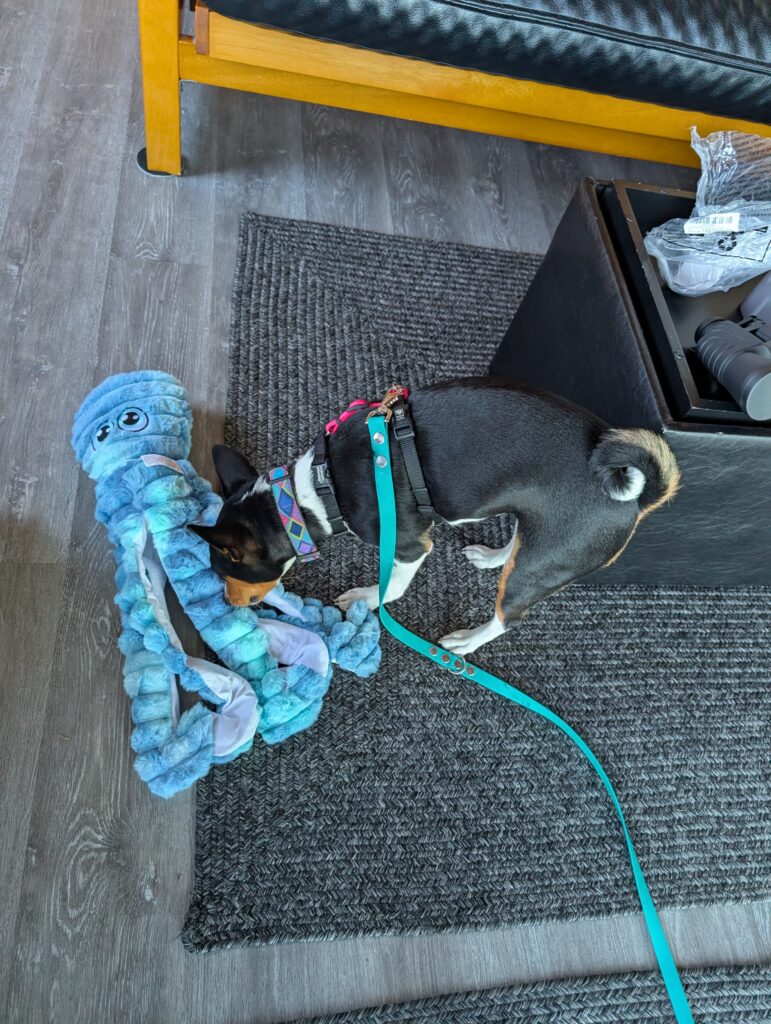
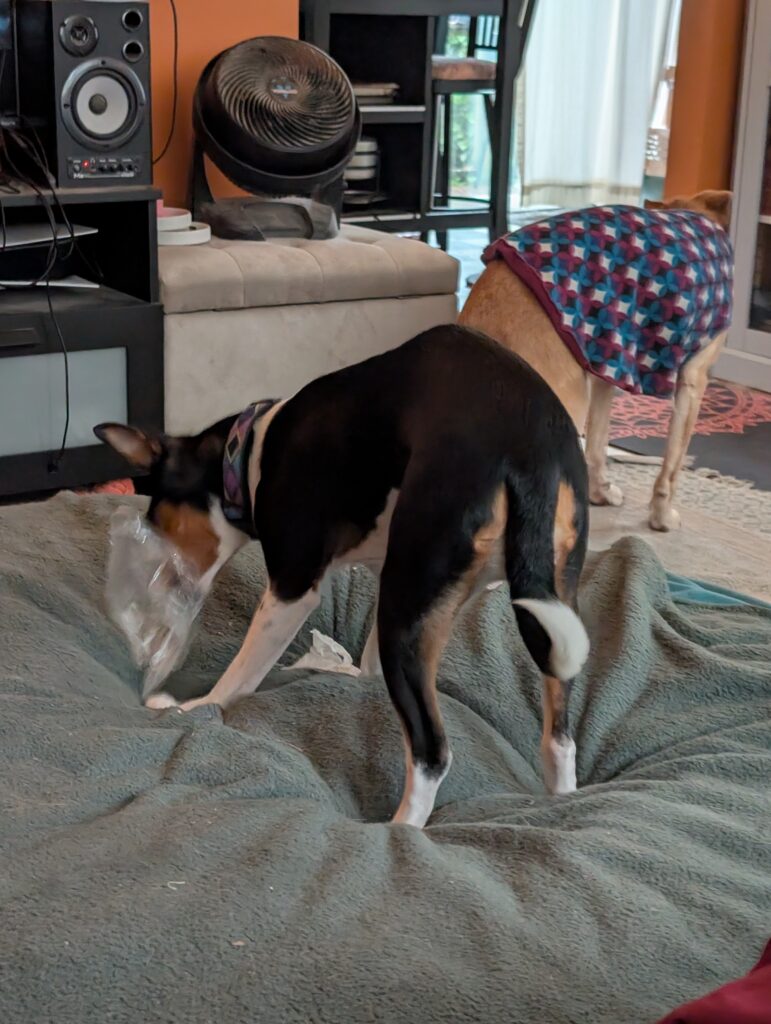
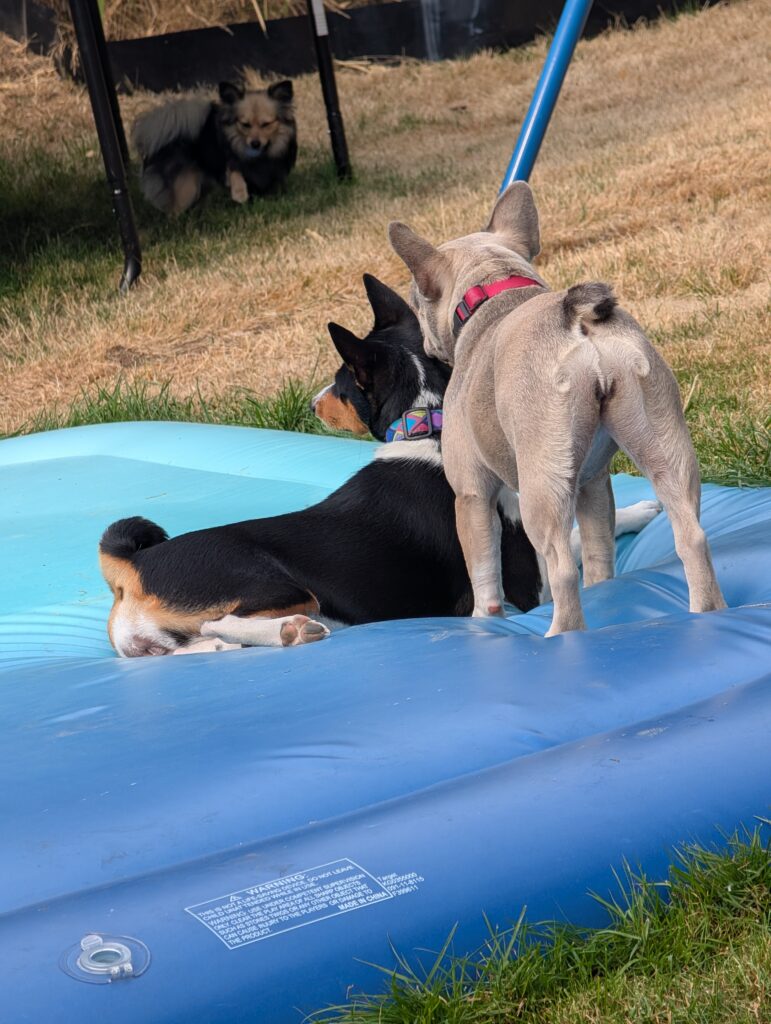
So many hobbies, so little time. Killing stuffed toys, shredding some trash with Copper, and hanging with her besties in her puppy play group, Miley does it all.
When to Seek Help for Resource Guarding or Regressions
Sometimes regressions signal that it’s time for professional support. Consider hiring a qualified behavior professional if you notice any of the following:
- Escalation toward biting or injury (don’t wait until a bite happens if you can avoid it; be proactive to save yourself more time, labor, expense, and grief)
- Guarding is happening when their resources aren’t being threatened
- Unpredictable behavior changes
- Household safety concerns
- Fear, stress, or burnout in caregivers
I want to emphasize that last one, because a lot of people will put off working with a behavior professional because they feel like “it’s not an actual problem” or “I just need to be a better pet parent.” If you need or want support, you deserve support. Full stop.
Plus, seeking help early prevents larger setbacks. The more proactive you are, the easier the journey usually is. You know the old adage: an ounce of prevention is worth a pound of cure. That never applies more than it does to behavior change.
Remember: support is not a failure of training or love. It’s an investment in safety and long-term stability.
If you’re unsure whether to reach out, these may help:
- Maybe It’ll Get Better on Its Own…
- 5 Signs Your Pet Needs Professional Help
- Errybody’s Got an Opinion
- Episode 88 and the Episode 88 Transcript
You don’t have to figure it out alone.
Supporting Dogs Through Behavioral Regressions
During developmental periods, adjust expectations. Set up your environment to make it easier for your dog to make good life choices and harder to make less optimal choices. This is called management.
Management is not a permanent sentence; more often than not, it’s a temporary support system. Reducing access to conflict-prone situations, increasing supervision, and revisiting foundational exercises can help stabilize behavior.
Other helpful strategies include:
- Lower performance expectations
- Pepper in more opportunities to play and explore
- Reduce environmental stressors
- Maintain predictable routines
- Track patterns instead of reacting to single incidents
And just as importantly, offer yourself compassion. The fact that you’re so worried about how you’re doing as a pet parent means that you’re doing a great job. If you’re feeling discouraged, overwhelmed, or second-guessing yourself, that’s part of the human side of behavior change. A qualified behavior professional can ensure you get the support you need.
Behavioral Regressions Are Part of Life
As you go through this journey with your pet, remember:
Development isn’t linear.
Behavior isn’t linear.
Capacity isn’t linear.
Progress isn’t linear.
Regressions are often part of a longer arc of growth, aging, and change—especially during major developmental periods in dogs.
The goal isn’t perfection; it’s safety, compassion, and responsiveness.
Stay curious instead of urgent.
Seek support when needed.
And remember: progress includes wobbles and setbacks. That’s just how life works.
If you’re navigating behavioral regressions in your dog, you’re not alone—and support is available.
Here’s to harmony,
Emily
Now What?
When you and your dog are struggle bussing through regressions, remember to pause, breathe, and find joyful moments of connection and appreciation. When Miley is driving me absolutely bonkers, I call her to me and we have a few moments of play, followed by snuggles. It reminds me in moments of frustration what a cute, sweet, snuggly ride or die companion she truly is.
If you need or want help and support, we are here for you!
Copyright 2025 Pet Harmony, LLC. All Rights Reserved.
Terms & Conditions, Privacy Policy
Results are not guaranteed because behavior, human, canine, or otherwise, are not guaranteeable.