
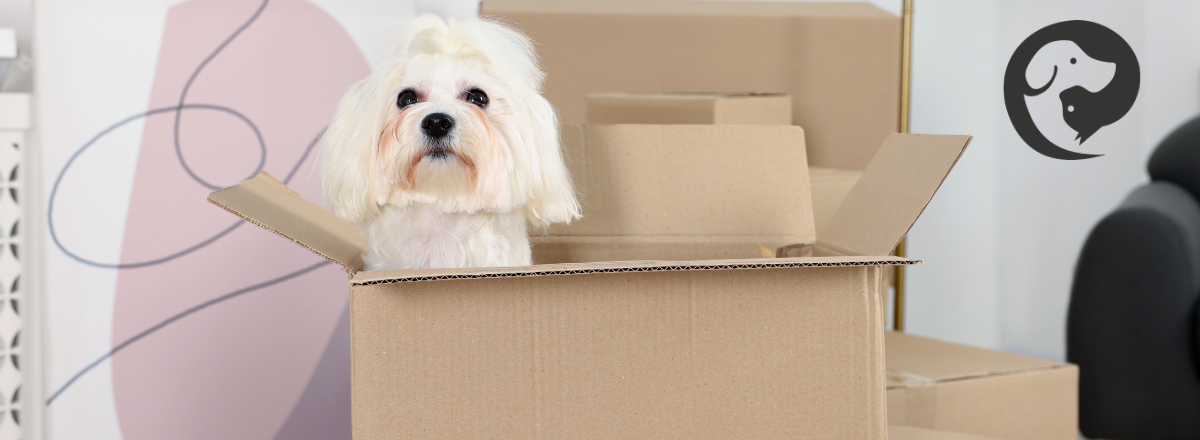
Big Change, Little Paws
Moving is complicated. It can be exciting, and it can be terrifying. It can bring desired change and opportunity, and it also brings routine disruption, stress, and the unknown.
My partner, our dogs, and myself have moved across the country multiple times in the last 15 years. Each move brought with it a new life stage, and new opportunities. And each move was stressful, whether we were excited or not.
At this point, between my own moves, and helping clients through the moving process, I have some tips to share to make all stages of the move, before, during, and after smoother with a little preparation.
Please note: I’m not covering air travel in this blog, but many of the preparation and arrival considerations are the same!
Tip 1: Give Your Pet a Safe Space
Each family and pet handles the disruption differently. Some pets do better observing and being in the middle of the packing. Some pets prefer to hang out in their safe space, over there, away from the clatter of cutlery clashing and voices hollering across the room.
No matter who your pet is, make sure to keep their safe space intact as long as possible. Giving them a place where they know they can go, take a deep breath, and get away from the kerfuffle will help them cope with routine disruptions, sounds, and environmental changes.
While I know it is hard, try to maintain some anchors of your daily routine. Predictability is hugely important for stress management and coping, so maintaining little bits of the routine will help your pet know what’s next and reduce some of the stress. If you’re interested in learning more about predictability, check out this blog about predictability and why we actually love spoilers.
P.S. Make sure the space is actually safe; teetering boxes and stuff leaned against the wall should be secured so nothing falls.
Tip 2: Update IDs, Microchips, and Records
Once you get to your new place, the last thing you want to do is deal with paperwork. Or at least, more paperwork than you need to. So before you move, take some time to get your pet’s things in order:
- Get an updated collar or tag with your new information.
- Update your pet’s microchip information with your new information.
- Get a copy of your pet’s vet records from any clinics where they have been seen.
If possible, I also encourage families to see their pet’s vet one more time and to double-check the following:
- Renew any prescriptions so that you have some breathing room when you get to your new location
- Update with vaccinations when needed, taking into account risks in your new location
- If your pet does not already have a medication protocol for anxiety, and you think they would benefit, then discuss options with your vet
- If your pet already has a medication protocol for anxiety, then discuss the protocol with your vet and see if any adjustments should be made to account for the new stressors
- If your pet struggles with car rides and motion sickness, then talk to your vet about support for the drive.
Tip 3: Pack an Essentials Bag for Your Pet
Find some time to take stock of your pet’s current care routine. What management is non-negotiable (for you or them)? What enrichment activities help your pet be their best selves? What fills their cup?
Make a list of the things that you need to have readily available during the move and immediately after you arrive. Here’s what’s in my dog’s essentials bag:
- Laika’s pink blanket (safe space)
- Griffey’s cave bed (safe space)
- Toppls x2
- Treats + treat bags
- Harnesses, standard leashes, long lines
- Jackets (depending)
- Food (enough for trip + week)
- Bowls/plates for feeding
- Travel water bottle
- Bowl for water
- Medications, supplements, and pill containers
- Griffey shampoo
- Husbandry kit (hair scissors, nail clippers, filing board, quick stop)
- Wubba x2, small Chuck It ball, stuffed toys x6
- Portable speaker (for sound masking on the go)
- Poop bags
- Vet records
- Muzzle
- Dog towels x3
- Blackout curtains (depending)
- Baby gate
What you need readily available when you arrive will depend on your pet’s needs, so think about what you currently do to help your pet be successful.
Tip 4: Keep Pets Secure on Moving Day
You need a clear plan before moving day. If you have multiple people in the family, determine who is responsible for what elements of the day. Put someone in charge of the pets, so nothing falls through the cracks. In my house, it is me. I’m responsible for keeping the dogs away from the open doors, getting under foot, sequestered from strangers in the home, and managing their stress.
Putting one person in charge makes sure that it isn’t “somebody’s” job, that everyone assumes is taking care of it, when in reality, no one is.
Go heavy on your management plan! Use crates, carriers, or secure rooms while boxes are being moved in and out, or movers are in the place. Throw sound masking, scent masking, and all your tools into the ring.
Prevent escape risks by using two barriers always. This can be crates, gates, doors, leashes, tethers… what will work for you and your pet depends on, well, you! Use clear communication between you and your family when moving the pets around. You don’t want to think the front door is closed, let the dogs into the living room, and then need to spend the day trying to get your dogs into the car.
If possible, avoid the Moving Day chaos all together by getting the pet out of the house. If you can coordinate time at a local space rental, stay with a friend, send your dog to daycare, at a trusted pet sitter, or coordinate the movers to arrive and pack after you’ve reached your destination.
Tip 5: Maintain Familiarity Where You Can
We all want calm pets during travel. Part of our pet stress management is providing those anchors of familiarity where we can (see Tip 1). Provide your pet with as much familiarity as you can, bring unwashed bedding or favorite toys in the care. If you have sound masking or audio that your pets know and associate with good things, turn that on. If you’ve taught certain scents to be calming, you can use those.
If you have a co-pilot, have someone responsible for planning out rest stops along the way. If you don’t, I recommend having a plan for stopping, and navigating bathroom breaks, getting food, and checking into overnight lodging, long before you hit the road. Don’t try to plan and coordinate when you’re already stressed, it is quite hard!
Again, clear, direct communication is helpful at rest stops. Who is responsible for the pets? Who is getting food? Where can you get the dogs out to stretch their legs away from a lot of traffic? Take a minute to know who is responsible for what, so that no balls get dropped.
If you are staying overnight in an environment, pull out all your safe space skills!
Tip 6: Set Up a Safe Space Right Away
Boy, do I feel like a broken record.
To help your pet adjust to the new home, set up their safe space. Getting pets settled after moving will take some time, but pulling out their known safety, a bed, a blanket, their long-term calming projects, their familiar training games, and their enrichment plans will help speed up the process.
Observe if your assumptions about your pet’s safe space are true. You may find, in the new place, that they need something different. In California, we slept with the windows open, and in Washington, we need blackout and sound-dampening curtains. I’ve had clients who either had to reduce or increase their sound masking. We may or may not need window film. We may need different temperature accommodations.
Remember, the safe space you built was built for your last environment; this one may need some tweaks.
Tip 7: Rebuild Routines and Observe Behavior
Carve out time to fill their cup and yours, because moving stress is real! The sooner you can start implementing some familiarity and routine back into your pet’s life, the better. It doesn’t need to be big things; it may be little things like re-establishing your breakfast and dinner routine. It may be prompting a familiar game, like chase, wrestling, or tug. Or 15 minutes at the end of the day to simply be together. Or a walk on their long line at a local park.
It will take some time for the family to get used to the little creaks of the new place, or the sounds of the neighborhood, but in the meantime, return to some normalcy, and some of the activities you know benefit you and your pet.
As your cognitive load lifts and you start to get into the swing of your new normal, pause to observe your pet. What changes do they need in this new environment? Observe their behavior, their health, and their routines so you can meet their needs now, not the needs from before.
Moving Forward Together
Moving is inherently stressful. Even when things go perfectly, there are no hiccups, and you can’t wait for the next stage in life, it is stressful. Helping pets adapt to their new home, routine, and life can be a lot, but it doesn’t have to be overwhelming. I’ve helped families create full transition routines, from skill building all the way through settling in to create stress-free moving with their pets.
Here’s to harmony,
Ellen
Now What?
Working with our team means you get experts guiding you to focus on what will make a difference, carry the cognitive load of planning, and be with you to troubleshoot when you’re already pulled in too many directions.
Whether you have a move on your horizon or simply want to be prepared for “what ifs,” we’re here to help.
Copyright 2025 Pet Harmony, LLC. All Rights Reserved.
Terms & Conditions, Privacy Policy
Results are not guaranteed because behavior, human, canine, or otherwise, are not guaranteeable.