
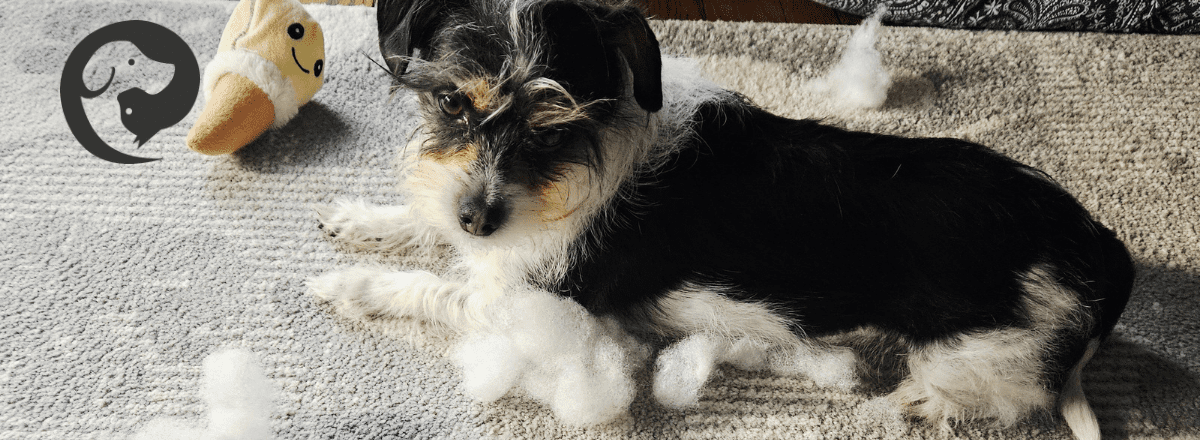
Why Your Dog Training Doesn’t Have to Be Perfect
Estimated reading time: 4 min
Does this sound like you: You have a dog with behavior challenges and seek out a professional. You get your training plan, but as you digest it, your brain starts translating “professional advice” into “impossible standards”:
Plan item | Your interpretation |
Follow protocols exactly | Timing and mechanics must be flawless. |
Daily training sessions | More = better; if I miss a day, I’ve failed. |
Provide daily enrichment | I need a Pinterest-worthy schedule. |
Track progress | I need a NASA level spreadsheet. |
Avoid mistakes | One setback ruins everything. |
Pretty quickly, you feel the pressure to be superhuman.
The Myth of Perfect Dog Training
There’s a common assumption that success requires flawless execution. In competitive dog sports? Sure. But real life with dogs (especially those with complex needs) rarely looks that way.
Like many of you, I have a busy schedule, unexpected setbacks, and days where management simply has to take priority over active training. Training success isn’t built on perfection; it’s built on consistent, sustainable effort over time. My own dogs are proof.
Why Dog Training Perfectionism Makes Caregiver Burnout Worse
Don’t get me wrong, I’m a classic perfectionist. I love organization and structure, and I have super high standards. I also have two dogs who have had behavior issues since the day I found them.
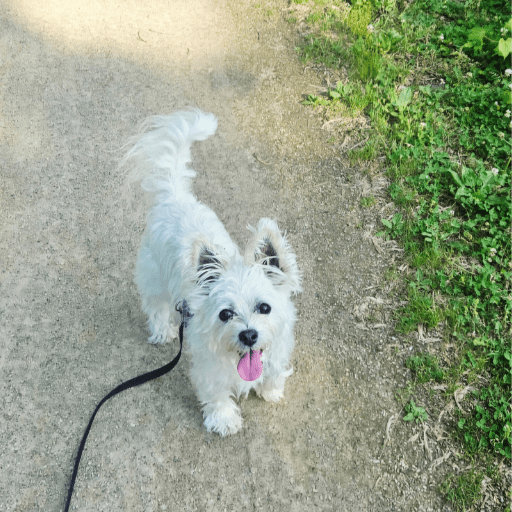
Preston has BIG feelings about other dogs and has always been a super sensitive soul. Now that he’s an old man, the saving grace is he doesn’t always know what’s going on and is less likely to be reactive to dogs. Sprite on the other hand still has BIG feelings about other dogs, AND strange men, AND about storms, AND having her nails trimmed, and lots of other things.
Because of my perfectionism, I used to feel immediate guilt if they showed even a hint of boredom. I’d tell myself
- I’m not doing enough training sessions
- I’m not doing this protocol properly
- I’m not providing enough enrichment
- I’m a substandard pet parent
When expectations become unrealistic, we often get stuck between two extremes: trying to do everything perfectly or giving up entirely. But there is a middle ground.
What Good Enough Actually Looks Like
My partner doesn’t know anything about the flight cue protocol. He hasn’t read books on Look At That protocol. He knows the basics of engage/disengage.
When he’s walking Sprite and we encounter a trigger, he tosses treats a few feet ahead of her to get her to keep moving. Is this a “perfect” technical protocol? Maybe not. Does it matter? Not to me. Sprite can remain under threshold enough to find the food on the ground and look back so my partner can toss another one. It gets the job done.
I’ve had to learn this lesson myself, too. I love taking my dogs for sniffaris in parks and industrial complexes. But it requires me to get in the car and drive to the place. There are days when time just doesn’t allow for it, at least not without emptying my cup completely.
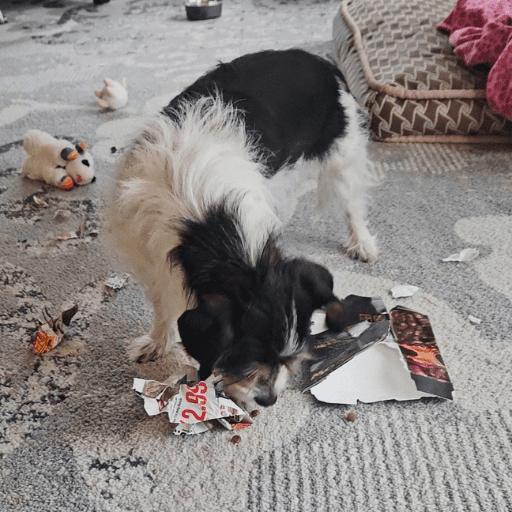
On those days I swap the outing for more mealtime enrichment. For Sprite that means destroying cardboard boxes, and for Preston that means foraging through a snuffle mat or a folded-up towel. In those moments, a cardboard box is good enough. It meets their needs while allowing me the space to actually sit down and breathe.
I’ve embraced good enough because it’s sustainable in a busy human world. Instead of perfection, our family focuses on:
- Providing basic enrichment opportunities.
- Practicing training when possible.
- Using management tools to prevent problems.
- Celebrating small improvements.
As a behavior consultant, I also find that the sustainable, good enough plans are the ones that resonate more with clients. Because…
The Dog Training Plans That Actually Get Done Are the Sustainable Ones
A couple months ago my partner and I took our dogs for a walk in an office complex. As such, I wasn’t expecting other triggers, much less dogs. But along the east side of the complex was a house with 3 large dogs in their fenced backyard. Those big dogs saw my dogs and immediately ran to the fenceline barking. Having practiced flight cue about a million times, I was ready to say my cue to get us outta there.
But then, to my absolute delight, Sprite turned to me and began TROTTING AWAY FROM THE DOGS ON HER OWN, without a single cue from me. I could have melted right then and there. My heart was so full. I told my partner, “Hey, the next time I feel like we’re not making enough progress with Sprite’s feelings about other dogs, remind me of this walk.” And sure enough, he has.
Why was this such a big deal? It was proof that behavior change doesn’t always happen in dramatic leaps. Sometimes progress looks like:
- Shorter, less intense, or less frequent reactions.
- Faster recovery and an improved ability to settle.
- Improved ability to respond to cues.
- Increased confidence in familiar environments.
These small changes build momentum over time. And they matter!
A Note for Pet Professionals: Small Wins Still Count
If you’re a trainer or behavior consultant sending your clients 10 page plans with 10 action items to do, take a deep breath—I’ve been there, too. It’s worth asking:
- Do I know my client’s current bandwidth?
- Is this plan realistic for this household?
- Are we asking clients to change their entire routine?
- Is there a simpler version of this plan that would still help?
When plans are sustainable, follow-through happens. And follow-through is what creates change.
Progress Over Perfection
Most of us are juggling jobs, kids, or health issues. I love Preston and Sprite. I am dedicated to helping them live their best lives. But they can’t live their best lives if I am not able to live mine.
I’ve adapted to my perfectionism to make it work for me:
- Focus on reality: Meeting a small goal feels better than failing an ambitious one.
- Practice self-compassion: Give myself the same grace I’d give a friend. (This one is HARD for me, no joke).
- Recognize the limits: I accept that there are some things simply out of my control.
- Embrace mistakes: Use them as opportunities for growth rather than reasons for guilt.
Progress doesn’t require perfection. Sometimes the most important thing you can do, for both yourself and your dog, is focus on what’s possible today. Small, consistent steps add up. And good enough can be more powerful than perfect.
Here’s to harmony,
Veronica
Now What?
If you’re feeling the weight of dog training perfectionism or caregiver burnout, you’re not alone. For more on the good enough philosophy, explore these resources:
- Episode #115: Present Over Perfect
- Episode #106: Combating Caregiver Burden
- Episode #142: Enrichment Guilt: When Enough Doesn’t Feel Like It
- Episode #150 If You Aren’t Doing It, It’s Not Doable
- Spicy Dogs, Big Lessons: Finding Gratitude in Daily Life with a Behavior Case Dog
- Combatting That Enrichment Guilt
Copyright 2025 Pet Harmony, LLC. All Rights Reserved.
Terms & Conditions, Privacy Policy
Results are not guaranteed because behavior, human, canine, or otherwise, are not guaranteeable.